Transport Across Membrane
Transport across the membrane refers to the physiological processes by which substances move into and out of cells, or across intracellular organelles, through the selectively permeable cell membrane. This fundamental biological activity is crucial for maintaining cellular homeostasis, acquiring nutrients, expelling waste products, signaling, and generating electrochemical gradients. These transpo…
Quick Summary
Transport across the cell membrane is fundamental for cell survival, regulating the movement of substances in and out. The cell membrane is selectively permeable, meaning it controls what passes through.
Transport mechanisms are broadly categorized into passive and active processes. Passive transport, like simple diffusion, facilitated diffusion, and osmosis, occurs down a concentration or electrochemical gradient and does not require cellular energy.
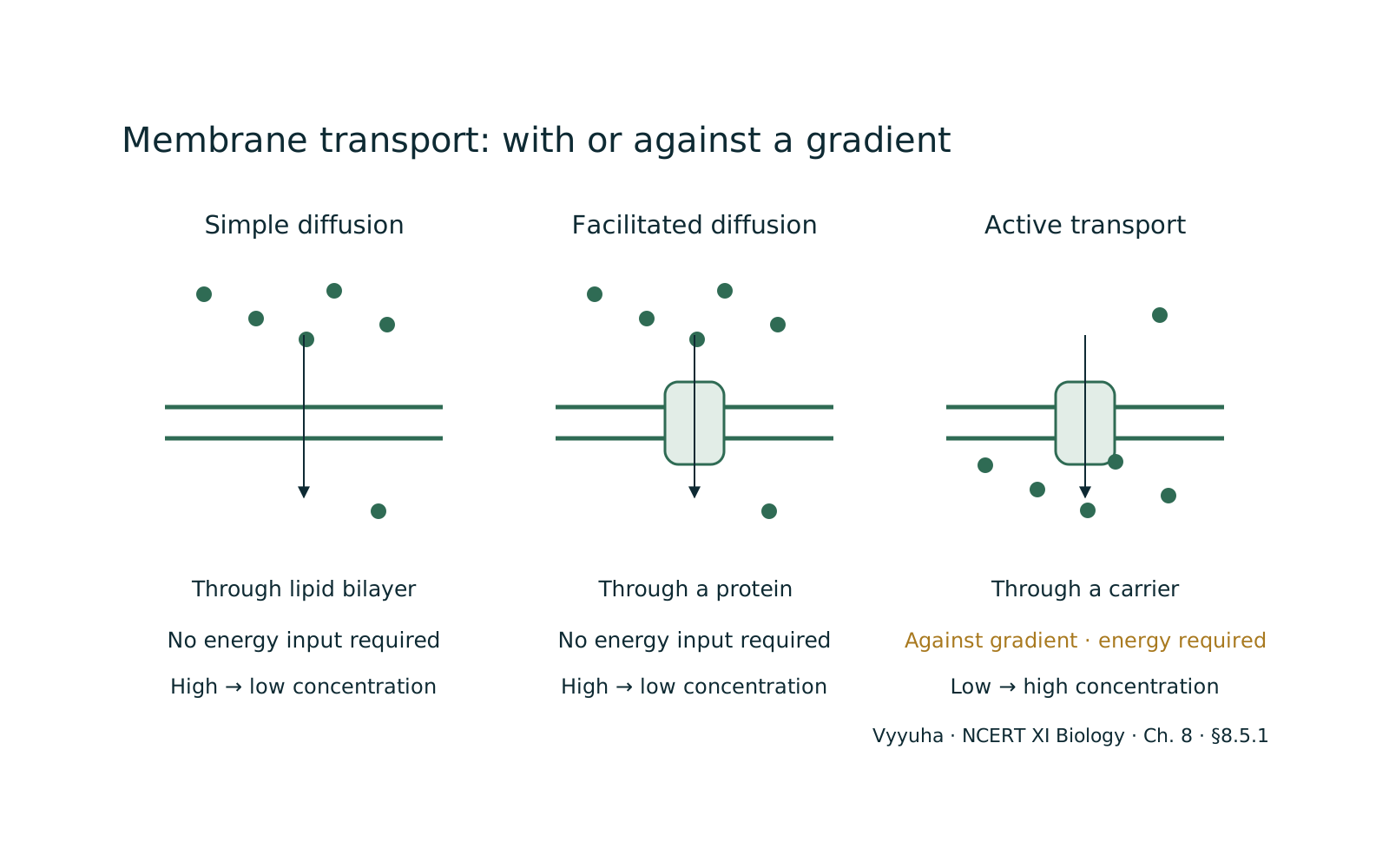
Simple diffusion allows small, nonpolar molecules to pass directly through the lipid bilayer. Facilitated diffusion uses specific channel or carrier proteins for larger or charged molecules. Osmosis is the specific movement of water across the membrane.
Active transport, on the other hand, moves substances against their concentration gradient, requiring metabolic energy, typically from ATP. Primary active transport directly uses ATP (e.g., Na/K pump), while secondary active transport uses the energy from an existing ion gradient (e.
g., Na-glucose symporter). For very large molecules, bulk transport mechanisms like endocytosis (ingestion) and exocytosis (secretion) involve vesicle formation.
Full explanation
The cell membrane, a dynamic and complex structure primarily composed of a phospholipid bilayer with embedded proteins, acts as a selective barrier that regulates the passage of substances into and out of the cell.
This regulation is critical for maintaining cellular homeostasis, nutrient uptake, waste removal, and intercellular communication. The mechanisms of transport across the membrane can be broadly categorized into passive transport, which does not require metabolic energy, and active transport, which does.
I. Passive Transport
Passive transport mechanisms move substances down their concentration gradient (from an area of higher concentration to an area of lower concentration) or electrochemical gradient, without direct expenditure of cellular metabolic energy. The driving force for passive transport is the inherent kinetic energy of molecules.
A. Simple Diffusion:
Simple diffusion is the direct movement of small, lipid-soluble, nonpolar molecules (e.g., O, CO, N, ethanol, urea, fatty acids, steroid hormones) across the lipid bilayer. These molecules dissolve in the lipid portion of the membrane and pass through without the aid of membrane proteins.
The rate of simple diffusion is directly proportional to the concentration gradient, the lipid solubility of the substance, and the surface area of the membrane, and inversely proportional to the molecular size and membrane thickness.
It does not exhibit saturation kinetics.
B. Facilitated Diffusion:
Facilitated diffusion involves the movement of substances down their concentration gradient with the assistance of specific membrane proteins, known as carrier proteins or channel proteins. This mechanism is employed by molecules that are too large, too polar, or too charged to pass directly through the lipid bilayer (e.g., glucose, amino acids, ions). While it still follows the concentration gradient, the presence of transport proteins allows for faster and more selective transport.
- Channel Proteins: — These proteins form hydrophilic pores through the membrane, allowing specific ions or small polar molecules to pass through. Many channels are 'gated,' meaning they can open or close in response to specific stimuli (e.g., ligand-gated channels respond to chemical signals, voltage-gated channels respond to changes in membrane potential, mechanically-gated channels respond to physical stress). Examples include ion channels (Na, K, Ca, Cl channels) and aquaporins (for water).
- Carrier Proteins: — These proteins bind to specific molecules on one side of the membrane, undergo a conformational change, and then release the molecule on the other side. Unlike channels, carrier proteins do not form a continuous pore. They exhibit specificity, saturation (a maximum transport rate when all binding sites are occupied), and competition (structurally similar molecules may compete for the same binding site). Examples include glucose transporters (GLUT proteins) and amino acid transporters.
C. Osmosis:
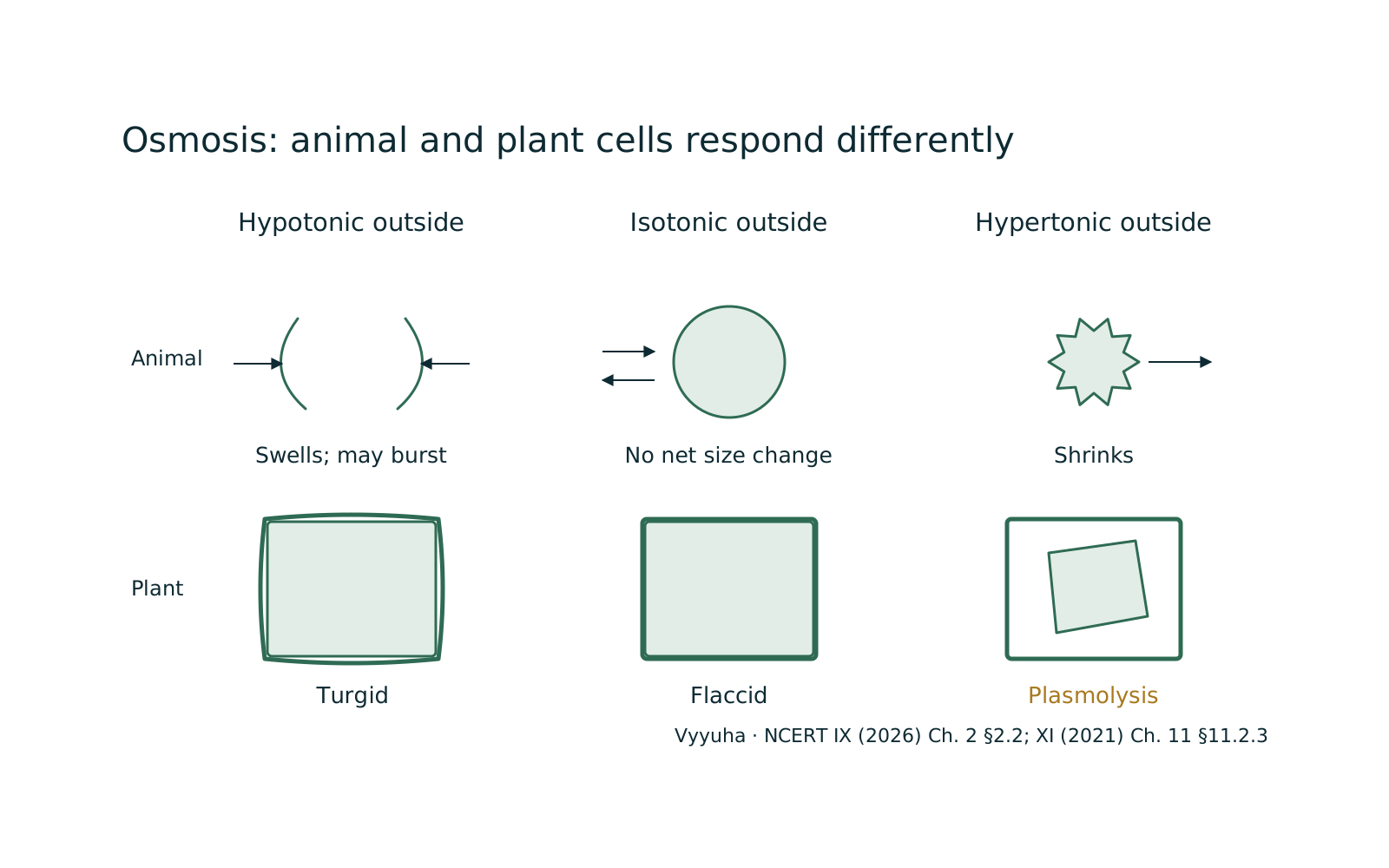
Osmosis is a special type of facilitated diffusion referring specifically to the net movement of water molecules across a selectively permeable membrane from a region of higher water concentration (lower solute concentration) to a region of lower water concentration (higher solute concentration).
Water can pass directly through the lipid bilayer to a limited extent, but its movement is significantly enhanced by aquaporins, which are channel proteins. Osmosis is crucial for maintaining cell volume, turgor pressure in plant cells, and fluid balance in animal tissues.
The osmotic pressure is the pressure that must be applied to a solution to prevent the inward flow of water across a semipermeable membrane.
II. Active Transport
Active transport is the movement of substances across the membrane against their concentration or electrochemical gradient, meaning from an area of lower concentration to an area of higher concentration.
This process requires direct expenditure of metabolic energy, typically derived from ATP hydrolysis, and involves specific carrier proteins often referred to as 'pumps'. Active transport is essential for maintaining steep concentration gradients, which are vital for nerve impulse transmission, nutrient absorption, and waste excretion.
A. Primary Active Transport:
Primary active transport directly uses energy from ATP hydrolysis to pump molecules across the membrane. The carrier protein itself acts as an ATPase, breaking down ATP to release energy for transport.
A classic example is the **Sodium-Potassium Pump (Na/K ATPase)**. This pump actively transports three Na ions out of the cell and two K ions into the cell for every ATP molecule hydrolyzed.
This creates an electrochemical gradient (higher Na outside, higher K inside) and maintains the resting membrane potential, which is critical for nerve and muscle cell function. Other examples include the Ca ATPase (pumping Ca out of the cytoplasm or into the sarcoplasmic reticulum) and H ATPase (proton pumps).
B. Secondary Active Transport (Co-transport):
Secondary active transport, also known as co-transport, does not directly use ATP. Instead, it harnesses the energy stored in an electrochemical gradient (often established by primary active transport) to move another substance against its own gradient. This process involves two types of carrier proteins:
- Symporters (Co-transporters): — These proteins transport two different substances in the same direction across the membrane. A common example is the Na-glucose symporter (SGLT) in the intestinal lining and kidney tubules. The downhill movement of Na (driven by the Na gradient established by the Na/K pump) provides the energy to 'drag' glucose uphill into the cell.
- Antiporters (Exchangers): — These proteins transport two different substances in opposite directions across the membrane. An example is the Na-Ca exchanger, which uses the inward movement of Na to pump Ca out of the cell.
III. Bulk Transport
For very large molecules, particles, or even entire cells, the membrane itself undergoes significant changes to engulf or expel substances. This process, known as bulk transport, is energy-dependent and involves the formation of vesicles.
A. Endocytosis:
Endocytosis is the process by which cells take in substances from their external environment by engulfing them in a portion of the cell membrane, forming a vesicle that buds off into the cytoplasm. There are three main types:
- Phagocytosis ('Cell Eating'): — The cell engulfs large particles, such as bacteria, cellular debris, or other cells, by extending pseudopods around them. This is common in immune cells like macrophages and neutrophils.
- Pinocytosis ('Cell Drinking'): — The cell takes in extracellular fluid and dissolved solutes by forming small vesicles. This is a non-specific process and occurs in almost all cells.
- Receptor-Mediated Endocytosis: — This is a highly specific process where specific receptors on the cell surface bind to particular ligands (e.g., hormones, growth factors, cholesterol-carrying LDL particles). The ligand-receptor complex then clusters in specialized regions of the membrane (often clathrin-coated pits), which invaginate and form coated vesicles. This allows for efficient uptake of specific molecules even when they are present in low concentrations.
B. Exocytosis:
Exocytosis is the process by which cells release substances from the cell into the extracellular environment. Vesicles containing the substances fuse with the plasma membrane and release their contents outside the cell. This is crucial for secreting hormones, neurotransmitters, digestive enzymes, and for inserting new proteins and lipids into the plasma membrane. For example, neurons release neurotransmitters into the synaptic cleft via exocytosis.
IV. Factors Affecting Transport
Several factors influence the rate and efficiency of membrane transport:
- Concentration Gradient: — The steeper the gradient, the faster the rate of passive transport.
- Temperature: — Higher temperatures generally increase molecular kinetic energy, thus increasing transport rates (up to a point).
- Surface Area: — Larger membrane surface area allows for more transport.
- Membrane Permeability: — Lipid solubility, molecular size, and charge of the substance, as well as the presence and activity of specific transport proteins, determine permeability.
- Number of Transporters: — For facilitated diffusion and active transport, the number of available carrier or channel proteins limits the maximum transport rate.
- ATP Availability: — Crucial for active transport processes.
Understanding these diverse mechanisms of transport across the membrane is fundamental to comprehending cellular physiology, drug action, and the pathogenesis of various diseases. For NEET aspirants, a clear grasp of the distinctions between passive and active transport, the different types within each category, and specific examples like the Na/K pump and glucose transporters, is absolutely essential.
Key Concepts
Both simple and facilitated diffusion are passive processes, meaning they don't require direct ATP and move…
Primary active transport directly uses energy from ATP hydrolysis to move ions or molecules against their…
Secondary active transport, or co-transport, doesn't directly use ATP. Instead, it harnesses the energy…
Often confused with
Side-by-side differences the NEET paper likes to test.
| Aspect | Transport Across Membrane | Active Transport |
|---|---|---|
| Energy Requirement | No direct metabolic energy (ATP) required. | Requires direct metabolic energy (ATP) or an existing ion gradient. |
| Concentration Gradient | Moves substances down their concentration/electrochemical gradient (from high to low). | Moves substances against their concentration/electrochemical gradient (from low to high). |
| Saturation | Simple diffusion does not saturate. Facilitated diffusion can saturate due to limited protein carriers. | Always exhibits saturation due to limited protein carriers/pumps. |
| Specificity | Simple diffusion is non-specific. Facilitated diffusion is specific. | Highly specific for the transported substance. |
| Protein Involvement | Simple diffusion: No proteins. Facilitated diffusion & Osmosis (via aquaporins): Yes, channel or carrier proteins. | Always involves specific carrier proteins (pumps). |
| Examples | O$_2$, CO$_2$ movement (simple diffusion); Glucose uptake via GLUT (facilitated diffusion); Water movement (osmosis). | Na$^+$/K$^+$ pump (primary); Na$^+$-glucose symporter (secondary); Endocytosis/Exocytosis (bulk). |
Passive transport mechanisms allow substances to move across the cell membrane without the cell expending metabolic energy, driven by natural gradients. This includes simple diffusion for small, nonpolar molecules, facilitated diffusion for larger or charged molecules aided by proteins, and osmosis for water.
Active transport, conversely, requires cellular energy, typically ATP, to move substances against their concentration gradients, often utilizing specific protein pumps. This 'uphill' movement is crucial for maintaining vital ion gradients, nutrient absorption, and waste removal, ensuring cellular homeostasis.
Why it is tested: For NEET, understanding the fundamental differences between passive and active transport is crucial. Questions frequently test the energy requirement, direction of movement relative to concentration gradients, involvement of carrier proteins, and specific examples of each type. Distinguishing between simple and facilitated diffusion, and between primary and secondary active transport, is a common area of inquiry, often involving scenarios related to nutrient absorption, nerve impulse generation, or kidney function.
Questions students ask
6 answered on this topic.
What is the primary difference between simple diffusion and facilitated diffusion?
The primary difference lies in the involvement of membrane proteins. Simple diffusion involves the direct movement of small, lipid-soluble molecules across the lipid bilayer without any assistance from proteins.
In contrast, facilitated diffusion requires the help of specific membrane proteins (channel or carrier proteins) to transport molecules that are too large, too polar, or charged, even though both processes move substances down their concentration gradient.
Simple diffusion does not exhibit saturation, while facilitated diffusion does, due to a limited number of protein transporters.
Why is active transport necessary if cells can use passive transport?
Active transport is necessary because cells often need to move substances against their concentration gradient, meaning from an area of lower concentration to an area of higher concentration. Passive transport can only move substances down their gradient.
For example, nerve cells need to maintain a high concentration of potassium inside and a high concentration of sodium outside, which requires active pumping against their respective gradients. This 'uphill' movement is vital for maintaining electrochemical gradients, absorbing nutrients completely, and expelling waste efficiently, even when external concentrations are unfavorable.
How does the Sodium-Potassium pump work and why is it important?
The Sodium-Potassium pump (Na/K ATPase) is a primary active transport protein that uses the energy from ATP hydrolysis to pump three Na ions out of the cell and two K ions into the cell.
It's crucial for several reasons: it maintains the resting membrane potential in nerve and muscle cells, which is essential for electrical signaling; it creates the steep Na gradient that is then used by secondary active transporters (like Na-glucose symporters) to move other molecules; and it helps regulate cell volume by controlling solute concentrations.
What are aquaporins and what is their role in osmosis?
Aquaporins are specific channel proteins embedded in the cell membrane that facilitate the rapid movement of water molecules across the membrane. While water can slowly diffuse directly through the lipid bilayer, aquaporins significantly enhance the rate of water transport.
They act as 'water channels,' allowing water to move quickly from an area of higher water potential to an area of lower water potential, thereby playing a critical role in osmosis and maintaining cellular hydration and osmotic balance in various tissues, such as kidney tubules and red blood cells.
Explain the concept of saturation in membrane transport.
Saturation refers to the phenomenon where the rate of transport reaches a maximum and cannot increase further, even if the concentration of the transported substance continues to rise. This occurs in transport mechanisms that rely on specific carrier proteins or channels, such as facilitated diffusion and active transport.
When all available binding sites on the transport proteins are occupied or all channels are open and actively transporting molecules, the system becomes saturated. Simple diffusion, which doesn't involve protein carriers, does not exhibit saturation.
What is the difference between symport and antiport in secondary active transport?
Both symport and antiport are forms of secondary active transport, meaning they use an existing electrochemical gradient (usually Na or H) to move another substance against its gradient. The key difference lies in the direction of transport: a symporter (or co-transporter) moves both the 'driving' ion (e.
g., Na) and the 'driven' solute (e.g., glucose) in the same direction across the membrane. An antiporter (or exchanger) moves the 'driving' ion in one direction and the 'driven' solute in the opposite direction across the membrane.
For example, Na-glucose symporter vs. Na-Ca antiporter.
Revise in 30 seconds
- Passive Transport — No ATP, down gradient.
- Simple Diffusion: Small, nonpolar, lipid-soluble (O, CO). - Facilitated Diffusion: Protein-mediated (channels/carriers), saturable, specific (Glucose, Ions). - Osmosis: Water movement (high water potential to low), via aquaporins.
- Active Transport — Requires ATP, against gradient.
- Primary Active: Direct ATP use (Na/K pump: 3Na out, 2K in). - Secondary Active: Uses existing ion gradient (Na-glucose symporter).
- Bulk Transport — For large molecules, vesicles.
- Endocytosis: Ingestion (Phagocytosis: large particles; Pinocytosis: fluids; Receptor-mediated: specific ligands). - Exocytosis: Secretion (hormones, neurotransmitters).
- Key Terms — Selectively permeable, concentration gradient, isotonic, hypotonic, hypertonic, plasmolysis, turgor.
To remember the types of transport and their energy needs: Passive Always Doesn't Need Energy; Active Always Demands Energy. For passive types: Simple Facilitated Osmosis. For active types: Primary Secondary Bulk.