Cell Wall
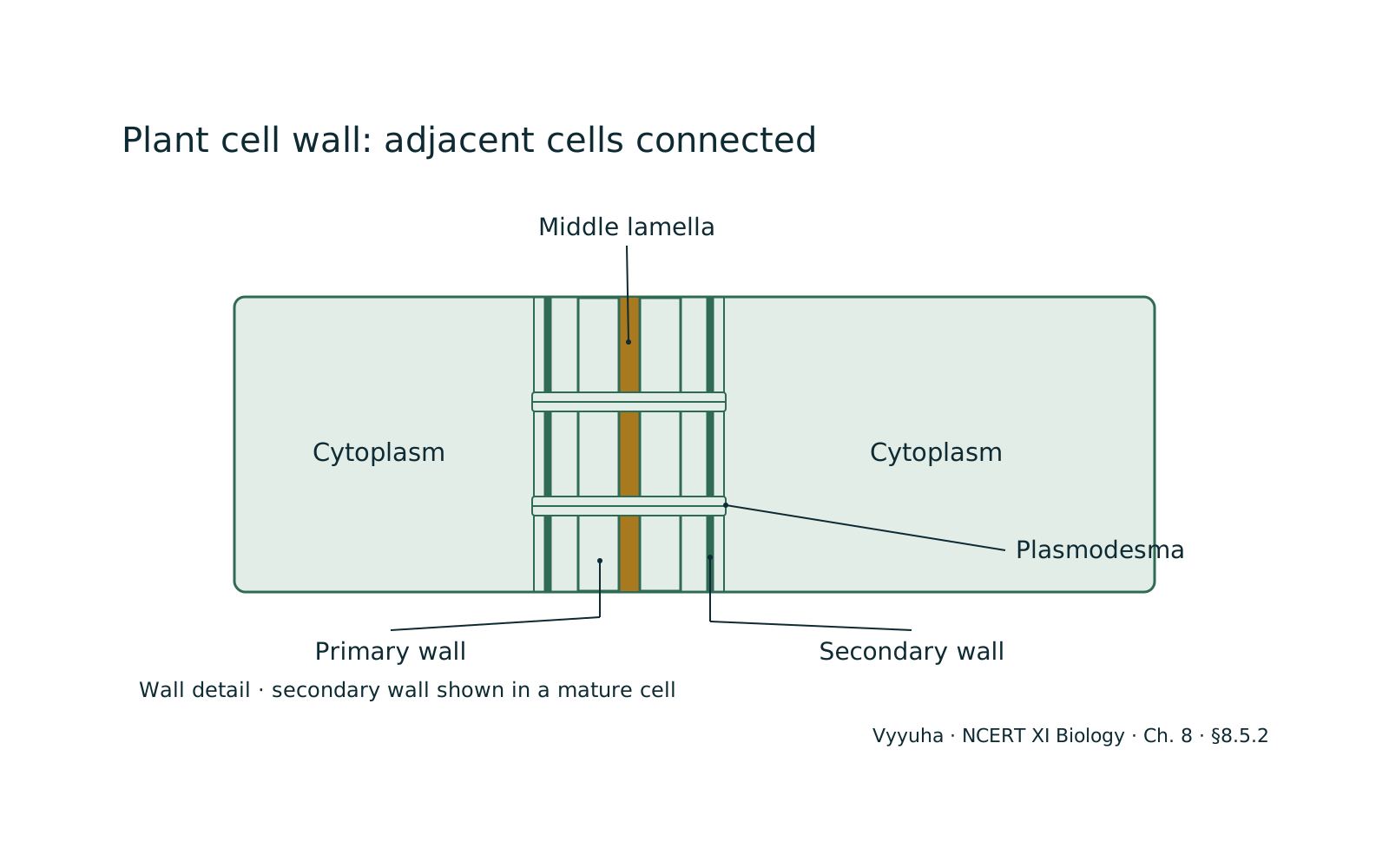
The cell wall is a rigid, semi-permeable protective layer found external to the plasma membrane in plant cells, fungi, algae, and bacteria. It provides structural support, protection against mechanical stress and osmotic lysis, and acts as a filtering mechanism. Its composition varies significantly across different kingdoms, with cellulose being the primary component in plants, chitin in fungi, an…
Quick Summary
The cell wall is a rigid, protective outer layer found in plant, fungal, algal, and bacterial cells, but absent in animal cells. Its primary functions include providing structural support, maintaining cell shape, protecting against mechanical stress and osmotic lysis, and acting as a barrier against pathogens.
In plants, the cell wall is primarily composed of cellulose, hemicellulose, and pectin, organized into a middle lamella (for adhesion), a primary wall (for growth), and sometimes a secondary wall (for strength).
Fungal cell walls are mainly made of chitin, while bacterial cell walls are composed of peptidoglycan (murein). The bacterial cell wall structure differs significantly between Gram-positive (thick peptidoglycan) and Gram-negative (thin peptidoglycan with an outer membrane) bacteria.
Plasmodesmata are channels in plant cell walls facilitating intercellular communication. The cell wall is fully permeable, allowing free passage of water and small solutes, and plays a crucial role in maintaining turgor pressure, which prevents cell bursting and keeps plant tissues firm.
Full explanation
The cell wall stands as a fundamental structural component in a vast array of organisms, including plants, fungi, algae, and bacteria, distinguishing them significantly from animal cells which lack this outer protective layer. Its presence dictates much of the cellular physiology, structural integrity, and ecological interactions of these life forms. Understanding the cell wall is crucial for comprehending plant biology, microbial pathogenesis, and even the mechanisms of certain antibiotics.
Conceptual Foundation:
The cell wall is an extracellular matrix, meaning it's located outside the plasma membrane. It's generally a rigid, non-living layer that is secreted by the cell itself. Its primary roles are multifaceted: providing mechanical strength and structural support, maintaining cell shape, protecting the cell from physical damage and pathogen invasion, and preventing excessive water uptake that could lead to osmotic lysis.
Unlike the selectively permeable cell membrane, the cell wall is typically fully permeable, allowing free passage of water and small solutes, yet it can still act as a coarse filter.
Key Principles and Laws:
- Turgor Pressure Regulation: — This is perhaps one of the most critical functions, particularly in plants. When a plant cell absorbs water by osmosis, the protoplast (cell membrane + cytoplasm + nucleus) swells and pushes against the rigid cell wall. The cell wall, in turn, exerts an equal and opposite pressure back on the protoplast, known as turgor pressure. This pressure prevents the cell from bursting and is essential for maintaining the rigidity of plant tissues, supporting non-woody plants, and facilitating cell expansion during growth. Without turgor, plants wilt.
- Structural Integrity: — The complex polymeric nature of the cell wall, particularly the arrangement of its microfibrils (like cellulose in plants), provides immense tensile strength. This allows cells to withstand significant internal and external forces without deforming or rupturing.
- Cell-Cell Adhesion and Communication: — In multicellular organisms like plants, cell walls are not isolated structures. They are interconnected via the middle lamella, which glues adjacent cells together. Furthermore, specialized channels called plasmodesmata traverse the cell walls and middle lamella, allowing direct cytoplasmic connections and facilitating the transport of water, nutrients, and signaling molecules between neighboring cells.
Composition and Structure Across Kingdoms:
1. Plant Cell Wall:
The plant cell wall is a highly complex and dynamic structure, primarily composed of carbohydrates and proteins. It's typically differentiated into several layers: * Middle Lamella: This is the outermost layer, formed first during cytokinesis.
It's a thin, amorphous, cementing layer rich in pectin (calcium and magnesium pectates) that glues adjacent plant cells together. It's crucial for cell adhesion. * Primary Cell Wall: This layer is formed inside the middle lamella and is characteristic of young, growing plant cells.
It's relatively thin, elastic, and capable of expansion, allowing the cell to grow. Its main components are cellulose microfibrils (arranged loosely), hemicellulose, pectin, and some structural proteins (e.
g., extensins). The cellulose microfibrils are embedded in a matrix of hemicellulose and pectin. * Secondary Cell Wall: This layer is formed only in mature plant cells, particularly those that require additional strength and support (e.
g., xylem vessels, sclerenchyma fibers). It's deposited inside the primary wall, closer to the plasma membrane. The secondary wall is much thicker, more rigid, and often lignified (impregnated with lignin, a complex polymer that provides waterproofing and significant mechanical strength).
It typically consists of three layers (S1, S2, S3) with cellulose microfibrils oriented differently in each layer, contributing to its immense strength. It is generally non-extensible.
2. Fungal Cell Wall:
The cell wall of fungi is distinct from that of plants. Its primary structural component is chitin, a nitrogen-containing polysaccharide composed of N-acetylglucosamine units, similar to the exoskeleton of insects. Other components include glucans (polymers of glucose) and glycoproteins. The fungal cell wall provides structural integrity, protection against osmotic stress, and acts as a barrier against environmental threats.
3. Algal Cell Wall:
Algae exhibit a diverse range of cell wall compositions. While many algal groups, like green algae, have cellulose in their cell walls, others may incorporate different polysaccharides such as galactans, mannans, and even minerals like calcium carbonate (e.g., in red algae and some green algae). The specific composition is often used in algal classification.
4. Bacterial Cell Wall:
The bacterial cell wall is unique and critically important for bacterial survival and as a target for antibiotics. Its primary component is peptidoglycan (murein), a complex polymer consisting of alternating units of N-acetylglucosamine (NAG) and N-acetylmuramic acid (NAM) linked by -1,4 glycosidic bonds, forming glycan chains.
These chains are then cross-linked by short peptide chains, creating a strong, mesh-like structure. The extent and nature of this peptidoglycan layer are key to distinguishing between Gram-positive and Gram-negative bacteria: * Gram-positive bacteria: Possess a thick, multilayered peptidoglycan cell wall, often containing teichoic acids and lipoteichoic acids, which contribute to the cell wall's negative charge and antigenicity.
* Gram-negative bacteria: Have a much thinner peptidoglycan layer, which is located in the periplasmic space between the inner plasma membrane and an outer membrane. This outer membrane is unique to Gram-negative bacteria and contains lipopolysaccharides (LPS), phospholipids, and porin proteins.
LPS is an endotoxin and a major virulence factor.
Real-World Applications and Significance:
- Plant Rigidity and Growth: — The cell wall is fundamental to plant architecture, enabling trees to grow tall and plants to maintain their form. Its controlled loosening and synthesis are essential for cell expansion and plant growth.
- Wood Formation: — The lignified secondary cell walls of xylem cells are the primary components of wood, providing the strength and rigidity that makes timber a valuable resource.
- Disease Resistance: — The cell wall acts as the first line of defense against plant pathogens, recognizing and responding to microbial attacks.
- Antibiotic Targets: — The unique structure of the bacterial cell wall, particularly peptidoglycan synthesis, is a prime target for many antibiotics (e.g., penicillin inhibits peptidoglycan cross-linking). This selective toxicity allows antibiotics to kill bacteria without harming human cells, which lack cell walls.
- Food Industry: — Pectin from the middle lamella is used as a gelling agent in jams and jellies. Cellulose is a major component of dietary fiber.
Common Misconceptions:
- Cell Wall vs. Cell Membrane: — A common error is confusing the cell wall with the cell membrane. The cell wall is a rigid, fully permeable outer layer providing structural support and protection. The cell membrane is a living, selectively permeable inner layer that regulates the passage of substances into and out of the cytoplasm. They have distinct compositions and functions.
- Permeability: — While the cell wall is generally considered fully permeable to water and small solutes, it's not entirely unregulated. Its pore size can limit the passage of larger molecules. It's not 'selectively permeable' in the same active, metabolic sense as the cell membrane.
- Presence in all Eukaryotes: — Only plant, fungal, and algal eukaryotic cells possess cell walls. Animal cells, protozoa, and some other eukaryotes do not.
NEET-Specific Angle:
For NEET aspirants, a deep understanding of the cell wall's composition across different kingdoms is paramount. Questions frequently test the primary components (cellulose for plants, chitin for fungi, peptidoglycan for bacteria), the functions of specific layers (middle lamella for adhesion, secondary wall for strength), and specialized structures like plasmodesmata for intercellular communication.
The distinction between Gram-positive and Gram-negative bacterial cell walls, and their relevance to antibiotic action, is also a high-yield area. Understanding the concept of turgor pressure and its role in plant cell integrity is fundamental.
Pay close attention to the differences in cell wall properties between young (primary wall) and mature (secondary wall) plant cells.
Key Concepts
Cellulose is not just a random collection of glucose molecules; it forms highly organized structures called…
The middle lamella is often overlooked but is fundamentally important for the integrity of multicellular…
The bacterial cell wall's peptidoglycan layer is a marvel of biological engineering and a critical target in…
Often confused with
Side-by-side differences the NEET paper likes to test.
| Aspect | Cell Wall | Cell Walls of Plants, Fungi, and Bacteria |
|---|---|---|
| Organism Type | Plants | Fungi |
| Primary Composition | Cellulose, Hemicellulose, Pectin | Chitin, Glucans |
| Structure/Layers | Middle Lamella, Primary Wall, Secondary Wall (optional) | Typically a single, multi-layered structure |
| Permeability | Fully permeable | Fully permeable |
| Key Function | Structural support, turgor maintenance, protection, cell-cell communication (plasmodesmata) | Structural support, protection, osmotic regulation |
| Special Features | Plasmodesmata for intercellular connection, lignification in secondary walls | May contain glycoproteins, often rigid |
The cell wall, while serving similar fundamental roles of structural support and protection, exhibits remarkable diversity in its chemical composition and structural organization across different biological kingdoms.
Plant cell walls are characterized by cellulose, hemicellulose, and pectin, forming distinct layers like the middle lamella, primary, and secondary walls, with specialized channels called plasmodesmata.
Fungal cell walls are predominantly composed of chitin and glucans. Bacterial cell walls are uniquely defined by peptidoglycan, with significant structural variations between Gram-positive (thick peptidoglycan) and Gram-negative (thin peptidoglycan with an outer membrane) bacteria.
These compositional differences are crucial for classification, understanding organismal biology, and developing targeted antimicrobial strategies.
Why it is tested: NEET relevance: Understanding these differences is critical for NEET as questions frequently test the specific components of cell walls in different organisms, their functions, and their implications (e.g., antibiotic action). It's a high-yield area for factual recall and comparative analysis.
Questions students ask
6 answered on this topic.
What is the primary function of the cell wall in plant cells?
The primary function of the cell wall in plant cells is to provide structural support and maintain the cell's shape, allowing plants to stand upright. It also protects the cell from mechanical stress and prevents excessive water uptake, which could lead to osmotic lysis, by exerting turgor pressure. Furthermore, it acts as a barrier against pathogens and facilitates cell-to-cell communication through plasmodesmata.
How does the cell wall differ between Gram-positive and Gram-negative bacteria?
Gram-positive bacteria have a thick, multilayered peptidoglycan cell wall, often containing teichoic acids. In contrast, Gram-negative bacteria possess a much thinner peptidoglycan layer, which is located in the periplasmic space between the inner plasma membrane and an outer membrane. This outer membrane, unique to Gram-negative bacteria, contains lipopolysaccharides (LPS), phospholipids, and porin proteins.
What is the middle lamella and what is its role?
The middle lamella is the outermost layer of the plant cell wall, formed during cell division. It is a thin, amorphous, cementing layer primarily composed of calcium and magnesium pectates. Its crucial role is to 'glue' or bind adjacent plant cells together, providing intercellular adhesion and contributing to the structural integrity of plant tissues.
Are cell walls found in animal cells?
No, cell walls are not found in animal cells. Animal cells are surrounded only by a cell membrane, which provides flexibility and allows for various cellular movements and interactions not possible with a rigid cell wall. The absence of a cell wall is a key distinguishing feature between animal cells and plant, fungal, algal, and bacterial cells.
What is the significance of plasmodesmata?
Plasmodesmata are microscopic channels that traverse the cell walls of adjacent plant cells, connecting their cytoplasm. They are crucial for intercellular communication and transport. Through plasmodesmata, water, nutrients, hormones, and even some macromolecules can move directly from one cell to another, facilitating coordinated physiological responses throughout the plant.
What is the difference between primary and secondary cell walls in plants?
The primary cell wall is formed in young, growing plant cells. It is relatively thin, elastic, and extensible, allowing the cell to grow and expand. It's composed of loosely arranged cellulose microfibrils, hemicellulose, and pectin. The secondary cell wall, in contrast, is deposited inside the primary wall in mature cells that require additional strength and support. It is much thicker, rigid, and often lignified, making it non-extensible and providing significant mechanical strength.
Revise in 30 seconds
- Plant Cell Wall: — Cellulose, Hemicellulose, Pectin. Layers: Middle Lamella (pectin, adhesion), Primary Wall (elastic, growth), Secondary Wall (rigid, lignified, strength).
- Fungal Cell Wall: — Chitin, Glucans.
- Bacterial Cell Wall: — Peptidoglycan (Murein). Gram-positive (thick PG), Gram-negative (thin PG + Outer Membrane).
- Functions: — Structural support, shape, protection (osmotic lysis, pathogens), turgor pressure.
- Permeability: — Fully permeable (Cell Wall) vs. Selectively permeable (Cell Membrane).
- Plasmodesmata: — Cytoplasmic connections in plant cells.
To remember the primary components of cell walls in different organisms: Plants Can Find Chocolate Bars Perfectly.
- Plants -> Cellulose
- Fungi -> Chitin
- Bacteria -> Peptidoglycan