Golgi Apparatus and Lysosomes
The Golgi apparatus, also known as the Golgi complex or Golgi body, is a membrane-bound organelle found in most eukaryotic cells, primarily responsible for modifying, sorting, and packaging proteins and lipids synthesized in the endoplasmic reticulum for secretion or delivery to other organelles. Lysosomes are spherical, membrane-bound organelles containing hydrolytic enzymes, crucial for intracel…
Quick Summary
The Golgi apparatus and lysosomes are indispensable membrane-bound organelles within eukaryotic cells, forming key components of the endomembrane system. The Golgi apparatus, a stack of flattened sacs called cisternae, acts as the cell's central processing and sorting hub.
It receives newly synthesized proteins and lipids from the endoplasmic reticulum, modifies them (e.g., through glycosylation), sorts them based on their final destination, and then packages them into vesicles for transport.
This ensures that cellular products are correctly prepared and delivered for secretion, integration into membranes, or targeting to other organelles. Lysosomes, often termed the 'suicidal bags' or 'recycling centers,' are spherical organelles filled with powerful hydrolytic enzymes, known as acid hydrolases.
These enzymes function optimally in the lysosome's acidic interior (pH 4.5-5.0) and are responsible for intracellular digestion of ingested materials (phagocytosis), breakdown of old or damaged cellular components (autophagy), and even programmed cell death (autolysis).
Together, the Golgi and lysosomes orchestrate the cell's internal logistics, ensuring efficient synthesis, transport, and degradation of macromolecules, which is fundamental for maintaining cellular health and function.
Full explanation
The intricate machinery of a eukaryotic cell relies on a highly coordinated system of membrane-bound organelles, collectively known as the endomembrane system. The Golgi apparatus and lysosomes are two pivotal components of this system, working in tandem with the endoplasmic reticulum to ensure the proper synthesis, modification, sorting, and degradation of cellular macromolecules.
I. The Golgi Apparatus: The Cell's Processing and Sorting Hub
A. Conceptual Foundation and Discovery:
The Golgi apparatus, also known as the Golgi complex or Golgi body, was first observed by Camillo Golgi in 1898 while studying nerve cells. He noted a network of interconnected threads and granules, which he termed the 'internal reticular apparatus.' Its role as a central processing and sorting organelle for proteins and lipids was later elucidated through electron microscopy and biochemical studies.
B. Structure:
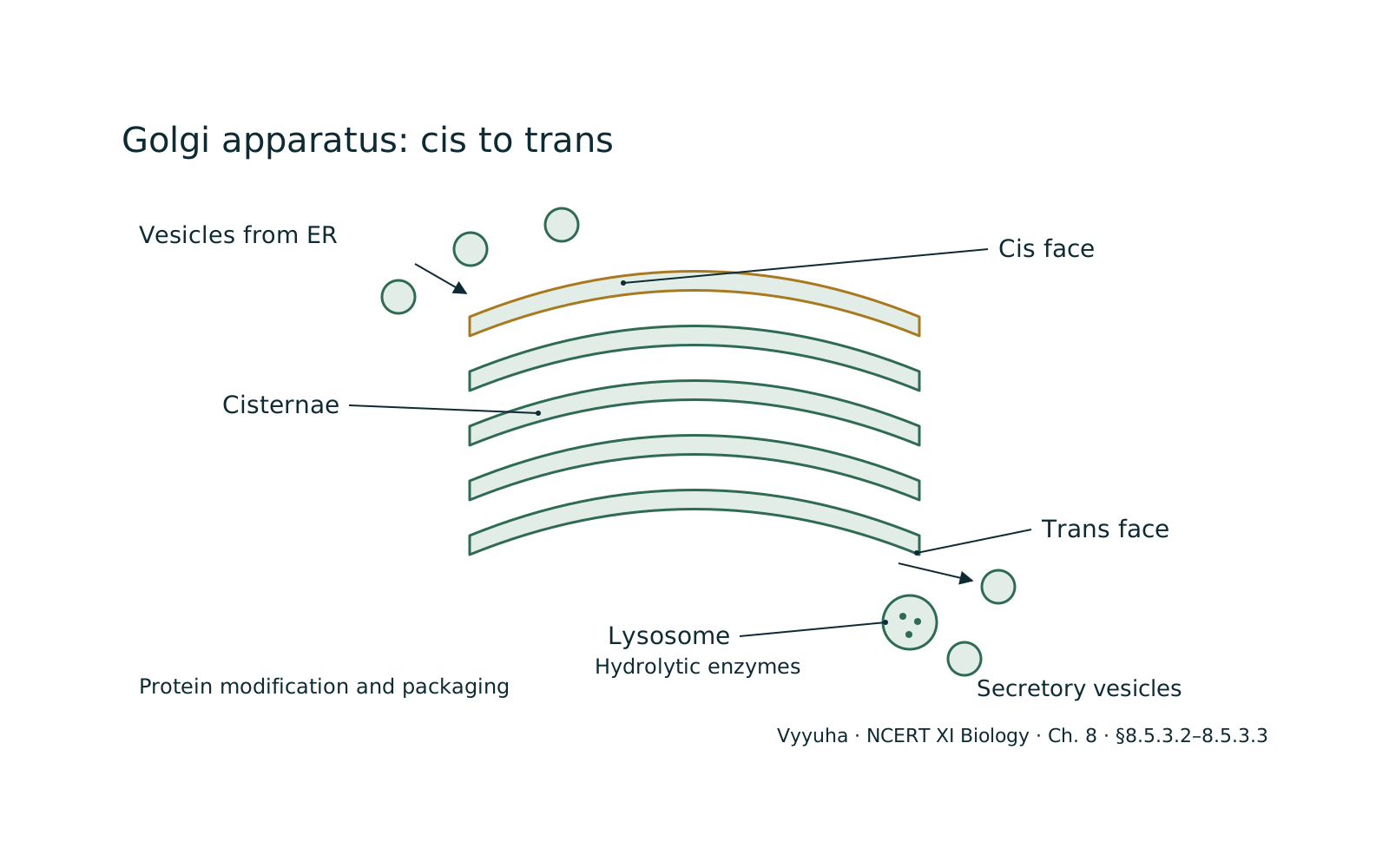
The Golgi apparatus is typically located near the nucleus and the endoplasmic reticulum. Its characteristic structure consists of a stack of flattened, membrane-bound sacs called cisternae (singular: cisterna). A typical mammalian cell may contain several Golgi stacks. These cisternae exhibit distinct polarity, with three functionally and biochemically different regions:
- Cis-face (or Cis-Golgi Network, CGN): — This is the 'forming face' of the Golgi, usually oriented towards the endoplasmic reticulum. It receives transport vesicles containing newly synthesized proteins and lipids from the ER. The membranes of the cis-face are often convex.
- Medial-face (or Medial-Golgi): — This comprises the cisternae located between the cis and trans faces. Here, most of the crucial modification reactions, such as glycosylation (addition of carbohydrate chains) and proteolytic processing, occur.
- Trans-face (or Trans-Golgi Network, TGN): — This is the 'maturing face' of the Golgi, typically oriented towards the plasma membrane. It is concave and functions as a sorting and dispatching station, packaging modified proteins and lipids into vesicles destined for various cellular locations (e.g., lysosomes, secretory vesicles, plasma membrane).
Associated with the cisternae are numerous vesicles, which bud off from one cisterna and fuse with the next, or bud off from the TGN to transport cargo to their final destinations. The lumen (internal space) of the Golgi cisternae is continuous, allowing for sequential processing.
C. Functions:
The Golgi apparatus performs a diverse array of functions critical for cell viability:
- Modification of Proteins and Lipids: — This is a primary role. As proteins and lipids move from the cis to the trans face, they undergo a series of enzymatic modifications. A key process is glycosylation, where carbohydrate chains are added to proteins (forming glycoproteins) and lipids (forming glycolipids). These carbohydrate tags are crucial for cell-cell recognition, adhesion, and protein targeting.
- Sorting and Packaging: — The TGN acts as a crucial sorting station. It recognizes specific 'address labels' (signal sequences or carbohydrate tags) on proteins and lipids, directing them into appropriate transport vesicles. These vesicles then bud off and travel to their designated destinations.
- Secretion: — Proteins destined for secretion outside the cell (e.g., hormones, digestive enzymes) are processed and packaged in the Golgi. These secretory vesicles fuse with the plasma membrane, releasing their contents via exocytosis.
- Formation of Lysosomes: — The Golgi apparatus plays a direct role in the formation of lysosomes. It processes and packages the hydrolytic enzymes synthesized in the ER into vesicles, which then mature into primary lysosomes.
- Synthesis of Cell Wall Components (in plants): — In plant cells, the Golgi is involved in the synthesis of non-cellulosic polysaccharides (like hemicellulose and pectin) that are essential components of the cell wall.
- Lipid Transport and Metabolism: — While the ER is the primary site of lipid synthesis, the Golgi is involved in further processing and transport of certain lipids.
II. Lysosomes: The Cell's Digestive and Recycling Centers
A. Conceptual Foundation and Discovery:
Lysosomes were discovered by Christian de Duve in 1955 and are often referred to as 'suicidal bags' of the cell due to their potent digestive capabilities. They are essential for breaking down cellular waste products, foreign materials, and worn-out organelles, thereby maintaining cellular health and preventing the accumulation of toxic substances.
B. Structure:
Lysosomes are small, spherical, single membrane-bound organelles. Their most distinctive feature is their internal environment: the lumen of a lysosome is highly acidic, maintained at a pH of approximately 4.
5-5.0. This acidic environment is crucial for the optimal activity of the enzymes they contain. The lysosomal membrane is unique, containing specific proton pumps (V-type ATPases) that actively transport protons ( ions) from the cytoplasm into the lysosome, consuming ATP to maintain the low internal pH.
The membrane also contains transport proteins that carry the digested products (amino acids, sugars, nucleotides) out into the cytoplasm for reuse.
C. Contents: Acid Hydrolases:
Lysosomes are packed with a diverse array of acid hydrolases – enzymes that function optimally in an acidic environment and use water to break down macromolecules. These include:
- Proteases: — Break down proteins into amino acids.
- Lipases: — Break down lipids into fatty acids and glycerol.
- Nucleases: — Break down nucleic acids (DNA and RNA) into nucleotides.
- Glycosidases (Carbohydrases): — Break down complex carbohydrates into simple sugars.
- Phosphatases and Sulfatases: — Remove phosphate and sulfate groups from various molecules.
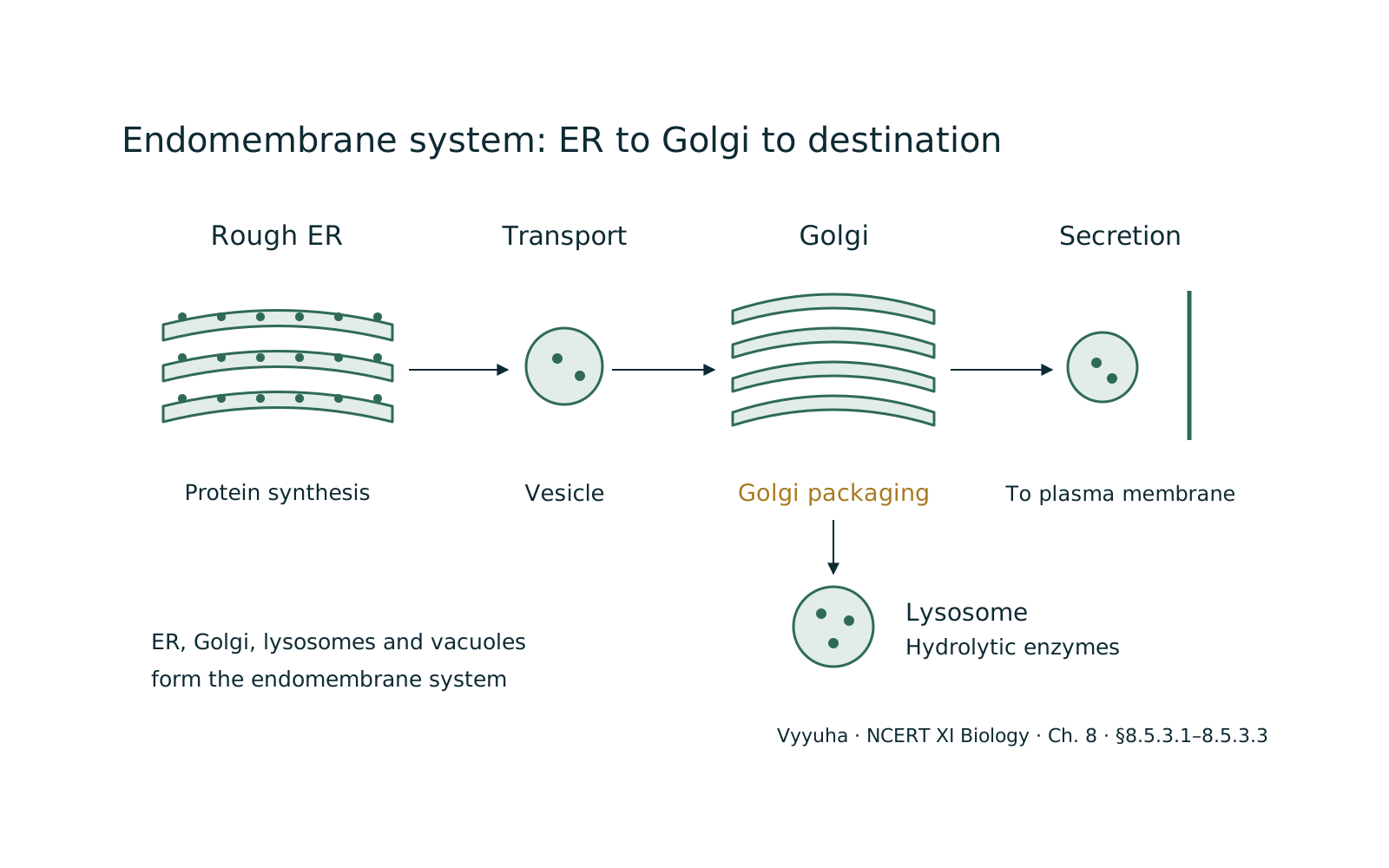
These enzymes are synthesized in the rough ER, transported to the Golgi apparatus, and then sorted and packaged into lysosomes.
D. Functions:
Lysosomes perform several vital functions:
- Intracellular Digestion: — Lysosomes are primarily involved in digesting materials taken into the cell from its external environment. This occurs through:
* Phagocytosis: The engulfment of large solid particles (e.g., bacteria, cellular debris) by specialized cells like macrophages. The ingested particle forms a phagosome, which then fuses with a lysosome to form a phagolysosome (or secondary lysosome), where digestion occurs. * Pinocytosis: The uptake of fluid and dissolved solutes. The resulting pinocytic vesicle also fuses with lysosomes. * Receptor-mediated endocytosis: Specific uptake of molecules via receptors.
- Autophagy (Self-eating): — This is a crucial process where lysosomes digest and recycle the cell's own worn-out or damaged organelles (e.g., mitochondria, ER) and macromolecules. The old organelle is first enclosed by a double membrane, forming an autophagosome, which then fuses with a lysosome to form an autophagolysosome (or autophagic vacuole), leading to its degradation.
- Autolysis (Self-destruction): — Under certain pathological conditions or during programmed cell death (apoptosis), lysosomes can rupture, releasing their enzymes into the cytoplasm and leading to the digestion of the entire cell. This is why they are called 'suicidal bags.'
- Defense Mechanism: — In phagocytic cells (like white blood cells), lysosomes play a critical role in destroying invading pathogens.
- Bone Resorption: — In osteoclasts (bone-resorbing cells), lysosomes release enzymes that help break down bone matrix.
E. Lysosomal Polymorphism:
Lysosomes exhibit polymorphism, meaning they can appear in different morphological forms depending on their stage of activity:
- Primary Lysosomes: — Newly formed lysosomes budding off from the Golgi, containing only hydrolytic enzymes, but not yet involved in digestion.
- Secondary Lysosomes (Phagolysosomes/Autophagolysosomes): — Formed by the fusion of a primary lysosome with a phagosome or autophagosome, actively engaged in digestion.
- Residual Bodies: — Lysosomes containing undigested waste material that remains after digestion. These can be expelled from the cell or accumulate within the cell (e.g., lipofuscin granules).
III. Interrelationship within the Endomembrane System (NEET-Specific Angle):
The Golgi apparatus and lysosomes are not isolated entities but are intimately connected within the endomembrane system. Proteins destined for lysosomes (e.g., acid hydrolases) are synthesized in the rough ER, enter the Golgi at the cis-face, undergo modification (e.
g., mannose-6-phosphate tagging for lysosomal enzymes), are sorted at the TGN, and then packaged into vesicles that bud off to form primary lysosomes. This coordinated pathway ensures that the right enzymes reach the right compartment, highlighting the precision of cellular logistics.
Understanding this flow is crucial for NEET aspirants, as questions often test the sequence of events or the specific roles of each organelle in this pathway.
Key Concepts
Glycosylation is a critical post-translational modification where carbohydrate chains (glycans) are…
The highly acidic environment within lysosomes (pH 4.5-5.0) is not accidental; it is meticulously maintained…
Autophagy is a fundamental catabolic process by which cells degrade and recycle their own cellular…
Often confused with
Side-by-side differences the NEET paper likes to test.
| Aspect | Golgi Apparatus and Lysosomes | Endoplasmic Reticulum (ER) |
|---|---|---|
| Structure | Network of interconnected tubules and flattened sacs (cisternae) extending throughout the cytoplasm, continuous with the outer nuclear membrane. | Stack of flattened, membrane-bound sacs (cisternae) with distinct cis, medial, and trans faces, typically located near the nucleus and ER. |
| Primary Function | Synthesis of proteins (Rough ER) and lipids (Smooth ER); detoxification; calcium storage. | Modification, sorting, and packaging of proteins and lipids received from the ER; formation of lysosomes; secretion. |
| Ribosomes | Rough ER has ribosomes on its surface; Smooth ER does not. | No ribosomes associated with the Golgi apparatus. |
| Polarity | Generally lacks distinct functional polarity in the same way as Golgi, though regions may specialize. | Exhibits clear functional and structural polarity with cis, medial, and trans faces. |
| Vesicle Flow | Receives proteins from ribosomes (RER) and synthesizes lipids (SER); sends transport vesicles to Golgi. | Receives transport vesicles from ER; sends secretory, lysosomal, and other vesicles to various destinations. |
While both the Endoplasmic Reticulum (ER) and the Golgi apparatus are crucial components of the endomembrane system, they perform distinct yet complementary roles. The ER is primarily the site of synthesis for proteins (RER) and lipids (SER), acting as the cell's manufacturing hub.
The Golgi, on the other hand, functions as the cell's post-production processing and distribution center, receiving products from the ER, modifying them further, and then sorting and packaging them for their final destinations.
The ER is a vast, interconnected network, while the Golgi is a more compact, polarized stack of cisternae, highlighting their specialized functions in the cellular production line.
Why it is tested: NEET relevance: Understanding the distinct roles and the sequential flow of molecules through the ER and Golgi is fundamental for questions on protein trafficking, membrane biogenesis, and the overall coordination of the endomembrane system. Distinguishing their functions is a common conceptual check.
Questions students ask
6 answered on this topic.
What is the primary function of the Golgi apparatus?
The Golgi apparatus primarily functions as a central processing and sorting station for proteins and lipids synthesized in the endoplasmic reticulum. It modifies these molecules, often through glycosylation, sorts them based on their destination, and then packages them into vesicles for transport to various cellular locations, including secretion outside the cell, delivery to lysosomes, or integration into other membranes. It's essentially the cell's 'post office' for macromolecules.
How are lysosomes formed within a cell?
Lysosomes are formed through a coordinated effort of the endoplasmic reticulum and the Golgi apparatus. The hydrolytic enzymes destined for lysosomes are synthesized on ribosomes of the rough ER, then enter the ER lumen.
From there, they are transported to the Golgi apparatus. Within the Golgi, these enzymes are further processed and tagged, typically with mannose-6-phosphate, which acts as a 'shipping label.' At the trans-Golgi network (TGN), these tagged enzymes are sorted and packaged into vesicles that bud off and mature into primary lysosomes.
Why is the interior of a lysosome acidic, and why is this important?
The interior of a lysosome is maintained at a highly acidic pH (around 4.5-5.0) by specific proton pumps (V-type ATPases) embedded in its membrane, which actively pump hydrogen ions () into the lysosome.
This acidic environment is crucial because the lysosomal digestive enzymes, known as acid hydrolases, function optimally only at this low pH. If a lysosome were to accidentally rupture, its enzymes would be largely inactive in the neutral pH of the cytoplasm, thus preventing widespread damage to the cell.
What is autophagy, and what is its significance?
Autophagy, meaning 'self-eating,' is a fundamental cellular process where lysosomes digest and recycle the cell's own worn-out or damaged organelles, misfolded proteins, and other cellular debris. This process involves the formation of an autophagosome, which engulfs the cellular material, and then fuses with a lysosome to form an autophagolysosome where degradation occurs.
Autophagy is vital for cellular housekeeping, nutrient recycling during starvation, and maintaining cellular homeostasis, playing a critical role in preventing the accumulation of toxic aggregates and in cellular rejuvenation.
What are lysosomal storage diseases?
Lysosomal storage diseases (LSDs) are a group of rare, inherited metabolic disorders caused by defects in specific lysosomal enzymes. When one of these enzymes is deficient or non-functional, the particular substrate it normally breaks down accumulates within the lysosomes, leading to their enlargement and disruption of normal cellular function.
This accumulation can cause progressive damage to various tissues and organs, resulting in a wide range of clinical symptoms affecting the nervous system, bones, liver, and spleen. Examples include Tay-Sachs disease and Gaucher's disease.
How do the Golgi apparatus and endoplasmic reticulum communicate?
The Golgi apparatus and endoplasmic reticulum (ER) communicate primarily through transport vesicles. Proteins and lipids synthesized in the ER are packaged into COPII-coated vesicles that bud off from the ER and travel to the cis-Golgi network (CGN).
These vesicles then fuse with the CGN, releasing their contents into the Golgi lumen. Retrograde transport, mediated by COPI-coated vesicles, also occurs, returning ER-resident proteins that accidentally escaped to the Golgi back to the ER, ensuring the proper localization of ER enzymes and membrane components.
Revise in 30 seconds
- Golgi Apparatus: — Stack of cisternae (cis, medial, trans faces). Modifies, sorts, packages proteins/lipids. Glycosylation. Forms lysosomes. Secretion.
- Lysosomes: — Single membrane-bound. Acidic pH (4.5-5.0). Contains acid hydrolases (proteases, lipases, nucleases, glycosidases).
- Functions of Lysosomes: — Intracellular digestion, autophagy, autolysis.
- Endomembrane System: — ER Golgi Lysosomes/Secretory Vesicles/Plasma Membrane.
- Key Tag: — Mannose-6-phosphate (M6P) for lysosomal enzymes in Golgi.
Golgi Packs Lysosomes And Sorts Molecules. Lysosomes Are Acidic Digestion Units.