Cell Organelles
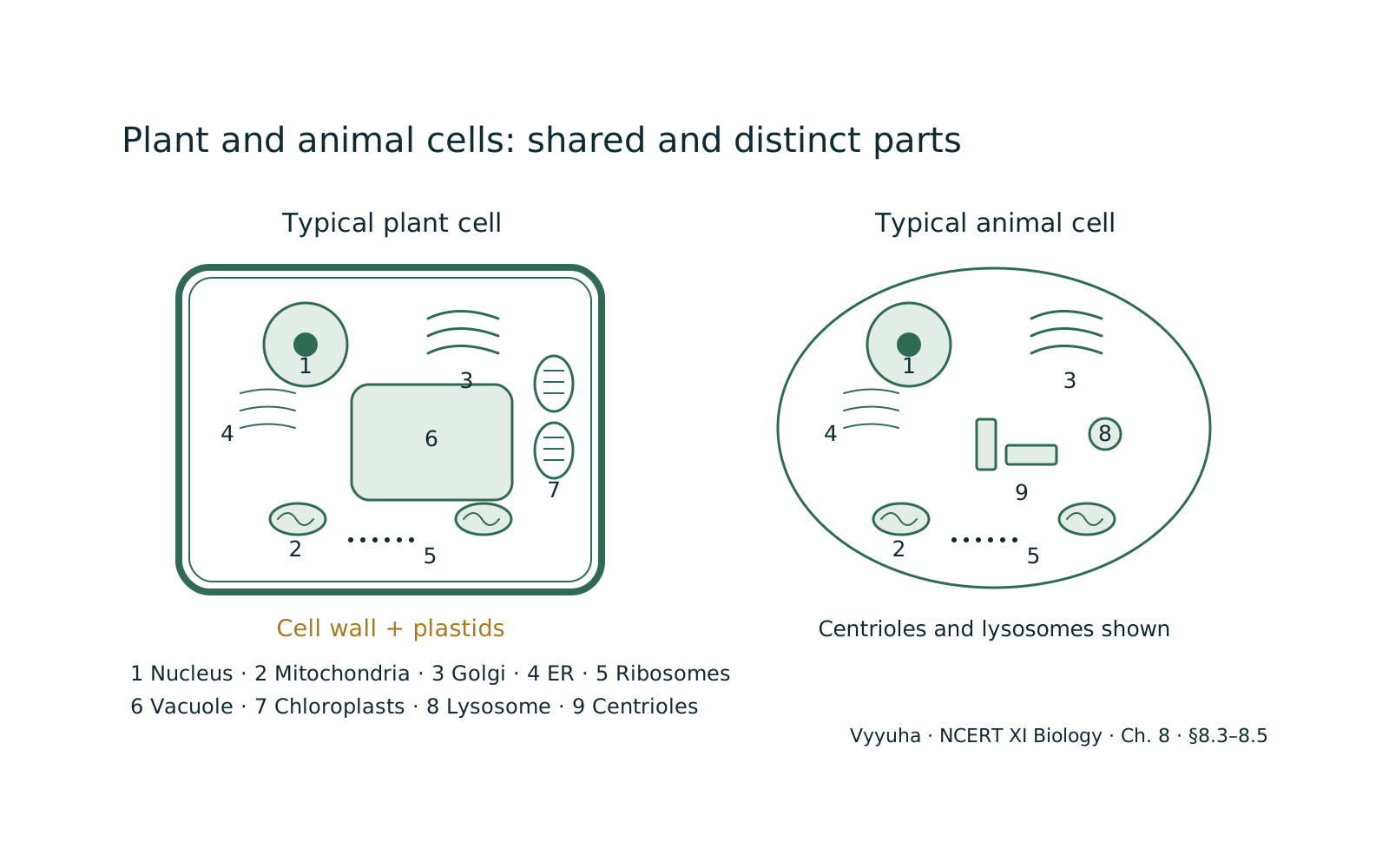
Cell organelles are specialized subcellular structures, typically enclosed by a membrane (though some are non-membranous), found within the cytoplasm of eukaryotic cells. They perform specific, vital functions necessary for the cell's survival, growth, and reproduction, effectively dividing the labor within the cell. This compartmentalization allows for efficient execution of diverse biochemical r…
Quick Summary
Cell organelles are specialized structures within eukaryotic cells, each performing vital functions. The Endoplasmic Reticulum (ER), comprising Rough ER (RER) with ribosomes for protein synthesis and Smooth ER (SER) for lipid synthesis and detoxification, forms a vast network.
The Golgi apparatus modifies, sorts, and packages these proteins and lipids. Lysosomes act as the cell's waste disposal, containing hydrolytic enzymes. Vacuoles, especially large in plant cells, store water, nutrients, and maintain turgor.
Mitochondria are the 'powerhouses,' generating ATP through aerobic respiration and possessing their own DNA. Plastids, like chloroplasts for photosynthesis and leucoplasts for storage, are unique to plant cells.
Ribosomes, non-membranous structures, are the sites of protein synthesis. The Cytoskeleton (microtubules, microfilaments, intermediate filaments) provides structural support and facilitates movement. Centrosomes with centrioles (in animal cells) are involved in cell division.
The Nucleus, containing genetic material, is the cell's control center, with the nucleolus synthesizing ribosomes. Peroxisomes detoxify substances. This compartmentalization ensures efficient cellular operation.
Full explanation
The eukaryotic cell is a marvel of biological engineering, characterized by its intricate internal organization, largely attributed to the presence of membrane-bound organelles. These subcellular compartments allow for a sophisticated division of labor, enhancing metabolic efficiency and enabling complex cellular processes.
Unlike prokaryotic cells, which lack such internal compartmentalization, eukaryotic cells leverage organelles to perform specialized functions, from energy generation to protein synthesis and waste degradation.
Conceptual Foundation: The Principle of Compartmentalization
The existence of cell organelles embodies the principle of compartmentalization. By enclosing specific biochemical pathways within distinct membrane-bound sacs, the cell can:
- Increase Efficiency — Enzymes and substrates for a particular pathway are concentrated, speeding up reactions.
- Prevent Interference — Incompatible reactions (e.g., synthesis and degradation) can occur simultaneously without disrupting each other.
- Create Specialized Environments — Optimal pH, ion concentrations, or redox states can be maintained within an organelle, crucial for specific enzyme activities.
- Regulate Processes — Transport across organelle membranes provides control points for regulating metabolic flow.
Key Organelles and Their Functions:
- Endoplasmic Reticulum (ER): — A vast network of interconnected tubules and flattened sacs (cisternae) extending from the outer nuclear membrane throughout the cytoplasm. It exists in two forms:
* Rough Endoplasmic Reticulum (RER): Studded with ribosomes on its surface, giving it a 'rough' appearance. Primarily involved in the synthesis, folding, modification, and transport of proteins destined for secretion, insertion into membranes, or delivery to other organelles (like Golgi, lysosomes, vacuoles).
Ribosomes synthesize proteins directly into the RER lumen or membrane. * Smooth Endoplasmic Reticulum (SER): Lacks ribosomes. Involved in lipid synthesis (steroid hormones, phospholipids), detoxification of drugs and poisons (especially in liver cells), and storage of calcium ions (important for muscle contraction in sarcoplasmic reticulum).
- Golgi Apparatus (Golgi Complex/Body): — Consists of a stack of flattened, membrane-bound sacs called cisternae, typically arranged in three regions: cis (forming face, near ER), medial, and trans (maturing face, away from ER). It acts as the cell's 'post office' or 'processing and packaging center'.
* Function: Modifies, sorts, and packages proteins and lipids synthesized in the ER into vesicles for secretion or delivery to other organelles. Glycosylation (addition of carbohydrates) of proteins and lipids is a major function here.
- Lysosomes: — Small, spherical, single-membrane-bound vesicles containing a variety of hydrolytic enzymes (acid hydrolases) that function optimally at acidic pH. They are formed from the Golgi apparatus.
* Function: The cell's 'recycling and waste disposal unit'. They break down waste materials, cellular debris, foreign particles (e.g., bacteria via phagocytosis), and worn-out organelles (autophagy). Crucial for programmed cell death (apoptosis).
- Vacuoles: — Membrane-bound sacs, typically larger in plant cells where a large central vacuole can occupy up to 90% of the cell volume. Animal cells may have smaller, temporary vacuoles.
* Function: In plants, the central vacuole maintains turgor pressure against the cell wall, stores water, nutrients, waste products, and pigments. In animal cells, they can be involved in storage, transport, or waste removal (e.g., contractile vacuoles in protists for osmoregulation).
- Mitochondria: — Double-membrane-bound, rod-shaped or oval organelles often called the 'powerhouses of the cell'. The outer membrane is smooth, while the inner membrane is highly folded into structures called cristae, increasing surface area. The inner compartment is filled with a matrix.
* Function: Site of aerobic respiration, generating ATP (adenosine triphosphate) through oxidative phosphorylation. Contains its own circular DNA, ribosomes, and enzymes, capable of self-replication (semi-autonomous organelle).
- Plastids: — Double-membrane-bound organelles found exclusively in plant cells and some protists. They are diverse and include:
* Chloroplasts: Green plastids containing chlorophyll, the primary site of photosynthesis. Possess an inner and outer membrane, with an internal system of flattened sacs called thylakoids, stacked into grana.
The fluid-filled space is the stroma. Also semi-autonomous with their own DNA and ribosomes. * Chromoplasts: Contain non-photosynthetic pigments (carotenoids) responsible for the red, orange, or yellow colors of fruits and flowers.
* Leucoplasts: Colorless plastids primarily involved in storage of food, e.g., amyloplasts (starch), elaioplasts (oils), proteinoplasts (proteins).
- Ribosomes: — Non-membranous organelles composed of ribosomal RNA (rRNA) and proteins. Found freely in the cytoplasm, attached to RER, or within mitochondria and chloroplasts.
* Function: The site of protein synthesis (translation). Eukaryotic ribosomes are 80S type (composed of 60S and 40S subunits), while prokaryotic, mitochondrial, and chloroplast ribosomes are 70S type (50S and 30S subunits).
- Cytoskeleton: — A network of protein filaments extending throughout the cytoplasm, providing structural support, maintaining cell shape, and facilitating cell movement and intracellular transport. Composed of:
* Microtubules: Hollow cylinders of tubulin protein. Involved in maintaining cell shape, intracellular transport (e.g., tracks for motor proteins), formation of cilia, flagella, and spindle fibers during cell division.
* Microfilaments (Actin Filaments): Solid rods of actin protein. Involved in muscle contraction, cell motility (amoeboid movement), cytokinesis, and maintaining cell shape. * Intermediate Filaments: Diverse group of fibrous proteins (e.
g., keratin). Provide mechanical strength and anchor organelles.
- Cilia and Flagella: — Hair-like appendages extending from the cell surface, involved in cell motility or moving fluids over the cell surface. Structurally similar, both have a '9+2' arrangement of microtubules (axoneme) surrounded by a plasma membrane. Cilia are short and numerous, flagella are long and few.
- Centrosome and Centrioles: — Non-membranous organelles found in animal cells and some lower plants, usually near the nucleus. The centrosome is the main microtubule-organizing center (MTOC) of animal cells, containing two perpendicularly arranged cylindrical structures called centrioles.
* Function: Centrioles are involved in the formation of spindle fibers during cell division and the basal bodies of cilia and flagella. Each centriole has a '9+0' arrangement of microtubules (nine peripheral triplets, no central ones).
- Nucleus: — The largest and most prominent organelle in eukaryotic cells, housing the cell's genetic material (DNA) in the form of chromosomes. Enclosed by a double membrane called the nuclear envelope, which is perforated by nuclear pores regulating transport between the nucleus and cytoplasm. Contains the nucleoplasm and the nucleolus.
* Nucleolus: A non-membranous structure within the nucleus, primarily involved in ribosomal RNA (rRNA) synthesis and ribosome assembly.
- Peroxisomes: — Small, single-membrane-bound organelles containing enzymes (e.g., catalase, oxidases) involved in various metabolic reactions, particularly those producing hydrogen peroxide ().
* Function: Detoxify harmful substances (e.g., alcohol in liver cells), break down fatty acids, and participate in photorespiration in plants. Catalase rapidly converts toxic into water and oxygen.
Real-World Applications and NEET-Specific Angle:
Understanding cell organelles is fundamental to medicine and biotechnology. Many diseases, such as lysosomal storage disorders (e.g., Tay-Sachs disease), mitochondrial diseases, and certain cancers, are linked to organelle dysfunction. In biotechnology, manipulating organelles can enhance cellular processes for drug production or genetic engineering.
For NEET, focus on:
- Structure-Function Relationships: — How the structure of an organelle (e.g., cristae in mitochondria, thylakoids in chloroplasts) relates to its specific function.
- Membrane-bound vs. Non-membrane-bound: — Crucial distinction (e.g., ribosomes, centrioles, nucleolus are non-membranous).
- Single vs. Double Membrane: — (e.g., ER, Golgi, lysosomes, peroxisomes, vacuoles are single; mitochondria, chloroplasts, nucleus are double).
- Semi-autonomous Organelles: — Mitochondria and chloroplasts (possess their own DNA, ribosomes, and can self-replicate).
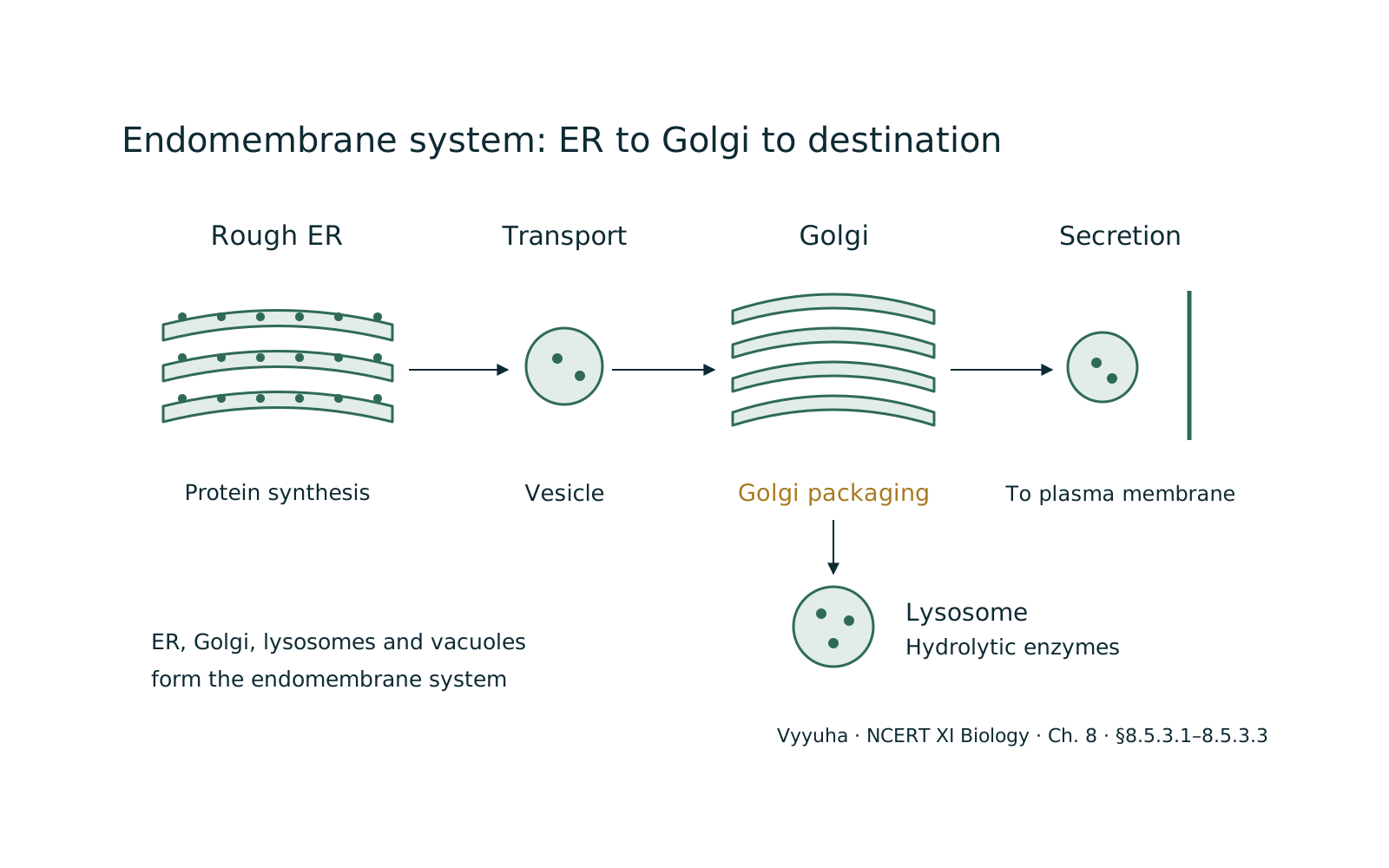
- Endomembrane System: — The coordinated network of ER, Golgi, lysosomes, and vacuoles, working together for synthesis, modification, and transport of cellular components.
- Plant vs. Animal Cell Differences: — Presence of cell wall, chloroplasts, large central vacuole in plants; presence of centrioles in animals.
- Specific Enzyme Locations: — E.g., acid hydrolases in lysosomes, catalase in peroxisomes, enzymes of Krebs cycle in mitochondrial matrix.
- Microtubule Arrangements: — '9+2' in cilia/flagella, '9+0' in centrioles.
Common Misconceptions:
- All organelles are membrane-bound: — Incorrect. Ribosomes, centrioles, and the nucleolus are prominent non-membranous organelles.
- Prokaryotic cells have no organelles: — While they lack membrane-bound organelles, prokaryotes do have ribosomes, which are non-membranous organelles essential for protein synthesis.
- Mitochondria and chloroplasts are fully independent: — While semi-autonomous, they still rely on the nucleus for synthesizing many of their proteins.
- Vacuoles are only for storage: — In plants, they also play a critical role in maintaining turgor and waste disposal; in some protists, they are involved in osmoregulation and feeding.
- ER and Golgi are separate entities: — They are functionally interconnected as part of the endomembrane system, with vesicles mediating transport between them.
Key Concepts
This pathway illustrates the coordinated function of several organelles. Proteins destined for secretion or…
Mitochondria are the primary sites of ATP synthesis in eukaryotic cells through aerobic respiration. Glucose…
Plant cells possess several organelles not found in animal cells, reflecting their autotrophic nature and…
Often confused with
Side-by-side differences the NEET paper likes to test.
| Aspect | Cell Organelles | Mitochondria vs. Chloroplasts |
|---|---|---|
| Presence | Found in almost all eukaryotic cells (animal, plant, fungi, protists) | Found only in plant cells and some protists (algae) |
| Primary Function | Cellular respiration (ATP production) | Photosynthesis (synthesis of organic compounds) |
| Energy Conversion | Converts chemical energy (glucose) into ATP | Converts light energy into chemical energy (glucose) |
| Internal Structure | Inner membrane folded into cristae; matrix | Internal system of thylakoids stacked into grana; stroma |
| Pigments | No photosynthetic pigments | Contains chlorophyll and carotenoids |
| Gas Exchange | Consumes $O_2$, releases $CO_2$ | Consumes $CO_2$, releases $O_2$ |
Mitochondria and chloroplasts are both double-membrane-bound, semi-autonomous organelles crucial for energy metabolism, but they perform opposite functions. Mitochondria are ubiquitous in eukaryotes, breaking down organic molecules to generate ATP through cellular respiration.
Chloroplasts are exclusive to photosynthetic organisms, capturing light energy to synthesize organic compounds via photosynthesis. Their internal structures, cristae in mitochondria and thylakoids/grana in chloroplasts, are specialized for their respective energy conversion processes.
Why it is tested: NEET relevance: This comparison is frequently tested, often in the form of direct questions about their functions, structural differences, or their roles in the carbon and oxygen cycles. Understanding their similarities (e.g., semi-autonomous nature, double membrane) and differences is critical for conceptual clarity and scoring well.
Questions students ask
5 answered on this topic.
What is the primary difference between prokaryotic and eukaryotic cells regarding organelles?
The most significant difference lies in the presence of membrane-bound organelles. Eukaryotic cells possess a complex system of internal, membrane-bound compartments like the nucleus, endoplasmic reticulum, Golgi apparatus, mitochondria, and chloroplasts, which allow for specialized functions and compartmentalization.
Prokaryotic cells, in contrast, lack all membrane-bound organelles. While they do have ribosomes (a non-membranous organelle), their genetic material is not enclosed within a nucleus, and their metabolic processes occur directly in the cytoplasm.
Why are mitochondria and chloroplasts considered 'semi-autonomous' organelles?
Mitochondria and chloroplasts are termed semi-autonomous because they possess their own circular DNA, ribosomes (70S type, similar to prokaryotes), and can synthesize some of their own proteins. They also have the ability to divide independently of the main cell cycle. However, they are not fully autonomous because they still rely on the nuclear genome for synthesizing a significant portion of their proteins and enzymes, and their existence is ultimately dependent on the host cell.
What is the function of the Endomembrane System?
The Endomembrane System is a group of organelles that work together to modify, package, and transport lipids and proteins. It includes the nuclear envelope, endoplasmic reticulum (RER and SER), Golgi apparatus, lysosomes, vacuoles, and the plasma membrane.
Proteins synthesized on the RER enter the ER lumen, are modified, then transported via vesicles to the Golgi for further processing, sorting, and packaging. From the Golgi, they are dispatched to their final destinations, such as lysosomes, vacuoles, or for secretion outside the cell.
Are ribosomes considered organelles, and if so, why are they different from others?
Yes, ribosomes are considered organelles because they are distinct subcellular structures with a specific function (protein synthesis). However, they are unique among many prominent organelles because they are non-membranous.
Unlike mitochondria, ER, or Golgi, ribosomes are not enclosed by a lipid bilayer. This distinction is important for classification and understanding their presence in both prokaryotic and eukaryotic cells, as prokaryotes lack membrane-bound organelles but possess ribosomes.
What is the significance of the folds (cristae) in the inner mitochondrial membrane?
The cristae are crucial for the efficient functioning of mitochondria. These extensive folds dramatically increase the surface area of the inner mitochondrial membrane. This increased surface area allows for the embedding of a greater number of electron transport chain components (protein complexes, enzymes, ATP synthase) that are essential for oxidative phosphorylation.
More surface area means more sites for ATP production, thereby maximizing the cell's ability to generate energy (ATP) through aerobic respiration.
Revise in 30 seconds
- Nucleus: — Control center, contains DNA, nuclear envelope (double membrane), nuclear pores, nucleolus (rRNA synthesis).
- Mitochondria: — 'Powerhouse', aerobic respiration, ATP synthesis, double membrane, cristae, matrix, semi-autonomous.
- Chloroplasts: — Photosynthesis, double membrane, thylakoids, grana, stroma, semi-autonomous (plants/algae).
- Endoplasmic Reticulum (ER): — Network of cisternae/tubules.
- RER: Ribosomes, protein synthesis/secretion. - SER: Lipid synthesis, detoxification, storage.
- Golgi Apparatus: — Modifies, sorts, packages proteins/lipids from ER.
- Lysosomes: — 'Suicidal bags', hydrolytic enzymes (acidic pH), intracellular digestion.
- Vacuoles: — Storage, turgor pressure (large central in plants).
- Ribosomes: — Protein synthesis, non-membranous, 80S (eukaryotes), 70S (prokaryotes, mitochondria, chloroplasts).
- Cytoskeleton: — Microtubules, microfilaments, intermediate filaments; cell shape, movement, transport.
- Centrosome/Centrioles: — Non-membranous, '9+0' arrangement, spindle formation (animal cells).
- Peroxisomes: — Detoxification, metabolism (catalase).
To remember the functions of the Endomembrane System: 'E.R. G.L.V. P.M.'
- E.R. — (Endoplasmic Reticulum): Exports Raw proteins/lipids.
- G. — (Golgi): Grooms and Graduates (modifies, sorts, packages).
- L. — (Lysosomes): Lyses (breaks down) waste.
- V. — (Vacuoles): Volume control and Vault (storage).
- P.M. — (Plasma Membrane): Protects and Manages entry/exit.