Modifications of Roots
Root modifications refer to the structural and functional alterations that roots undergo to perform functions other than their primary roles of anchorage and absorption of water and minerals. These adaptations are crucial for the plant's survival in diverse environments, allowing them to store food, provide additional mechanical support, facilitate gas exchange in waterlogged soils, or even engage…
Quick Summary
Roots, primarily responsible for anchorage and absorption, often undergo structural and functional changes called modifications to adapt to specific environmental conditions or perform additional roles.
These modifications can originate from the primary tap root system or from adventitious roots. Common modifications of tap roots include conical (carrot), fusiform (radish), and napiform (turnip) shapes, all primarily for food storage.
Adventitious roots exhibit a wider array of modifications: for food storage (fasciculated roots in dahlia, tuberous roots in sweet potato), for support (prop roots in banyan, stilt roots in maize, climbing roots in money plant), and for special functions.
Special functions include respiration via pneumatophores in mangroves, absorption of atmospheric moisture by velamen roots in orchids, parasitic nutrition through haustoria in Cuscuta, and nitrogen fixation in nodulated roots of legumes.
Understanding these diverse adaptations and their specific plant examples is crucial for NEET aspirants.
Full explanation
The root system is one of the two major structural axes of vascular plants, typically located underground. Its primary functions are anchorage of the plant body, absorption of water and dissolved minerals from the soil, and transport of these absorbed substances to the stem.
However, over evolutionary time, roots have undergone remarkable structural and functional adaptations, known as root modifications, to perform a variety of specialized roles essential for the plant's survival and propagation in diverse ecological niches.
Conceptual Foundation: Why Roots Modify
Plants are sessile organisms, meaning they cannot move from one place to another. This immobility necessitates a high degree of adaptability to their immediate environment. When the environment presents challenges or opportunities that cannot be met by the standard root functions, natural selection favors individuals whose roots have undergone structural changes. These changes allow them to:
- Store Food — Accumulate reserves for periods of dormancy, rapid growth, or reproduction.
- Provide Support — Offer additional mechanical stability, especially in unstable soils or for large, spreading plants.
- Facilitate Respiration — Obtain oxygen in anaerobic or waterlogged conditions.
- Absorb Moisture — Capture water from the atmosphere in humid environments.
- Fix Nitrogen — House symbiotic microorganisms for nitrogen assimilation.
- Reproduce Vegetatively — Propagate new plants without seeds.
- Parasitize Hosts — Obtain nutrients from other living plants.
Key Principles/Laws Governing Root Modifications
While not 'laws' in the physical sense, the underlying principles are those of natural selection and adaptation. Any modification that enhances a plant's fitness (survival and reproduction) in a particular environment will be selected for. This involves:
- Resource Allocation — Plants invest energy and biomass into root structures that provide the greatest benefit.
- Structural Plasticity — The ability of plant tissues to differentiate and grow into various forms in response to genetic programming and environmental cues.
- Symbiotic Relationships — Evolution of mutualistic interactions, such as with nitrogen-fixing bacteria, leading to specialized root structures.
Types of Root Modifications
Root modifications can broadly be categorized based on the type of root (tap root or adventitious root) and the specific function they perform.
A. Modifications of Tap Roots (Primary Root System)
Tap roots, which originate from the radicle and grow vertically downwards, often modify for food storage.
- For Food Storage — These roots become swollen and fleshy due to the accumulation of reserve food materials, primarily carbohydrates.
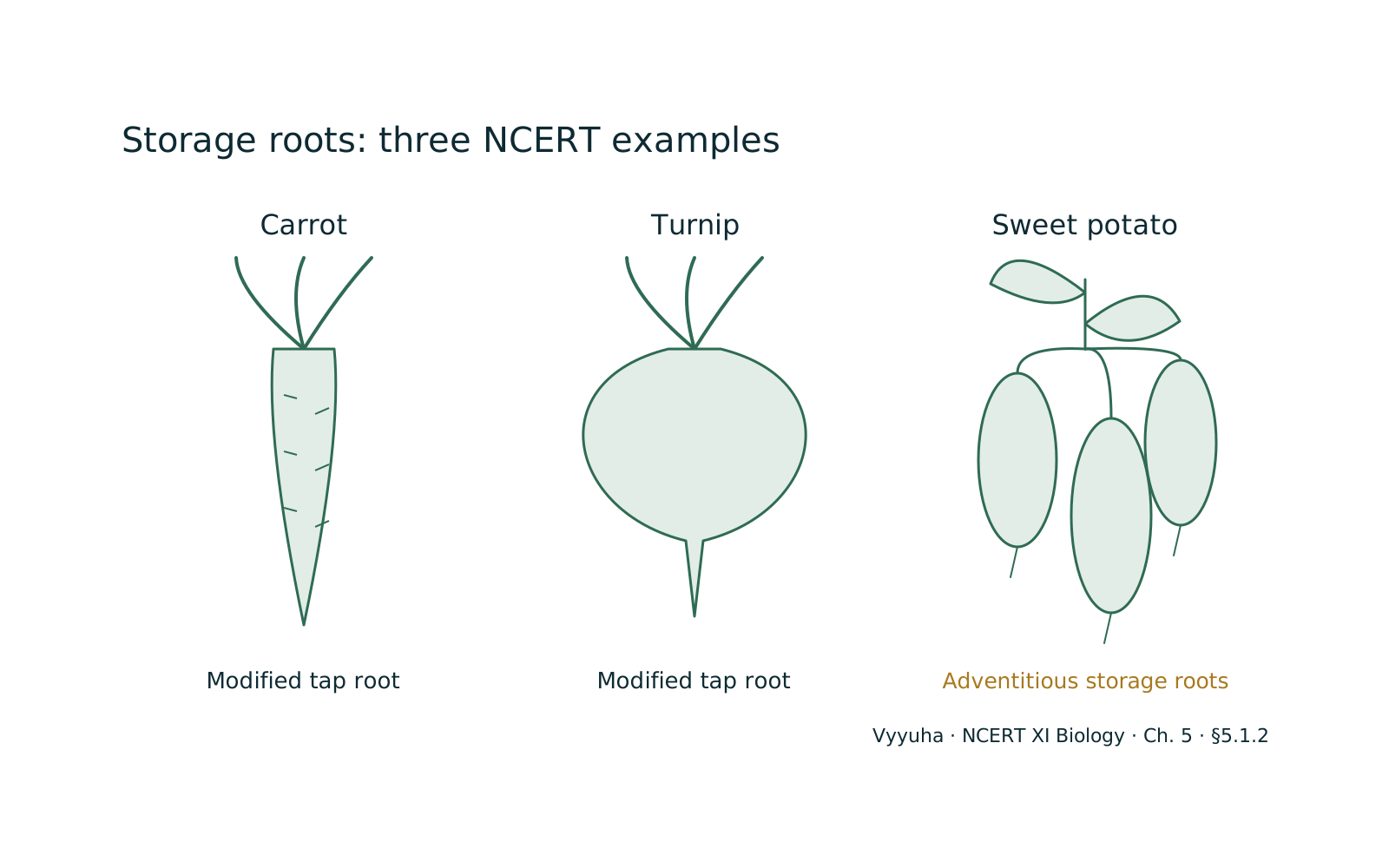
* Conical Root: Broad at the base and gradually tapering towards the apex, resembling a cone. E.g., Carrot (Daucus carota). * Fusiform Root: Swollen in the middle and tapering towards both ends, spindle-shaped.
E.g., Radish (Raphanus sativus). * Napiform Root: Greatly swollen and spherical at the upper part, abruptly tapering into a slender tail-like structure below. E.g., Turnip (Brassica rapa), Beetroot (Beta vulgaris).
* Tuberous Root (Simple Tuberous Tap Root): A single, irregularly shaped, swollen tap root that does not form a definite shape. E.g., Four o'clock plant (Mirabilis jalapa).
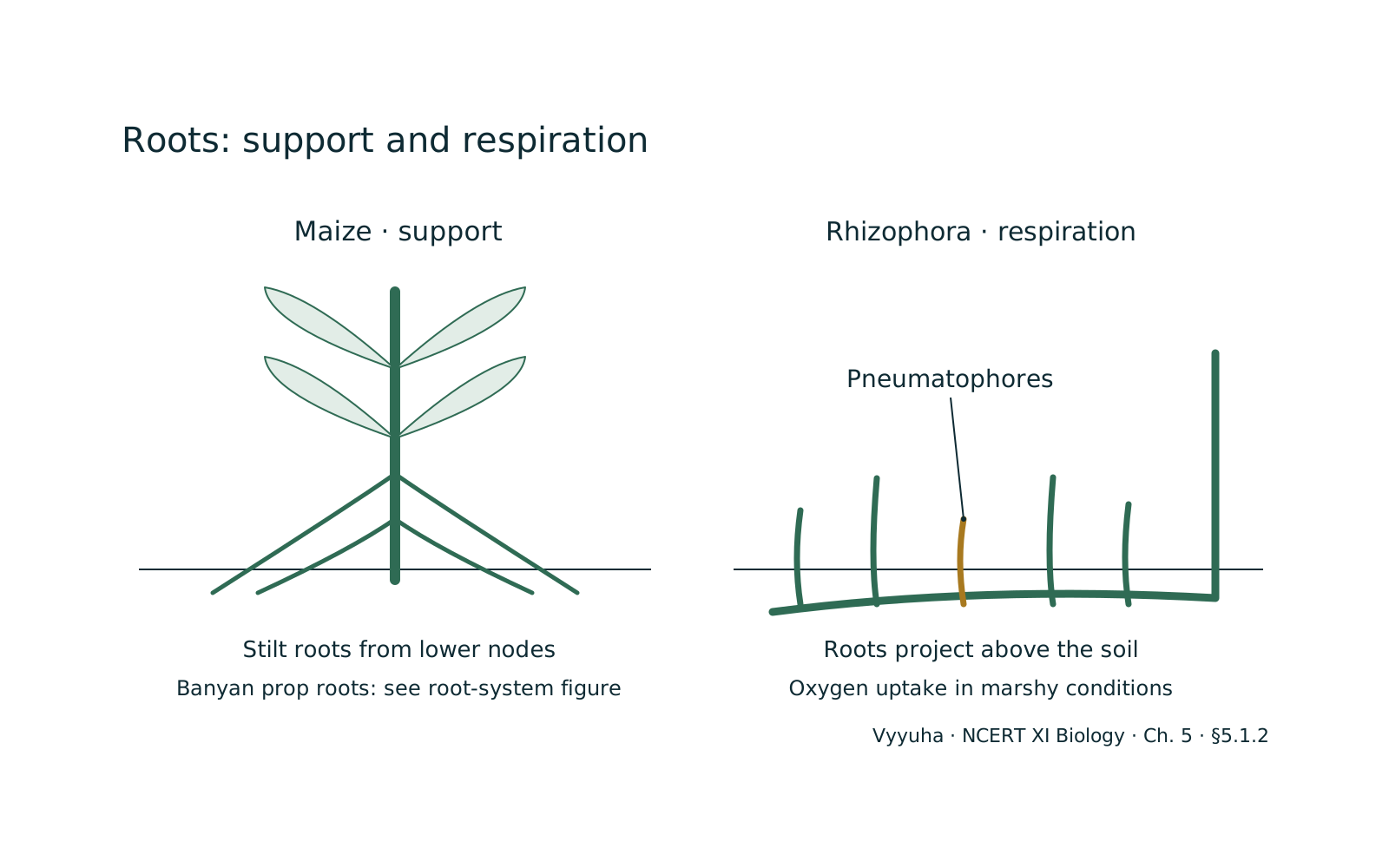
- For Respiration (Pneumatophores) — Found in plants growing in marshy, saline, or waterlogged areas (mangroves) where the soil lacks oxygen. These are specialized negatively geotropic (grow upwards, away from gravity) roots that emerge from the soil surface. They possess numerous small pores called lenticels, through which oxygen diffuses into the root system. E.g., Rhizophora, Avicennia, Sonneratia.
- For Nitrogen Fixation (Nodulated Roots) — Characteristic of leguminous plants (e.g., peas, beans, groundnut). The roots develop small, irregular swellings called root nodules. These nodules house symbiotic nitrogen-fixing bacteria (e.g., Rhizobium), which convert atmospheric nitrogen into usable forms for the plant. In return, the plant provides nutrients and a protected environment for the bacteria.
B. Modifications of Adventitious Roots (Fibrous Root System or Roots Arising from Stem/Leaves)
Adventitious roots, which arise from any part of the plant body other than the radicle, show a wider range of modifications.
- For Food Storage — Similar to tap roots, adventitious roots can also swell to store food.
* Tuberous Adventitious Roots (Sweet Potato Type): Single, irregularly shaped, swollen adventitious roots that store food. Unlike tap root tubers, these arise from stem nodes. E.g., Sweet potato (Ipomoea batatas).
* Fasciculated Roots: Clusters of adventitious roots arising from the base of the stem, becoming fleshy and swollen. E.g., Dahlia, Asparagus, Sweet potato (sometimes also shows this arrangement).
* Nodulose Roots: Adventitious roots that become swollen only at their tips, forming nodule-like structures. E.g., Ginger, Turmeric (Curcuma longa). * Moniliform/Beaded Roots: Roots that swell at regular intervals, giving them a beaded appearance.
E.g., Momordica (bitter gourd), Indian spinach (Basella rubra). * Annulated Roots: Roots that show a series of ring-like swellings. E.g., Ipecac.
- For Support — These roots provide additional mechanical support to the plant.
* Prop Roots: Large, pillar-like adventitious roots that grow vertically downwards from horizontal branches of large trees, entering the soil to provide support. E.g., Banyan tree (Ficus benghalensis).
* Stilt Roots: Oblique adventitious roots that grow from the lower nodes of the stem, penetrating the soil to provide additional support, especially in plants with weak stems or growing in loose soil.
E.g., Maize (Zea mays), Sugarcane (Saccharum officinarum), Screw pine (Pandanus). * Climbing Roots: Non-absorptive adventitious roots that arise from the nodes and help the plant cling to supports (walls, trees) for climbing.
They often secrete a sticky substance. E.g., Money plant (Epipremnum aureum), Betel (Piper betle), Black pepper (Piper nigrum).
- For Special Functions
* Epiphytic/Velamen Roots: Found in epiphytic plants (plants that grow on other plants for support but not for nutrition, e.g., orchids, Vanda). These roots hang freely in the air and are covered by a spongy, hygroscopic tissue called velamen.
Velamen cells absorb atmospheric moisture and nutrients. These roots also contain chlorophyll in their cortex and can perform photosynthesis. * Haustorial/Sucking/Parasitic Roots: Found in parasitic plants (e.
g., Cuscuta, Viscum). These roots penetrate the host plant's tissues (xylem and phloem) to absorb water, minerals, and prepared food. Cuscuta is a total stem parasite, while Viscum is a partial stem parasite.
* Assimilatory/Photosynthetic Roots: Roots that develop chlorophyll and become green, performing photosynthesis. E.g., Tinospora, Trapa (water chestnut), some epiphytic orchids. * Floating Roots: Found in some aquatic plants, these are spongy, air-filled roots that help the plant float.
E.g., Jussiaea. * Contractile Roots: Roots that contract or shorten, pulling the stem or bulb deeper into the soil, providing stability or protection from frost. E.g., Onion, Lily, Crocus. * Reproductive Roots: Fleshy adventitious roots that bear adventitious buds, which can develop into new plants (vegetative propagation).
E.g., Sweet potato, Dahlia, Asparagus, Dalbergia (sheesham).
Real-World Applications and Ecological Significance
- Agriculture — Understanding root modifications is crucial in agriculture. For instance, knowing that carrots and radishes store food in their tap roots helps in optimizing harvesting times. The nitrogen-fixing ability of nodulated roots in legumes is exploited in crop rotation to enrich soil fertility naturally.
- Horticulture — Vegetative propagation using reproductive roots (e.g., sweet potato slips) is a common horticultural practice.
- Ecology — Mangrove ecosystems, characterized by pneumatophores, are vital coastal protectors and unique habitats. The structural support provided by prop and stilt roots allows large trees to grow in challenging environments, contributing to forest structure and biodiversity.
Common Misconceptions
- Confusing Root and Stem Modifications — Students often confuse underground stem modifications (rhizome, corm, tuber, bulb) with root modifications (e.g., potato is a stem tuber, not a root tuber). Key difference: stems have nodes, internodes, and buds (axillary/terminal), while roots do not. Roots have a root cap and root hairs.
- All Swollen Underground Parts are Roots — Not true. Many plants store food in their stems or even leaves. Always look for distinguishing features.
- All Aerial Roots are for Support — While many are (prop, stilt, climbing), some aerial roots like velamen roots are for moisture absorption, and assimilatory roots are for photosynthesis.
NEET-Specific Angle
For NEET, the focus is heavily on examples and their corresponding functions. Students must be able to:
- Identify the type of modification — given a plant example (e.g., 'Carrot' -> 'Conical tap root for food storage').
- State the function — of a specific modified root type (e.g., 'Pneumatophores' -> 'Respiration').
- Distinguish between tap root and adventitious root modifications — for similar functions (e.g., tap root tuber vs. adventitious root tuber).
- Recognize key anatomical features — associated with modifications (e.g., lenticels in pneumatophores, velamen in epiphytic roots, nodules in leguminous roots).
- Understand the ecological context — of these modifications (e.g., mangroves in saline swamps, epiphytes on host trees).
Questions often involve direct recall, matching columns, or identifying the odd one out based on function or origin. A thorough understanding of the examples provided for each modification type is paramount.
Key Concepts
Roots often swell up to store reserve food materials, primarily starch. This modification can occur in both…
Plants develop various root modifications to provide extra mechanical support, especially for large,…
Beyond storage and support, roots can evolve highly specialized physiological functions. Pneumatophores are…
Often confused with
Side-by-side differences the NEET paper likes to test.
| Aspect | Modifications of Roots | Tap Root Modifications vs. Adventitious Root Modifications |
|---|---|---|
| Origin | Develop from the radicle, forming the primary root system. | Develop from any part of the plant body other than the radicle (e.g., stem, leaves). |
| Examples (Food Storage) | Carrot (conical), Radish (fusiform), Turnip (napiform). | Sweet potato (tuberous), Dahlia (fasciculated), Asparagus (fasciculated). |
| Examples (Support) | Less common for primary tap roots to directly provide aerial support, though some may develop buttress roots (a type of tap root modification for support). | Prop roots (banyan), Stilt roots (maize, sugarcane), Climbing roots (money plant). |
| Examples (Special Functions) | Pneumatophores (Rhizophora), Nodulated roots (legumes). | Velamen roots (orchids), Haustorial roots (Cuscuta), Assimilatory roots (Tinospora). |
| Structure | Typically a single, prominent root (e.g., carrot) or a main root with lateral branches, often retaining a distinct tap root identity. | Can be single (sweet potato), clustered (dahlia), or numerous fine roots (fibrous system), often lacking a distinct primary root structure. |
The fundamental distinction between tap root and adventitious root modifications lies in their developmental origin. Tap roots originate from the embryonic radicle, forming the plant's main primary root, while adventitious roots arise from stems, leaves, or other non-radicular parts.
This difference in origin leads to variations in their typical morphology and the range of functions they can perform. While both can store food, adventitious roots show a much broader spectrum of modifications for support (prop, stilt, climbing) and specialized physiological roles (velamen, haustoria, assimilatory roots), reflecting their greater developmental plasticity.
Why it is tested: For NEET, distinguishing between tap and adventitious root modifications is a frequently tested concept. Questions often involve identifying the type of root modification based on a given plant example or its function. Understanding the origin helps in correctly classifying these modifications and avoiding common confusions, such as mistaking a sweet potato (adventitious root) for a carrot (tap root) or a potato (stem) tuber.
Questions students ask
6 answered on this topic.
What is the primary difference between a tap root modification and an adventitious root modification?
The fundamental difference lies in their origin. Tap roots develop directly from the radicle of the embryo and form the primary root system. Their modifications, like the conical carrot or fusiform radish, are typically extensions of this primary root.
Adventitious roots, on the other hand, originate from any part of the plant body other than the radicle, such as the stem (e.g., prop roots of banyan) or even leaves. Their modifications, like the fasciculated roots of dahlia or stilt roots of maize, are specialized structures arising from these secondary origins.
How can I differentiate between a root tuber and a stem tuber?
Differentiating between a root tuber (like sweet potato) and a stem tuber (like potato) is crucial. Root tubers are modified roots, lacking nodes, internodes, and buds. They are typically irregular in shape and have a root cap at their tip (though often lost in mature tubers).
Stem tubers, however, are modified underground stems. They possess nodes (often visible as 'eyes' on a potato), internodes, and axillary buds, which can sprout new shoots. The presence of these stem characteristics is the key identifier.
What is the significance of pneumatophores in mangrove plants?
Pneumatophores are vital for the survival of mangrove plants in their unique habitat. Mangrove soils are typically waterlogged, saline, and anaerobic (lacking oxygen). Normal roots cannot respire effectively in such conditions.
Pneumatophores are negatively geotropic roots that grow upwards, emerging above the water or soil surface. They have numerous pores called lenticels, which allow atmospheric oxygen to diffuse into the submerged root system, facilitating cellular respiration and preventing suffocation of the roots.
Do all aerial roots perform the same function?
No, aerial roots exhibit diverse functions. While some aerial roots, like prop roots of banyan and stilt roots of maize, provide mechanical support, others serve different purposes. For instance, velamen roots of epiphytic orchids are specialized to absorb atmospheric moisture.
Climbing roots of money plant help the plant cling to supports. Assimilatory roots of Tinospora are green and perform photosynthesis. Therefore, the term 'aerial root' encompasses a variety of modifications with distinct roles.
How do parasitic roots (haustoria) obtain nutrients from host plants?
Parasitic roots, or haustoria, are highly specialized structures developed by parasitic plants like Cuscuta (dodder). These roots penetrate the tissues of a host plant. Once inside, they establish a connection with the host's vascular bundles – specifically the xylem and phloem. The haustoria then draw water and minerals from the host's xylem and prepared organic food (sugars) from its phloem, effectively 'stealing' nutrients and weakening the host plant.
Can roots be involved in vegetative propagation?
Absolutely. Some roots are modified for vegetative propagation, which is a form of asexual reproduction where new plants arise from vegetative parts. These are often fleshy adventitious roots, like those found in sweet potato, dahlia, or asparagus. They develop adventitious buds on their surface. When these roots are detached or planted, these buds can sprout and grow into new, genetically identical plants, making them valuable for horticultural practices.
Revise in 30 seconds
- Tap Root Modifications (Food Storage) — Carrot (conical), Radish (fusiform), Turnip (napiform).
- Adventitious Root Modifications (Food Storage) — Sweet potato (tuberous), Dahlia (fasciculated).
- Support Roots — Prop roots (Banyan), Stilt roots (Maize, Sugarcane), Climbing roots (Money plant).
- Respiration — Pneumatophores (Mangroves like Rhizophora).
- Atmospheric Moisture Absorption — Velamen roots (Orchids like Vanda).
- Nitrogen Fixation — Nodulated roots (Legumes like Pea).
- Parasitic Nutrition — Haustorial roots (Cuscuta).
- Vegetative Propagation — Reproductive roots (Sweet potato, Dahlia).
To remember key root modifications and their examples, think:
Carrot Radish Turnip are Tap Roots for Food. (Conical, Fusiform, Napiform are Tap Roots for Food)
Sweet Potato Dahlia are Adventitious Roots for Food. (Sweet Potato, Dahlia are Adventitious Roots for Food)
Banyan has Prop Roots, Maize has Stilt Roots, Money Plant has Climbing Roots. (Support Roots: Banyan-Prop, Maize-Stilt, Money Plant-Climbing)
Mangroves Pneumatophores Respirate. (Mangroves have Pneumatophores for Respiration)
Orchids Velamen Absorb Moisture. (Orchids have Velamen roots to Absorb Moisture)
Legumes Nodules Fix Nitrogen. (Legumes have Nodules to Fix Nitrogen)
Cuscuta Haustoria Parasitize. (Cuscuta has Haustoria to Parasitize)