Permanent Tissues
Permanent tissues in plants are a group of mature cells that have lost the capacity to divide, having undergone differentiation to attain a specific form and function. They originate from meristematic tissues, which are actively dividing cells. Once differentiated, these cells become specialized to perform particular roles such as protection, support, storage, or transport of water and nutrients. …
Quick Summary
Permanent tissues are mature plant cells that have lost their ability to divide, having undergone differentiation to specialize in specific functions. They originate from meristematic tissues. These tissues are crucial for the plant's structure, support, protection, storage, and transport. They are broadly categorized into two types: simple and complex.
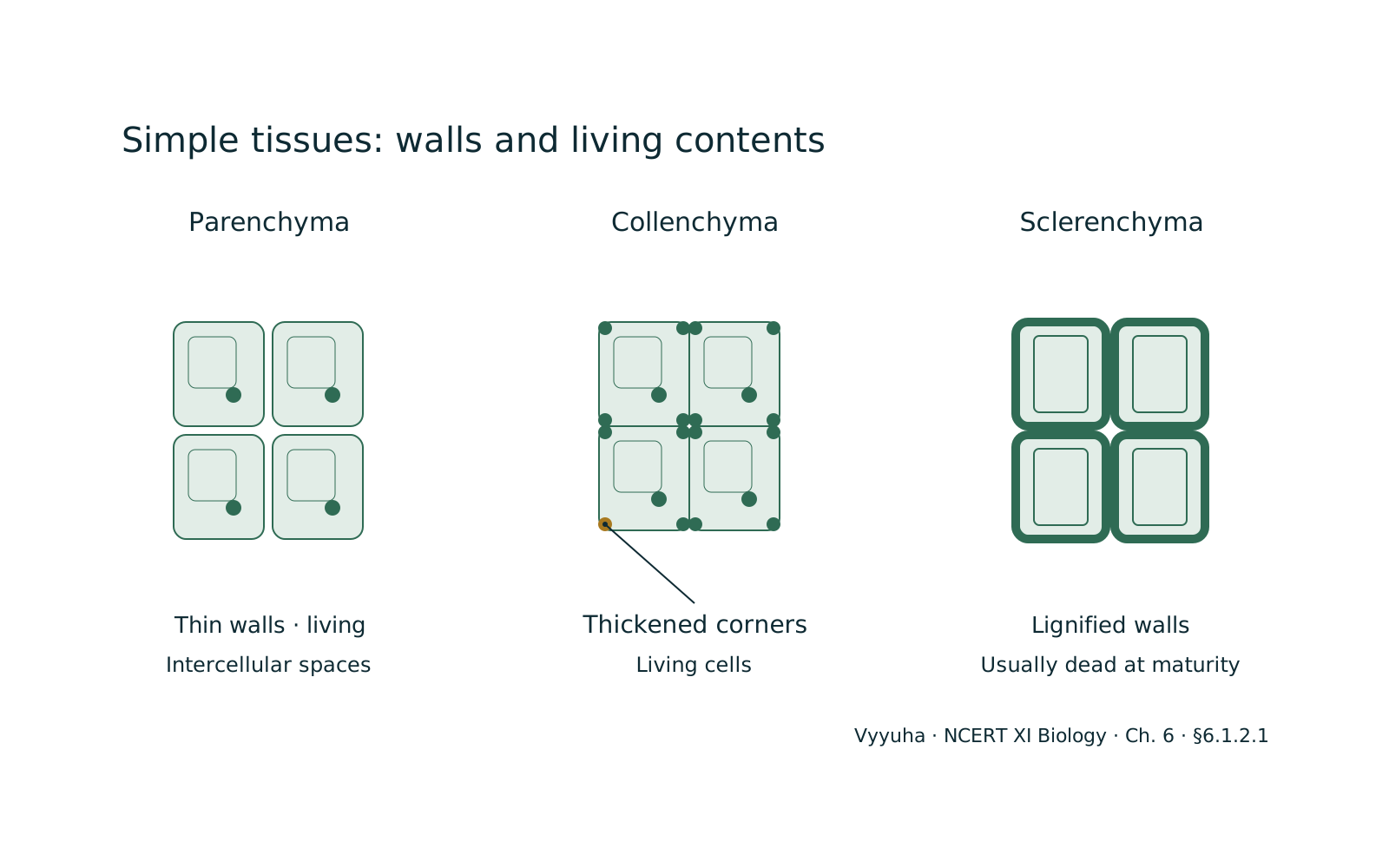
Simple permanent tissues consist of a single type of cell. Parenchyma cells are living, thin-walled, and involved in storage, photosynthesis (chlorenchyma), and buoyancy (aerenchyma). Collenchyma cells are living, have irregularly thickened corners, and provide flexible support to young, growing parts. Sclerenchyma cells are dead at maturity, have thick, lignified walls, and offer rigid mechanical support and protection, existing as fibres or sclereids.
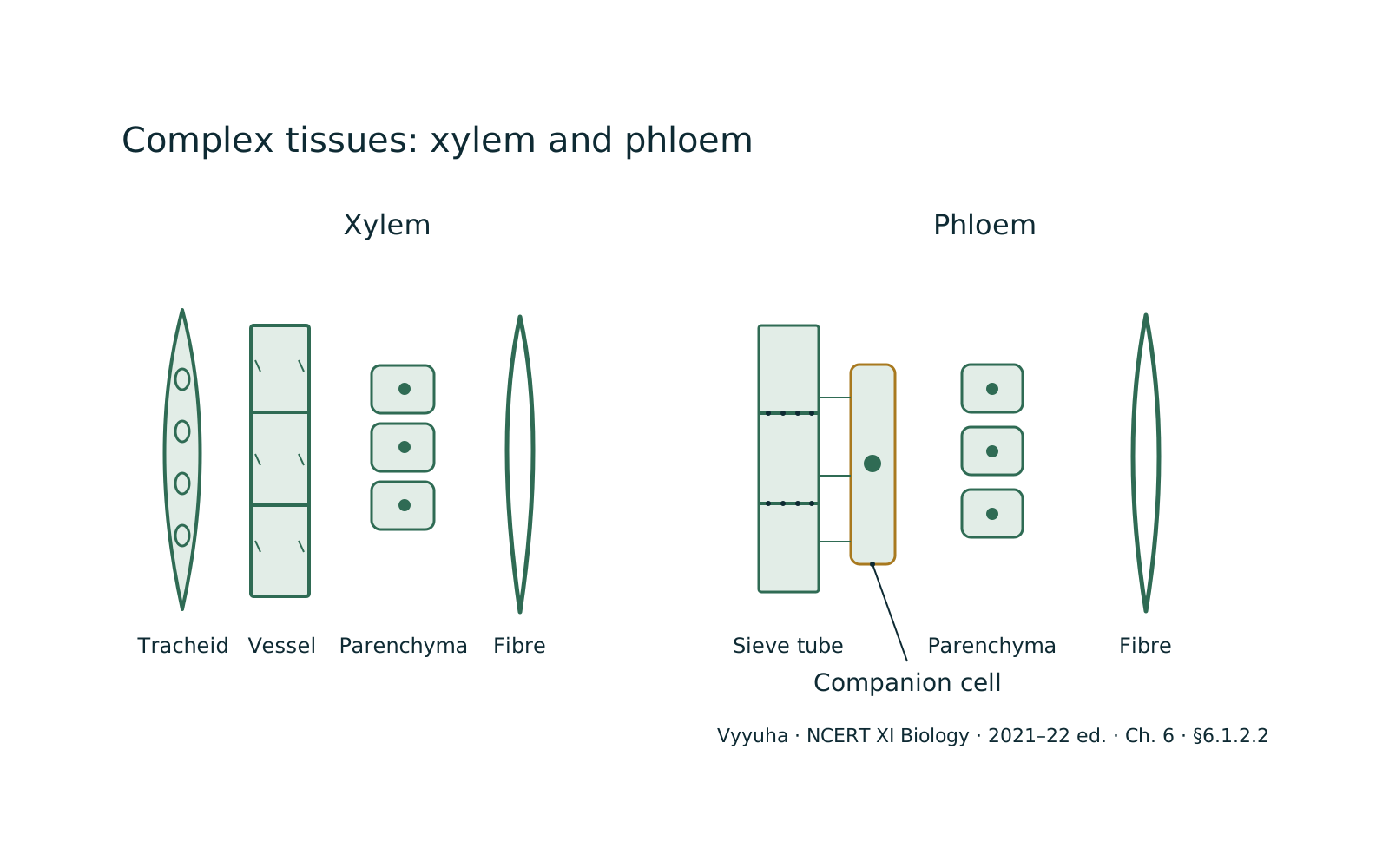
Complex permanent tissues are composed of multiple cell types working together. Xylem transports water and minerals upwards, consisting of tracheids, vessels, xylem parenchyma, and xylem fibres. Phloem transports food (sugars) from leaves to other parts, comprising sieve tube elements, companion cells, phloem parenchyma, and phloem fibres. Understanding these tissues is key to comprehending plant anatomy and physiology.
Full explanation
The journey of a plant cell from an undifferentiated, actively dividing state to a specialized, non-dividing functional unit is fundamental to plant growth and development. This transition marks the formation of permanent tissues, which are the backbone of a plant's structure and physiology.
Conceptual Foundation: Differentiation and Maturation
All plant tissues originate from meristematic tissues, which are regions of active cell division. As these meristematic cells divide, some of the daughter cells are retained in the meristem, while others are pushed away.
These displaced cells undergo a process called differentiation, where they mature, lose their capacity to divide, and develop specific structural modifications to perform specialized functions. This irreversible process of acquiring a definite shape, size, and function is what defines a permanent tissue.
Once differentiated, these cells are said to be 'mature' and form the various permanent tissues that constitute the bulk of the plant body, providing protection, support, storage, and transport.
Key Principles: Division of Labor and Structural Adaptation
Plants, like complex organisms, exhibit a remarkable division of labor. Each permanent tissue is structurally adapted to perform its specific role efficiently. For instance, cells involved in support (like sclerenchyma) have thick, lignified walls, while those involved in transport (like xylem vessels) form continuous tubes. This principle of structural adaptation for function is a recurring theme in plant anatomy.
Types of Permanent Tissues:
Permanent tissues are broadly classified into two categories based on their cellular composition:
- Simple Permanent Tissues: — These tissues are composed of only one type of cell, all performing a similar function.
* Parenchyma: * Structure: These are the most abundant and fundamental tissue in plants. Parenchyma cells are generally isodiametric (roughly spherical), thin-walled, and living. They have a large central vacuole and prominent intercellular spaces.
The cell walls are typically made of cellulose. * Function: Parenchyma cells are versatile. Their primary functions include storage of food (starch, oils, proteins), water, and waste products. They are also involved in photosynthesis (when they contain chloroplasts, they are called chlorenchyma, found in leaves and young stems), secretion (glands), and buoyancy (when they contain large air cavities, called aerenchyma, found in aquatic plants).
* Location: Found in the cortex of roots, pith of stems, mesophyll of leaves, and pulp of fruits. * Collenchyma: * Structure: Collenchyma cells are living, elongated cells with irregularly thickened cell walls, particularly at the corners, due to the deposition of cellulose, hemicellulose, and pectin.
They usually lack intercellular spaces. * Function: They provide mechanical support and flexibility to young stems (e.g., petiole of a leaf) and growing parts of the plant, allowing them to bend without breaking.
They are also involved in photosynthesis if they contain chloroplasts. * Location: Typically found in the hypodermis of dicot stems and petioles, often absent in roots and monocot stems. * Sclerenchyma: * Structure: Sclerenchyma cells are dead at maturity and possess thick, lignified (woody) cell walls, making them extremely strong and rigid.
They have very narrow lumens (cell cavities). * Function: Their primary role is to provide mechanical support and protection to mature plant parts, making them hard and stiff. They are responsible for the hardness of nut shells and the grittiness of fruits like pears.
* Types: Sclerenchyma exists in two main forms: * Fibres: Long, narrow, pointed cells, often found in bundles (e.g., jute, flax, hemp fibres used commercially). * Sclereids (stone cells): Irregularly shaped, often branched, and shorter than fibres.
Found in fruit pulp (e.g., guava, pear), seed coats, and nut shells. * Location: Found in mature stems, veins of leaves, hard coverings of seeds and nuts.
- Complex Permanent Tissues: — These tissues are made up of more than one type of cell, all working together as a coordinated unit to perform a specific function. They are primarily involved in transport.
* Xylem (Wood): * Function: Xylem is the primary water-conducting tissue in vascular plants. It transports water and dissolved minerals from the roots upwards to the rest of the plant. It also provides mechanical support.
* Components: Xylem is composed of four different types of elements: * Tracheids: Elongated, tube-like cells with tapering ends. They are dead and lignified, with pits in their walls for water movement.
Found in all vascular plants. * Vessels (Tracheae): Shorter, wider, cylindrical tubes formed by a series of cells (vessel members) placed end-to-end, forming a continuous pipe-like structure. They are dead and lignified, with perforated end walls (perforation plates).
More efficient at water transport than tracheids, primarily found in angiosperms. * Xylem Parenchyma: Living, thin-walled cells that store food (starch, fats) and assist in the lateral conduction of water.
* Xylem Fibres: Dead, sclerenchymatous fibres that provide mechanical support to the xylem tissue. * Types: Primary xylem (formed during primary growth from procambium) and secondary xylem (formed during secondary growth from vascular cambium).
* Phloem (Bast): * Function: Phloem is the food-conducting tissue. It transports organic nutrients (sugars, primarily sucrose) produced during photosynthesis from the leaves to other parts of the plant, including storage organs and growing regions.
* Components: Phloem in angiosperms consists of four main types of elements: * Sieve Tube Elements: Living, elongated, tube-like cells arranged end-to-end, forming sieve tubes. Their end walls are perforated, forming sieve plates, which allow the passage of food materials.
They lack a nucleus at maturity. * Companion Cells: Living, specialized parenchyma cells closely associated with sieve tube elements. They are nucleated and control the activities of the enucleated sieve tube elements, assisting in loading and unloading of sugars.
* Phloem Parenchyma: Living, thin-walled cells that store food materials (resins, latex, mucilage) and aid in lateral conduction of food. * Phloem Fibres (Bast Fibres): Sclerenchymatous fibres that provide mechanical support.
They are generally absent in primary phloem but present in secondary phloem.
Real-World Applications:
Understanding permanent tissues is critical for various fields. For instance, the strength and durability of wood (secondary xylem) are due to its lignified sclerenchymatous components, making it invaluable for construction and furniture.
Plant fibres like jute, flax, and hemp are derived from sclerenchyma, used in textiles and ropes. The storage capacity of parenchyma is exploited in agriculture for crops like potatoes and carrots. Knowledge of xylem and phloem is essential for understanding plant physiology, water relations, and nutrient transport, which has implications for crop yield and plant health.
Common Misconceptions:
- All permanent tissues are dead: — This is incorrect. Parenchyma, collenchyma, xylem parenchyma, phloem parenchyma, sieve tube elements, and companion cells are all living at maturity. Only sclerenchyma, tracheids, vessels, and xylem fibres are dead.
- Simple tissues are less important than complex tissues: — Both are equally vital. Simple tissues form the bulk and perform fundamental roles, while complex tissues are specialized for long-distance transport.
- Xylem only transports water, phloem only transports food: — While their primary roles are water and food transport respectively, both also provide some mechanical support due to their structural components (e.g., xylem fibres, phloem fibres) and can store some substances (xylem parenchyma, phloem parenchyma).
- Differentiation is the same as growth: — Differentiation is the process of specialization, while growth is an increase in size or number of cells. Differentiation follows growth and leads to the formation of specialized structures.
NEET-specific Angle:
For NEET, a deep understanding of the structural features and functions of each permanent tissue type is crucial. Questions often involve:
- Identification: — Recognizing tissues from diagrams or descriptions of their cell characteristics (e.g., 'cells with irregularly thickened corners' points to collenchyma).
- Functional correlation: — Matching a tissue with its primary role (e.g., 'tissue responsible for flexible support' is collenchyma).
- Components of complex tissues: — Knowing the four elements of xylem and phloem, and their individual characteristics (e.g., 'which phloem element lacks a nucleus at maturity?').
- Living vs. Dead cells: — Distinguishing which components of permanent tissues are living and which are dead.
- Location: — Knowing where specific tissues are typically found in a plant (e.g., collenchyma in dicot stem hypodermis).
- Comparative analysis: — Differentiating between similar-looking tissues (e.g., collenchyma vs. sclerenchyma, tracheids vs. vessels). Emphasis should be placed on unique identifying features and exceptions.
Key Concepts
Parenchyma is the most fundamental and abundant simple permanent tissue in plants. Its cells are typically…
Xylem is a complex permanent tissue, meaning it's made of multiple cell types working together to transport…
Sclerenchyma is a simple permanent tissue composed of dead cells with extremely thick, hard, and lignified…
Often confused with
Side-by-side differences the NEET paper likes to test.
| Aspect | Permanent Tissues | Meristematic Tissues |
|---|---|---|
| Cell Division | Actively dividing, retain capacity for mitosis. | Lost capacity for division, differentiated. |
| Cell Structure | Small, isodiametric, thin-walled, dense cytoplasm, small vacuoles, no intercellular spaces. | Larger, varied shapes, thick or thin walls, large vacuoles, may have intercellular spaces. |
| Function | Growth (increase in length and girth) of the plant. | Protection, support, storage, transport, photosynthesis, secretion. |
| Metabolic Activity | High metabolic rate. | Variable metabolic rate, often lower than meristems. |
| Differentiation | Undifferentiated or partially differentiated. | Fully differentiated and specialized. |
Meristematic tissues are the growth centers of a plant, characterized by actively dividing, undifferentiated cells that continuously add new cells. They are responsible for primary and secondary growth.
In stark contrast, permanent tissues are composed of mature cells that have undergone differentiation, losing their ability to divide. These cells are specialized for various functions like support, protection, storage, and transport, forming the bulk of the plant body.
The transition from meristematic to permanent tissue involves a loss of proliferative capacity and acquisition of specific structural and functional roles.
Why it is tested: For NEET, understanding the fundamental differences between meristematic and permanent tissues is crucial. Questions often test the characteristics that distinguish these two tissue types, their respective roles in plant growth and development, and the process of differentiation. This forms the basis of plant anatomy.
Questions students ask
5 answered on this topic.
Why are permanent tissues called 'permanent'?
Permanent tissues are termed 'permanent' because their cells have undergone differentiation, meaning they have matured and specialized to perform specific functions, and in doing so, they have permanently lost their ability to divide.
Unlike meristematic tissues, which are actively dividing, permanent tissues have reached a stable state in terms of their proliferative capacity, maintaining a fixed form and function throughout their lifespan within the plant.
This 'permanence' refers to their non-dividing nature and specialized role.
What is the main difference between simple and complex permanent tissues?
The fundamental distinction lies in their cellular composition. Simple permanent tissues are homogeneous, meaning they are composed of only one type of cell that performs a common function (e.g., parenchyma, collenchyma, sclerenchyma).
In contrast, complex permanent tissues are heterogeneous, consisting of more than one type of cell working together as a coordinated unit to achieve a specific, often more intricate, function. Xylem and phloem are prime examples, each comprising four different cell types that collectively facilitate transport.
Are all cells in permanent tissues dead?
No, this is a common misconception. While some permanent tissues or their components are dead at maturity (e.g., sclerenchyma, tracheids, vessels, xylem fibres), many others are living. Parenchyma, collenchyma, xylem parenchyma, phloem parenchyma, sieve tube elements, and companion cells are all living cells that perform vital metabolic activities within the plant. The state of being living or dead is specific to the cell type and its function.
What is the role of lignification in permanent tissues?
Lignification is the deposition of lignin, a complex polymer, into the cell walls of certain permanent tissues, primarily sclerenchyma and the water-conducting elements of xylem (tracheids and vessels).
Lignin provides immense mechanical strength, rigidity, and impermeability. In sclerenchyma, it makes cell walls thick and hard, offering robust support and protection. In xylem, lignification prevents the collapse of water-conducting pipes under tension and reduces water loss through the walls, ensuring efficient long-distance water transport.
How do sieve tube elements function without a nucleus?
Sieve tube elements, though living, lose their nucleus at maturity to create a clear pathway for efficient food transport. Their metabolic activities and overall function are regulated by closely associated companion cells.
Companion cells are nucleated and connected to sieve tube elements via plasmodesmata, providing them with necessary proteins, ATP, and other metabolic support. This symbiotic relationship ensures the sieve tube elements can remain specialized for bulk flow while still being metabolically active.
Revise in 30 seconds
- Parenchyma: — Living, thin-walled, storage, photosynthesis (chlorenchyma), buoyancy (aerenchyma).
- Collenchyma: — Living, irregularly corner-thickened, flexible support (young parts).
- Sclerenchyma: — Dead, thick lignified walls, rigid support, protection (fibres, sclereids).
- Xylem: — Complex, water/mineral transport. Components: Tracheids, Vessels, Xylem Parenchyma, Xylem Fibres.
- Phloem: — Complex, food transport. Components: Sieve Tube Elements (enucleated, living), Companion Cells (nucleated, support), Phloem Parenchyma, Phloem Fibres.
- Differentiation: — Meristematic to permanent, loss of division capacity.
To remember the components of Xylem and Phloem:
Xylem's Four Friends (T-V-P-F):
Thirsty Trees Vigorously Pump Fluid. (Tracheids, Vessels, Xylem Parenchyma, Xylem Fibres)
Phloem's Sweet Squad (S-C-P-F):
Sugars Carry Plant Food. (Sieve tube elements, Companion cells, Phloem Parenchyma, Phloem Fibres)