Carbohydrates
Carbohydrates are polyhydroxy aldehydes or polyhydroxy ketones, or compounds which produce such units on hydrolysis. They are the most abundant organic molecules on Earth and serve as primary energy sources and structural components in living organisms. Their general empirical formula is often represented as , where 'x' and 'y' are whole numbers, though this formula does not hold true…
Quick Summary
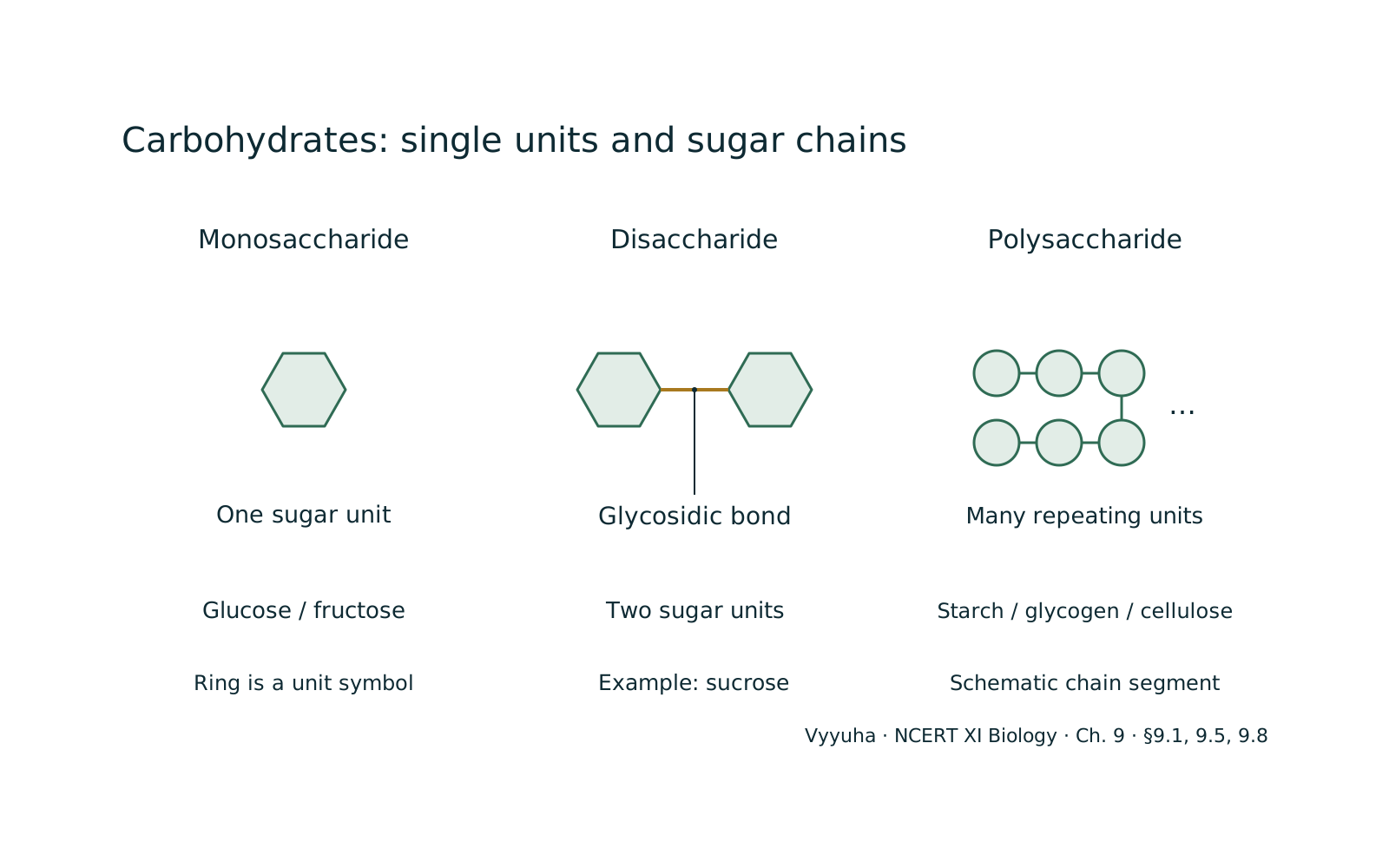
Carbohydrates are essential biomolecules, primarily serving as energy sources and structural components. They are broadly classified into monosaccharides, oligosaccharides (like disaccharides), and polysaccharides.
Monosaccharides are simple sugars like glucose, fructose, and galactose, which are the basic building blocks. They can be aldoses (with an aldehyde group) or ketoses (with a ketone group) and exhibit isomerism (D/L, epimers, anomers).
Disaccharides, such as sucrose (glucose + fructose), lactose (glucose + galactose), and maltose (glucose + glucose), are formed by two monosaccharides linked by a glycosidic bond. Polysaccharides are long chains of many monosaccharide units.
Starch (plants) and glycogen (animals) are energy storage polysaccharides, while cellulose (plant cell walls) and chitin (fungal cell walls, insect exoskeletons) provide structural support. The type of glycosidic bond ( or ) dictates digestibility.
Reducing sugars have a free anomeric carbon capable of reduction, while non-reducing sugars do not. Understanding these classifications, structures, and functions is crucial for NEET.
Full explanation
Carbohydrates, often colloquially referred to as 'sugars' or 'saccharides,' are a vast and diverse group of organic compounds that play indispensable roles in all living systems. They are defined chemically as polyhydroxy aldehydes or polyhydroxy ketones, or substances that yield these compounds upon hydrolysis.
The term 'carbohydrate' literally means 'hydrates of carbon,' reflecting their general empirical formula . While this formula holds true for many common carbohydrates like glucose ( or ), it's important to note that not all compounds fitting this formula are carbohydrates (e.
g., formaldehyde, acetic acid), and not all carbohydrates strictly adhere to it (e.g., deoxyribose, ).
Conceptual Foundation:
Carbohydrates are fundamentally built from simple sugar units. The presence of multiple hydroxyl (-OH) groups makes them highly soluble in water and allows for extensive hydrogen bonding, which is crucial for their interactions within biological systems.
The carbonyl group (C=O), either an aldehyde () or a ketone (), is the reactive center that defines their reducing properties and participates in various chemical reactions.
The linkage between these sugar units is a covalent bond known as a glycosidic bond, formed through a dehydration reaction (removal of a water molecule).
Key Principles and Classification:
Carbohydrates are broadly classified into three main groups based on the number of sugar units they contain:
- Monosaccharides (Simple Sugars): — These are the simplest carbohydrates and cannot be hydrolyzed into smaller sugar units. They typically contain 3 to 7 carbon atoms. Based on the number of carbon atoms, they are called trioses (3C), tetroses (4C), pentoses (5C), hexoses (6C), and heptoses (7C). Based on the functional group, they are classified as aldoses (containing an aldehyde group, e.g., glucose, ribose) or ketoses (containing a ketone group, e.g., fructose, dihydroxyacetone). Key monosaccharides include:
* Glucose: An aldohexose, the most important metabolic fuel for most organisms. It exists in both linear and cyclic (pyranose) forms. The cyclic form is predominant in aqueous solutions. * Fructose: A ketohexose, commonly found in fruits and honey.
It typically forms a five-membered furanose ring in solution. * Galactose: An aldohexose, a component of lactose (milk sugar). It is an epimer of glucose at C-4. * Ribose and Deoxyribose: Aldopentoses, crucial components of RNA and DNA, respectively.
Isomerism in Monosaccharides: Monosaccharides exhibit various forms of isomerism, which is critical for their diverse biological roles: * Stereoisomerism (D/L Isomers): Based on the configuration of the hydroxyl group on the chiral carbon furthest from the carbonyl group.
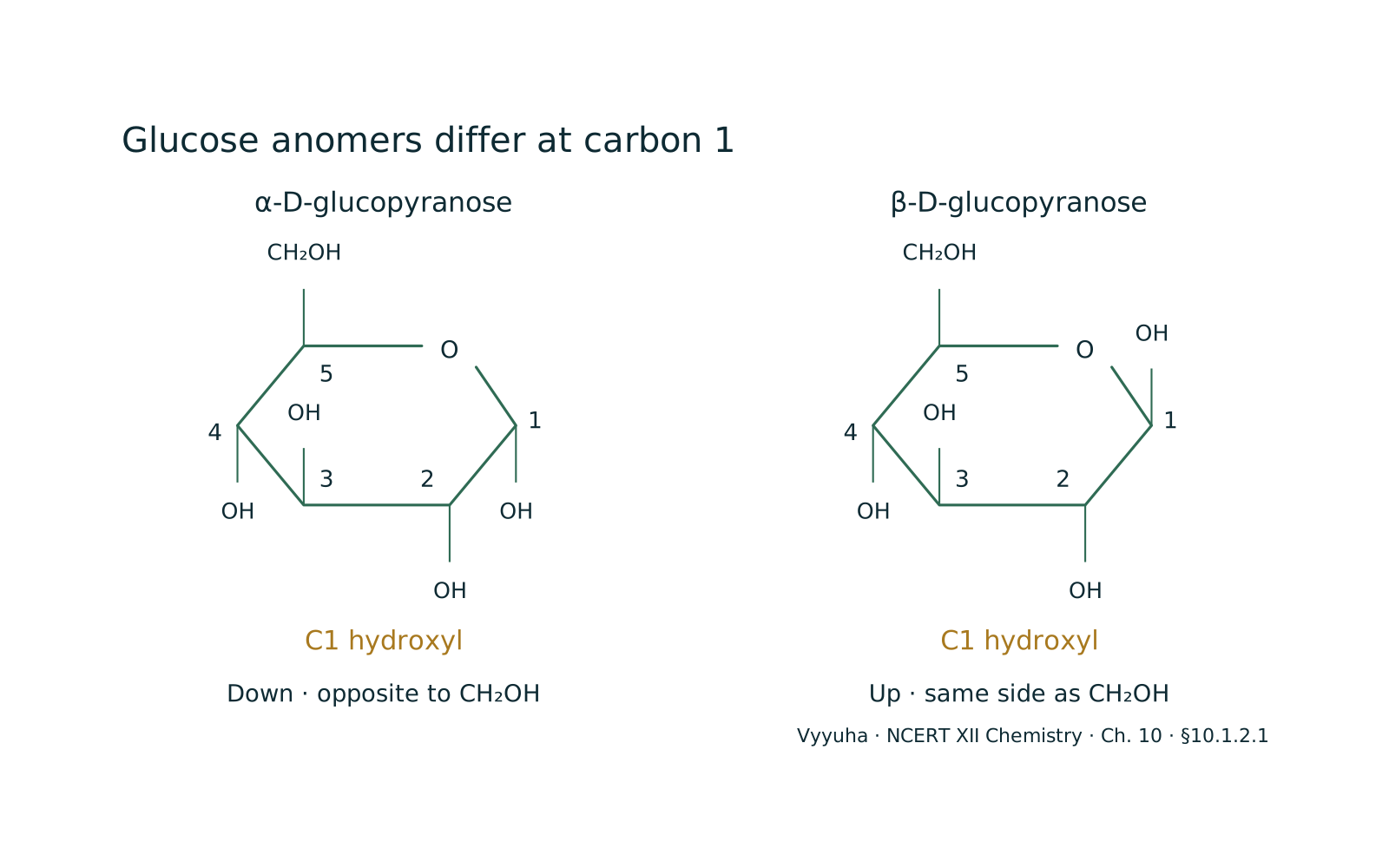
Most naturally occurring sugars are D-isomers. * Epimers: Stereoisomers that differ in configuration at only one chiral carbon atom (e.g., glucose and galactose are C-4 epimers). * Anomers: Isomers formed when a monosaccharide cyclizes.
The new chiral center formed at the carbonyl carbon (anomeric carbon) can have two configurations, and . For glucose, -D-glucose and -D-glucose differ in the orientation of the -OH group at C-1.
- Oligosaccharides: — These carbohydrates consist of 2 to 10 monosaccharide units linked by glycosidic bonds. The most common are disaccharides.
* Disaccharides: Formed by the condensation of two monosaccharide units. Important examples include: * Sucrose: Glucose + Fructose. A non-reducing sugar because its anomeric carbons are involved in the glycosidic bond, preventing mutarotation and opening of the ring. * Lactose: Glucose + Galactose. A reducing sugar because the anomeric carbon of glucose is free. * Maltose: Glucose + Glucose. A reducing sugar, formed from the hydrolysis of starch.
- Polysaccharides (Complex Carbohydrates): — These are long chains of many monosaccharide units (hundreds to thousands) linked by glycosidic bonds. They can be homopolysaccharides (composed of a single type of monosaccharide) or heteropolysaccharides (composed of two or more different types of monosaccharides). Polysaccharides serve primarily as energy storage molecules or structural components.
* Storage Polysaccharides: * Starch: The primary energy storage polysaccharide in plants. It is a mixture of two polymers: amylose (unbranched chain of -D-glucose units linked by glycosidic bonds) and amylopectin (branched chain of -D-glucose units with and glycosidic bonds).
It gives a blue-black color with iodine. * Glycogen: The main energy storage polysaccharide in animals (liver and muscles). It is structurally similar to amylopectin but is more highly branched, allowing for rapid mobilization of glucose.
It gives a red-brown color with iodine. * Structural Polysaccharides: * Cellulose: The most abundant organic polymer on Earth, forming the primary component of plant cell walls. It is an unbranched polymer of -D-glucose units linked by glycosidic bonds.
The -linkage makes it indigestible by most animals, including humans, due to the lack of the enzyme cellulase. It forms strong, rigid fibers. * Chitin: A structural polysaccharide found in the exoskeletons of arthropods and cell walls of fungi.
It is a polymer of N-acetylglucosamine units, similar to cellulose but with an acetamido group at C-2 instead of a hydroxyl group.
Glycosidic Bond Formation:
A glycosidic bond is formed between the anomeric carbon of one monosaccharide and a hydroxyl group of another monosaccharide (or a non-carbohydrate compound). This is a condensation reaction, releasing a molecule of water. For example, in maltose, an glycosidic bond links two glucose units. In sucrose, an glycosidic bond links glucose and fructose, involving both anomeric carbons, making it non-reducing.
Reducing and Non-reducing Sugars:
A sugar is considered 'reducing' if it has a free anomeric carbon (a hemiacetal or hemiketal group) that can open to form an aldehyde or ketone group. This aldehyde/ketone group can then be oxidized, reducing other compounds (e.
g., Benedict's reagent). All monosaccharides are reducing sugars. Disaccharides like lactose and maltose are reducing because one of their anomeric carbons is free. Sucrose, however, is a non-reducing sugar because the glycosidic bond involves the anomeric carbons of both glucose and fructose, leaving no free anomeric carbon to open up.
Real-World Applications and Biological Significance:
- Energy Source: — Carbohydrates are the primary and most readily available source of energy for living organisms. Glucose is metabolized through glycolysis and cellular respiration to produce ATP.
- Energy Storage: — Starch in plants and glycogen in animals serve as efficient forms of stored energy, providing a readily accessible glucose supply.
- Structural Components: — Cellulose provides structural integrity to plant cell walls. Chitin forms the exoskeletons of insects and crustaceans and fungal cell walls. Peptidoglycan (a heteropolysaccharide) is a major component of bacterial cell walls.
- Cell Recognition and Signaling: — Glycoproteins (carbohydrates attached to proteins) and glycolipids (carbohydrates attached to lipids) on cell surfaces play crucial roles in cell-cell recognition, adhesion, and signaling, acting as 'identity markers' for cells.
- Precursors for other Biomolecules: — Carbohydrate intermediates are used in the synthesis of amino acids, fatty acids, and nucleic acids.
Common Misconceptions:
- All carbohydrates are 'sugars' and are sweet: — While many simple carbohydrates are sweet, complex carbohydrates like starch and cellulose are not. The term 'sugar' usually refers to mono- and disaccharides.
- All carbohydrates are digestible by humans: — Humans can digest starch and disaccharides like sucrose and lactose (if lactase enzyme is present), but not cellulose, due to the absence of the enzyme cellulase.
- Carbohydrates are 'bad' for health: — This is an oversimplification. While excessive intake of refined sugars can be detrimental, complex carbohydrates (whole grains, fruits, vegetables) are essential for a balanced diet, providing fiber, vitamins, and sustained energy.
NEET-Specific Angle:
For NEET, a deep understanding of the classification, structures (especially of glucose, fructose, galactose, sucrose, lactose, maltose, starch, glycogen, cellulose), and functions is paramount. Questions often test the ability to differentiate between reducing and non-reducing sugars, identify glycosidic linkages ( vs.
, 1,4 vs. 1,6), and recall the biological roles of specific polysaccharides. Knowledge of isomerism (D/L, epimers, anomers) is also frequently tested. Practical aspects like the Benedict's test for reducing sugars and the Iodine test for starch/glycogen are also important.
Pay close attention to the structural differences that lead to functional differences, such as the vs. linkages in starch/glycogen vs. cellulose, and their implications for digestibility.
Key Concepts
A glycosidic bond is the fundamental linkage in complex carbohydrates. It's a covalent bond formed when the…
Monosaccharides exhibit crucial types of isomerism that impact their biological recognition and function. D/L…
The ability of a sugar to act as a reducing agent is determined by the presence of a free anomeric carbon (a…
Often confused with
Side-by-side differences the NEET paper likes to test.
| Aspect | Carbohydrates | Starch, Glycogen, and Cellulose |
|---|---|---|
| Primary Function | Starch | Glycogen |
| Primary Function | Energy storage in plants | Energy storage in animals (liver, muscles) |
| Constituent Monomer | $\alpha$-D-Glucose | $\alpha$-D-Glucose |
| Types of Glycosidic Bonds | $alpha-1,4$ (amylose) and $alpha-1,4$ with $alpha-1,6$ branches (amylopectin) | $alpha-1,4$ with extensive $alpha-1,6$ branches |
| Branching | Amylose is unbranched; Amylopectin is moderately branched | Highly branched |
| Iodine Test Result | Blue-black color | Red-brown color |
| Digestibility by Humans | Digestible (by amylase) | Digestible (by amylase) |
Starch, glycogen, and cellulose are all homopolysaccharides of glucose, yet their distinct biological roles stem from subtle but critical differences in their glycosidic linkages and branching patterns.
Starch and glycogen serve as energy reserves, utilizing -glycosidic bonds that are readily hydrolyzed by animal enzymes. Starch, found in plants, has both linear (amylose) and branched (amylopectin) forms.
Glycogen, the animal equivalent, is more extensively branched, allowing for rapid glucose mobilization. Cellulose, in contrast, forms the rigid structure of plant cell walls, employing -glycosidic bonds.
This -linkage renders it indigestible by most animals, including humans, highlighting how stereochemistry profoundly impacts biological function.
Why it is tested: For NEET, understanding the structural differences (especially the $\alpha$ vs. $\beta$ linkages and branching) between these three polysaccharides is extremely important. Questions frequently test their functions, locations, and digestibility, often requiring students to correlate structural features with biological properties. The iodine test results are also a common point of inquiry.
Questions students ask
6 answered on this topic.
What makes a sugar a 'reducing sugar'?
A sugar is classified as a 'reducing sugar' if it possesses a free anomeric carbon atom that can exist in equilibrium with its open-chain aldehyde or ketone form. This aldehyde or ketone group has the ability to donate electrons (get oxidized) to other compounds, thereby reducing them.
Common examples include all monosaccharides (like glucose, fructose, galactose) and some disaccharides (like maltose and lactose). The presence of a free hemiacetal or hemiketal group is key, allowing it to react with mild oxidizing agents such as Benedict's reagent or Fehling's solution, leading to a color change.
Why can't humans digest cellulose, even though it's made of glucose units?
Humans cannot digest cellulose because they lack the necessary enzyme, cellulase. Cellulose is a polysaccharide composed of -D-glucose units linked by glycosidic bonds. Our digestive enzymes, like amylase, are specific for glycosidic bonds found in starch and glycogen.
The -linkage in cellulose creates a different spatial arrangement that our enzymes cannot recognize or hydrolyze. While indigestible, cellulose acts as dietary fiber, aiding in bowel regularity and overall digestive health.
What is the primary difference between starch and glycogen?
Both starch and glycogen are storage polysaccharides made of glucose units, but they differ in their origin, structure, and degree of branching. Starch is the primary energy storage in plants and consists of two components: amylose (unbranched, linkages) and amylopectin (branched, and linkages).
Glycogen, on the other hand, is the main energy storage in animals (liver and muscles). It is structurally similar to amylopectin but is much more highly branched, with more frequent linkages.
This extensive branching in glycogen allows for rapid glucose release when energy is needed.
Explain the concept of D- and L-isomers in carbohydrates.
D- and L-isomers refer to the stereochemical configuration of a monosaccharide, specifically at the chiral carbon atom furthest from the carbonyl group. If the hydroxyl group on this carbon is on the right side in a Fischer projection, it's a D-isomer.
If it's on the left, it's an L-isomer. Most naturally occurring carbohydrates in living organisms are D-isomers. This distinction is crucial because enzymes are highly specific and typically only recognize and metabolize one form (usually the D-form), highlighting the importance of stereochemistry in biological systems.
What is a glycosidic bond and how is it formed?
A glycosidic bond is a covalent bond that links a carbohydrate (sugar) molecule to another group, which can be another carbohydrate or a non-carbohydrate compound. It is formed between the anomeric carbon of a sugar and a hydroxyl group of another molecule through a condensation reaction, where a molecule of water is removed.
This bond is fundamental for forming disaccharides, oligosaccharides, and polysaccharides from individual monosaccharide units. The type of glycosidic bond (e.g., , , ) determines the overall structure and properties of the complex carbohydrate.
Why is sucrose considered a non-reducing sugar?
Sucrose is a disaccharide composed of one glucose unit and one fructose unit. It is classified as a non-reducing sugar because the glycosidic bond that links glucose and fructose involves the anomeric carbon atoms of both monosaccharides.
Specifically, it's an glycosidic bond, meaning the anomeric carbon of glucose (C-1) and the anomeric carbon of fructose (C-2) are both engaged in the linkage. This prevents either ring from opening up to form a free aldehyde or ketone group, which is necessary for a sugar to exhibit reducing properties.
Thus, sucrose cannot reduce agents like Benedict's reagent.
Revise in 30 seconds
- Monosaccharides: — Glucose, Fructose, Galactose. Simple sugars. All are reducing.
- Disaccharides: — Sucrose (Glucose + Fructose, bond, non-reducing), Lactose (Galactose + Glucose, bond, reducing), Maltose (Glucose + Glucose, bond, reducing).
- Polysaccharides:
- Starch (Plants): Amylose ( unbranched) + Amylopectin ( & branched). Blue-black with Iodine. - Glycogen (Animals): Highly branched & linkages. Red-brown with Iodine. - Cellulose (Plants): Unbranched linkages. Indigestible by humans. No Iodine reaction.
- Chitin: — Unbranched linkages of N-acetylglucosamine. Structural.
- Glycosidic Bond: — Covalent link between sugar units, formed by dehydration.
- Reducing Sugar: — Has a free anomeric carbon (e.g., all monosaccharides, maltose, lactose). Reduces Benedict's reagent.
For remembering the reducing/non-reducing nature of common disaccharides: 'S' for Sucrose, 'S' for Sad (Non-reducing). 'M' for Maltose, 'M' for Merry (Reducing). 'L' for Lactose, 'L' for Lively (Reducing).