Kingdom Monera
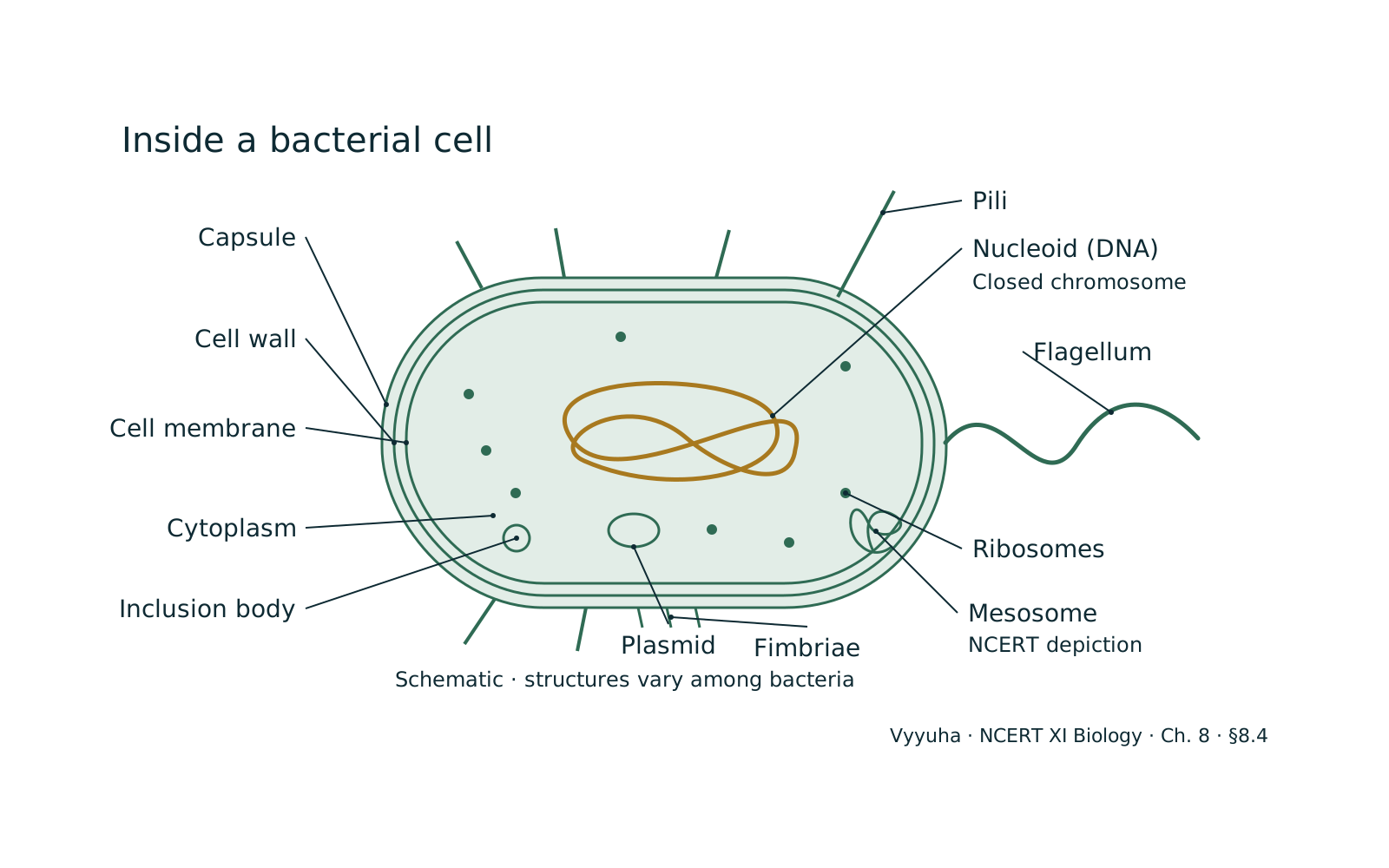
Kingdom Monera encompasses all prokaryotic organisms, which are characterized by the absence of a true nucleus and other membrane-bound organelles within their cells. These are typically unicellular organisms, though some may form colonies or filaments. Their genetic material, usually a single circular chromosome, is located in a region called the nucleoid. The cell wall, primarily composed of pep…
Quick Summary
Kingdom Monera comprises all prokaryotic organisms, characterized by the absence of a true nucleus and other membrane-bound organelles. These are typically unicellular, with their genetic material (a single circular chromosome) located in a nucleoid region.
Most Monerans possess a cell wall, primarily made of peptidoglycan in Eubacteria, providing structural support. They exhibit diverse nutritional strategies, including autotrophic (photoautotrophic and chemoautotrophic) and heterotrophic (saprophytic, parasitic, symbiotic) modes.
Reproduction is mainly asexual via binary fission, but genetic recombination occurs through conjugation, transformation, and transduction. Monera is broadly divided into Archaebacteria, which thrive in extreme environments and lack peptidoglycan, and Eubacteria, the 'true bacteria,' which are widespread and include significant groups like Cyanobacteria.
Monerans are ecologically vital as decomposers, nitrogen fixers, and producers, but also include many pathogenic species. Their study is fundamental to understanding life's origins and ecological balance.
Full explanation
Kingdom Monera, a cornerstone of the Five Kingdom Classification system proposed by R.H. Whittaker, is exclusively dedicated to prokaryotic organisms. These organisms represent the earliest forms of life and are characterized by a cellular organization fundamentally distinct from that of eukaryotes (which include Protista, Fungi, Plantae, and Animalia). Understanding Monera is crucial for comprehending the diversity of life and the foundational principles of biology.
Conceptual Foundation: The Prokaryotic Blueprint
At the heart of Kingdom Monera lies the prokaryotic cell. The term 'prokaryote' literally means 'before nucleus' (pro- = before, karyon = nucleus). This signifies their most defining feature: the absence of a true, membrane-bound nucleus.
Unlike eukaryotic cells, where genetic material is enclosed within a nuclear envelope, in prokaryotes, the DNA (typically a single, circular chromosome) is located in a region of the cytoplasm called the nucleoid.
Furthermore, prokaryotic cells lack other membrane-bound organelles such as mitochondria, chloroplasts, endoplasmic reticulum, Golgi apparatus, and lysosomes. Their cellular machinery is simpler, with ribosomes being the only prominent organelles, responsible for protein synthesis.
Despite their structural simplicity, prokaryotes are incredibly diverse metabolically and ecologically. Their small size (typically 0.2 to 10 micrometers) and rapid reproduction rates allow them to adapt quickly to various environments, making them ubiquitous across the planet.
Key Principles and Laws Governing Monera
- Cellular Organization — Unicellular, prokaryotic. Some may form colonies or filaments, but each cell functions independently.
- Cell Wall — Present in most Monerans, providing structural integrity and protection. In Eubacteria, it is primarily composed of peptidoglycan (murein), a polymer of sugars and amino acids. Archaebacteria, however, have cell walls made of pseudopeptidoglycan or other protein/glycoprotein complexes, lacking peptidoglycan.
- Genetic Material — A single, circular chromosome located in the nucleoid. Plasmids (small, extrachromosomal, circular DNA molecules) are often present, carrying genes for specific traits like antibiotic resistance.
- Ribosomes — 70S type (smaller than eukaryotic 80S ribosomes), freely dispersed in the cytoplasm.
- Locomotion — Many motile forms possess flagella, which are structurally different from eukaryotic flagella. Pili (fimbriae) are shorter, hair-like appendages involved in attachment and conjugation.
- Nutrition — Exhibits the broadest range of nutritional modes:
* Autotrophic: Organisms synthesize their own food. * Photoautotrophic: Use light energy for food synthesis (e.g., Cyanobacteria, purple sulfur bacteria). They contain photosynthetic pigments (chlorophyll a in cyanobacteria, bacteriochlorophyll in others).
* Chemoautotrophic: Oxidize inorganic substances (e.g., nitrites, nitrates, ammonia, sulfur, iron) to release energy for ATP synthesis (e.g., Nitrosomonas, Nitrobacter, Thiobacillus). They play a crucial role in nutrient cycling.
* Heterotrophic: Obtain nutrients from external sources. * Saprophytic: Decompose dead organic matter (e.g., most common bacteria). Essential decomposers. * Parasitic: Live in or on other organisms, deriving nutrients and often causing disease (e.
g., Salmonella typhi, Mycobacterium tuberculosis). * Symbiotic: Form mutually beneficial relationships with other organisms (e.g., Rhizobium in legume root nodules for nitrogen fixation, Escherichia coli in human intestine).
Classification within Monera
Kingdom Monera is broadly divided into two major groups:
- Archaebacteria (Archaea)
Considered 'ancient bacteria' due to their evolutionary divergence and ability to thrive in extreme environments, resembling early Earth conditions. Distinct cell wall composition (no peptidoglycan), unique cell membrane lipids (branched hydrocarbon chains), and different ribosomal RNA sequences.
* Examples: Methanogens (produce methane, live in anaerobic conditions like marshy areas and gut of ruminants), Halophiles (salt-loving, found in extreme saline environments), Thermoacidophiles (thrive in hot, acidic environments like hot springs and volcanic vents).
- Eubacteria (True Bacteria)
The most common and diverse group of bacteria. Characterized by the presence of a rigid cell wall made of peptidoglycan. Motile forms have flagella. Further classified based on shape (coccus-spherical, bacillus-rod, spirillum-spiral, vibrio-comma), Gram staining (Gram-positive/Gram-negative), and metabolic properties.
* Cyanobacteria (Blue-green algae): A significant group of Eubacteria. They are photoautotrophic, possess chlorophyll 'a' similar to plants, and are often colonial or filamentous. Many form blooms in polluted water bodies and some can fix atmospheric nitrogen (e.
g., Nostoc, Anabaena).
Reproduction in Monera
- Asexual Reproduction — Primarily by binary fission, where a single bacterial cell divides into two identical daughter cells. This is a rapid process under favorable conditions.
- Endospore Formation — Under unfavorable conditions (e.g., nutrient depletion, extreme temperatures), some bacteria (e.g., Bacillus, Clostridium) form highly resistant, dormant structures called endospores. Endospores can survive harsh conditions for extended periods and germinate into vegetative cells when conditions become favorable. This is a survival mechanism, not reproduction.
- Genetic Recombination (Parasexual Processes) — While not true sexual reproduction, bacteria can exchange genetic material through:
* Conjugation: Direct transfer of genetic material (plasmid DNA) from one bacterium to another via a pilus. * Transformation: Uptake of naked DNA fragments from the environment by a bacterial cell. * Transduction: Transfer of bacterial DNA from one bacterium to another via bacteriophages (viruses that infect bacteria).
Real-World Applications and Ecological Roles
Monerans, particularly Eubacteria, are indispensable to life on Earth:
- Decomposition — Saprophytic bacteria are primary decomposers, breaking down dead organic matter and recycling nutrients back into the ecosystem.
- Nitrogen Fixation — Rhizobium in legume root nodules and free-living bacteria like Azotobacter and Nostoc convert atmospheric nitrogen () into usable forms (ammonia, nitrates), a critical step in the nitrogen cycle.
- Bioremediation — Certain bacteria are used to clean up oil spills and other pollutants.
- Industrial Applications — Used in the production of curd (Lactobacillus), cheese, antibiotics (e.g., Streptomyces), vitamins, and in genetic engineering.
- Human Health — Symbiotic bacteria in our gut (e.g., E. coli) aid in digestion and vitamin synthesis. However, many bacteria are pathogenic, causing diseases like cholera, typhoid, tetanus, tuberculosis, and pneumonia.
Common Misconceptions
- All bacteria are harmful — Only a small percentage of bacteria are pathogenic. Most are harmless, and many are beneficial or essential for life.
- Bacteria are primitive because they are simple — While structurally simple, bacteria are highly evolved and incredibly adaptable, having survived and thrived for billions of years.
- Archaebacteria and Eubacteria are the same — While both are prokaryotic, they differ significantly in their biochemistry, genetics, and evolutionary history, warranting their classification into separate domains (Archaea and Bacteria).
- Endospores are reproductive structures — Endospores are survival structures, not a means of increasing population size. One cell forms one endospore, which then germinates into one cell.
NEET-Specific Angle
For NEET, focus on:
- Key distinguishing features — Prokaryotic nature, absence of membrane-bound organelles, peptidoglycan cell wall (Eubacteria).
- Classification and examples — Differentiate Archaebacteria (methanogens, halophiles, thermoacidophiles) from Eubacteria (Cyanobacteria, common bacteria). Know specific examples for each group.
- Nutritional modes — Understand photoautotrophic, chemoautotrophic, saprophytic, parasitic, and symbiotic with examples.
- Reproduction — Binary fission as the primary mode; endospore formation as a survival strategy; basic understanding of genetic recombination (conjugation, transformation, transduction).
- Economic importance — Positive roles (nitrogen fixation, decomposition, industrial uses) and negative roles (diseases caused by specific bacteria).
- Specific structures — Flagella, pili, capsule, cell wall composition.
- Gram staining — Basic concept of Gram-positive vs. Gram-negative bacteria based on cell wall differences and its relevance in medicine.
Key Concepts
While both are prokaryotic, Archaebacteria (Archaea) and Eubacteria (Bacteria) represent distinct…
Bacteria exhibit an unparalleled diversity in their nutritional strategies. Autotrophs can synthesize their…
A typical bacterial cell is prokaryotic, meaning it lacks a true nucleus and membrane-bound organelles. It…
Often confused with
Side-by-side differences the NEET paper likes to test.
| Aspect | Kingdom Monera | Archaebacteria vs. Eubacteria |
|---|---|---|
| Cell Wall Composition | Lacks peptidoglycan; often contains pseudopeptidoglycan or protein layers. | Contains peptidoglycan (murein). |
| Cell Membrane Lipids | Branched hydrocarbon chains, often ether linkages. | Unbranched fatty acid chains, ester linkages. |
| Habitat | Often extremophiles (e.g., hot springs, salt lakes, anaerobic marshes). | Ubiquitous; found in diverse environments, including soil, water, and living organisms. |
| Ribosomal RNA (rRNA) | Distinct rRNA sequences, more similar to eukaryotes in some aspects. | Distinct rRNA sequences, different from Archaea and Eukaryotes. |
| Initiator tRNA for protein synthesis | Methionine | Formylmethionine |
Archaebacteria and Eubacteria, though both prokaryotic, represent two fundamentally different domains of life. Their distinctions are rooted in their molecular biology, particularly cell wall and membrane composition, and ribosomal RNA.
Archaebacteria are renowned for their ability to thrive in extreme conditions, reflecting their ancient lineage, while Eubacteria are the more commonly encountered 'true bacteria' with a peptidoglycan cell wall.
These differences highlight a significant evolutionary divergence, impacting their metabolism, ecology, and classification.
Why it is tested: NEET relevance: Understanding the distinct characteristics of Archaebacteria and Eubacteria is crucial for questions on bacterial classification, adaptation to extreme environments, and the fundamental differences within prokaryotes. Questions often test specific features like cell wall composition or habitat.
Questions students ask
5 answered on this topic.
What are the fundamental differences between prokaryotic and eukaryotic cells?
The most fundamental difference lies in the presence or absence of a true nucleus and membrane-bound organelles. Prokaryotic cells, characteristic of Kingdom Monera, lack a nuclear envelope, so their genetic material (DNA) is free in the cytoplasm within a region called the nucleoid.
They also lack organelles like mitochondria, chloroplasts, and endoplasmic reticulum. Eukaryotic cells, on the other hand, possess a membrane-bound nucleus enclosing their DNA and a variety of membrane-bound organelles that compartmentalize cellular functions.
This structural complexity allows for greater specialization in eukaryotic cells.
How do Archaebacteria differ from Eubacteria, despite both being prokaryotes?
While both Archaebacteria and Eubacteria are prokaryotic, they exhibit significant biochemical and genetic differences. Archaebacteria have unique cell wall compositions that lack peptidoglycan, often containing pseudopeptidoglycan or protein layers.
Their cell membrane lipids are also distinct, featuring branched hydrocarbon chains. Eubacteria, or 'true bacteria,' typically have cell walls made of peptidoglycan. Furthermore, their ribosomal RNA sequences and metabolic pathways show significant divergence, suggesting they represent two distinct evolutionary lineages within the prokaryotic domain, now often classified as separate domains: Archaea and Bacteria.
What is the significance of endospore formation in bacteria?
Endospore formation is a crucial survival mechanism for certain Gram-positive bacteria, such as Bacillus and Clostridium, when faced with unfavorable environmental conditions like nutrient depletion, extreme temperatures, or desiccation.
An endospore is a highly resistant, dormant structure that encapsulates the bacterial cell's genetic material and essential components within a tough, protective coat. It is not a reproductive process, as one vegetative cell forms only one endospore.
Once favorable conditions return, the endospore can germinate back into an active vegetative bacterial cell, ensuring the species' survival.
Explain the different modes of nutrition found in Monera.
Monera exhibit remarkable nutritional diversity. Autotrophic Monerans produce their own food: photoautotrophs (like cyanobacteria) use sunlight for photosynthesis, while chemoautotrophs (e.g., nitrifying bacteria) derive energy by oxidizing inorganic compounds.
Heterotrophic Monerans obtain food from external sources. Saprophytes (most common bacteria) decompose dead organic matter, playing a vital role in nutrient cycling. Parasites live on or in other organisms, causing disease.
Symbionts form mutually beneficial relationships, like nitrogen-fixing bacteria in plant roots, which provide fixed nitrogen to the plant in exchange for nutrients.
What is the role of Cyanobacteria in ecosystems?
Cyanobacteria, often called blue-green algae, are photoautotrophic Eubacteria that play a critical role as primary producers in many aquatic and terrestrial ecosystems. They possess chlorophyll 'a' and perform oxygenic photosynthesis, contributing significantly to atmospheric oxygen.
Many species, such as Nostoc and Anabaena, are also capable of atmospheric nitrogen fixation, converting inert nitrogen gas into usable forms like ammonia, thereby enriching soil and water with essential nutrients.
However, under nutrient-rich conditions, they can form harmful algal blooms, depleting oxygen and producing toxins.
Revise in 30 seconds
- Kingdom Monera — All prokaryotes.
- Prokaryotic — No true nucleus, no membrane-bound organelles, 70S ribosomes.
- Cell Wall — Peptidoglycan in Eubacteria; no peptidoglycan in Archaebacteria.
- Genetic Material — Single circular chromosome (nucleoid), often plasmids.
- Reproduction — Binary fission (asexual), Endospore (survival).
- Genetic Recombination — Conjugation, Transformation, Transduction.
- Archaebacteria — Extremophiles (Methanogens, Halophiles, Thermoacidophiles).
- Eubacteria — True bacteria. Includes Cyanobacteria (photoautotrophs, chlorophyll 'a', nitrogen fixation).
- Nutrition — Photoautotrophic, Chemoautotrophic, Saprophytic, Parasitic, Symbiotic.
- Key Examples — Nostoc, Anabaena (Cyanobacteria); Nitrosomonas, Nitrobacter (Chemoautotrophs); Rhizobium (Nitrogen fixer); Lactobacillus (Curd); Salmonella (Pathogen).
To remember the key characteristics of Monera, think of P.C.N.A.R.E.D.: Prokaryotic (no true nucleus) Cell wall (peptidoglycan in Eubacteria, absent/different in Archaebacteria) Nutrition (diverse: auto, hetero) Asexual reproduction (binary fission) Recombination (conjugation, transformation, transduction) Extremophiles (Archaebacteria) Decomposers (many Eubacteria)