Kingdom Fungi
Kingdom Fungi encompasses a diverse group of eukaryotic organisms characterized primarily by their heterotrophic mode of nutrition, typically absorbing nutrients from their environment. Unlike plants, they lack chlorophyll and do not perform photosynthesis. Their cell walls are predominantly composed of chitin, a complex polysaccharide, which distinguishes them from both plants (cellulose cell wal…
Quick Summary
Kingdom Fungi comprises eukaryotic, heterotrophic organisms that absorb nutrients from their environment. Their cell walls are made of chitin, distinguishing them from plants (cellulose) and animals (no cell wall).
Most fungi are filamentous, forming hyphae that collectively make up a mycelium, though some are unicellular (e.g., yeast). They reproduce vegetatively (fragmentation, budding), asexually (spores like conidia, zoospores, aplanospores), and sexually (involving plasmogamy, karyogamy, and meiosis, often with a dikaryophase).
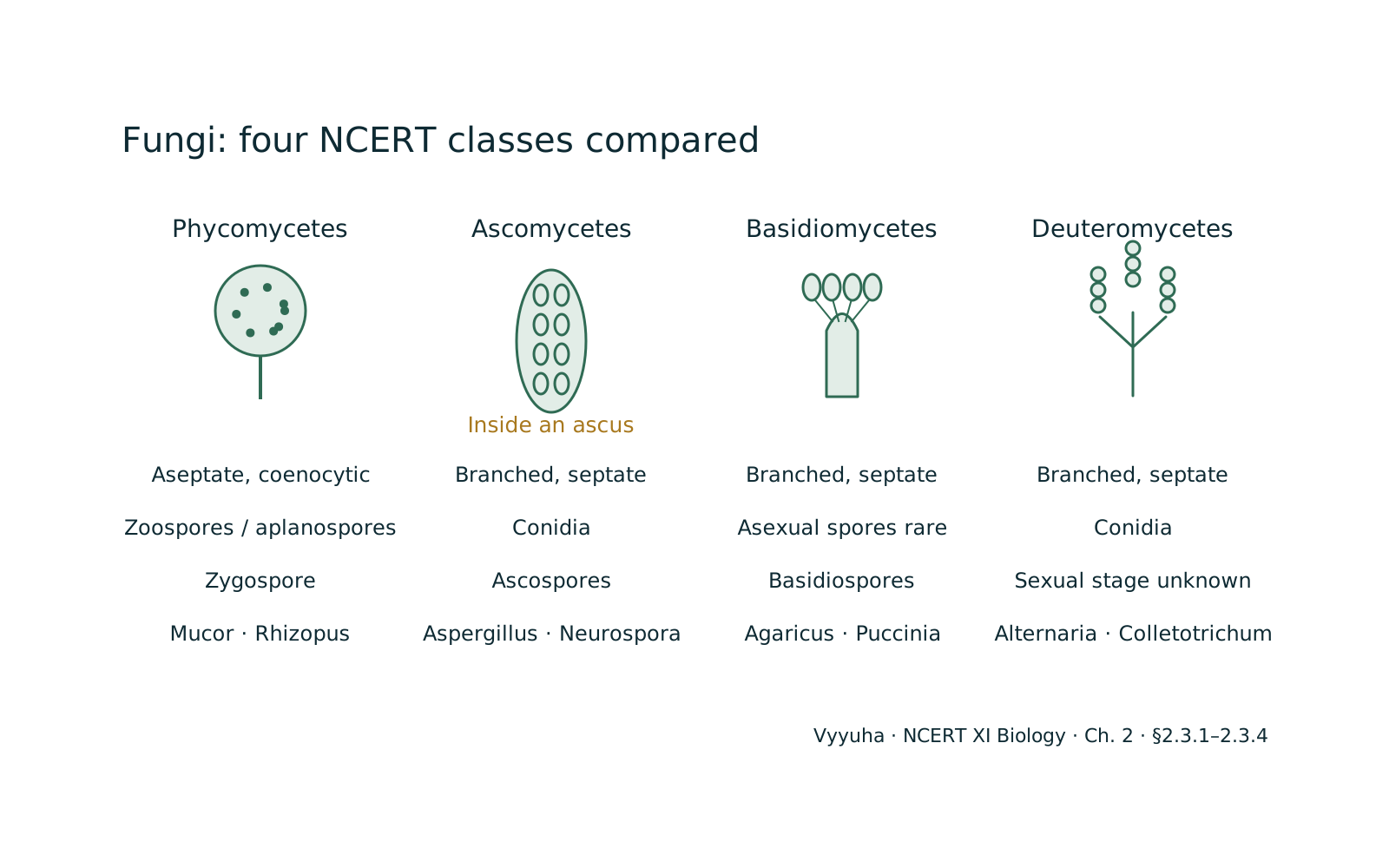
Fungi are classified into Phycomycetes (aseptate, coenocytic, zoospores/aplanospores, zygospore), Ascomycetes (septate, conidia, ascospores in ascocarps, prominent dikaryophase), Basidiomycetes (septate, basidiospores on basidia in basidiocarps, long dikaryophase), and Deuteromycetes (imperfect fungi, only asexual reproduction by conidia known).
They are crucial decomposers, symbionts (lichens, mycorrhizae), and pathogens, with significant ecological and economic importance.
Full explanation
Kingdom Fungi represents a fascinating and immensely diverse group of eukaryotic organisms that occupy a distinct position in the biological classification, separate from plants, animals, and protists. Their unique evolutionary trajectory has endowed them with characteristics that are crucial for their ecological roles and economic importance.
Conceptual Foundation:
Fungi are fundamentally heterotrophic eukaryotes. Unlike plants, they lack chlorophyll and thus cannot perform photosynthesis. Their primary mode of nutrition is absorptive heterotrophy, where they secrete powerful extracellular digestive enzymes onto their food source.
These enzymes break down complex organic molecules into simpler, soluble forms, which are then absorbed across the fungal cell membrane. This mechanism makes them primary decomposers in most ecosystems, playing a critical role in nutrient cycling by breaking down dead organic matter and returning essential elements to the soil.
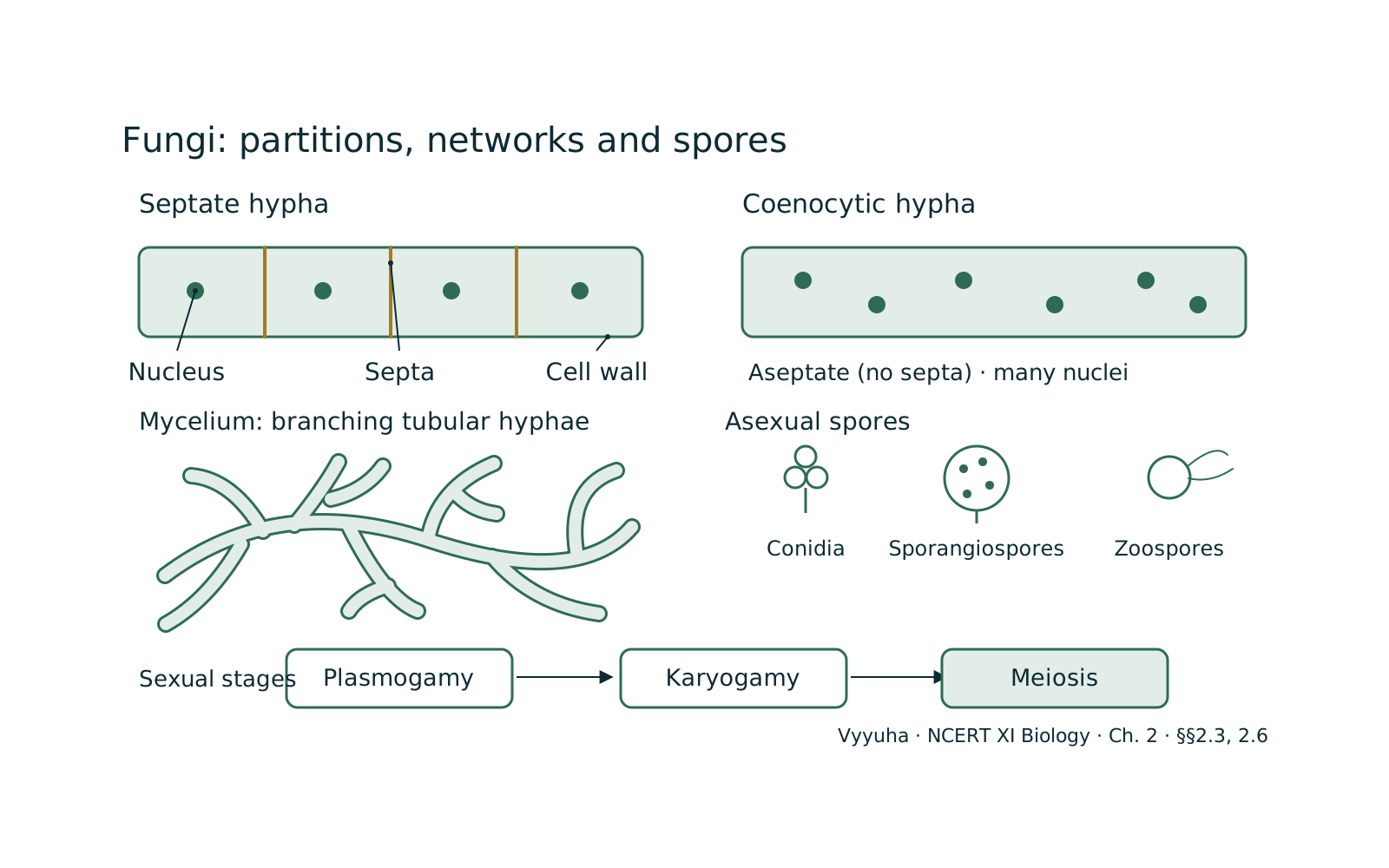
The basic structural unit of most multicellular fungi is the hypha (plural: hyphae), a long, slender, tubular filament. These hyphae grow by extending their tips and branching, forming an intricate, interwoven network called a mycelium (plural: mycelia).
The mycelium is the vegetative body of the fungus, often hidden within the substrate (soil, wood, host tissue). Hyphae can be septate, meaning they are divided by cross-walls called septa (singular: septum) which usually have pores allowing cytoplasm and even nuclei to flow between cells.
Alternatively, some fungi have coenocytic hyphae, which are continuous tubes filled with multinucleated cytoplasm, lacking septa.
Fungal cell walls are a defining feature, composed primarily of chitin, a strong, flexible polysaccharide also found in the exoskeletons of insects. This chitinous wall provides structural support and protection, distinguishing fungi from plants (cellulose cell walls) and bacteria (peptidoglycan cell walls). Fungi store food reserves as glycogen, similar to animals, rather than starch, like plants.
Key Principles and Laws:
- Nutritional Modes: — Fungi exhibit diverse nutritional strategies:
* Saprophytic: The majority of fungi are saprophytes, obtaining nutrients from dead organic matter. They are essential decomposers, breaking down fallen leaves, dead wood, and animal remains. Examples include common molds and mushrooms.
* Parasitic: Many fungi are parasites, living on or in other organisms (hosts) and deriving nutrients from them, often causing diseases. Plant pathogens like rusts and smuts, and human pathogens like those causing ringworm or athlete's foot, are examples.
* Symbiotic: Fungi form mutually beneficial relationships with other organisms: * Lichens: A symbiotic association between a fungus (mycobiont, usually an ascomycete or basidiomycete) and an alga or cyanobacterium (phycobiont).
The alga provides food through photosynthesis, while the fungus provides protection, water, and minerals. * Mycorrhizae: A symbiotic association between fungi and the roots of higher plants. The fungus helps the plant absorb water and minerals (especially phosphorus) from the soil, and in return, the plant provides carbohydrates to the fungus.
- Reproduction: — Fungi reproduce through various means:
* Vegetative Reproduction: Includes fragmentation (a piece of mycelium breaks off and grows into a new individual) and budding (in yeasts, a small outgrowth detaches and matures). * Asexual Reproduction: Primarily through the formation of spores.
Spores are non-motile, microscopic reproductive units produced asexually (e.g., conidia, sporangiospores, zoospores). They are dispersed by wind, water, or animals and germinate to form new mycelia under favorable conditions.
* Sexual Reproduction: Involves the fusion of two compatible nuclei. The sexual cycle typically involves three stages: * Plasmogamy: Fusion of protoplasts (cytoplasm) of two compatible hyphae, bringing two haploid nuclei () together in the same cell.
* Karyogamy: Fusion of the two haploid nuclei () to form a diploid zygote nucleus (). This may occur immediately after plasmogamy or after a delay. * Meiosis: The diploid zygote undergoes meiosis to produce haploid spores (), which then germinate to form new haploid mycelia.
In some fungi (Ascomycetes and Basidiomycetes), plasmogamy is followed by a dikaryophase (or dikaryon stage), where two haploid nuclei () coexist in each cell of the mycelium for a period before karyogamy occurs.
Classification of Fungi (NEET-specific Angle):
Kingdom Fungi is traditionally divided into four main classes based primarily on the morphology of their mycelium, mode of spore formation, and fruiting bodies. A fifth group, Deuteromycetes, includes fungi with no known sexual stage.
- Phycomycetes (Algal Fungi):
* Habitat: Aquatic habitats, decaying wood in moist and damp places, or as obligate parasites on plants. * Mycelium: Aseptate and coenocytic (multinucleated cytoplasm without cross-walls). * Asexual Reproduction: By motile zoospores (in aquatic fungi) or non-motile aplanospores (in terrestrial fungi), produced endogenously in sporangia.
* Sexual Reproduction: Involves the fusion of two gametes. It can be isogamous (similar gametes), anisogamous (dissimilar gametes), or oogamous (large, non-motile female gamete and smaller, motile male gamete).
The resulting zygospore is thick-walled and resistant. * Examples: Mucor, Rhizopus (the bread mold), Albugo (parasitic fungus on mustard).
- Ascomycetes (Sac Fungi):
* Habitat: Saprophytic, decomposers, parasitic, or coprophilous (growing on dung). * Mycelium: Branched and septate. * Asexual Reproduction: Primarily by conidia, produced exogenously on special mycelia called conidiophores.
Conidia germinate to produce new mycelium. * Sexual Reproduction: Involves the formation of ascospores, which are produced endogenously in sac-like asci (singular: ascus). These asci are typically arranged within macroscopic fruiting bodies called ascocarps.
* Dikaryophase: A prominent dikaryophase () exists between plasmogamy and karyogamy. * Examples: Aspergillus, Claviceps, Neurospora (used extensively in biochemical and genetic work), Saccharomyces (yeast, unicellular), Penicillium (source of penicillin), Morels and Truffles (edible).
- Basidiomycetes (Club Fungi):
* Habitat: Soil, on logs and tree stumps, and as parasites (rusts and smuts). * Mycelium: Branched and septate. Primary mycelium is haploid, secondary mycelium is dikaryotic and long-lived.
* Asexual Reproduction: Generally absent, but vegetative reproduction by fragmentation is common. * Sexual Reproduction: Involves the formation of basidiospores, produced exogenously on club-shaped structures called basidia (singular: basidium).
Basidia are arranged in fruiting bodies called basidiocarps. * Dikaryophase: The dikaryophase () is very long and prominent, forming the dominant vegetative stage. * Examples: Mushrooms (Agaricus), bracket fungi, puffballs, rusts (Puccinia), smuts (Ustilago).
- Deuteromycetes (Fungi Imperfecti):
* Characteristics: This group includes fungi for which only the asexual or vegetative phases are known. Their sexual forms, if they exist, have either not been discovered or have been lost during evolution.
* Mycelium: Septate and branched. * Asexual Reproduction: Primarily by conidia. * Nutritional Mode: Most are saprophytes or parasites. Many are decomposers of litter and help in mineral cycling.
* Classification Note: When the sexual forms of these fungi are discovered, they are often moved into Ascomycetes or Basidiomycetes. * Examples: Alternaria, Colletotrichum, Trichoderma.
Real-World Applications:
Fungi have immense practical significance. In medicine, Penicillium notatum led to the discovery of penicillin, the first antibiotic. Yeasts (Saccharomyces cerevisiae) are indispensable in baking (leavening bread) and brewing (fermenting alcohol).
Fungi are used in the production of various organic acids, enzymes, and vitamins. Edible fungi like mushrooms, morels, and truffles are culinary delicacies. However, fungi also cause significant problems, including plant diseases (rusts, smuts, blights) that devastate crops, and human diseases (mycoses) like ringworm, athlete's foot, and candidiasis.
Some fungi produce toxins (mycotoxins) that can contaminate food.
Common Misconceptions:
- Fungi are plants: — A common mistake. Fungi are distinct from plants; they lack chlorophyll, are heterotrophic, and have chitinous cell walls, not cellulose. They are more closely related to animals than to plants based on molecular evidence.
- All fungi are mushrooms: — Mushrooms are just the fruiting bodies of certain types of fungi (Basidiomycetes). The main body, the mycelium, is usually hidden.
- Fungi are always harmful: — While some fungi are pathogenic, many are beneficial (decomposers, symbionts, sources of medicine and food).
- Yeast is a plant: — Yeast is a unicellular fungus, not a plant. It belongs to Ascomycetes.
NEET-specific Angle:
For NEET, a deep understanding of fungal classification, including the distinguishing features of each class (mycelial structure, types of asexual and sexual spores, presence/absence of fruiting bodies, and dikaryophase), is paramount.
Memorizing key examples for each class is crucial. Questions often test the unique life cycle stages, particularly plasmogamy, karyogamy, and meiosis, and the concept of dikaryophase. The ecological roles (decomposers, symbionts, pathogens) and economic importance (antibiotics, food, diseases) are also frequently examined.
Pay close attention to the differences between various spore types (zoospores, aplanospores, conidia, ascospores, basidiospores) and their modes of formation.
Key Concepts
Fungal hyphae exhibit two main structural forms: coenocytic and septate. **Coenocytic hyphae** are continuous…
These three stages define the sexual reproductive cycle in fungi. **Plasmogamy** is the initial fusion of the…
Lichens are a remarkable example of mutualistic symbiosis, involving a fungus (the mycobiont) and a…
Often confused with
Side-by-side differences the NEET paper likes to test.
| Aspect | Kingdom Fungi | Kingdom Plantae |
|---|---|---|
| Cell Wall Composition | Chitin (primarily) | Cellulose (primarily) |
| Mode of Nutrition | Heterotrophic (absorptive) | Autotrophic (photosynthetic) |
| Presence of Chlorophyll | Absent | Present |
| Food Storage | Glycogen | Starch |
| Body Organization | Mostly filamentous (hyphae, mycelium), some unicellular | Multicellular, differentiated tissues and organs (roots, stems, leaves) |
| Motility | Generally non-motile, except for some zoospores | Non-motile (sessile) |
Fungi and Plants, though both eukaryotic, represent distinct kingdoms with fundamental differences. Fungi are heterotrophic decomposers with chitinous cell walls and store food as glycogen, while plants are autotrophic producers with cellulose cell walls and store food as starch.
The absence of chlorophyll in fungi and their filamentous body plan further distinguish them from the complex, differentiated structures of plants. These differences highlight their separate evolutionary paths and ecological roles.
Why it is tested: NEET relevance: Understanding these distinctions is crucial for correctly classifying organisms and for answering conceptual questions that compare and contrast different kingdoms. Questions often test the unique features of fungi that set them apart from plants, such as cell wall composition, nutritional mode, and storage products.
Questions students ask
6 answered on this topic.
What is the primary difference between fungi and plants?
The most fundamental difference lies in their mode of nutrition and cell wall composition. Plants are autotrophic, meaning they produce their own food through photosynthesis using chlorophyll, and their cell walls are made of cellulose.
Fungi, on the other hand, are heterotrophic, specifically absorptive heterotrophs, meaning they obtain nutrients by secreting enzymes and absorbing digested organic matter. Their cell walls are primarily composed of chitin, a nitrogen-containing polysaccharide, which is a key distinguishing feature from plants.
What is a dikaryophase, and why is it important in fungal life cycles?
A dikaryophase () is a unique stage in the sexual life cycle of certain fungi, specifically Ascomycetes and Basidiomycetes. It occurs after plasmogamy (fusion of cytoplasm) but before karyogamy (fusion of nuclei).
In this phase, two haploid nuclei from different parents coexist within the same cell without fusing immediately. This allows for a period of genetic recombination and growth of a dikaryotic mycelium, effectively delaying the formation of a diploid zygote and extending the haploid genetic contribution from both parents, which is crucial for genetic diversity and adaptation.
How do fungi contribute to the environment?
Fungi are indispensable to ecosystems, primarily as decomposers. They break down complex organic matter from dead plants and animals, recycling essential nutrients like carbon, nitrogen, and phosphorus back into the soil, making them available for other organisms. Beyond decomposition, many fungi form symbiotic relationships, such as mycorrhizae with plant roots, enhancing nutrient uptake for plants, and lichens, which are pioneer species in barren environments, contributing to soil formation.
What are the main types of asexual spores found in fungi?
Fungi exhibit various types of asexual spores. Common examples include zoospores, which are motile (flagellated) spores typically found in aquatic fungi (e.g., some Phycomycetes). Aplanospores are non-motile spores, also produced endogenously within sporangia, characteristic of terrestrial Phycomycetes.
Conidia are non-motile spores produced exogenously (on the tips of specialized hyphae called conidiophores) and are characteristic of Ascomycetes and Deuteromycetes. These spores are crucial for rapid propagation and dispersal of fungi.
Why are Deuteromycetes called 'Fungi Imperfecti'?
Deuteromycetes are referred to as 'Fungi Imperfecti' because only their asexual or vegetative stages are known. The sexual reproductive stage, which is a key criterion for classifying other fungal groups (Phycomycetes, Ascomycetes, Basidiomycetes), has either not been observed, has been lost during evolution, or is yet to be discovered for these fungi. Once a sexual stage is identified for a Deuteromycete, it is typically reclassified into one of the other fungal classes, usually Ascomycetes.
Can fungi be beneficial to humans?
Absolutely! Fungi offer numerous benefits. The most famous example is Penicillium, which produces the antibiotic penicillin, revolutionizing medicine. Yeasts (Saccharomyces cerevisiae) are vital in baking (leavening bread) and brewing (alcohol fermentation). Many mushrooms are edible and nutritious. Fungi are also used in industrial processes to produce organic acids, enzymes, and vitamins, and some are employed in bioremediation to clean up pollutants.
Revise in 30 seconds
- Kingdom Fungi — Eukaryotic, heterotrophic (absorptive).
- Cell Wall — Chitin (primary component).
- Food Storage — Glycogen.
- Body — Hyphae (filaments) forming mycelium. Can be septate or coenocytic.
- Reproduction — Vegetative (fragmentation, budding), Asexual (spores: conidia, zoospores, aplanospores), Sexual (plasmogamy karyogamy meiosis).
- Dikaryophase ($n+n$) — Present in Ascomycetes and Basidiomycetes.
- Phycomycetes — Aseptate, coenocytic; zoospores/aplanospores; zygospore; e.g., Rhizopus, Albugo.
- Ascomycetes (Sac Fungi) — Septate; conidia (exogenous); ascospores (endogenous in asci/ascocarps); prominent dikaryophase; e.g., Saccharomyces, Penicillium, Aspergillus.
- Basidiomycetes (Club Fungi) — Septate; no asexual spores; basidiospores (exogenous on basidia/basidiocarps); long dikaryophase; e.g., Agaricus, Puccinia.
- Deuteromycetes (Fungi Imperfecti) — Septate; only asexual (conidia) known; no sexual stage; e.g., Alternaria, Trichoderma.
- Ecological Roles — Decomposers, symbionts (lichens, mycorrhizae), pathogens.
To remember the characteristics of the four main fungal classes (Phycomycetes, Ascomycetes, Basidiomycetes, Deuteromycetes), use the mnemonic:
Please Always Bring Delicious Mushrooms, So All Boys Dance.
- Phycomycetes: Aseptate mycelium, Zygospores (sexual), Zoospores/Aplanospores (asexual).
- Ascomycetes: Septate mycelium, Ascospores (sexual), Conidia (asexual), Dikaryophase.
- Basidiomycetes: Septate mycelium, Basidiospores (sexual), No asexual spores (generally), Long dikaryophase.
- Deuteromycetes: Septate mycelium, Conidia (asexual), No sexual stage known.
(Note: The 'M' in 'Mushrooms' can link to Basidiomycetes, 'S' in 'So' to Septate, 'A' in 'All' to Asexual, 'B' in 'Boys' to Basidiospores, 'D' in 'Dance' to Dikaryophase/Deuteromycetes. It's a bit flexible, but the initial letters for classes and key features are strong.)