Structure and Replication of Virus — Explained
Detailed Explanation
Viruses represent a fascinating and often perplexing category of biological entities, existing at the interface between the living and non-living worlds. Their unique structure and replication strategies are central to their success as pathogens and their utility in molecular biology. Understanding these aspects is paramount for NEET aspirants.
Conceptual Foundation of Viruses
Viruses are acellular, meaning they are not composed of cells. Unlike bacteria, fungi, or protozoa, they lack cytoplasm, organelles, and a cell membrane in the traditional sense. Their existence is predicated on their ability to infect and exploit the cellular machinery of a host organism.
This obligate intracellular parasitism is their defining characteristic. The term 'virus' itself, derived from the Latin word for 'poison,' reflects the early understanding of these agents as disease-causing entities before their true nature was elucidated.
Historically, viruses were first recognized as 'filterable agents' that could pass through filters designed to retain bacteria, indicating their extremely small size. Dmitri Ivanovsky's work on tobacco mosaic disease in 1892 and Martinus Beijerinck's subsequent coining of the term 'contagium vivum fluidum' (contagious living fluid) laid the groundwork for virology.
The advent of the electron microscope in the 20th century finally allowed scientists to visualize these enigmatic particles, revealing their diverse and intricate structures.
Key Principles of Viral Structure
Despite their diversity, all viruses share fundamental structural components:
- Genetic Material (Nucleic Acid Core): — This is the heart of the virus, carrying the blueprint for viral replication. Crucially, a virus contains either DNA or RNA, but never both. The genetic material can be single-stranded (ss) or double-stranded (ds), linear or circular, and segmented or non-segmented. Examples include dsDNA (e.g., bacteriophages, herpesviruses), ssDNA (e.g., parvoviruses), dsRNA (e.g., reoviruses), and ssRNA (e.g., poliovirus, influenza virus, HIV). The type of genetic material is a primary basis for viral classification.
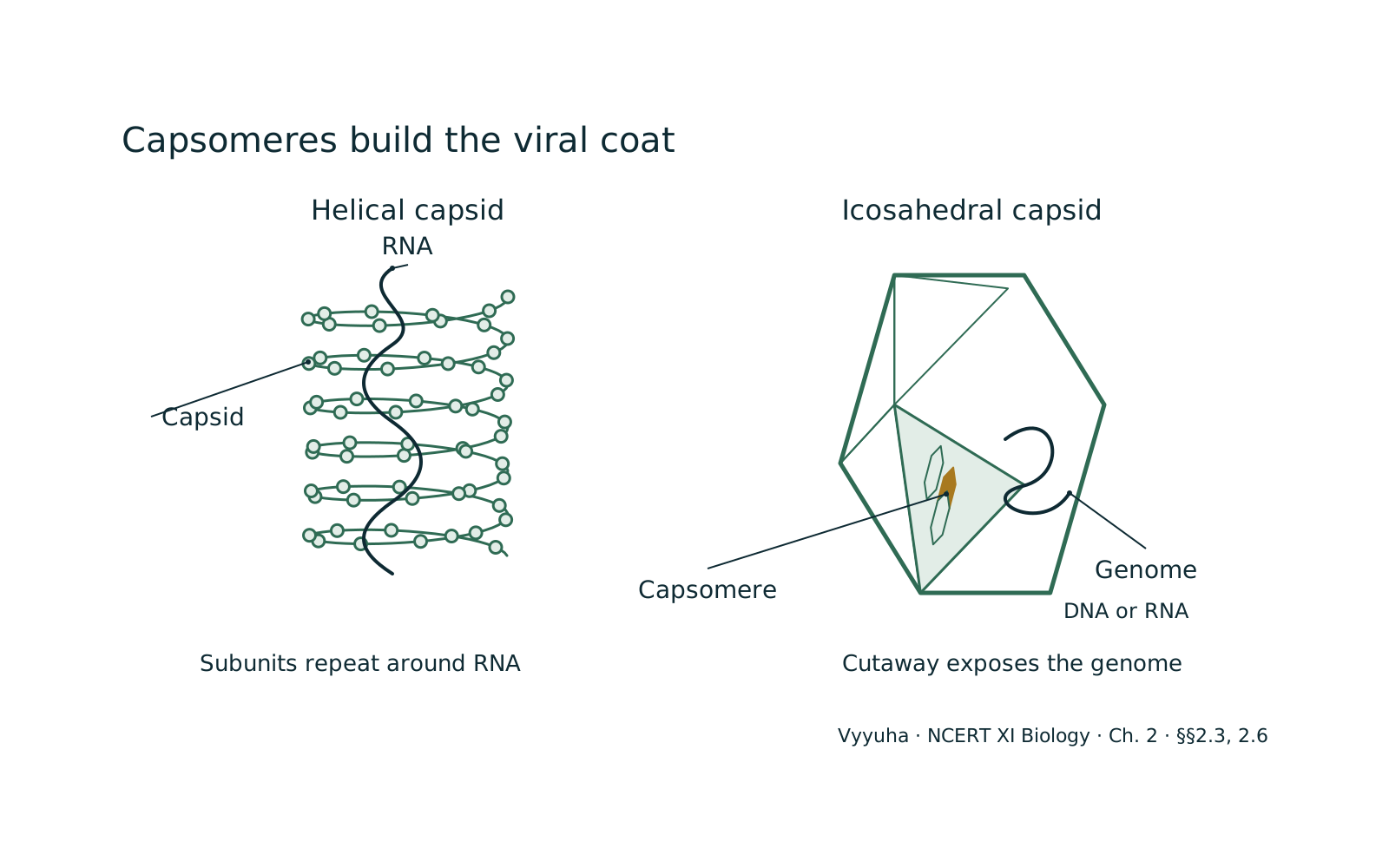
- Capsid: — This is a protein coat that encloses and protects the viral genetic material. The capsid is composed of numerous protein subunits called capsomeres. The arrangement of these capsomeres determines the morphology of the virus. Common capsid symmetries include:
* Helical: Capsomeres are arranged in a spiral around the nucleic acid, forming a rod-shaped structure (e.g., Tobacco Mosaic Virus - TMV, Influenza virus). * Icosahedral (Polyhedral): Capsomeres form a 20-sided polygon with 12 vertices, giving a spherical appearance (e.
g., Adenovirus, Poliovirus, Herpesvirus). This is a highly efficient way to enclose a maximum volume with minimum protein subunits. * Complex: These viruses have structures that are neither purely helical nor icosahedral, often possessing additional components like protein tails or outer walls (e.
g., Bacteriophages, Poxviruses).
- Envelope (Optional): — Many animal viruses, and some plant and bacterial viruses, possess an outer lipid bilayer membrane called an envelope. This envelope is typically derived from the host cell's plasma membrane, nuclear membrane, or endoplasmic reticulum membrane as the virus buds out. Embedded within the envelope are viral glycoproteins, often called spikes or peplomers, which are crucial for attachment to host cells and can also act as antigens. Enveloped viruses are generally more susceptible to detergents and disinfectants than non-enveloped (naked) viruses because the envelope is easily disrupted.
A complete, infectious viral particle outside a host cell is called a virion.
Viral Replication: The Molecular Hijack
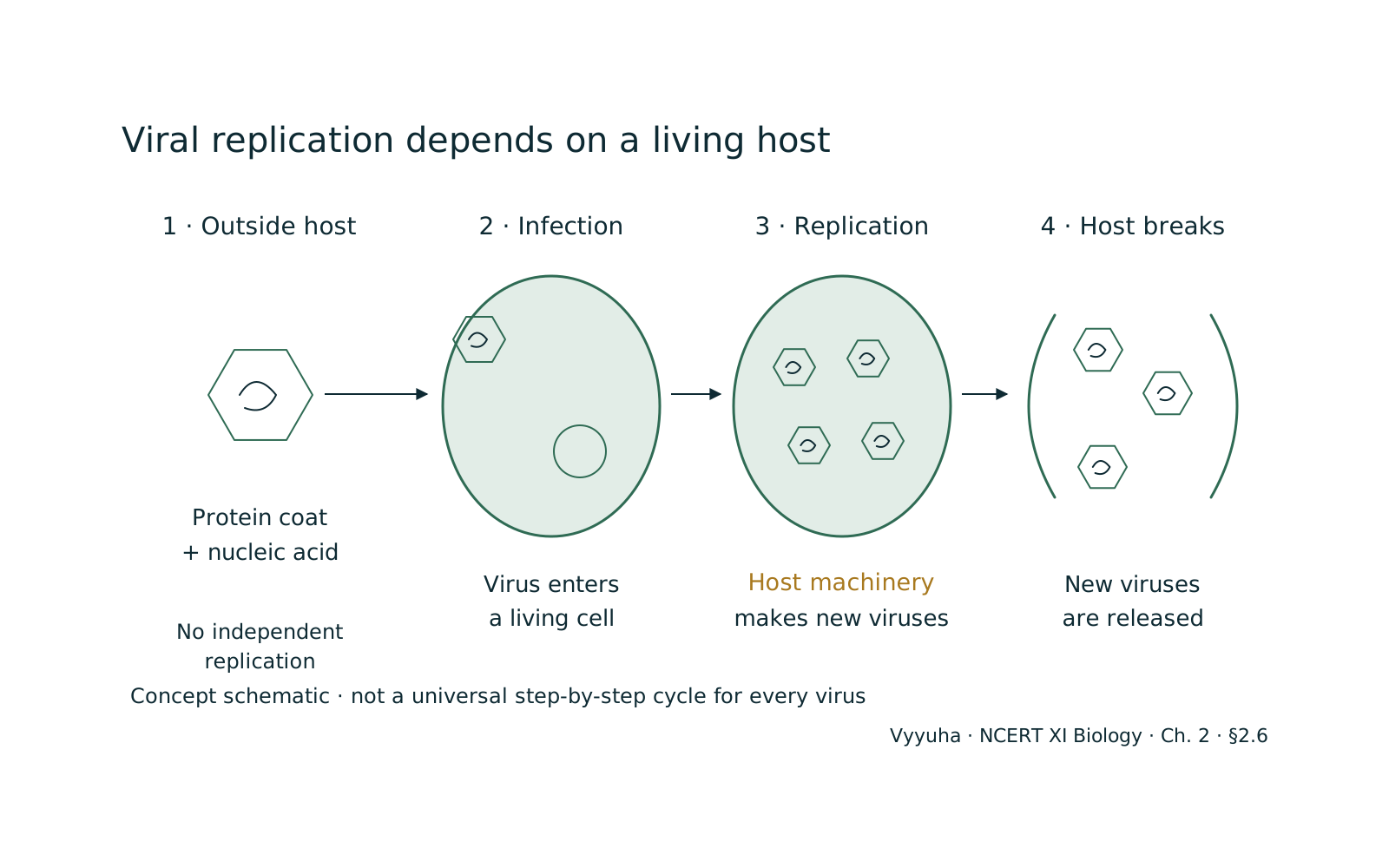
Viral replication is a highly orchestrated process that involves several distinct stages, all aimed at producing new virions using the host cell's resources. The general steps are:
- Adsorption (Attachment): — The virion specifically binds to receptor molecules on the surface of a susceptible host cell. This specificity is a key determinant of host range and tissue tropism (which cells a virus can infect).
- Penetration (Entry): — The virus enters the host cell. This can occur through several mechanisms:
* Direct injection: For bacteriophages, the capsid remains outside, and only the nucleic acid enters the host cell (e.g., T-phages). * Endocytosis: The host cell engulfs the entire virion (e.g., influenza virus). * Membrane fusion: For enveloped viruses, the viral envelope fuses with the host cell membrane, releasing the nucleocapsid into the cytoplasm (e.g., HIV, herpesviruses).
- Uncoating: — Once inside, the viral capsid is removed, releasing the genetic material into the host cell's cytoplasm or nucleus. This step is essential for the viral genome to become accessible for replication and transcription.
- Biosynthesis (Replication and Synthesis): — This is the core of the viral life cycle, where the viral genome is replicated, and viral proteins are synthesized. This stage is highly dependent on the type of viral genetic material:
* DNA viruses: Typically replicate their DNA in the host cell nucleus using host DNA polymerase (or their own viral polymerase) and synthesize mRNA for protein production using host RNA polymerase.
* RNA viruses: Most replicate in the cytoplasm. Positive-sense ssRNA viruses (e.g., poliovirus) can directly serve as mRNA. Negative-sense ssRNA viruses (e.g., influenza) carry their own RNA-dependent RNA polymerase to synthesize mRNA from their genome.
Retroviruses (e.g., HIV), a special class of ssRNA viruses, use an enzyme called reverse transcriptase to synthesize a DNA copy from their RNA genome, which then integrates into the host genome. * During this phase, the host cell's machinery (ribosomes, tRNAs, amino acids, ATP) is commandeered to produce viral enzymes, capsid proteins, and other structural components.
- Assembly (Maturation): — Newly synthesized viral genetic material and proteins spontaneously or enzymatically assemble into new virions. This can occur in the cytoplasm or nucleus, depending on the virus.
- Release: — New virions exit the host cell. This can happen via:
* Lysis: Non-enveloped viruses often cause the host cell to burst open, releasing progeny virions and killing the cell (e.g., bacteriophages, poliovirus). * Budding: Enveloped viruses acquire their envelope by budding through a host cell membrane (plasma membrane, nuclear membrane, ER/Golgi membrane), often without immediately killing the host cell (e.g., HIV, influenza virus).
Lytic vs. Lysogenic Cycles (Bacteriophages)
Bacteriophages (viruses that infect bacteria) exhibit two main replication strategies:
- Lytic Cycle: — This is a virulent cycle where the phage immediately takes over the host cell, replicates, and causes lysis (bursting) of the host cell, releasing new phages. This cycle is characterized by rapid replication and host cell destruction.
- Lysogenic Cycle: — Temperate phages can integrate their DNA into the host bacterium's chromosome, becoming a prophage. The viral DNA is replicated along with the host DNA during cell division, without immediately harming the host. The host cell is called a lysogen. Under certain environmental stresses (e.g., UV radiation), the prophage can excise from the host genome and enter the lytic cycle, leading to host cell lysis.
Real-World Applications and NEET-Specific Angle
Viruses are responsible for numerous diseases in humans (e.g., common cold, influenza, HIV/AIDS, COVID-19, polio, measles, mumps, rubella), animals (e.g., rabies, foot-and-mouth disease), and plants (e.g., TMV, potato virus). Understanding their structure and replication is crucial for:
- Antiviral Drug Development: — Targeting specific steps in the viral replication cycle (e.g., reverse transcriptase inhibitors for HIV, neuraminidase inhibitors for influenza).
- Vaccine Development: — Using attenuated or inactivated viruses, or viral components, to stimulate an immune response.
- Gene Therapy: — Modified viruses (e.g., adenoviruses, retroviruses) can be used as vectors to deliver therapeutic genes into human cells.
- Biotechnology: — Bacteriophages are used in genetic engineering and phage therapy (using phages to treat bacterial infections).
For NEET, focus on:
- Key terminology: — Virion, capsid, capsomere, envelope, nucleocapsid, prophage, lysogen, reverse transcriptase.
- Classification: — DNA vs. RNA viruses, ss vs. ds, enveloped vs. naked.
- Specific examples: — TMV (helical, ssRNA), Bacteriophage (complex, dsDNA, lytic/lysogenic), HIV (enveloped, ssRNA retrovirus, reverse transcriptase).
- Steps of replication: — Adsorption, penetration, uncoating, biosynthesis, assembly, release.
- Distinction between lytic and lysogenic cycles.
- Enzymes unique to viruses: — Reverse transcriptase, RNA-dependent RNA polymerase.
- Viral diseases and their causative agents.
Common Misconceptions
- Viruses are living organisms: — While they possess genetic material and evolve, their inability to metabolize or reproduce independently places them in a unique category, often described as 'obligate intracellular parasites' rather than truly 'living' in the cellular sense.
- Antibiotics kill viruses: — Antibiotics target bacterial cellular processes (e.g., cell wall synthesis, protein synthesis on bacterial ribosomes). Viruses lack these structures and processes, making antibiotics ineffective against them. Antiviral drugs are specifically designed to interfere with viral replication.
- All viruses are harmful: — While many cause disease, some viruses are benign, and others are being explored for therapeutic uses (e.g., oncolytic viruses for cancer therapy, bacteriophages for antibiotic-resistant bacteria).
By grasping these fundamental concepts, NEET aspirants can build a strong foundation for understanding virology and its implications in biology and medicine.
Often confused with
Side-by-side differences the NEET paper likes to test.
| Aspect | Structure and Replication of Virus | Bacteria |
|---|---|---|
| Cellular Nature | Acellular (not a cell) | Prokaryotic cell (unicellular) |
| Genetic Material | DNA or RNA (never both) | DNA (main chromosome) and sometimes plasmids |
| Metabolism | None (obligate intracellular parasite) | Independent (has own metabolic machinery) |
| Reproduction | Replication via host cell machinery | Binary fission (asexual reproduction) |
| Size | Extremely small (20-300 nm) | Larger (0.5-5 µm) |
| Cell Wall/Membrane | No cell wall, some have an envelope (host-derived) | Cell wall (peptidoglycan) and cell membrane |
| Ribosomes | Absent | Present (70S type) |
| Treatment | Antiviral drugs | Antibiotics |
Viruses are acellular, obligate intracellular parasites that lack their own metabolic machinery and ribosomes, relying entirely on host cells for replication. They contain either DNA or RNA. Bacteria, in contrast, are true prokaryotic cells, possessing their own ribosomes, metabolic pathways, and a cell wall, allowing them to grow and reproduce independently.
Viruses are significantly smaller than bacteria and are unaffected by antibiotics, which specifically target bacterial cellular processes. This fundamental distinction underpins their different biological roles and disease mechanisms.
Why it is tested: NEET relevance: Understanding the fundamental differences between viruses and bacteria is crucial for correctly identifying their characteristics, modes of infection, and appropriate treatment strategies. Questions often test these distinctions, particularly regarding their cellular nature, genetic material, and susceptibility to antibiotics. This comparison helps clarify why viruses are not considered 'living organisms' in the same sense as bacteria.
Questions students ask
6 answered on this topic.
What is the primary difference between a virus and a bacterium?
The fundamental difference lies in their cellular organization and metabolic capabilities. Bacteria are prokaryotic cells, meaning they are single-celled organisms with their own cellular machinery (ribosomes, cytoplasm, cell wall, cell membrane) and can metabolize and reproduce independently.
Viruses, on the other hand, are acellular entities, lacking these cellular components. They are obligate intracellular parasites, meaning they cannot carry out metabolic processes or replicate without hijacking a host cell's machinery.
Bacteria are typically much larger than viruses and are susceptible to antibiotics, while viruses are not.
Why are viruses considered obligate intracellular parasites?
Viruses are called obligate intracellular parasites because they absolutely require a living host cell to carry out their life cycle. They lack the necessary cellular machinery, such as ribosomes for protein synthesis, enzymes for energy production (metabolism), and organelles, to replicate independently.
Instead, they must infect a host cell and commandeer its cellular resources – including ribosomes, ATP, amino acids, and enzymes – to synthesize their own genetic material and proteins, and then assemble new viral particles.
Without a host cell, a virus is metabolically inert.
What is the role of the capsid in a virus?
The capsid is a crucial protein coat that encloses and protects the viral genetic material (DNA or RNA). It is made up of repeating protein subunits called capsomeres. Beyond protection, the capsid plays several vital roles: it helps in the attachment of the virus to specific receptors on the host cell surface, facilitates the entry of the viral genome into the host cell, and in some cases, aids in the release of new virions.
The shape and symmetry of the capsid (e.g., helical, icosahedral) are important characteristics used in viral classification.
How do enveloped viruses differ from non-enveloped (naked) viruses in terms of structure and release?
Enveloped viruses possess an outer lipid bilayer membrane, called an envelope, which is derived from the host cell membrane during the budding process. This envelope often contains viral glycoproteins (spikes) that aid in attachment and entry into new host cells.
Non-enveloped or naked viruses lack this outer membrane; their outermost layer is the protein capsid. In terms of release, enveloped viruses typically exit the host cell by budding, acquiring their envelope as they pass through a host membrane, often without immediately lysing (killing) the cell.
Naked viruses, conversely, usually cause the host cell to lyse and burst open to release progeny virions.
What is reverse transcriptase and which type of virus uses it?
Reverse transcriptase is a unique viral enzyme that catalyzes the synthesis of DNA from an RNA template, a process known as reverse transcription. This enzyme is characteristic of retroviruses, a specific class of RNA viruses (e.
g., HIV). After infecting a host cell, retroviruses use reverse transcriptase to convert their single-stranded RNA genome into a double-stranded DNA copy. This viral DNA can then integrate into the host cell's genome, becoming a provirus, which allows the viral genetic material to be replicated along with the host's DNA and transcribed into new viral RNA.
Can antibiotics be used to treat viral infections? Why or why not?
No, antibiotics are ineffective against viral infections. Antibiotics are designed to target specific structures and metabolic pathways found in bacteria, such as bacterial cell walls, bacterial ribosomes, or unique bacterial enzymes.
Viruses, being acellular and obligate intracellular parasites, lack these bacterial targets. They rely on host cell machinery for replication, and therefore, antibiotics have no mechanism to inhibit viral processes.
Using antibiotics for viral infections is not only futile but can also contribute to antibiotic resistance in bacteria, making future bacterial infections harder to treat. Antiviral drugs, which specifically target viral replication steps, are used for viral infections.