Structure of Bacterial Cell — Explained
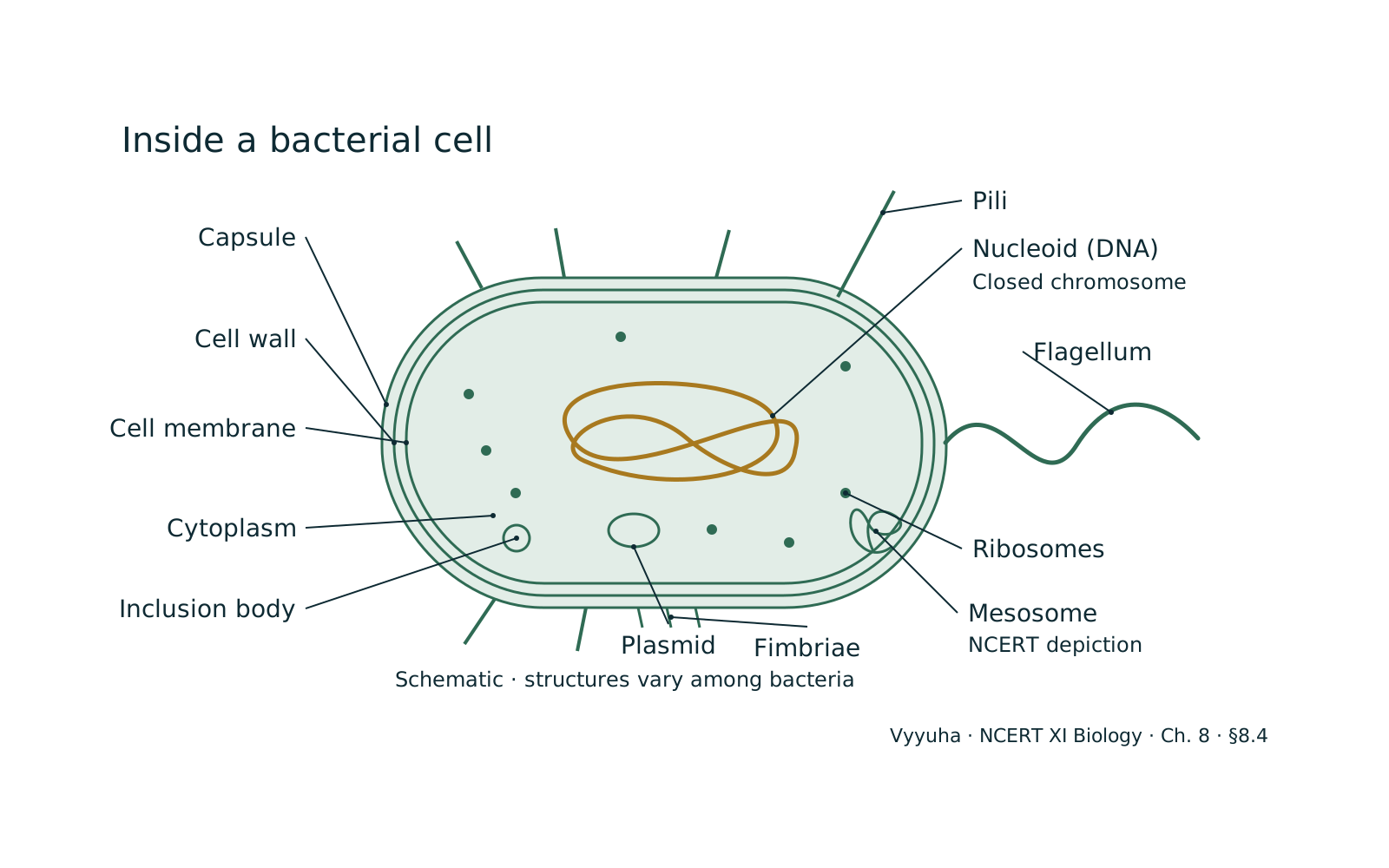
Detailed Explanation
The bacterial cell, a prime example of prokaryotic life, exhibits a remarkable balance of simplicity and functional complexity. Unlike eukaryotic cells, which are characterized by extensive internal compartmentalization via membrane-bound organelles, bacterial cells achieve all their life processes within a relatively undifferentiated cytoplasm. This fundamental distinction is central to understanding their biology and their interactions with the environment and other organisms.
Conceptual Foundation: The Prokaryotic Blueprint
Bacteria are defined by their prokaryotic cellular organization. This means they lack a true nucleus, where the genetic material is enclosed within a nuclear envelope. Instead, their genetic material, typically a single circular chromosome, resides in a region of the cytoplasm known as the nucleoid.
Furthermore, they do not possess other membrane-bound organelles such as mitochondria, endoplasmic reticulum, Golgi apparatus, or lysosomes. Despite this apparent simplicity, bacterial cells are highly efficient biochemical factories, capable of diverse metabolic activities, rapid growth, and adaptation to extreme conditions.
Their small size, typically ranging from to in diameter, facilitates rapid diffusion of nutrients and waste products, contributing to their high metabolic rates and quick generation times.
Key Principles of Bacterial Cell Structure:
- Compartmentalization without Membranes: — While lacking internal membrane-bound organelles, bacteria still achieve functional compartmentalization. For example, the plasma membrane serves as the site for crucial metabolic processes like respiration and photosynthesis (in photosynthetic bacteria), analogous to mitochondria and chloroplasts in eukaryotes.
- Structural Rigidity and Protection: — The cell wall is a defining feature, providing structural integrity, shape, and protection against osmotic lysis. Its unique composition, particularly peptidoglycan, is a primary target for many antibiotics.
- Genetic Simplicity and Adaptability: — A single, circular chromosome forms the core genome. The presence of plasmids, extrachromosomal DNA elements, allows for rapid acquisition and dissemination of advantageous traits, such as antibiotic resistance or virulence factors.
- Surface Appendages for Interaction: — Structures like flagella, pili, and fimbriae are crucial for motility, adhesion to surfaces, biofilm formation, and genetic exchange (conjugation), enabling bacteria to thrive in specific niches and cause infection.
Detailed Components of a Bacterial Cell:
I. Essential Components (Present in almost all bacteria):
- Cell Wall:
* Structure: A rigid layer external to the plasma membrane. Its primary component is peptidoglycan (murein), a complex polymer unique to bacteria. Peptidoglycan consists of alternating units of N-acetylglucosamine (NAG) and N-acetylmuramic acid (NAM), cross-linked by short peptide chains.
* Gram-Positive vs. Gram-Negative: * Gram-Positive Bacteria: Have a thick, multilayered peptidoglycan wall (20-80 nm thick) containing teichoic acids and lipoteichoic acids, which extend through the peptidoglycan and are anchored to the plasma membrane.
These acids contribute to cell wall stability and antigenicity. * Gram-Negative Bacteria: Possess a much thinner peptidoglycan layer (2-7 nm thick) located in the periplasmic space, between the inner (plasma) membrane and an outer membrane.
The outer membrane is a unique lipid bilayer containing lipopolysaccharides (LPS), phospholipids, and porin proteins. LPS acts as an endotoxin, contributing to pathogenicity. The outer membrane provides an additional barrier, making Gram-negative bacteria more resistant to certain antibiotics and detergents.
* Function: Provides shape, structural support, protects against osmotic lysis, and acts as a barrier against harmful substances. * NEET Relevance: The difference in cell wall structure is the basis of Gram staining, a crucial diagnostic tool.
Peptidoglycan synthesis is the target of many antibiotics (e.g., penicillin).
- Plasma Membrane (Cell Membrane):
* Structure: A typical biological membrane composed of a phospholipid bilayer with embedded proteins (fluid mosaic model). It lacks sterols, except for mycoplasmas and some other bacteria, which incorporate sterols from their host.
* Function: Selectively permeable barrier, regulating passage of substances. Site of crucial metabolic activities: electron transport chain and oxidative phosphorylation (respiration), photosynthesis (in photosynthetic bacteria), synthesis of cell wall components, and secretion of extracellular enzymes.
Contains receptor molecules for sensing the environment. * Mesosomes: Invaginations of the plasma membrane into the cytoplasm. While once thought to be distinct organelles with specific functions (e.
g., DNA replication, cell division, respiration), current understanding suggests they are often artifacts of chemical fixation for electron microscopy. However, some evidence suggests they might play a role in DNA segregation during cell division in certain bacteria.
- Cytoplasm:
* Structure: A semi-fluid, jelly-like matrix filling the cell, composed primarily of water, proteins, carbohydrates, lipids, ions, and various small molecules. * Function: Site of most metabolic reactions, including glycolysis, protein synthesis, and various biosynthetic pathways.
- Ribosomes:
* Structure: Tiny, granular structures composed of ribosomal RNA (rRNA) and proteins. Bacterial ribosomes are type (composed of and subunits), distinct from eukaryotic ribosomes. * Function: Sites of protein synthesis (translation). * NEET Relevance: The difference in ribosomal size is exploited by antibiotics like streptomycin and tetracycline, which selectively inhibit bacterial protein synthesis without harming host cells.
- Nucleoid:
* Structure: An irregularly shaped region within the cytoplasm where the bacterial chromosome is located. It is not enclosed by a membrane. The chromosome is typically a single, circular, double-stranded DNA molecule, highly supercoiled and condensed. * Function: Contains the cell's genetic information, essential for all cellular functions.
II. Accessory/Optional Components (Present in some bacteria):
- Plasmids:
* Structure: Small, circular, double-stranded DNA molecules distinct from the main bacterial chromosome. They replicate independently. * Function: Carry non-essential genes that often confer advantageous traits, such as antibiotic resistance (R-plasmids), virulence factors, or genes for metabolic pathways (e.
g., degradation of unusual compounds). They are crucial for horizontal gene transfer (e.g., conjugation). * NEET Relevance: Plasmids are vital tools in genetic engineering and contribute significantly to the spread of antibiotic resistance.
- Capsule and Slime Layer (Glycocalyx):
* Structure: An outermost layer composed of polysaccharides, polypeptides, or both. If it's a well-organized, tightly attached layer, it's a capsule. If it's loose and diffuse, it's a slime layer.
* Function: Protection against phagocytosis by host immune cells, desiccation (drying out), and adhesion to surfaces (important for biofilm formation and colonization). * NEET Relevance: Capsules are major virulence factors in many pathogenic bacteria (e.
g., Streptococcus pneumoniae).
- Flagella:
* Structure: Long, thin, filamentous appendages extending from the cell surface. Composed of a protein called flagellin. They rotate like propellers. * Types: Monotrichous (single flagellum), Lophotrichous (tuft at one end), Amphitrichous (flagella at both ends), Peritrichous (flagella all over the surface). * Function: Motility (movement) in liquid environments, allowing bacteria to move towards nutrients (chemotaxis) or away from harmful substances.
- Pili (Fimbriae):
* Structure: Short, hair-like protein appendages, thinner and shorter than flagella, composed of pilin protein. * Function: * Fimbriae: Primarily for adhesion to host cells and surfaces, crucial for colonization and biofilm formation. * Sex Pili (F-pili): Longer and fewer than fimbriae, involved in conjugation (transfer of genetic material, typically plasmids, between bacteria).
- Inclusion Bodies (Storage Granules):
* Structure: Non-membrane-bound granules within the cytoplasm. Examples include poly-beta-hydroxybutyrate (PHB) granules (carbon and energy storage), volutin granules (polyphosphate storage), sulfur granules (energy storage in sulfur bacteria), and gas vacuoles (buoyancy in aquatic bacteria).
* Function: Storage of reserve materials (nutrients, energy) for later use. * NEET Relevance: Volutin granules are also known as metachromatic granules and are characteristic of Corynebacterium diphtheriae.
- Endospores:
* Structure: Highly resistant, dormant structures formed by some Gram-positive bacteria (e.g., Bacillus, Clostridium) in response to unfavorable environmental conditions. They contain a complete copy of the bacterial chromosome, minimal cytoplasm, ribosomes, and a tough outer coat.
* Function: Ensures survival during extreme conditions (heat, radiation, chemicals, desiccation). They can germinate back into vegetative cells when conditions become favorable. * NEET Relevance: Endospores are extremely difficult to kill and are a major concern in sterilization procedures in medicine and food industry.
Common Misconceptions:
- Bacteria are 'simple' organisms: — While structurally simpler than eukaryotes, their biochemical pathways and adaptive mechanisms are incredibly complex and diverse.
- Lack of organelles means lack of function: — Bacterial cells perform all essential life functions (respiration, photosynthesis, protein synthesis, DNA replication) using specialized regions of the plasma membrane and cytoplasmic components.
- All bacteria are harmful: — The vast majority of bacteria are harmless or even beneficial (e.g., gut microbiota, decomposers). Only a small fraction are pathogenic.
NEET-Specific Angle:
For NEET, focus on the unique features of bacterial cells that distinguish them from eukaryotes, such as the peptidoglycan cell wall, ribosomes, nucleoid, and the absence of membrane-bound organelles.
Understand the functions of accessory structures like flagella, pili, capsule, and plasmids, as these are frequently tested. Gram staining differentiation and the targets of common antibiotics (cell wall synthesis, protein synthesis) are also high-yield areas.
Pay attention to specific examples of bacteria associated with certain structures (e.g., Corynebacterium diphtheriae and volutin granules, Bacillus and Clostridium and endospores).
Understanding the intricate structure of bacterial cells provides a foundation for microbiology, infectious diseases, and the development of antimicrobial strategies. Each component, from the rigid cell wall to the dynamic flagella, plays a vital role in the bacterium's survival, proliferation, and interaction with its environment.
Often confused with
Side-by-side differences the NEET paper likes to test.
| Aspect | Structure of Bacterial Cell | Eukaryotic Cell |
|---|---|---|
| Nucleus | Absent (genetic material in nucleoid region) | Present (membrane-bound, contains genetic material) |
| Membrane-bound Organelles | Absent (e.g., mitochondria, ER, Golgi) | Present (e.g., mitochondria, ER, Golgi, lysosomes, chloroplasts) |
| Ribosomes | 70S type (50S + 30S subunits) | 80S type (60S + 40S subunits); 70S in mitochondria/chloroplasts |
| Cell Wall | Present in most, primarily peptidoglycan | Present in plants (cellulose) and fungi (chitin), absent in animals |
| Genetic Material | Single, circular chromosome in nucleoid; plasmids often present | Multiple, linear chromosomes in nucleus; no plasmids normally |
| Size | Typically 0.5-5 $\mu$m | Typically 10-100 $\mu$m |
| Cell Division | Binary fission | Mitosis and Meiosis |
| Sterols in Plasma Membrane | Generally absent (except Mycoplasma) | Generally present |
Bacterial cells, being prokaryotic, fundamentally differ from eukaryotic cells in their internal organization. The most striking distinction is the absence of a true nucleus and other membrane-bound organelles in bacteria, with their genetic material residing in a nucleoid region.
Bacterial ribosomes are smaller (70S) compared to eukaryotic ones (80S). While both can have cell walls, their composition is distinct (peptidoglycan in bacteria vs. cellulose/chitin in plants/fungi).
These differences impact cellular complexity, metabolic pathways, and susceptibility to various antimicrobial agents, making this comparison a cornerstone of cell biology.
Why it is tested: Understanding the structural differences between prokaryotic and eukaryotic cells is fundamental to biology and is frequently tested in NEET. Questions often focus on specific components like ribosomes, cell wall composition, or the presence/absence of organelles, and their implications for antibiotic action or evolutionary relationships. This comparison helps solidify the basic tenets of cell theory and biological classification.
Questions students ask
6 answered on this topic.
What is the primary difference between a prokaryotic (bacterial) cell and a eukaryotic cell?
The most fundamental difference lies in their internal organization. Prokaryotic cells, like bacteria, lack a true nucleus, meaning their genetic material (DNA) is not enclosed within a membrane. They also lack other membrane-bound organelles such as mitochondria, endoplasmic reticulum, and Golgi apparatus.
Eukaryotic cells, on the other hand, possess a membrane-bound nucleus and a variety of specialized membrane-bound organelles that compartmentalize cellular functions. This structural distinction leads to significant differences in their cellular processes and complexity.
What is the significance of the bacterial cell wall, and how does it differ in Gram-positive and Gram-negative bacteria?
The bacterial cell wall is crucial for maintaining cell shape, providing structural integrity, and protecting the cell from osmotic lysis (bursting) in hypotonic environments. Its primary component is peptidoglycan.
In Gram-positive bacteria, the cell wall is thick and consists of many layers of peptidoglycan, along with teichoic acids. In contrast, Gram-negative bacteria have a much thinner peptidoglycan layer located in the periplasmic space, sandwiched between an inner plasma membrane and an outer membrane containing lipopolysaccharides (LPS).
This structural difference is the basis for Gram staining and affects their susceptibility to antibiotics.
What are plasmids, and why are they important for bacteria and in biotechnology?
Plasmids are small, circular, double-stranded DNA molecules found in the cytoplasm of many bacteria, separate from the main bacterial chromosome. They replicate independently and often carry genes that confer advantageous traits, such as antibiotic resistance, virulence factors, or the ability to metabolize unusual compounds.
For bacteria, plasmids are crucial for adaptation and horizontal gene transfer, allowing rapid dissemination of beneficial traits. In biotechnology, plasmids are indispensable as vectors for cloning and expressing genes, making them fundamental tools in genetic engineering.
What are mesosomes, and what is their current understanding in bacterial cell biology?
Mesosomes are invaginations or infoldings of the bacterial plasma membrane into the cytoplasm. Historically, they were thought to play various roles, including DNA replication, cell division, and respiration, essentially acting like primitive organelles.
However, modern research, particularly using improved electron microscopy techniques, suggests that many mesosomes observed are artifacts of the chemical fixation methods used to prepare samples for microscopy.
While their physiological significance is largely debated, some evidence still points to their potential involvement in specific cellular processes in certain bacterial species, though not as universal organelles.
How do flagella and pili (fimbriae) differ in structure and function?
Both flagella and pili are proteinaceous appendages extending from the bacterial cell surface, but they have distinct structures and functions. Flagella are long, whip-like structures composed of flagellin protein, responsible for bacterial motility (swimming) through liquid environments.
They rotate like propellers. Pili (or fimbriae) are shorter, thinner, and more numerous hair-like structures made of pilin protein. Fimbriae primarily function in adhesion, allowing bacteria to attach to surfaces or host cells, which is crucial for colonization and biofilm formation.
A specific type of pilus, the sex pilus, is involved in conjugation, facilitating the transfer of genetic material between bacteria.
What is the glycocalyx, and what are its two forms?
The glycocalyx is an outermost, sticky, gelatinous layer found external to the cell wall in many bacteria. It is typically composed of polysaccharides, polypeptides, or both. It exists in two main forms: a capsule and a slime layer.
A capsule is a well-organized, tightly attached, and relatively rigid layer that excludes small particles. A slime layer, in contrast, is unorganized, loosely attached, and more diffuse. Both forms provide protection against desiccation (drying out), aid in adhesion to surfaces, and help pathogenic bacteria evade host immune responses, particularly phagocytosis.