Classification of Algae — Explained
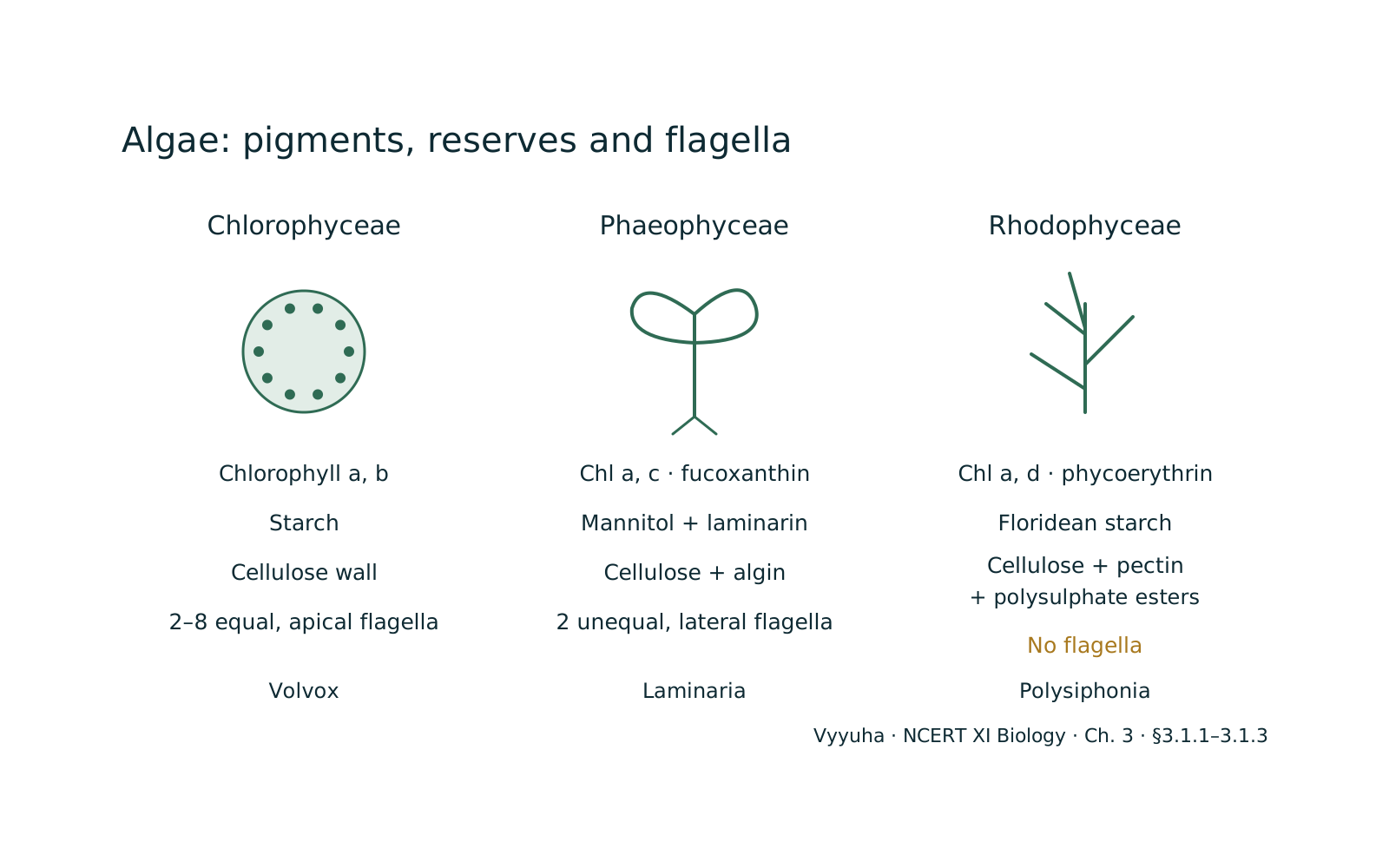
Detailed Explanation
The classification of algae is a fundamental aspect of botany, providing a structured approach to understanding the immense diversity within this polyphyletic group of photosynthetic organisms. While often grouped together due to their shared photosynthetic ability and simple thalloid body plan, algae are not a single evolutionary lineage.
Instead, they represent various groups that have independently evolved photosynthetic capabilities, leading to a wide array of biochemical, structural, and reproductive differences.
Conceptual Foundation: Why Classify Algae?
Algae are ubiquitous, inhabiting freshwater, marine, and even moist terrestrial environments. Their forms range from microscopic unicellular organisms to massive multicellular seaweeds. To make sense of this vast diversity, classification becomes indispensable. It allows biologists to:
- Organize Knowledge: — Systematically arrange algal species based on shared characteristics, making it easier to study and understand their biology.
- Infer Evolutionary Relationships: — Grouping organisms by common traits often reflects their evolutionary history, helping to construct phylogenetic trees.
- Predict Characteristics: — If an alga belongs to a certain class, we can predict many of its features, such as its pigments, stored food, and habitat.
- Identify Ecological Roles: — Different algal groups play distinct roles in ecosystems, from primary producers in aquatic food webs to symbionts in lichens.
- Recognize Economic Importance: — Many algal products (agar, algin, carrageenan) are derived from specific algal classes, making classification crucial for biotechnology and industry.
Key Principles and Laws of Algal Classification:
The primary criteria used for classifying algae are deeply rooted in their cellular biology and biochemistry. These include:
- Photosynthetic Pigments: — This is arguably the most important criterion. The specific types of chlorophylls (a, b, c, d), carotenoids (e.g., carotenes, xanthophylls like fucoxanthin), and phycobilins (e.g., phycoerythrin, phycocyanin) present in the chloroplasts dictate the color of the alga and its ability to absorb different wavelengths of light. This, in turn, influences their ecological niche, particularly in aquatic environments where light quality changes with depth.
- Nature of Stored Food Material: — The primary carbohydrate reserve product synthesized during photosynthesis varies significantly among algal groups. This reflects distinct metabolic pathways and serves as a reliable taxonomic marker.
- Cell Wall Composition: — While cellulose is a common component, the presence and nature of other polysaccharides (like pectin, algin, carrageenan, agar) in the cell wall are highly characteristic of different algal classes.
- Presence, Number, and Insertion of Flagella: — Flagella are locomotor organelles. Their presence or absence, the number per cell, their relative lengths (equal or unequal), and their point of attachment (apical, subapical, lateral) are crucial distinguishing features, especially for motile stages (zoospores, gametes).
- Habitat and Thallus Organization: — While less primary, general habitat preferences (freshwater, marine, brackish) and the complexity of the thallus (unicellular, colonial, filamentous, parenchymatous) also contribute to classification.
Detailed Breakdown of Major Algal Classes (NEET Focus):
Based on these criteria, three major classes are particularly relevant for NEET UG:
I. Chlorophyceae (Green Algae):
- Pigments: — Dominance of chlorophyll a and b, along with -carotene and xanthophylls. This pigment composition is very similar to that of higher plants, suggesting a common evolutionary ancestor.
- Color: — Grass green.
- Stored Food: — Starch, stored within pyrenoids (proteinaceous bodies associated with chloroplasts).
- Cell Wall: — Rigid cell wall made of an inner layer of cellulose and an outer layer of pectose.
- Flagella: — Typically 2 to 8, equal in size, and apically inserted (at the anterior end) in motile forms (zoospores, gametes).
- Habitat: — Mostly freshwater (e.g., ponds, lakes, rivers), but some are marine (e.g., Ulva) and a few are terrestrial (e.g., on moist soil, tree trunks).
- Thallus Organization: — Highly diverse, ranging from unicellular (Chlamydomonas), colonial (Volvox), filamentous (Ulothrix, Spirogyra), to parenchymatous (Ulva).
- Reproduction: — Vegetative (fragmentation), Asexual (zoospores, aplanospores), Sexual (isogamous, anisogamous, oogamous).
- Examples: — Chlamydomonas, Volvox, Ulothrix, Spirogyra, Chara, Chlorella, Ulva.
II. Phaeophyceae (Brown Algae):
- Pigments: — Chlorophyll a and c, carotenoids, and the dominant xanthophyll, fucoxanthin, which imparts the characteristic brown color.
- Color: — Olive green to various shades of brown, depending on the amount of fucoxanthin.
- Stored Food: — Complex carbohydrates like laminarin and mannitol (sugar alcohol).
- Cell Wall: — Composed of cellulose and algin (a phycocolloid), which gives them a gelatinous texture.
- Flagella: — Two unequal, laterally attached flagella are present in motile stages (zoospores, gametes).
- Habitat: — Almost exclusively marine, found predominantly in cold temperate and polar waters, often forming extensive kelp forests.
- Thallus Organization: — Highly variable, from simple branched filamentous forms (Ectocarpus) to profusely branched forms reaching up to 100 meters (Macrocystis). The body is typically differentiated into a holdfast (for attachment), a stipe (stalk), and a frond (leaf-like photosynthetic organ).
- Reproduction: — Vegetative (fragmentation), Asexual (biflagellate zoospores), Sexual (isogamous, anisogamous, oogamous).
- Examples: — Ectocarpus, Dictyota, Laminaria, Sargassum, Fucus, Macrocystis.
III. Rhodophyceae (Red Algae):
- Pigments: — Chlorophyll a and d, carotenoids, and the dominant phycobilins: phycoerythrin (red pigment) and phycocyanin (blue pigment). The abundance of phycoerythrin gives them their characteristic red color.
- Color: — Red to purplish-red, sometimes bluish or greenish in well-lit areas.
- Stored Food: — Floridean starch, which is structurally similar to amylopectin and glycogen.
- Cell Wall: — Complex, composed of cellulose, pectin, and various phycocolloids like agar and carrageenan.
- Flagella: — Completely absent in all stages of their life cycle, including motile spores and gametes. This is a unique and defining characteristic.
- Habitat: — Mostly marine, with a greater abundance in warmer areas. They can thrive in both well-lit surface waters and at great depths (up to 100 meters or more) where other algae cannot, due to their ability to absorb blue-green light (which penetrates deepest) using phycoerythrin.
- Thallus Organization: — Mostly multicellular, with complex body organization. Some are filamentous, others are parenchymatous or even calcified.
- Reproduction: — Vegetative (fragmentation), Asexual (non-motile spores), Sexual (oogamous, with complex post-fertilization development).
- Examples: — Polysiphonia, Porphyra, Gracilaria, Gelidium, Chondrus.
Common Misconceptions:
- All algae are plants: — While plant-like, algae are not true plants. They lack true roots, stems, leaves, and a vascular system. They are classified under Kingdom Protista (or various other kingdoms in more modern classifications, but for NEET, Protista is generally accepted for most algae, with green algae often considered ancestral to plants).
- All algae are green: — As discussed, algae exhibit a wide range of colors due to diverse pigment compositions.
- All algae are microscopic: — While many are, some brown algae (kelps) can grow to enormous sizes.
NEET-Specific Angle:
For NEET, the key is to master the comparative features of Chlorophyceae, Phaeophyceae, and Rhodophyceae. Questions frequently involve matching columns, identifying incorrect statements, or direct recall of specific features (pigments, stored food, cell wall, flagella, examples).
Understanding the ecological implications, such as why red algae are found in deeper waters, is also important. Focus on the unique characteristics of each group, especially the absence of flagella in red algae and the specific phycocolloids produced.
Often confused with
Side-by-side differences the NEET paper likes to test.
| Aspect | Classification of Algae | Chlorophyceae, Phaeophyceae, and Rhodophyceae |
|---|---|---|
| Common Name | Green Algae | Brown Algae |
| Major Pigments | Chlorophyll a, b; Carotenoids | Chlorophyll a, c; Fucoxanthin |
| Stored Food | Starch | Laminarin, Mannitol |
| Cell Wall Composition | Cellulose, Pectose | Cellulose, Algin |
| Flagella (Motile Stages) | 2-8, equal, apical | 2, unequal, lateral |
| Habitat | Mostly Freshwater, some Marine/Terrestrial | Almost exclusively Marine |
| Examples | *Chlamydomonas, Volvox, Spirogyra, Chara* | *Ectocarpus, Laminaria, Sargassum, Fucus* |
The three major classes of algae — Chlorophyceae, Phaeophyceae, and Rhodophyceae — are fundamentally distinguished by their unique combinations of photosynthetic pigments, energy storage molecules, cell wall components, and flagellar characteristics.
Green algae resemble higher plants in pigments and starch storage, brown algae are characterized by fucoxanthin and unique carbohydrates like laminarin, while red algae are defined by phycoerythrin, floridean starch, and a complete lack of flagella.
These differences reflect distinct evolutionary pathways and adaptations to diverse ecological niches, particularly varying light conditions in aquatic environments.
Why it is tested: For NEET, understanding these distinctions is paramount. Questions frequently test direct recall of these comparative features, often in matching or 'identify the incorrect statement' formats. The economic importance of phycocolloids from brown and red algae is also a recurring theme. Mastery of this comparative table is a high-yield strategy for scoring well on algal classification questions.
Questions students ask
5 answered on this topic.
What are the primary criteria used for classifying algae?
The classification of algae primarily relies on four fundamental criteria: the types of photosynthetic pigments present (e.g., chlorophylls, carotenoids, phycobilins), the chemical nature of their stored food reserves (e.
g., starch, laminarin, floridean starch), the composition of their cell walls (e.g., cellulose, algin, carrageenan), and the presence or absence, number, and insertion of flagella. These features collectively provide a robust framework for distinguishing between major algal groups.
Why are red algae (Rhodophyceae) often found in deeper oceanic waters compared to green or brown algae?
Red algae possess unique red pigments called phycoerythrins, which are highly efficient at absorbing blue-green light. Blue-green wavelengths penetrate deepest into water, while red light is absorbed closer to the surface. This adaptation allows red algae to photosynthesize effectively in low-light conditions found in deeper waters, giving them a competitive advantage over green and brown algae that rely more on red and orange light.
What are phycocolloids, and what is their significance in algal classification and economy?
Phycocolloids are hydrophilic polysaccharides found in the cell walls of certain algae, particularly brown and red algae. Examples include algin from brown algae and agar and carrageenan from red algae. These substances are significant taxonomically as their presence and type help classify algae. Economically, they are highly valuable, used as gelling agents, thickeners, and stabilizers in food, cosmetics, pharmaceuticals, and biotechnology (e.g., agar in culture media).
How do the flagellar characteristics differ among the major algal classes?
Flagellar characteristics are a key distinguishing feature. Green algae (Chlorophyceae) typically have 2 to 8 equal-sized, apically inserted flagella in their motile stages. Brown algae (Phaeophyceae) possess two unequal, laterally inserted flagella. A unique and defining characteristic of red algae (Rhodophyceae) is the complete absence of flagella at any stage of their life cycle, including their reproductive cells.
What is the evolutionary significance of the pigment composition in green algae (Chlorophyceae)?
The pigment composition of green algae, specifically the presence of chlorophyll a and b, along with carotenoids, is strikingly similar to that found in higher plants. This similarity is a strong piece of evidence supporting the hypothesis that green algae, particularly charophytes, are the direct evolutionary ancestors of land plants. This shared biochemical pathway for photosynthesis underscores a common lineage and evolutionary link.