General Characteristics
Angiosperms, also known as flowering plants, constitute the most diverse and widespread group of plants on Earth, characterized primarily by the presence of flowers, which are specialized reproductive structures. Their seeds are enclosed within a fruit, a distinguishing feature that sets them apart from gymnosperms, whose seeds are 'naked.' This enclosure provides superior protection and aids in d…
Quick Summary
Angiosperms, or flowering plants, are the most diverse and dominant group of plants, characterized by several key features. Their defining structure is the flower, a specialized reproductive organ containing male (stamens) and/or female (carpels) parts, often adapted to attract pollinators.
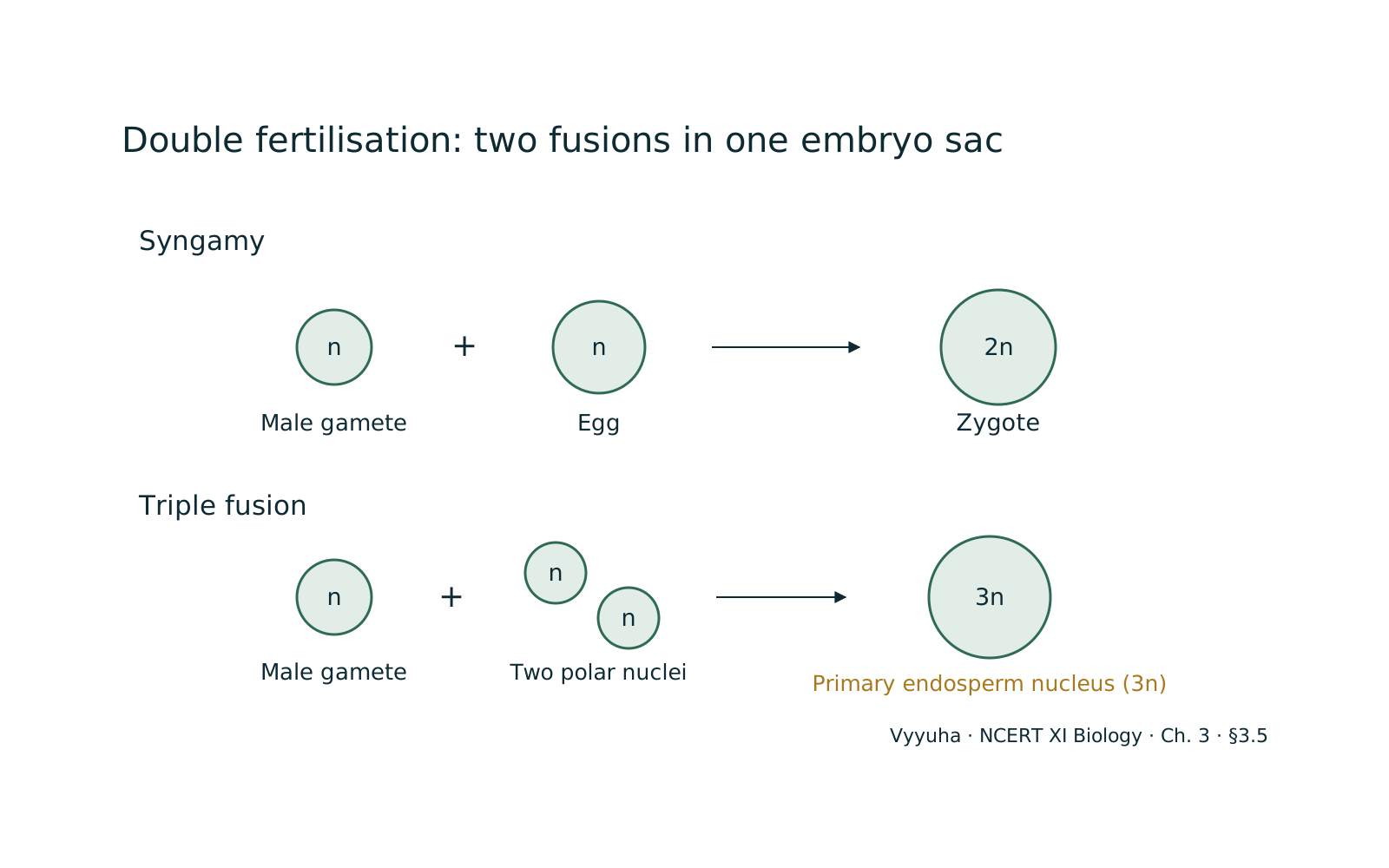
A unique process called double fertilization occurs, where one male gamete fuses with the egg to form a zygote (embryo), and another fuses with the central cell to form the triploid endosperm, which nourishes the embryo.
Crucially, angiosperm seeds are enclosed within a fruit, which develops from the ovary after fertilization. This fruit provides protection and aids in seed dispersal. They possess a highly efficient vascular system with true xylem vessels and phloem sieve tubes, enabling effective transport of water and nutrients.
The sporophyte generation is dominant, while the gametophytes are highly reduced and dependent. Angiosperms exhibit immense diversity in form and habitat, providing most of the world's food, fiber, and medicine, underscoring their ecological and economic importance.
Full explanation
Angiosperms, or flowering plants, represent the pinnacle of plant evolution, dominating terrestrial ecosystems across the globe. Their success can be attributed to a suite of highly evolved characteristics that confer significant adaptive advantages in reproduction, survival, and dispersal. Understanding these general characteristics is fundamental for any NEET aspirant, as they form the basis for classifying and comprehending the biology of this vast plant kingdom.
Conceptual Foundation: Evolution and Dominance
Angiosperms emerged approximately 140 million years ago during the early Cretaceous period and rapidly diversified, outcompeting many existing plant groups, including gymnosperms, to become the most species-rich and ecologically dominant group.
Their evolutionary success is rooted in innovations that optimized reproduction, nutrient transport, and environmental adaptation. The development of the flower as a specialized reproductive organ, the protection of seeds within fruits, and the unique process of double fertilization are key evolutionary milestones that propelled their dominance.
Key Principles and Laws Governing Angiosperm Characteristics:
- The Flower: The Reproductive Marvel
The flower is the defining characteristic of angiosperms. It is a modified shoot, typically comprising four whorls of floral organs: sepals, petals, stamens, and carpels, arranged on a receptacle. Each part plays a crucial role: * Sepals (Calyx): Outermost whorl, usually green and leaf-like, protecting the bud.
* Petals (Corolla): Often brightly colored and scented, attracting pollinators. * Stamens (Androecium): The male reproductive organ, consisting of a filament and an anther. Anthers produce pollen grains, which contain the male gametes.
* Carpels (Gynoecium): The female reproductive organ, typically composed of an ovary (containing ovules), a style, and a stigma. The stigma receives pollen, the style connects the stigma to the ovary, and the ovary encloses and protects the ovules.
The evolution of diverse floral structures and their co-evolution with pollinators (e.g., insects, birds, bats) has led to highly efficient and specific pollination mechanisms, ensuring genetic diversity and reproductive success.
- Double Fertilization: A Unique Reproductive Strategy
This process is exclusive to angiosperms and is a hallmark of their reproductive efficiency. It involves two distinct fusion events: * Syngamy: One male gamete (sperm) fuses with the egg cell (n) to form a diploid zygote (2n).
The zygote develops into the embryo. * Triple Fusion: The other male gamete (sperm) fuses with the central cell, which typically contains two polar nuclei (n+n), to form a triploid primary endosperm nucleus (3n).
This nucleus then develops into the endosperm. The significance of double fertilization lies in its efficiency: the endosperm, a nutritive tissue, is only formed after fertilization, ensuring that resources are not wasted on unfertilized ovules.
The endosperm provides nourishment to the developing embryo and, in many cases, to the germinating seedling.
- Fruit Formation: Seed Protection and Dispersal
Following fertilization, the ovary wall matures and develops into the fruit, which encloses the seeds. The fruit's primary functions are: * Protection: Shielding the developing seeds from desiccation, predation, and mechanical damage.
* Dispersal: Fruits are often adapted for various dispersal mechanisms. Fleshy fruits attract animals, which consume the fruit and disperse the seeds through their feces. Dry fruits may be adapted for wind dispersal (e.
g., winged seeds), water dispersal, or mechanical dispersal (e.g., explosive dehiscence). This efficient dispersal mechanism minimizes competition between parent and offspring and allows colonization of new habitats.
- Seed Enclosure: A Key Distinction
Unlike gymnosperms, where seeds are 'naked' (exposed on the surface of scales or leaves), angiosperm seeds are always enclosed within the fruit. This enclosure is a significant evolutionary advantage, offering superior protection to the embryo and contributing to the widespread success of flowering plants.
- Highly Developed Vascular System
Angiosperms possess a highly efficient vascular system, crucial for transporting water, minerals, and synthesized food throughout the plant body. Their xylem typically contains true vessels, which are more efficient at water conduction than the tracheids found in gymnosperms and ferns.
The phloem consists of sieve tubes and companion cells, facilitating rapid transport of sugars. This efficient transport system supports their often large size and complex structures, enabling them to thrive in diverse environments.
- Dominant Sporophyte Generation and Reduced Gametophyte
The life cycle of angiosperms exhibits alternation of generations, but the sporophyte (the plant body we typically see) is the dominant, independent, and photosynthetic generation. The gametophyte generation is highly reduced and dependent on the sporophyte.
The male gametophyte is represented by the pollen grain, and the female gametophyte (embryo sac) is contained within the ovule, which itself is enclosed within the ovary. This reduction and protection of the gametophytes within the sporophyte further enhance reproductive success and protection from environmental stresses.
- Diversity in Habit and Habitat
Angiosperms exhibit an unparalleled diversity in their growth forms (herbs, shrubs, trees, vines, epiphytes) and occupy nearly every conceivable habitat, from deserts to rainforests, high mountains to aquatic environments. This adaptability is a testament to their evolutionary plasticity and efficient physiological mechanisms.
Real-World Applications and Economic Importance:
Angiosperms are the cornerstone of human civilization. They provide:
- Food — Cereals (wheat, rice, maize), pulses (beans, lentils), fruits (apples, oranges, bananas), vegetables (potatoes, carrots, tomatoes), nuts, oils, and spices. They form the base of almost all food chains.
- Fiber — Cotton, flax, jute, hemp for textiles and ropes.
- Timber — Wood for construction, furniture, and paper from trees like teak, oak, pine.
- Medicines — A vast array of pharmaceutical compounds, from aspirin (willow bark) to quinine (cinchona), and countless traditional herbal remedies.
- Ornamentals — Flowers and plants for aesthetic purposes, landscaping, and horticulture.
- Industrial Products — Rubber, resins, gums, dyes, and biofuels.
Common Misconceptions:
- Angiosperms vs. Gymnosperms — A common mistake is confusing the two. Remember, angiosperms have enclosed seeds within fruits and produce flowers, while gymnosperms have naked seeds and do not produce true flowers or fruits.
- All flowers are bisexual — Not all flowers contain both male and female reproductive parts. Some are unisexual (either male or female), leading to monoecious (both male and female flowers on the same plant) or dioecious (male and female flowers on different plants) conditions.
- All fruits are fleshy and edible — Fruits can be dry (e.g., nuts, grains, pods) and are not always meant for human consumption. Their primary role is seed protection and dispersal.
NEET-Specific Angle:
For NEET, a deep understanding of angiosperm characteristics is crucial. Questions frequently test:
- Floral morphology — Identification of floral parts and their functions (e.g., 'Which part develops into the fruit?').
- Reproductive processes — Detailed steps and significance of double fertilization, formation of zygote and endosperm.
- Life cycle — Dominant sporophyte, reduced gametophyte, structure of pollen grain and embryo sac.
- Distinguishing features — Clear differentiation from gymnosperms, pteridophytes, and bryophytes.
- Economic importance — Examples of plants providing food, medicine, or fiber.
- Seed and fruit development — What develops from ovule, ovary, integuments, etc.
Mastering these general characteristics provides a strong foundation for understanding the subsequent classification of angiosperms into monocots and dicots, and their various families, which are also important topics for the NEET examination.
Key Concepts
A typical angiosperm flower is organized into four concentric whorls, each with a specific function. The…
Double fertilization is a two-step process initiated when a pollen grain lands on the stigma and germinates,…
After successful double fertilization, the ovary of the flower undergoes significant changes, maturing into a…
Often confused with
Side-by-side differences the NEET paper likes to test.
| Aspect | General Characteristics | Gymnosperms |
|---|---|---|
| Presence of Flowers | Present (specialized reproductive structures) | Absent (cones or strobili are present instead) |
| Seed Enclosure | Seeds are enclosed within a fruit (developed from ovary) | Seeds are 'naked' or exposed on sporophylls |
| Double Fertilization | Present and unique to angiosperms | Absent |
| Endosperm Ploidy | Triploid (3n), formed after fertilization | Haploid (n), formed before fertilization |
| Vascular Tissue (Xylem) | Possess true vessels (more efficient water transport) | Lack true vessels (primarily tracheids) |
| Female Gametophyte | Highly reduced (embryo sac, 7-celled, 8-nucleate) | Relatively larger, with archegonia |
| Pollination | Often involves animals (insects, birds) due to flowers | Primarily wind pollination |
Angiosperms and Gymnosperms represent two distinct groups of seed plants, with angiosperms being the more evolutionarily advanced and dominant. The most striking differences lie in their reproductive structures: angiosperms bear true flowers and enclose their seeds within fruits, while gymnosperms produce cones and have naked seeds.
Angiosperms also exhibit the unique process of double fertilization, leading to a triploid endosperm, and possess more efficient vascular tissues with xylem vessels. These innovations have contributed significantly to the widespread success and diversity of flowering plants.
Why it is tested: NEET relevance: Differentiating between angiosperms and gymnosperms is a frequently tested concept. Questions often focus on their unique reproductive features (flowers vs. cones, enclosed vs. naked seeds, double fertilization), ploidy of endosperm, and presence/absence of xylem vessels. A clear understanding of these distinctions is essential for conceptual questions and comparative analysis.
Questions students ask
6 answered on this topic.
What is the primary distinguishing feature of angiosperms compared to other plant groups?
The most fundamental distinguishing feature of angiosperms is the presence of flowers, which are specialized reproductive structures, and the enclosure of their seeds within a fruit. Unlike gymnosperms, whose seeds are 'naked' or exposed, angiosperm seeds are protected by the pericarp (fruit wall).
This evolutionary innovation provides superior protection to the developing embryo and significantly aids in seed dispersal, contributing to their widespread ecological success and dominance across diverse habitats.
Explain the significance of double fertilization in angiosperms.
Double fertilization is a unique process in angiosperms involving two fusion events. One male gamete fuses with the egg cell to form a diploid zygote, which develops into the embryo. The second male gamete fuses with the central cell (containing two polar nuclei) to form a triploid primary endosperm nucleus, which develops into the endosperm.
Its significance lies in ensuring that nutritive tissue (endosperm) is only formed when a viable embryo is initiated, preventing resource wastage and providing efficient nourishment for the developing embryo and seedling.
How do fruits contribute to the success of angiosperms?
Fruits are crucial for angiosperm success primarily through two mechanisms: seed protection and seed dispersal. The fruit wall (pericarp) physically protects the enclosed seeds from environmental stressors like desiccation, mechanical damage, and predation.
Furthermore, fruits have evolved diverse adaptations for dispersal, such as attractive fleshy parts for animal consumption, wings for wind dispersal, or buoyant structures for water dispersal. This ensures seeds are carried away from the parent plant, reducing competition and facilitating colonization of new areas.
What is the role of the endosperm in angiosperm seeds?
The endosperm is a nutritive tissue formed as a result of double fertilization in angiosperms. It is typically triploid (3n) and serves as a primary food source for the developing embryo within the seed.
It stores carbohydrates, proteins, and lipids, which are essential for the embryo's growth and initial establishment during germination. In some seeds (e.g., castor), the endosperm persists and provides nourishment to the seedling, while in others (e.
g., pea, bean), it is absorbed by the cotyledons during seed development.
Are all angiosperm flowers bisexual? Explain.
No, not all angiosperm flowers are bisexual. Bisexual (or perfect) flowers contain both male reproductive organs (stamens) and female reproductive organs (carpels). However, many angiosperms have unisexual (or imperfect) flowers, meaning they contain either stamens (male flower) or carpels (female flower), but not both.
Plants can be monoecious (both male and female flowers on the same plant, e.g., maize) or dioecious (male and female flowers on different plants, e.g., papaya). This diversity in floral structure influences pollination strategies.
How does the vascular system of angiosperms contribute to their dominance?
The vascular system of angiosperms is highly advanced and efficient, playing a critical role in their dominance. Their xylem typically contains true vessels, which are wider and more efficient at water and mineral conduction compared to the tracheids found in gymnosperms.
The phloem, composed of sieve tubes and companion cells, facilitates rapid and efficient transport of sugars (photosynthates) throughout the plant. This superior transport system allows angiosperms to grow larger, develop more complex structures, and colonize diverse habitats more effectively than other plant groups.
Revise in 30 seconds
- Flowers — Specialized reproductive organs, defining feature.
- Double Fertilization — Unique to angiosperms; one male gamete + egg Zygote (); other male gamete + central cell ( polar nuclei) Primary Endosperm Nucleus ().
- Fruit — Matured ovary, encloses seeds, aids protection and dispersal.
- Seed — Matured ovule, contains embryo and endosperm/cotyledons.
- Endosperm — Triploid () nutritive tissue for embryo.
- Vascular Tissue — Highly efficient, xylem with true vessels.
- Life Cycle — Dominant sporophyte, reduced gametophyte.
- Key Distinction — Seeds enclosed in fruit (vs. naked in gymnosperms).
To remember key Angiosperm characteristics: Flowers Define Fruit Seeds Enclosed Very Diverse.
- Flowers: The reproductive structures.
- Define: Double Fertilization is defining.
- Fruit: Ovary develops into fruit.
- Seeds: Ovules develop into seeds.
- Enclosed: Seeds are enclosed within fruits.
- Very: Vascular tissue is very efficient (with vessels).
- Diverse: They are the most diverse plant group.