Epidermal Tissue System — Explained
Detailed Explanation
The Epidermal Tissue System (ETS) represents the plant's primary interface with its external environment, forming a crucial protective and regulatory layer that envelops the entire plant body. Its evolution was a pivotal step in the colonization of land by plants, providing essential adaptations to cope with desiccation, mechanical stress, and pathogen attack.
Conceptual Foundation:
Terrestrial plants face numerous challenges, primarily the constant threat of water loss through evaporation, exposure to UV radiation, mechanical damage from wind or animals, and potential invasion by microorganisms.
The ETS is the specialized tissue system that addresses these challenges. It acts as a selective barrier, allowing necessary exchanges (gas, water, nutrients) while preventing detrimental ones. Its structural organization reflects a balance between protection and physiological function, making it indispensable for plant homeostasis and survival.
Key Principles/Laws:
- Protection: — The ETS provides a physical barrier against mechanical injury, pathogen entry, and herbivory. The tightly packed nature of epidermal cells and the presence of a cuticle are central to this function.
- Water Regulation: — The cuticle significantly reduces non-stomatal transpiration. Stomata, through their regulated opening and closing, control the rate of transpiration, balancing water conservation with the need for gas exchange.
- Gas Exchange: — Stomata are the primary gateways for the entry of carbon dioxide for photosynthesis and the exit of oxygen and water vapor.
- Absorption: — Root hairs dramatically increase the surface area for efficient absorption of water and mineral nutrients from the soil.
- Secretion and Defense: — Glandular trichomes secrete various substances (e.g., essential oils, deterrents), while non-glandular trichomes can provide physical defense.
Components of the Epidermal Tissue System:
The ETS is typically composed of three main types of structures:
- Epidermis (Epidermal Cells):
* Structure: This is the outermost layer of primary plant organs. It is typically a single layer of parenchymatous cells, compactly arranged without intercellular spaces. Epidermal cells are usually tabular (brick-shaped) in cross-section and often irregular or interlocking in surface view.
They are generally living cells, but unlike most other plant cells, they usually lack chloroplasts (except for guard cells). Their cytoplasm is often pushed to the periphery by a large central vacuole.
The outer wall of epidermal cells is often thicker than the inner walls. * Cuticle: Covering the outer surface of the epidermis in aerial parts of the plant is a waxy, protective layer called the cuticle.
It is composed primarily of cutin, a complex lipid polymer, embedded with waxes. The thickness of the cuticle varies greatly depending on the plant species and its environment; xerophytes (plants in dry habitats) typically have very thick cuticles to minimize water loss, while hydrophytes (aquatic plants) may have a very thin or absent cuticle.
* Function: The primary function of the epidermis is protection against desiccation (water loss), mechanical stress, and pathogen invasion. The cuticle is particularly effective in reducing transpiration.
It also helps reflect harmful UV radiation.
- Stomata (Stomatal Apparatus):
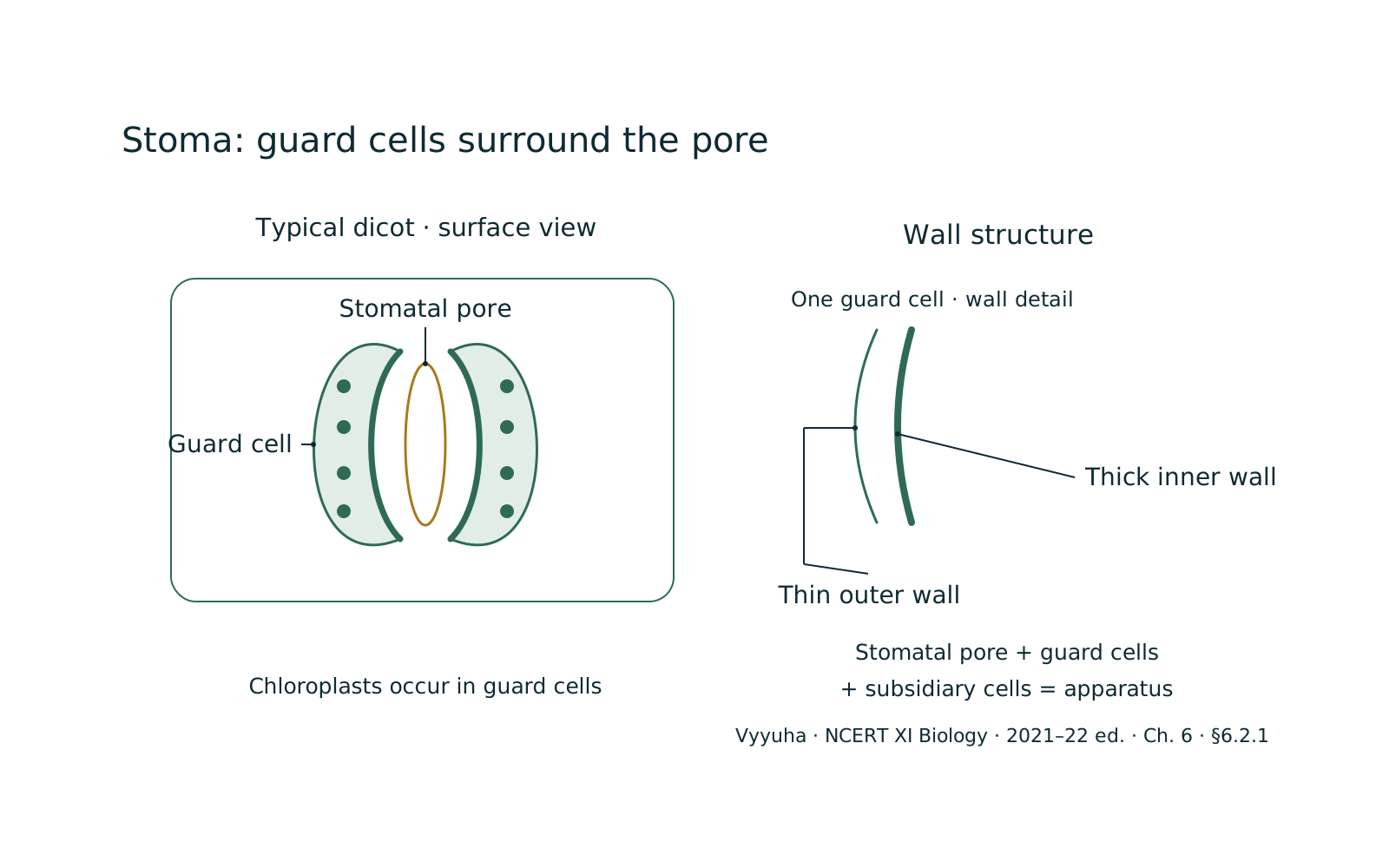
* Structure: Stomata are minute pores present in the epidermis of leaves and sometimes stems, facilitating gas exchange. Each stoma is surrounded by two specialized epidermal cells called guard cells.
Guard cells are unique among epidermal cells because they contain chloroplasts and are capable of photosynthesis. In dicots, guard cells are typically kidney-shaped (reniform), while in monocots (e.g., grasses), they are dumbbell-shaped.
The inner walls of guard cells (facing the pore) are thicker and more elastic than their outer walls. * Subsidiary Cells (Accessory Cells): In many plants, the epidermal cells surrounding the guard cells become specialized in shape and size and are known as subsidiary cells.
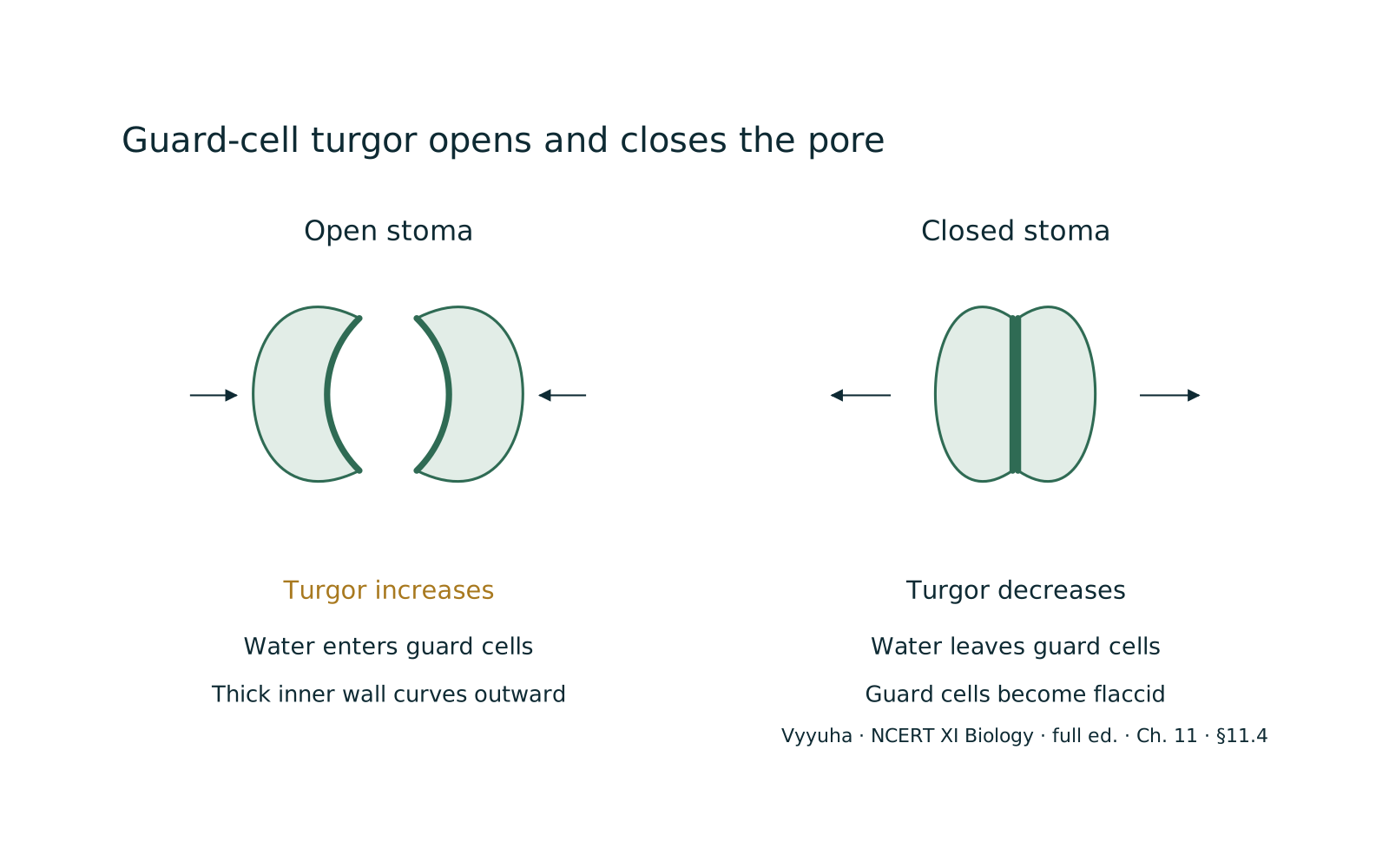
The guard cells along with the subsidiary cells (if present) and the stomatal aperture constitute the stomatal apparatus. * Mechanism of Opening and Closing: The opening and closing of stomata are regulated by the turgor pressure within the guard cells.
When guard cells absorb water, their turgor pressure increases. Due to the differential thickness of their walls and the radial orientation of cellulose microfibrils, the guard cells bow outwards, causing the stomatal pore to open.
Conversely, when guard cells lose water, their turgor pressure decreases, they become flaccid, and the pore closes. This turgor change is primarily driven by the active transport of potassium ions () into and out of the guard cells, followed by the osmotic movement of water.
Light, concentration, and water availability are key factors influencing stomatal movement. * Function: Stomata are essential for gas exchange (intake of for photosynthesis, release of ) and transpiration (release of water vapor), which helps in the ascent of sap and cooling of the plant.
- Epidermal Appendages (Trichomes and Root Hairs):
* Trichomes: These are hair-like outgrowths on the epidermis of stems, leaves, and other aerial parts. They can be unicellular or multicellular, branched or unbranched, soft or stiff, and may be secretory or non-secretory.
* Types and Functions: * Non-glandular trichomes: Provide physical protection against herbivores, reduce water loss by creating a boundary layer of still air, and can reflect solar radiation.
* Glandular trichomes: Secrete various substances like essential oils, resins, mucilage, or defensive compounds (e.g., stinging hairs of nettle). These secretions can deter herbivores, attract pollinators, or protect against pathogens.
* Root Hairs: These are specialized, unicellular, tubular elongations of epidermal cells (trichoblasts) in the root. They are typically found in the zone of maturation of the root. * Function: Root hairs significantly increase the surface area of the root epidermis, thereby maximizing the efficiency of water and mineral nutrient absorption from the soil.
They are crucial for the plant's uptake of essential resources.
Real-World Applications and Adaptations:
The structure of the ETS is highly adapted to the specific environmental conditions a plant faces:
- Xerophytes (Dry Habitats): — Often exhibit thick cuticles, sunken stomata (stomata located in pits or depressions to reduce air movement and water loss), and a dense covering of trichomes (e.g., Oleander leaf). Some have specialized water-storing epidermal cells.
- Hydrophytes (Aquatic Habitats): — Submerged plants may lack stomata entirely, with gas exchange occurring directly through the epidermal cells. Floating-leaved hydrophytes (e.g., water lily) have stomata only on the upper surface of the leaves. Cuticle is often thin or absent.
- Mesophytes (Moderate Habitats): — Have a moderately thick cuticle and stomata typically on both surfaces of the leaf, or predominantly on the lower surface.
Common Misconceptions:
- Epidermis vs. Dermal Tissue: — While epidermis is the primary dermal tissue in young plants, in older stems and roots, the epidermis is replaced by periderm (bark), which is part of the secondary dermal tissue system. The ETS specifically refers to the primary protective layer.
- Stomata are just holes: — Stomata are not just passive openings; they are dynamic structures whose opening and closing are actively regulated by guard cells, responding to environmental cues.
- All epidermal cells lack chloroplasts: — While most epidermal cells lack chloroplasts, guard cells are a notable exception, possessing chloroplasts and capable of photosynthesis, which contributes to their turgor changes.
NEET-Specific Angle:
For NEET, understanding the Epidermal Tissue System requires not just memorizing its components but also grasping their functional significance and adaptive roles. Questions frequently involve:
- Identification: — Recognizing epidermal cells, guard cells, subsidiary cells, trichomes, and root hairs in diagrams or microscopic images.
- Function: — Linking specific structures to their roles (e.g., cuticle for water retention, stomata for gas exchange, root hairs for absorption).
- Adaptations: — Understanding how the ETS is modified in different plant types (xerophytes, hydrophytes) to suit their environments.
- Mechanism: — Explaining the mechanism of stomatal opening and closing, including the role of potassium ions and turgor pressure.
- Distinguishing features: — Differentiating between various types of trichomes or between epidermal cells and guard cells.
Often confused with
Side-by-side differences the NEET paper likes to test.
| Aspect | Epidermal Tissue System | Ground Tissue System |
|---|---|---|
| Location | Outermost layer, covering the entire plant body (roots, stems, leaves). | Internal to the epidermis, forming the bulk of the plant body (cortex, pith, mesophyll). |
| Primary Function | Protection, gas exchange, water regulation, absorption, defense. | Photosynthesis, storage (food, water), support, secretion. |
| Cell Types | Epidermal cells, guard cells, subsidiary cells, trichomes, root hairs. | Parenchyma, collenchyma, sclerenchyma cells. |
| Cell Arrangement | Typically single-layered, compactly arranged, minimal intercellular spaces. | Often multi-layered, with varying degrees of intercellular spaces, forming bulk tissue. |
| Presence of Cuticle | Present on aerial parts (epidermal cells secrete it). | Absent, as it is an internal tissue. |
| Chloroplasts | Generally absent in epidermal cells, but present in guard cells. | Present in photosynthetic parenchyma (chlorenchyma) cells, absent in collenchyma and sclerenchyma. |
The Epidermal Tissue System (ETS) forms the plant's protective outer skin, primarily responsible for defense, regulating water loss via the cuticle and stomata, and absorption through root hairs. It consists of specialized epidermal cells, guard cells, and appendages.
In contrast, the Ground Tissue System (GTS) constitutes the internal bulk of the plant, filling the space between the ETS and the vascular tissues. Its main roles include photosynthesis (in leaves), storage of food and water, and providing structural support.
The GTS is composed of parenchyma, collenchyma, and sclerenchyma cells, each contributing to these diverse internal functions.
Why it is tested: For NEET, understanding the distinct roles and components of the Epidermal Tissue System versus the Ground Tissue System is fundamental. Questions often test the ability to differentiate between their functions, cellular composition, and anatomical locations. For instance, knowing that the ETS is for protection and gas exchange, while the GTS is for photosynthesis and storage, helps in identifying correct options in functional questions. Diagram-based questions might require identifying these tissue systems in a cross-section of a stem or leaf.
Questions students ask
6 answered on this topic.
What is the primary function of the cuticle in the Epidermal Tissue System?
The primary function of the cuticle is to prevent excessive water loss from the plant body through evaporation, a process known as transpiration. This waxy layer, composed mainly of cutin and waxes, forms a waterproof barrier over the epidermal cells of aerial plant parts.
By significantly reducing water evaporation, the cuticle plays a critical role in helping terrestrial plants conserve water, especially in dry or arid environments, thereby preventing desiccation and maintaining turgor pressure necessary for plant structure and physiological processes.
How do guard cells differ from other epidermal cells?
Guard cells are highly specialized epidermal cells that differ from typical epidermal cells in several key aspects. Firstly, they are typically kidney-shaped (dicots) or dumbbell-shaped (monocots) and surround the stomatal pore, whereas other epidermal cells are usually irregular or tabular.
Secondly, and most importantly, guard cells contain chloroplasts and can perform photosynthesis, a feature generally absent in other epidermal cells. This photosynthetic activity contributes to the energy required for their active ion transport, which drives stomatal movement.
Lastly, their cell walls are differentially thickened, with the inner wall facing the pore being thicker and more elastic, which is crucial for their turgor-driven opening and closing mechanism.
What are trichomes and what are their main functions?
Trichomes are epidermal outgrowths or hairs found on the surface of stems, leaves, and other aerial plant parts. They are incredibly diverse in structure, being unicellular or multicellular, branched or unbranched, and can be either glandular or non-glandular.
Their main functions include reducing water loss by creating a boundary layer of still air that traps humidity, providing physical defense against herbivores by being prickly or irritating, and secreting various substances (e.
g., essential oils, resins, defensive compounds) from glandular trichomes. They can also aid in absorption in some specialized cases.
Explain the role of root hairs in plants.
Root hairs are slender, unicellular, tubular extensions of epidermal cells (specifically, trichoblasts) located in the zone of maturation of a plant's root. Their primary and most crucial role is to significantly increase the surface area of the root epidermis.
This massive increase in surface area is vital for maximizing the efficiency of water and mineral nutrient absorption from the soil. By extending into the soil particles, root hairs come into close contact with water films and dissolved minerals, facilitating their uptake into the plant.
Without root hairs, the plant's ability to absorb essential resources would be severely limited.
How does the Epidermal Tissue System adapt to dry environments?
In dry environments (xerophytic conditions), the Epidermal Tissue System exhibits several key adaptations to minimize water loss. These include a very thick cuticle, which acts as a robust waterproof barrier.
Stomata are often sunken into pits or depressions, sometimes covered by trichomes, to create a humid microenvironment that reduces the water potential gradient and thus transpiration. Some xerophytes also develop a dense covering of trichomes over their leaf surfaces, which traps a layer of moist air and reflects sunlight, further reducing water loss and heat absorption.
These adaptations collectively enhance the plant's ability to conserve water.
What is the stomatal apparatus?
The stomatal apparatus refers to the complete functional unit responsible for regulating gas exchange and transpiration in plants. It consists of three main components: the stomatal aperture (the actual pore), the two guard cells that surround and control the opening and closing of this pore, and the subsidiary cells (also known as accessory cells), which are specialized epidermal cells surrounding the guard cells.
Subsidiary cells often differ in shape and size from other epidermal cells and play a supportive role in stomatal function, aiding in the movement of guard cells by providing a reservoir for water and ions.