Ground and Vascular Tissue Systems — Explained
Detailed Explanation
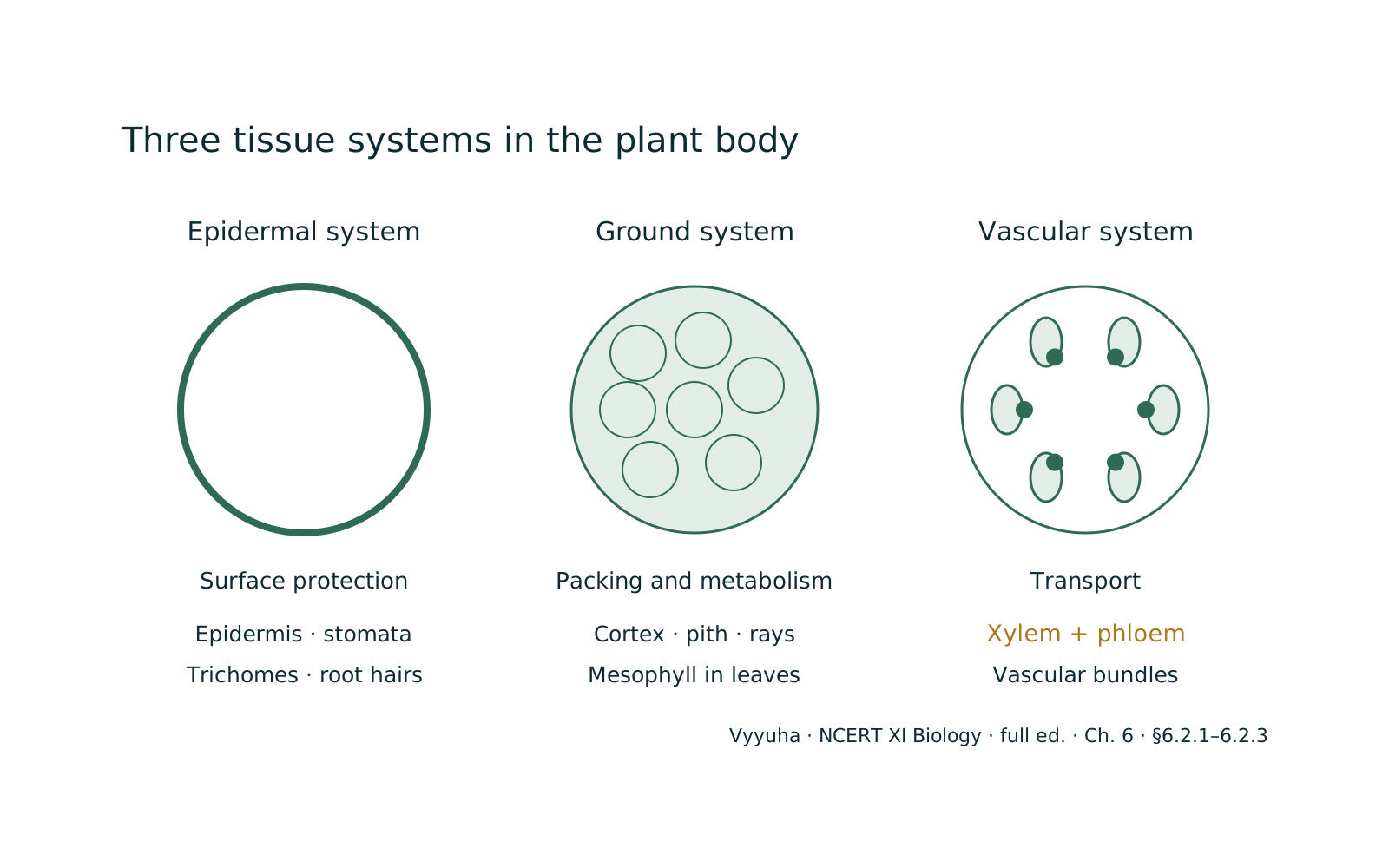
The intricate architecture of a vascular plant is fundamentally organized into three distinct tissue systems: the epidermal, ground, and vascular tissue systems. While the epidermal system forms the protective outer covering, the ground and vascular tissue systems constitute the internal bulk and the transport network, respectively, enabling the plant's growth, metabolism, and survival. Understanding these systems is paramount for comprehending plant physiology and adaptation.
Conceptual Foundation
Plant tissues are groups of cells that are structurally and functionally similar. These tissues, in turn, are organized into tissue systems, which perform broader, coordinated functions. The ground tissue system is the most voluminous, occupying the regions between the epidermis and the vascular tissues.
It is the site for most metabolic activities, including photosynthesis, storage, and secretion. The vascular tissue system, conversely, is specialized for long-distance transport, acting as the plant's internal 'plumbing' system, connecting all parts of the plant body.
Ground Tissue System
The ground tissue system is composed primarily of three simple permanent tissues: parenchyma, collenchyma, and sclerenchyma. Their distribution and relative abundance vary depending on the plant organ and its developmental stage, reflecting their diverse roles.
1. Parenchyma Tissue
- Structure: — Composed of living cells, typically isodiametric (equally dimensioned), thin-walled, with abundant intercellular spaces. They possess a large central vacuole and a prominent nucleus. The cell walls are primarily cellulosic.
- Functions:
* Photosynthesis: In leaves, parenchyma cells (mesophyll) contain chloroplasts and are the primary sites of photosynthesis. * Storage: They store food materials (starch, fats, proteins), water, and waste products (e.
g., tannins, resins). This is prominent in roots (e.g., potato tubers) and stems. * Secretion: Involved in the secretion of various substances. * Healing and Regeneration: Parenchyma cells retain the power of division and can differentiate into other cell types, aiding in wound healing and regeneration.
* Turgor Pressure: Maintain turgor, contributing to the rigidity of herbaceous plants.
- Distribution: — Forms the cortex and pith of stems and roots, the mesophyll of leaves, and the medullary rays in stems.
2. Collenchyma Tissue
- Structure: — Consists of living, elongated cells with unevenly thickened primary cell walls, primarily at the corners, due to the deposition of pectin and hemicellulose. Intercellular spaces are generally absent. They often contain chloroplasts.
- Functions:
* Mechanical Support: Provides flexible mechanical support to young, growing parts of the plant, such as young stems, petioles, and leaf margins, allowing them to bend without breaking. * Photosynthesis: If chloroplasts are present, they can perform photosynthesis.
- Distribution: — Typically found in the hypodermis (layer below the epidermis) of dicot stems and petioles. Absent in roots and monocot stems.
3. Sclerenchyma Tissue
- Structure: — Composed of dead cells at maturity, characterized by thick, lignified secondary cell walls. Lignin deposition makes them hard and rigid. They lack protoplast at maturity.
- Functions:
* Mechanical Support: Provides rigid mechanical support and protection to mature plant parts, making them hard and stiff. * Protection: Protects seeds and nuts due to their hardness.
- Types:
* Fibres: Long, narrow, pointed cells, often occurring in bundles. Found in the pericycle, xylem, and phloem (e.g., jute, flax). * Sclereids (Stone Cells): Short, irregular, often branched cells with extremely thick, lignified walls and narrow lumens. Found in fruit pulp (e.g., pear), seed coats (e.g., legumes), and nut shells.
- Distribution: — Present in various parts of the plant, including mature stems, leaves, fruits, and seed coats.
Vascular Tissue System
The vascular tissue system is the plant's lifeline, responsible for the efficient transport of water, minerals, and organic nutrients. It is composed of two complex tissues: xylem and phloem, which are typically organized into vascular bundles.
1. Xylem
- Function: — Primarily conducts water and dissolved minerals from roots to the rest of the plant. Also provides mechanical support.
- Components:
* Tracheids: Elongated, tube-like cells with tapering ends. Dead at maturity, with lignified walls and pits. Found in all vascular plants. * Vessels (Tracheae): Shorter, wider, cylindrical tubes arranged end-to-end to form continuous pipelines.
Dead at maturity, with lignified walls and perforations at the end walls. Primarily found in angiosperms. * Xylem Parenchyma: Living, thin-walled cells that store food (starch, fats) and assist in the lateral conduction of water.
* Xylem Fibres: Dead, thick-walled, lignified cells that provide mechanical support.
- Types of Xylem:
* Protoxylem: The first-formed primary xylem, with narrower vessels. * Metaxylem: The later-formed primary xylem, with wider vessels.
- Arrangement:
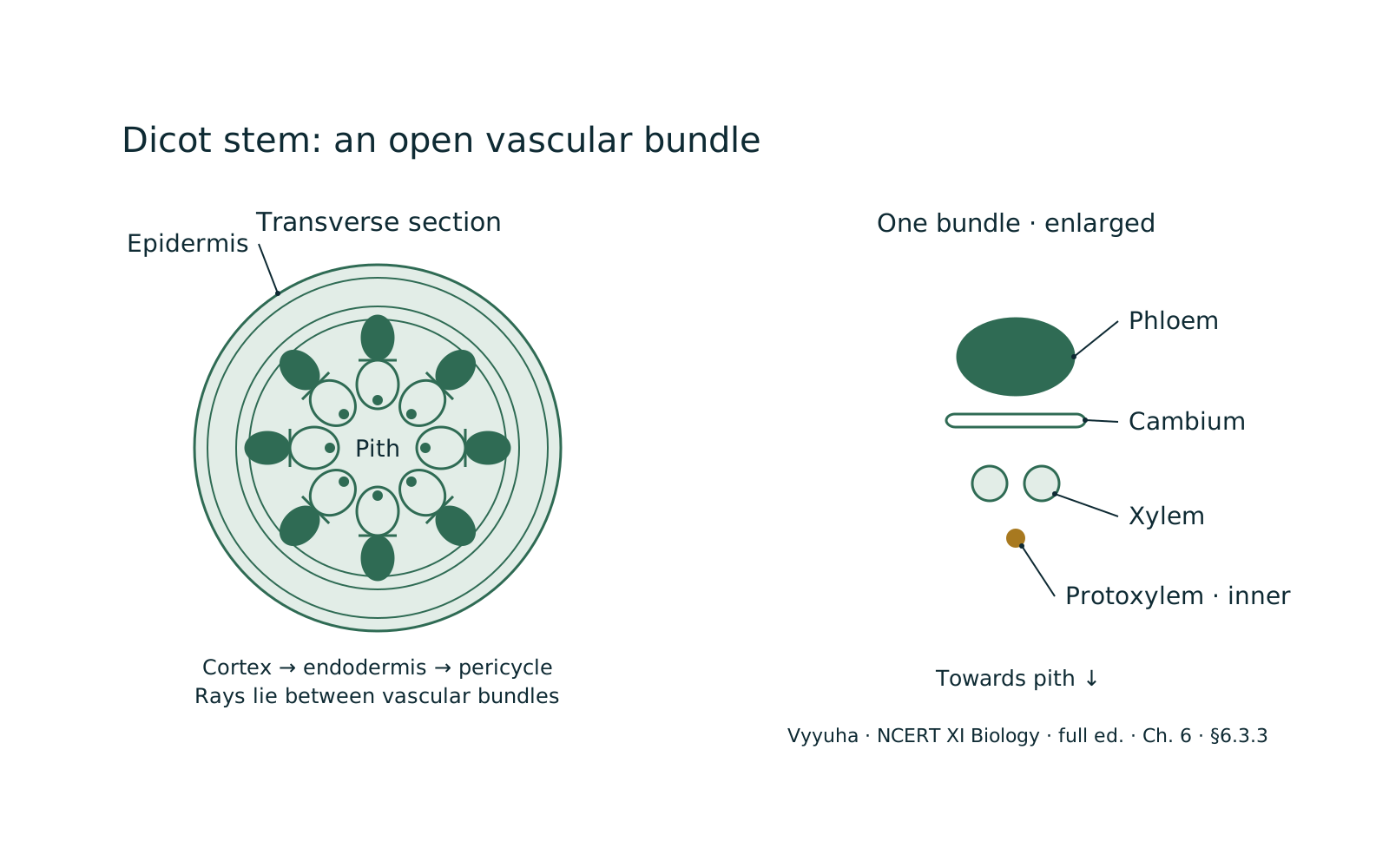
* Endarch: Protoxylem lies towards the pith (centre) and metaxylem towards the periphery (e.g., dicot stem). * Exarch: Protoxylem lies towards the periphery and metaxylem towards the pith (e.g., roots).
2. Phloem
- Function: — Transports organic nutrients (sugars, primarily sucrose) from the leaves (site of photosynthesis) to other parts of the plant (storage organs, growing regions).
- Components:
* Sieve Tube Elements: Living, elongated, tube-like cells arranged end-to-end, forming sieve tubes. Their end walls are perforated, forming sieve plates. They lack a nucleus at maturity but are associated with companion cells.
* Companion Cells: Living, specialized parenchyma cells closely associated with sieve tube elements. They have a prominent nucleus and help maintain the pressure gradient and metabolic functions of the sieve tube elements.
* Phloem Parenchyma: Living, thin-walled cells that store food materials (resins, latex, mucilage) and assist in lateral conduction. * Phloem Fibres (Bast Fibres): Dead, thick-walled, elongated cells that provide mechanical support.
Absent in primary phloem of most monocots.
Vascular Bundles
Xylem and phloem are typically organized into vascular bundles. The arrangement of these bundles is a key anatomical feature.
- Radial Vascular Bundles: — Xylem and phloem are arranged on different radii, alternating with each other. Characteristic of roots.
- Conjoint Vascular Bundles: — Xylem and phloem are situated on the same radius. Characteristic of stems and leaves.
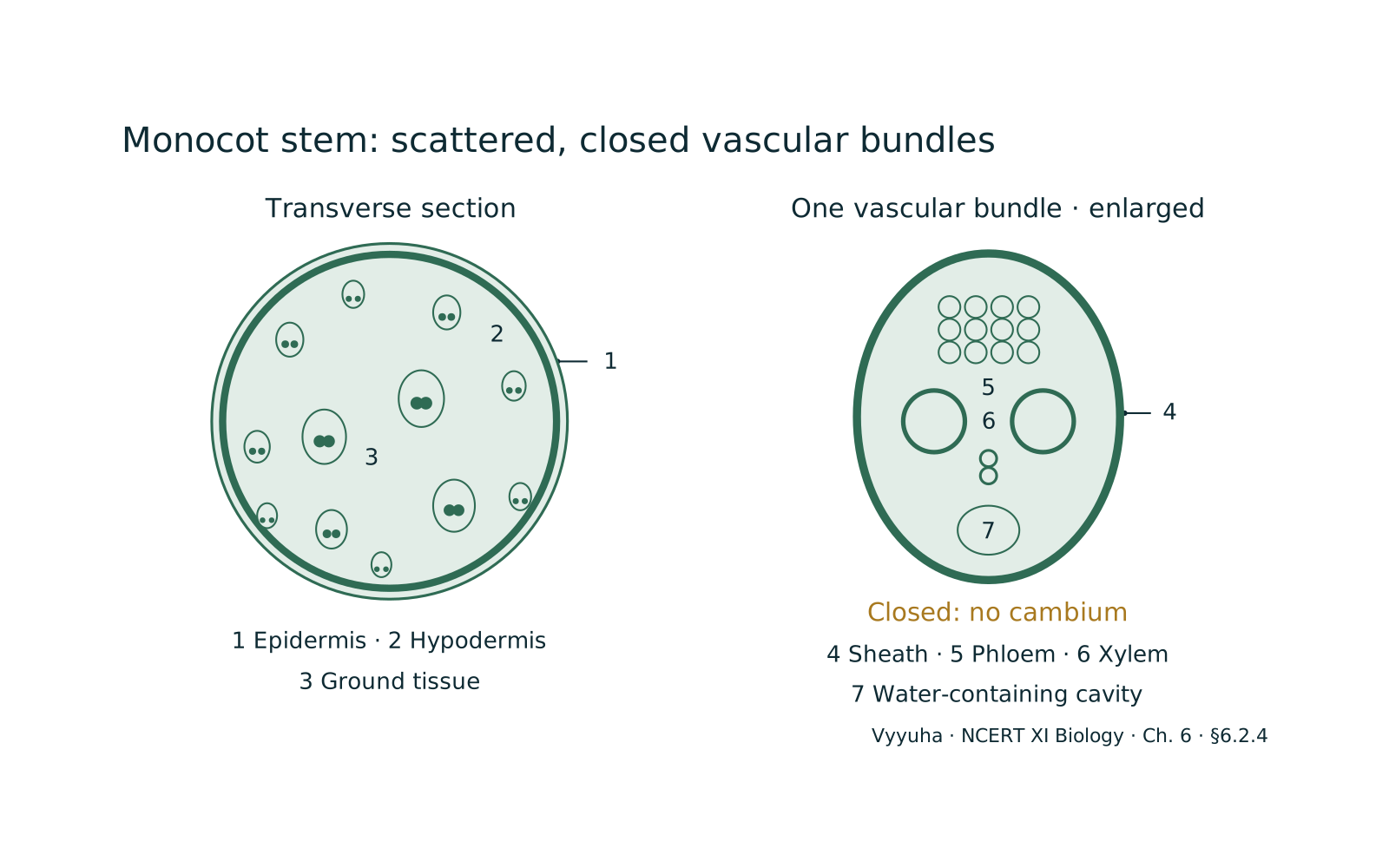
* Conjoint Collateral: Xylem is towards the inner side and phloem towards the outer side. Most common type. * Open: A strip of cambium (meristematic tissue) is present between xylem and phloem, allowing for secondary growth (e.g., dicot stem). * Closed: Cambium is absent, so no secondary growth occurs (e.g., monocot stem). * Conjoint Bicollateral: Phloem is present on both outer and inner sides of the xylem, with cambium on both sides (e.g., Cucurbita stem).
- Concentric Vascular Bundles: — One tissue completely surrounds the other. Rare in angiosperms, more common in ferns.
* Amphivasal (Leptocentric): Phloem surrounds xylem. * Amphicribral (Hadrocentric): Xylem surrounds phloem.
Real-World Applications and NEET-Specific Angle
The ground tissue system is crucial for plant survival, performing vital functions like photosynthesis (food production), storage (energy reserves), and structural support. The vascular tissue system ensures the efficient distribution of these resources and water, enabling plants to grow tall and colonize diverse environments. Understanding the specific cell types and their arrangements helps in identifying plant parts and their adaptations.
For NEET, a deep understanding of the structural components (cell types, their characteristics, and functions) and their arrangement in different plant organs (root, stem, leaf) for both monocots and dicots is essential. Questions often involve:
- Identification: — Recognizing tissue types from diagrams or descriptions.
- Functional Correlation: — Linking a specific tissue/cell type to its primary function.
- Comparative Anatomy: — Differentiating between monocot and dicot roots/stems/leaves based on ground and vascular tissue organization.
- Terminology: — Correctly using terms like endarch, exarch, collateral, radial, etc.
- Exceptions and Specializations: — Knowing unique features, e.g., absence of phloem parenchyma in some monocots, presence of cambium in open bundles.
Common Misconceptions
- Confusing simple and complex tissues: — Students often mix up parenchyma, collenchyma, sclerenchyma (simple) with xylem and phloem (complex). Remember simple tissues are made of one type of cell, complex tissues of multiple types.
- Function of xylem vs. phloem: — While both transport, xylem is primarily water and minerals (unidirectional, root to shoot), phloem is food (bidirectional, source to sink).
- Presence of cambium: — Not all vascular bundles have cambium. Only 'open' bundles in dicots do, allowing for secondary growth. Monocots have 'closed' bundles.
- Living vs. Dead cells: — Xylem has mostly dead cells (tracheids, vessels, fibres), except xylem parenchyma. Phloem has mostly living cells (sieve tube elements, companion cells, phloem parenchyma), except phloem fibres.
- Location of protoxylem/metaxylem: — Endarch (protoxylem towards pith) is for stems, exarch (protoxylem towards periphery) is for roots. This is a common point of confusion.
Often confused with
Side-by-side differences the NEET paper likes to test.
| Aspect | Ground and Vascular Tissue Systems | Monocot vs. Dicot Stem (Ground and Vascular Tissue) |
|---|---|---|
| Ground Tissue Organization | Monocot Stem: Ground tissue is undifferentiated, forming a continuous mass (often called fundamental tissue) with scattered vascular bundles embedded within it. No distinct cortex, endodermis, pericycle, or pith. | Dicot Stem: Ground tissue is well-differentiated into distinct regions: hypodermis (collenchymatous), cortex (parenchymatous), endodermis, pericycle, and a central pith (parenchymatous). |
| Vascular Bundle Arrangement | Monocot Stem: Vascular bundles are numerous, smaller, and scattered throughout the ground tissue. Often larger bundles towards the center and smaller ones towards the periphery. | Dicot Stem: Vascular bundles are fewer, larger, and arranged in a distinct ring around the pith. |
| Vascular Bundle Type | Monocot Stem: Vascular bundles are conjoint, collateral, and 'closed' (cambium absent). | Dicot Stem: Vascular bundles are conjoint, collateral, and 'open' (cambium present between xylem and phloem). |
| Secondary Growth | Monocot Stem: No secondary growth due to the absence of cambium (except in some arborescent monocots like palms). | Dicot Stem: Undergoes secondary growth due to the presence of cambium, leading to an increase in girth. |
| Bundle Sheath | Monocot Stem: Vascular bundles are typically surrounded by a prominent sclerenchymatous bundle sheath. | Dicot Stem: Bundle sheath is generally absent or poorly developed. |
The internal organization of ground and vascular tissues provides clear distinctions between monocot and dicot stems. Monocot stems exhibit scattered, closed vascular bundles within an undifferentiated ground tissue, precluding secondary growth.
In contrast, dicot stems feature vascular bundles arranged in a ring, which are open (possessing cambium), thus enabling significant secondary growth. These differences are critical for identifying plant types and understanding their growth patterns and adaptations.
Why it is tested: For NEET, understanding these anatomical differences is fundamental. Questions frequently test the ability to distinguish between monocot and dicot stems or roots based on the arrangement and characteristics of their ground and vascular tissue systems. This knowledge is crucial for practical identification and theoretical understanding of plant diversity and evolution.
Questions students ask
6 answered on this topic.
What is the primary difference in function between xylem and phloem?
The primary difference lies in their transport roles. Xylem is responsible for the unidirectional transport of water and dissolved mineral nutrients from the roots upwards to all aerial parts of the plant.
Phloem, on the other hand, conducts organic nutrients, primarily sugars (like sucrose) produced during photosynthesis in the leaves, to all other parts of the plant, including roots, growing tips, and storage organs.
This transport in phloem is bidirectional, moving from 'source' (where food is produced) to 'sink' (where it's used or stored).
Why are parenchyma cells considered the most versatile type of ground tissue?
Parenchyma cells are highly versatile due to their simple structure and metabolic activity. They are living cells with thin, flexible walls and retain the capacity to divide and differentiate. This allows them to perform a wide range of functions, including photosynthesis (in mesophyll cells), storage of food and water, secretion, and even wound healing and regeneration. Their presence in almost all plant organs further highlights their adaptability and fundamental importance.
What is the significance of cambium in vascular bundles?
Cambium is a lateral meristematic tissue found in 'open' vascular bundles, typically in dicot stems. Its significance lies in its ability to divide and produce new xylem cells towards the inner side and new phloem cells towards the outer side. This activity leads to an increase in the girth of the plant, a process known as secondary growth. Plants with cambium can form wood and bark, allowing them to grow larger and live longer, unlike plants with 'closed' bundles (lacking cambium).
How do monocot and dicot stems differ in their vascular tissue arrangement?
Monocot stems typically have scattered vascular bundles, which are usually numerous, smaller, and 'closed' (lacking cambium), meaning they do not undergo secondary growth. The bundles are often surrounded by a sclerenchymatous bundle sheath.
Dicot stems, in contrast, have vascular bundles arranged in a ring, which are fewer, larger, and 'open' (possessing cambium between xylem and phloem), enabling secondary growth. This difference in arrangement and presence of cambium is a key distinguishing feature.
What are sclereids, and where are they commonly found?
Sclereids are a type of sclerenchyma cell, characterized by their short, irregular shapes, extremely thick, lignified cell walls, and narrow lumens. Unlike sclerenchyma fibres, they are not typically elongated. Sclereids provide hardness and rigidity. They are commonly found in the pulp of fruits (e.g., the gritty texture in pears), the hard seed coats of legumes, and the shells of nuts, providing protection against mechanical stress and predation.
Explain the terms 'endarch' and 'exarch' in relation to xylem.
'Endarch' and 'exarch' describe the relative position of protoxylem (first-formed xylem with narrower vessels) and metaxylem (later-formed xylem with wider vessels) within the primary xylem. In an 'endarch' arrangement, the protoxylem is located towards the center (pith) of the organ, and the metaxylem is towards the periphery.
This is characteristic of stems. In an 'exarch' arrangement, the protoxylem is towards the periphery, and the metaxylem is towards the center. This arrangement is typical of roots, facilitating efficient water absorption and transport.