Polysaccharides
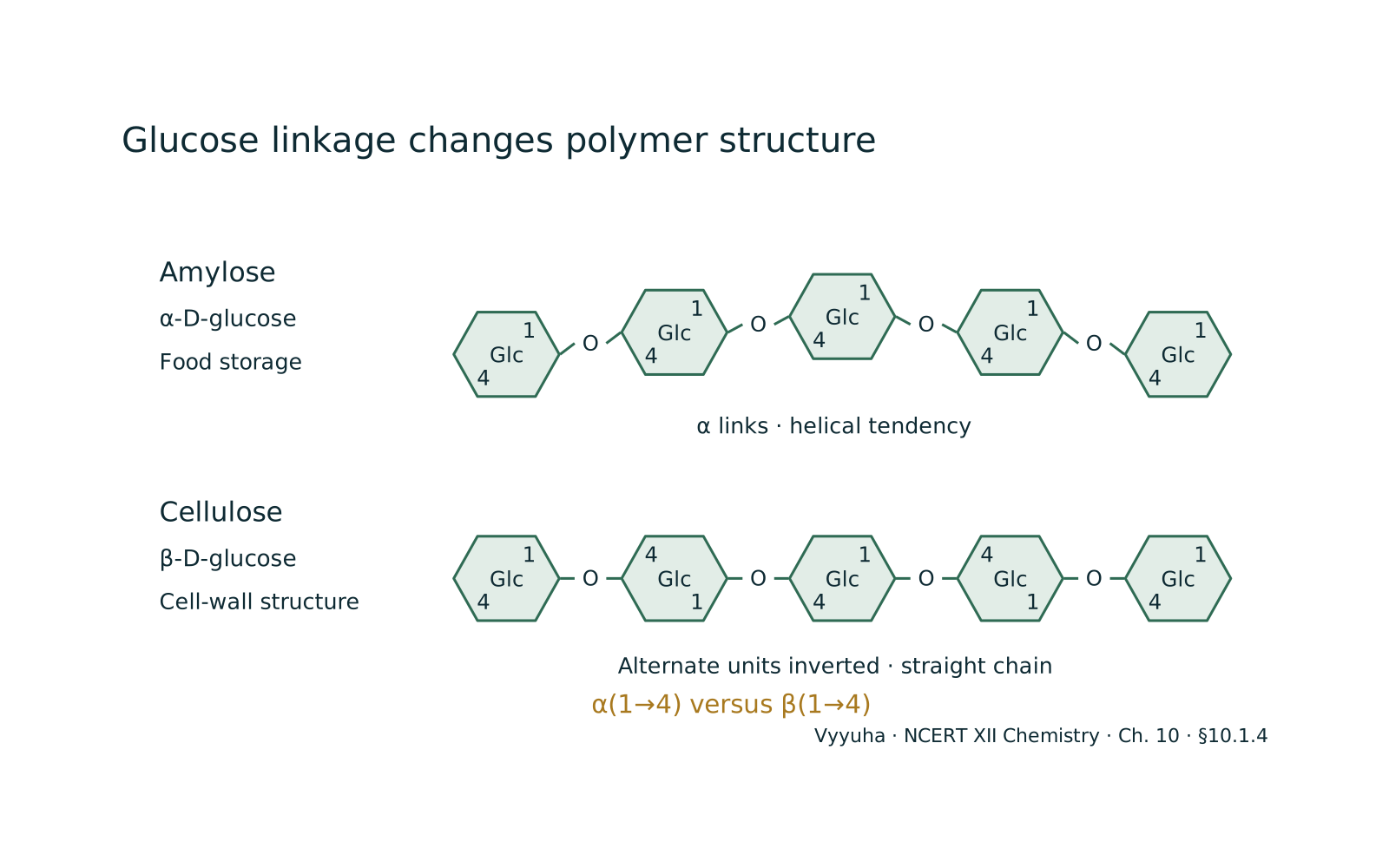
Polysaccharides are complex carbohydrates formed by the polymerization of a large number of monosaccharide units, typically hundreds to thousands, linked together by glycosidic bonds. These macromolecules serve crucial roles in living organisms, primarily as energy storage molecules (e.g., starch in plants, glycogen in animals) and as structural components (e.g., cellulose in plant cell walls, chi…
Quick Summary
Polysaccharides are large, complex carbohydrate polymers formed by linking many monosaccharide units (simple sugars) together through glycosidic bonds. These bonds are formed via dehydration reactions.
Unlike simple sugars, polysaccharides are generally not sweet and are often insoluble or sparingly soluble in water. They are broadly classified into homopolysaccharides, made of a single type of monosaccharide, and heteropolysaccharides, made of two or more different types.
Key examples of homopolysaccharides include starch (plant energy storage, composed of amylose and amylopectin), glycogen (animal energy storage, highly branched), cellulose (plant structural component, indigestible by humans), and chitin (exoskeletons of arthropods and fungal cell walls).
Heteropolysaccharides, such as hyaluronic acid and peptidoglycan, play crucial roles in structural support, lubrication, and cell recognition, often involving modified sugar units. Polysaccharides are vital for energy storage, providing structural integrity, and facilitating various biological processes in all living organisms.
Full explanation
Polysaccharides represent the most complex class of carbohydrates, characterized by their polymeric nature, consisting of hundreds to thousands of monosaccharide units linked via glycosidic bonds. These macromolecules are fundamental to life, fulfilling critical roles in energy storage, structural integrity, and cellular recognition. Understanding their structure, synthesis, and degradation is paramount for a comprehensive grasp of biochemistry.
Conceptual Foundation:
Polysaccharides are formed through a series of dehydration synthesis reactions, where each glycosidic bond formation results in the elimination of a water molecule. The reverse process, hydrolysis, breaks these bonds by adding a water molecule.
The type of monosaccharide monomer, the specific carbons involved in the glycosidic linkage (e.g., , , ), and the degree of branching determine the polysaccharide's overall three-dimensional structure and its biological function.
Their general formula is often represented as , where 'n' can be a very large number, reflecting the loss of water during polymerization.
Polysaccharides can be broadly classified into two main categories:
- Homopolysaccharides (Homoglycans): — Composed of only one type of monosaccharide monomer.
- Heteropolysaccharides (Heteroglycans): — Composed of two or more different types of monosaccharide monomers.
Key Principles and Laws:
- Glycosidic Bond Formation: — The primary chemical principle governing polysaccharide synthesis is the formation of a glycosidic bond, a covalent bond formed between the anomeric carbon of a carbohydrate and another functional group (typically a hydroxyl group of another carbohydrate). This is a condensation reaction.
- Stereochemistry of Glycosidic Bonds: — The orientation of the glycosidic bond (alpha or beta) is crucial. For instance, -glycosidic bonds in starch and glycogen are easily hydrolyzed by animal enzymes, while -glycosidic bonds in cellulose are not, due to specific enzyme requirements.
- Polymerization and Depolymerization: — Polysaccharides are synthesized by enzymes (e.g., glycosyltransferases) and broken down by other enzymes (e.g., glycosidases or carbohydrases), demonstrating the dynamic nature of these polymers in metabolism.
Major Homopolysaccharides and Their Biological Roles:
- Starch: — The primary energy storage polysaccharide in plants. It is a mixture of two glucose polymers:
* Amylose: A linear, unbranched polymer of D-glucose units linked by glycosidic bonds. It typically forms a helical structure, which can trap iodine, giving a characteristic blue-black color.
* Amylopectin: A branched polymer of D-glucose units. It has glycosidic bonds forming the main chain and glycosidic bonds at the branch points, occurring every 24-30 glucose residues.
Amylopectin is much larger and more abundant than amylose in most starches. * Function: Efficient long-term energy storage in plants, readily hydrolyzed to glucose for metabolic needs.
- Glycogen: — The principal energy storage polysaccharide in animals and fungi. Structurally, it is very similar to amylopectin but is even more highly branched, with linkages occurring every 8-12 glucose residues. This high degree of branching allows for rapid mobilization of glucose units from multiple non-reducing ends, crucial for quick energy release.
* Function: Short-term energy reserve in animals, particularly abundant in the liver (for blood glucose regulation) and muscles (for muscle contraction).
- Cellulose: — The most abundant organic polymer on Earth, forming the primary structural component of plant cell walls. It is a linear, unbranched polymer of D-glucose units linked by glycosidic bonds. The -linkages allow cellulose chains to form extended, rigid, ribbon-like structures that can hydrogen bond extensively with adjacent chains, forming strong microfibrils. This arrangement provides immense tensile strength.
* Function: Structural support and rigidity in plants. Humans lack the enzyme cellulase to hydrolyze glycosidic bonds, so cellulose acts as dietary fiber.
- Chitin: — The second most abundant polysaccharide after cellulose. It is a linear homopolysaccharide composed of N-acetylglucosamine units linked by glycosidic bonds. Structurally, it resembles cellulose, with strong hydrogen bonding between parallel chains.
* Function: Primary structural component of the exoskeletons of arthropods (insects, crustaceans) and the cell walls of fungi. Provides protection and structural rigidity.
- Inulin: — A homopolysaccharide composed of fructose units, typically with a terminal glucose. It is a storage carbohydrate in some plants (e.g., artichokes, dandelions, chicory). It is not digested by human enzymes and is used as a prebiotic.
* Function: Storage in plants, dietary fiber in humans.
Major Heteropolysaccharides and Their Biological Roles:
These polysaccharides contain two or more different types of monosaccharide units, often derivatives of sugars (e.g., amino sugars, uronic acids). Many heteropolysaccharides are components of the extracellular matrix (ECM) in animals.
- Hyaluronic Acid (Hyaluronan): — A linear polymer consisting of repeating disaccharide units of D-glucuronic acid and N-acetylglucosamine, linked by and glycosidic bonds. It is a major component of the ECM, synovial fluid, and vitreous humor of the eye.
* Function: Lubrication, shock absorption, cell migration, wound healing.
- Chondroitin Sulfate: — Consists of repeating disaccharide units of N-acetylgalactosamine and D-glucuronic acid, often sulfated. It is a major component of cartilage, bone, and other connective tissues.
* Function: Provides structural integrity to tissues, contributes to the compressive strength of cartilage.
- Heparin: — A highly sulfated linear polysaccharide composed of repeating disaccharide units of D-glucosamine and uronic acid (either D-glucuronic acid or L-iduronic acid). It is found in mast cells and is a potent anticoagulant.
* Function: Prevents blood clotting by activating antithrombin III.
- Peptidoglycan (Murein): — A complex heteropolysaccharide found in bacterial cell walls. It consists of alternating N-acetylglucosamine (NAG) and N-acetylmuramic acid (NAM) units linked by glycosidic bonds, with short peptide chains cross-linking the polysaccharide strands. This forms a strong, mesh-like layer.
* Function: Provides structural rigidity and protection to bacterial cells.
Real-World Applications:
- Food Industry: — Starch is a primary source of energy in human diets (cereals, potatoes). It's also used as a thickening agent in processed foods. Inulin is used as a dietary fiber and prebiotic.
- Textile and Paper Industry: — Cellulose is the main component of cotton, linen, and wood, used extensively in textiles, paper, and building materials.
- Biomedical Applications: — Chitin derivatives (chitosan) are used in wound dressings, drug delivery, and water purification. Hyaluronic acid is used in cosmetics, joint lubrication injections, and ophthalmic surgery. Heparin is a critical anticoagulant in medicine.
- Biofuels: — Cellulose is a potential source for cellulosic ethanol production.
Common Misconceptions:
- All carbohydrates are sweet: — Only monosaccharides and some disaccharides (like sucrose) are sweet. Polysaccharides are generally tasteless.
- All polysaccharides are digestible by humans: — While starch and glycogen are digestible, cellulose and chitin are not, due to the absence of specific enzymes (cellulase, chitinase) in the human digestive system. They function as dietary fiber.
- All polysaccharides are linear: — Many important polysaccharides, like amylopectin and glycogen, are highly branched, which significantly impacts their properties and functions.
- Polysaccharides are always just energy storage: — While many serve this role, an equally important function is structural support (cellulose, chitin, peptidoglycan) and cellular communication/recognition (glycocalyx components).
NEET-Specific Angle:
For NEET, the focus on polysaccharides typically revolves around:
- Examples and their monomers: — Knowing that starch, glycogen, and cellulose are polymers of glucose is crucial. Chitin is a polymer of N-acetylglucosamine. Heteropolysaccharides like peptidoglycan (NAG and NAM) are also important.
- Types of glycosidic bonds: — Differentiating between , , and linkages and their implications for digestibility and structure is a frequent test point.
- Branching patterns: — Understanding why glycogen is more branched than amylopectin and how this relates to rapid glucose mobilization.
- Biological functions: — Associating each polysaccharide with its primary role (e.g., starch/glycogen for energy, cellulose/chitin for structure, heparin for anticoagulation).
- Location: — Where these polysaccharides are found (e.g., starch in plants, glycogen in animals, cellulose in plant cell walls, chitin in fungi/arthropods, peptidoglycan in bacteria).
- Reducing vs. Non-reducing sugars: — Most polysaccharides are non-reducing due to the involvement of anomeric carbons in glycosidic bonds, leaving few or no free anomeric carbons. However, they do possess one reducing end.
Mastering these distinctions and functional correlations will enable students to confidently tackle questions related to polysaccharides in the NEET exam.
Key Concepts
Glycosidic bonds are the fundamental linkages in all complex carbohydrates. They are formed when the hydroxyl…
Starch, the plant's energy reserve, is not a single molecule but a mixture of two distinct glucose polymers:…
Cellulose is a remarkable polysaccharide, not for energy storage, but for its unparalleled structural…
Often confused with
Side-by-side differences the NEET paper likes to test.
| Aspect | Polysaccharides | Starch, Glycogen, and Cellulose |
|---|---|---|
| Monomer Unit | Starch | Glycogen |
| Monomer Unit | D-Glucose | D-Glucose |
| Primary Glycosidic Bonds | $\alpha-1,4$ (amylose) and $\alpha-1,4$ with $\alpha-1,6$ branches (amylopectin) | $\alpha-1,4$ with frequent $\alpha-1,6$ branches |
| Branching | Amylose is unbranched; Amylopectin is moderately branched (every 24-30 residues) | Highly branched (every 8-12 residues) |
| Biological Function | Long-term energy storage in plants | Short-term energy storage in animals and fungi |
| Location | Plants (e.g., seeds, tubers) | Animals (liver, muscles), fungi |
| Digestibility by Humans | Digestible (by amylase) | Digestible (by amylase) |
| Iodine Test Result | Blue-black color (due to amylose helix) | Reddish-brown color |
Starch, glycogen, and cellulose are all homopolysaccharides of glucose, yet their distinct glycosidic linkages, branching patterns, and resulting three-dimensional structures dictate vastly different biological roles.
Starch, a plant energy reserve, comprises linear amylose and moderately branched amylopectin, both with -linkages. Glycogen, the animal equivalent, is even more highly branched, facilitating rapid glucose release.
In stark contrast, cellulose, with its linkages, forms rigid, unbranched fibers crucial for plant structural support, rendering it indigestible to humans. These differences highlight how subtle variations in monomer linkage can lead to profound functional divergence in biological macromolecules.
Why it is tested: For NEET, understanding the comparative aspects of starch, glycogen, and cellulose is extremely high-yield. Questions frequently test their monomer units, types of glycosidic bonds, branching patterns, primary biological functions, and digestibility. Distinguishing between their structural features and functional consequences is fundamental to carbohydrate biochemistry and often appears in MCQs, requiring precise recall of details like $\alpha$ vs. $\beta$ linkages and branching frequency.
Questions students ask
6 answered on this topic.
What is the general chemical formula for polysaccharides?
The general chemical formula for polysaccharides is often represented as , where 'n' denotes the number of repeating monosaccharide units. This formula reflects the fact that for each glycosidic bond formed between two monosaccharide units, a molecule of water () is eliminated.
While this is a common representation, it's important to remember that this formula primarily applies to homopolysaccharides made of hexoses, like glucose polymers (starch, glycogen, cellulose), and may vary slightly for other types of monosaccharides or heteropolysaccharides.
How are polysaccharides formed and broken down in living organisms?
Polysaccharides are formed through a process called dehydration synthesis, also known as condensation reaction. In this process, individual monosaccharide units are linked together by glycosidic bonds, with the removal of a water molecule for each bond formed.
This synthesis is catalyzed by specific enzymes, such as glycosyltransferases. Conversely, polysaccharides are broken down into their constituent monosaccharide units through hydrolysis, a reaction where water is added across the glycosidic bonds, breaking them.
This catabolic process is facilitated by hydrolytic enzymes called glycosidases or carbohydrases, like amylase for starch or cellulase for cellulose.
What is the key difference between starch and glycogen?
Both starch and glycogen are homopolysaccharides of glucose, serving as energy storage molecules. The primary difference lies in their origin and degree of branching. Starch is the main storage polysaccharide in plants, composed of two components: amylose (linear, linkages) and amylopectin (branched, and linkages every 24-30 glucose units).
Glycogen, on the other hand, is the main storage polysaccharide in animals and fungi. It is structurally similar to amylopectin but is significantly more highly branched, with linkages occurring every 8-12 glucose units.
This higher branching in glycogen allows for faster glucose mobilization.
Why can't humans digest cellulose, even though it's made of glucose?
Humans cannot digest cellulose because they lack the specific enzyme, cellulase, required to hydrolyze the glycosidic bonds that link the glucose units in cellulose. While human digestive enzymes like amylase can break down glycosidic bonds found in starch and glycogen, the -linkage in cellulose has a different stereochemical orientation that human enzymes cannot recognize or cleave.
Therefore, cellulose passes through the human digestive tract largely undigested, functioning as dietary fiber, which is important for gut health but provides no nutritional calories.
What are heteropolysaccharides, and give an example?
Heteropolysaccharides, also known as heteroglycans, are polysaccharides composed of two or more different types of monosaccharide units or their derivatives. Unlike homopolysaccharides which use only one type of monomer, heteropolysaccharides exhibit greater structural diversity due to the varied building blocks.
A prominent example is hyaluronic acid, a major component of the extracellular matrix in animals. It is a linear polymer made of repeating disaccharide units of D-glucuronic acid and N-acetylglucosamine, playing roles in lubrication, shock absorption, and tissue organization.
Are polysaccharides reducing or non-reducing sugars?
Most polysaccharides are considered non-reducing sugars. A sugar is 'reducing' if it has a free anomeric carbon (a carbon atom that was part of the carbonyl group in the open-chain form of the sugar) that can open to form an aldehyde group, capable of reducing other compounds (like Benedict's reagent).
In polysaccharides, the anomeric carbons of most monosaccharide units are involved in forming glycosidic bonds, thus they are 'locked' and cannot open. While a polysaccharide chain technically has one free anomeric carbon at one end (the reducing end), its contribution to the overall reducing capacity is negligible due to the molecule's large size, making the entire molecule effectively non-reducing.
Revise in 30 seconds
- Polysaccharides: — Many monosaccharides linked by glycosidic bonds.
- Homopolysaccharides: — One type of monomer (e.g., glucose).
- Heteropolysaccharides: — Two+ types of monomers.
- Starch (Plants): — Energy storage. Glucose polymer. Amylose (linear, ) + Amylopectin (branched, & ). Blue-black with iodine.
- Glycogen (Animals/Fungi): — Energy storage. Glucose polymer. Highly branched ( & ). Reddish-brown with iodine.
- Cellulose (Plants): — Structural. Glucose polymer. Linear, . Indigestible by humans.
- Chitin (Arthropods/Fungi): — Structural. N-acetylglucosamine polymer. Linear, .
- Peptidoglycan (Bacteria): — Structural. NAG + NAM + peptide cross-links.
- Glycosidic bond: — Covalent bond, formed by dehydration, broken by hydrolysis.
- Digestibility: — -linkages digestible by humans; -linkages generally not.
To remember the major homopolysaccharides and their key features:
Starch: Storage in Plants, Alpha bonds, Branched (amylopectin) & Linear (amylose). Glycogen: Glucose in Animals, Alpha bonds, Highly Branched. Cellulose: Cell Walls of Plants, Beta bonds, Linear, Indigestible. Chitin: Crabs & Fungi, N-acetylglucosamine, Beta bonds, Structural.
Think: Some Good Cookies Crunch (Starch, Glycogen, Cellulose, Chitin) - and then recall their specific details using the mnemonic's letters.