Five Kingdom Classification — Explained
Detailed Explanation
The journey of classifying life forms is as old as human curiosity itself. Early attempts were often pragmatic, based on whether an organism was useful, harmful, or simply by its habitat. However, as scientific understanding deepened, the need for a more systematic and biologically sound classification became apparent.
The Five Kingdom Classification, proposed by R.H. Whittaker in 1969, represents a significant milestone in this journey, offering a robust framework that largely remains relevant today, especially for introductory biology.
Conceptual Foundation: The Evolution of Classification Systems
Before Whittaker, the most widely accepted system was the 'Two Kingdom Classification' by Carolus Linnaeus (1758), which divided all life into Plantae and Animalia. This system was revolutionary for its time, introducing binomial nomenclature and a hierarchical structure. However, it faced severe limitations:
- Lack of distinction for prokaryotes: — Bacteria and blue-green algae (cyanobacteria), despite their fundamental prokaryotic cell structure (lacking a true nucleus and membrane-bound organelles), were grouped with plants due to the presence of a cell wall.
- Fungi's ambiguous position: — Fungi, which are heterotrophic and have cell walls, were placed under Plantae. This ignored their distinct mode of nutrition (absorption vs. photosynthesis) and cell wall composition (chitin vs. cellulose).
- Unicellular eukaryotes: — Organisms like Euglena, which possess chloroplasts (plant-like) but also show amoeboid movement (animal-like), were problematic. Many single-celled organisms with diverse nutritional modes and cellular organizations did not fit neatly into either kingdom.
- Evolutionary relationships: — The two-kingdom system did not adequately reflect the evolutionary divergence and relationships between different groups of organisms.
To address these shortcomings, various scientists proposed modifications. Ernst Haeckel (1866) introduced Protista for unicellular organisms. Copeland (1956) proposed a four-kingdom system, adding Monera for prokaryotes. Whittaker's five-kingdom system built upon these ideas, integrating a more comprehensive set of criteria to establish a more natural and phylogenetically accurate classification.
Key Principles and Criteria of Whittaker's Five Kingdom Classification
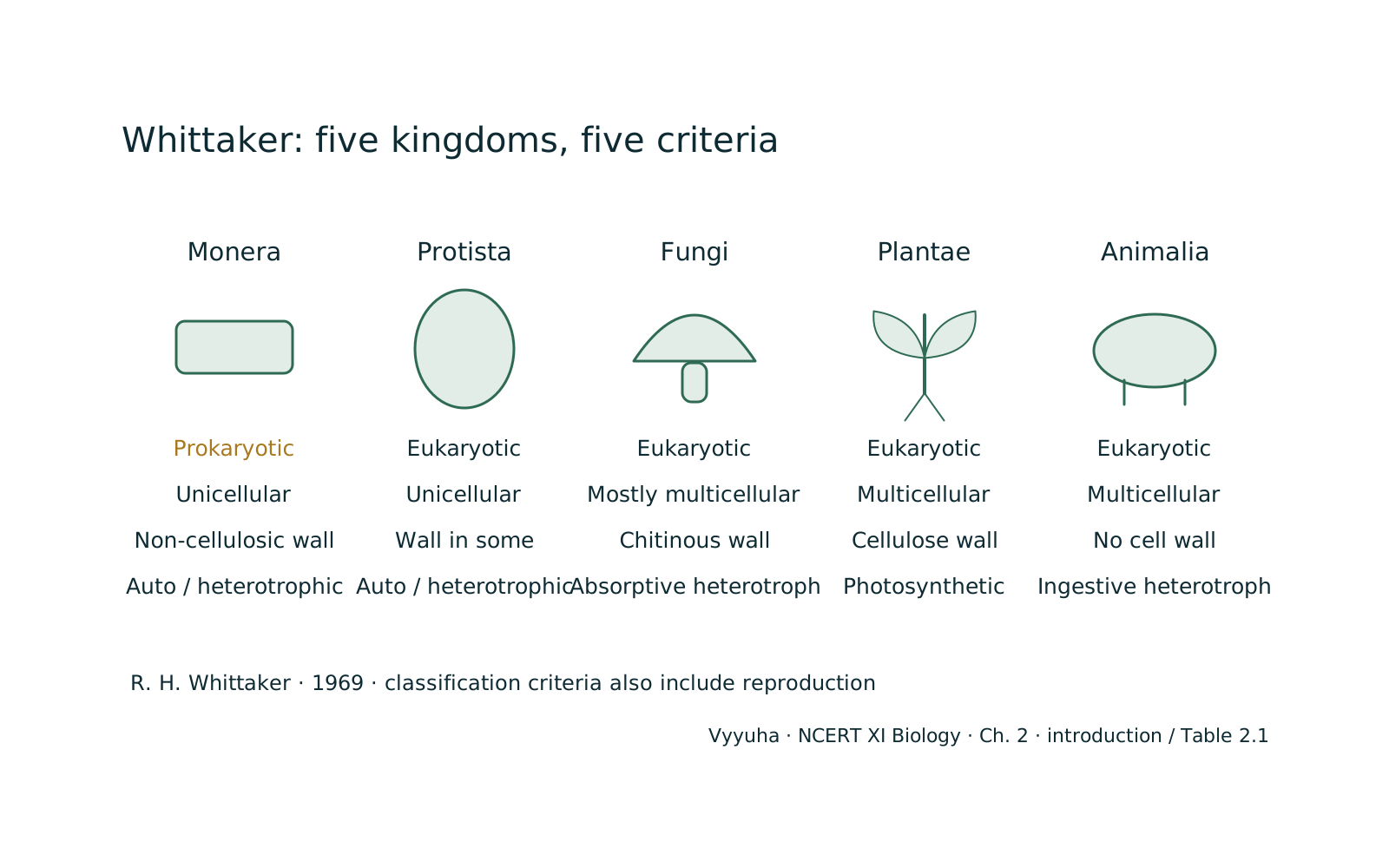
Whittaker's system is based on five fundamental criteria, which allowed for a more nuanced grouping of organisms:
- Cell Structure (Prokaryotic vs. Eukaryotic): — This is the most fundamental distinction. Prokaryotic cells lack a true nucleus and other membrane-bound organelles (e.g., mitochondria, chloroplasts). Eukaryotic cells possess these structures. This criterion separates Monera (prokaryotes) from all other four kingdoms (eukaryotes).
- Thallus Organization (Unicellular vs. Multicellular): — This refers to the complexity of the organism's body plan. Unicellular organisms consist of a single cell, while multicellular organisms are composed of many cells organized into tissues, organs, and organ systems. This criterion helps distinguish Protista (mostly unicellular eukaryotes) from Fungi, Plantae, and Animalia (mostly multicellular eukaryotes).
- Mode of Nutrition (Autotrophic vs. Heterotrophic): — This criterion describes how an organism obtains its energy and nutrients.
* Autotrophic: Organisms that produce their own food, primarily through photosynthesis (photoautotrophs, e.g., plants, cyanobacteria) or chemosynthesis (chemoautotrophs, e.g., some bacteria). * Heterotrophic: Organisms that obtain nutrients by consuming other organisms or organic matter.
This can be further divided into: * Holozoic: Ingestion of food, followed by internal digestion (e.g., animals). * Saprophytic (Saprotrophic): Absorption of nutrients from dead and decaying organic matter (e.
g., fungi, some bacteria). * Parasitic: Obtaining nutrients from a living host (e.g., some bacteria, fungi, protists, animals).
- Reproduction (Asexual vs. Sexual): — While all kingdoms exhibit some form of asexual reproduction, the presence and complexity of sexual reproduction (involving gamete fusion) vary significantly and are important indicators of evolutionary advancement.
- Phylogenetic Relationships (Evolutionary History): — This criterion considers the evolutionary lineage and relatedness between different groups of organisms. Whittaker's system attempts to group organisms based on their shared ancestry, reflecting the tree of life.
The Five Kingdoms:
1. Kingdom Monera
- Cell Type: — Prokaryotic (no true nucleus, no membrane-bound organelles).
- Body Organization: — Unicellular, colonial, or filamentous.
- Cell Wall: — Present, non-cellulosic (peptidoglycan).
- Mode of Nutrition: — Autotrophic (photosynthetic or chemosynthetic) or Heterotrophic (saprophytic or parasitic).
- Examples: — Bacteria (e.g., E. coli, Rhizobium), Cyanobacteria (blue-green algae), Archaebacteria.
- NEET Angle: — Focus on the absence of a true nucleus, peptidoglycan cell wall, and diverse metabolic capabilities. Understand the distinction between Eubacteria and Archaebacteria.
2. Kingdom Protista
- Cell Type: — Eukaryotic (true nucleus, membrane-bound organelles).
- Body Organization: — Mostly unicellular, some colonial (e.g., Volvox).
- Cell Wall: — Present in some (e.g., diatoms, dinoflagellates), absent in others (e.g., amoeba).
- Mode of Nutrition: — Autotrophic (photosynthetic), Heterotrophic (holozoic or saprophytic), or Mixotrophic (both).
- Examples: — Amoeba, Paramecium, Euglena, Diatoms, Dinoflagellates, Slime Moulds.
- NEET Angle: — Emphasize their eukaryotic, mostly unicellular nature, and diverse modes of nutrition. Understand the different groups within Protista (Chrysophytes, Dinoflagellates, Euglenoids, Slime Moulds, Protozoans).
3. Kingdom Fungi
- Cell Type: — Eukaryotic.
- Body Organization: — Mostly multicellular (filamentous, forming hyphae), some unicellular (e.g., yeast).
- Cell Wall: — Present, made of chitin and polysaccharides.
- Mode of Nutrition: — Heterotrophic (primarily saprophytic, some parasitic).
- Examples: — Mushrooms, molds, yeasts, rusts, smuts.
- NEET Angle: — Key features are chitinous cell walls, saprophytic nutrition (absorption), and filamentous body structure (except yeast). Understand their role as decomposers and different classes (Phycomycetes, Ascomycetes, Basidiomycetes, Deuteromycetes).
4. Kingdom Plantae
- Cell Type: — Eukaryotic.
- Body Organization: — Multicellular, with tissue and organ differentiation.
- Cell Wall: — Present, made of cellulose.
- Mode of Nutrition: — Primarily autotrophic (photosynthetic).
- Examples: — Algae (multicellular forms), Bryophytes, Pteridophytes, Gymnosperms, Angiosperms.
- NEET Angle: — Focus on cellulose cell walls, photosynthetic autotrophy, and the progression of complexity from simpler forms (algae, bryophytes) to more complex ones (angiosperms).
5. Kingdom Animalia
- Cell Type: — Eukaryotic.
- Body Organization: — Multicellular, with complex tissue, organ, and organ system differentiation.
- Cell Wall: — Absent.
- Mode of Nutrition: — Heterotrophic (holozoic).
- Examples: — Sponges, insects, fish, amphibians, reptiles, birds, mammals.
- NEET Angle: — Key characteristics are the absence of cell walls, holozoic nutrition, and the ability for locomotion. Understand the major phyla and their distinguishing features.
Real-World Applications and Significance
Whittaker's Five Kingdom Classification is not just an academic exercise; it has profound implications:
- Understanding Biodiversity: — It provides a structured way to catalog and understand the vast diversity of life, making it easier to study individual groups and their ecological roles.
- Ecological Roles: — By grouping organisms based on nutrition, it highlights their roles in ecosystems (producers, consumers, decomposers), crucial for understanding energy flow and nutrient cycling.
- Evolutionary Studies: — The system reflects broad evolutionary relationships, helping scientists trace the lineage of life forms and understand adaptive radiations.
- Medical and Agricultural Relevance: — Identifying pathogens (bacteria, fungi, protists) and pests (animals) becomes systematic, aiding in disease control and crop protection. Understanding beneficial organisms (e.g., nitrogen-fixing bacteria, mycorrhizal fungi) is also facilitated.
Common Misconceptions
- Viruses in the Five Kingdom System: — A major limitation is that viruses, viroids, and prions are not included. This is because they are acellular and do not fit the criteria of cellular organization. They are often considered at the 'borderline of living and non-living'.
- Fungi are Plants: — This is a persistent misconception. Fungi are distinct from plants primarily due to their heterotrophic (saprophytic) nutrition, chitinous cell walls, and lack of chlorophyll.
- All bacteria are harmful: — While some bacteria are pathogenic, the vast majority are harmless or even beneficial (e.g., gut bacteria, decomposers, nitrogen fixers).
- Protists are primitive animals/plants: — Protists are a highly diverse group, often considered a 'catch-all' kingdom for eukaryotes that don't fit into Fungi, Plantae, or Animalia. They represent a paraphyletic group, meaning they don't share a single common ancestor to the exclusion of all other groups.
NEET-Specific Angle
For NEET aspirants, a deep understanding of the distinguishing features of each kingdom is paramount. Questions often test:
- Key characteristics: — Cell type, cell wall composition, mode of nutrition, body organization for each kingdom.
- Examples: — Identifying which organisms belong to which kingdom, and specific examples within each kingdom (e.g., Euglena in Protista, Agaricus in Fungi).
- Exceptions: — Organisms that might seem to defy typical characteristics (e.g., unicellular fungi like yeast, parasitic fungi/bacteria).
- Criteria of classification: — Understanding why Whittaker chose the five specific criteria.
- Limitations: — Knowing why viruses are excluded and the challenges in classifying certain groups.
Mastering these aspects will ensure a strong foundation for biological classification and related topics.
Often confused with
Side-by-side differences the NEET paper likes to test.
| Aspect | Five Kingdom Classification | Two Kingdom Classification |
|---|---|---|
| Proposer | Carolus Linnaeus (1758) | R.H. Whittaker (1969) |
| Number of Kingdoms | Two (Plantae, Animalia) | Five (Monera, Protista, Fungi, Plantae, Animalia) |
| Primary Criteria | Presence/absence of cell wall, locomotion | Cell structure, thallus organization, mode of nutrition, reproduction, phylogenetic relationships |
| Prokaryotes | Grouped with plants (e.g., bacteria, blue-green algae) | Separate kingdom (Monera) |
| Fungi | Grouped with plants | Separate kingdom (Fungi) |
| Unicellular Eukaryotes | Ambiguous placement (some in Plantae, some in Animalia) | Separate kingdom (Protista) |
| Evolutionary Basis | Less reflective of evolutionary relationships | More phylogenetically sound, reflecting evolutionary divergence |
| Viruses | Not considered | Not included (acellular nature) |
The Two Kingdom Classification was a foundational but simplistic system, primarily distinguishing organisms by their ability to move and presence of a cell wall. It struggled with organisms like bacteria, fungi, and many protists, which possess characteristics that blur the lines between plants and animals.
Whittaker's Five Kingdom Classification, in contrast, introduced a more sophisticated and biologically accurate system by considering cellular complexity, body organization, and nutritional strategies, leading to a more natural grouping that better reflects evolutionary history and resolves the ambiguities of earlier systems.
Why it is tested: For NEET, understanding this historical progression is crucial. Questions often test the limitations of the two-kingdom system and the advantages/criteria of the five-kingdom system. It helps in appreciating the scientific method's iterative nature in refining understanding of life's diversity.
Questions students ask
5 answered on this topic.
Why was the Two Kingdom Classification system inadequate?
The Two Kingdom Classification, proposed by Linnaeus, divided all life into Plantae and Animalia. It proved inadequate because it failed to accommodate organisms that didn't fit neatly into either category.
For instance, prokaryotes (like bacteria) lacked a true nucleus but were grouped with plants due to cell walls. Fungi, though stationary like plants, were heterotrophic and had chitinous cell walls, unlike plants.
Moreover, many unicellular eukaryotes (protists) exhibited mixed characteristics, making their placement ambiguous. This system also didn't reflect evolutionary relationships accurately.
What are the five main criteria used by Whittaker for his classification system?
R.H. Whittaker's Five Kingdom Classification system is based on five fundamental criteria. These are: 1) Cell structure (whether prokaryotic or eukaryotic), 2) Thallus organization (whether unicellular or multicellular), 3) Mode of nutrition (autotrophic, heterotrophic - holozoic, saprophytic, or parasitic), 4) Reproduction (asexual or sexual), and 5) Phylogenetic relationships (evolutionary history and relatedness).
These criteria allowed for a more natural and comprehensive grouping of organisms based on their fundamental biological characteristics.
Why are viruses not included in the Five Kingdom Classification?
Viruses are not included in Whittaker's Five Kingdom Classification because they are acellular, meaning they do not possess a cellular structure. They lack the complex cellular machinery (like ribosomes, mitochondria) found in even the simplest living cells.
Viruses are obligate intracellular parasites, meaning they can only replicate inside living host cells, using the host's machinery. Since Whittaker's system is based on cellular organization and other cellular characteristics, viruses, existing at the borderline of living and non-living, do not fit the criteria for any of the five kingdoms.
What is the primary difference in cell wall composition between Fungi and Plantae?
The primary difference in cell wall composition is a key distinguishing feature between Fungi and Plantae. Plants have cell walls primarily composed of cellulose, a complex carbohydrate. In contrast, fungi possess cell walls made of chitin, which is a tough, nitrogen-containing polysaccharide also found in the exoskeletons of insects and crustaceans.
This difference, along with their distinct modes of nutrition, highlights their separate evolutionary paths and justifies their placement in different kingdoms.
Can organisms from the Monera kingdom be autotrophic?
Yes, organisms from the Kingdom Monera can indeed be autotrophic. While many bacteria are heterotrophic (saprophytic or parasitic), a significant portion of Monerans are autotrophic. This includes photoautotrophs, like cyanobacteria (blue-green algae), which perform photosynthesis using sunlight, and chemoautotrophs, which synthesize their own food using energy derived from the oxidation of inorganic chemical compounds (e.
g., nitrifying bacteria, sulfur bacteria). This nutritional diversity is a hallmark of the Monera kingdom.