Virus, Viroids and Prions — Explained
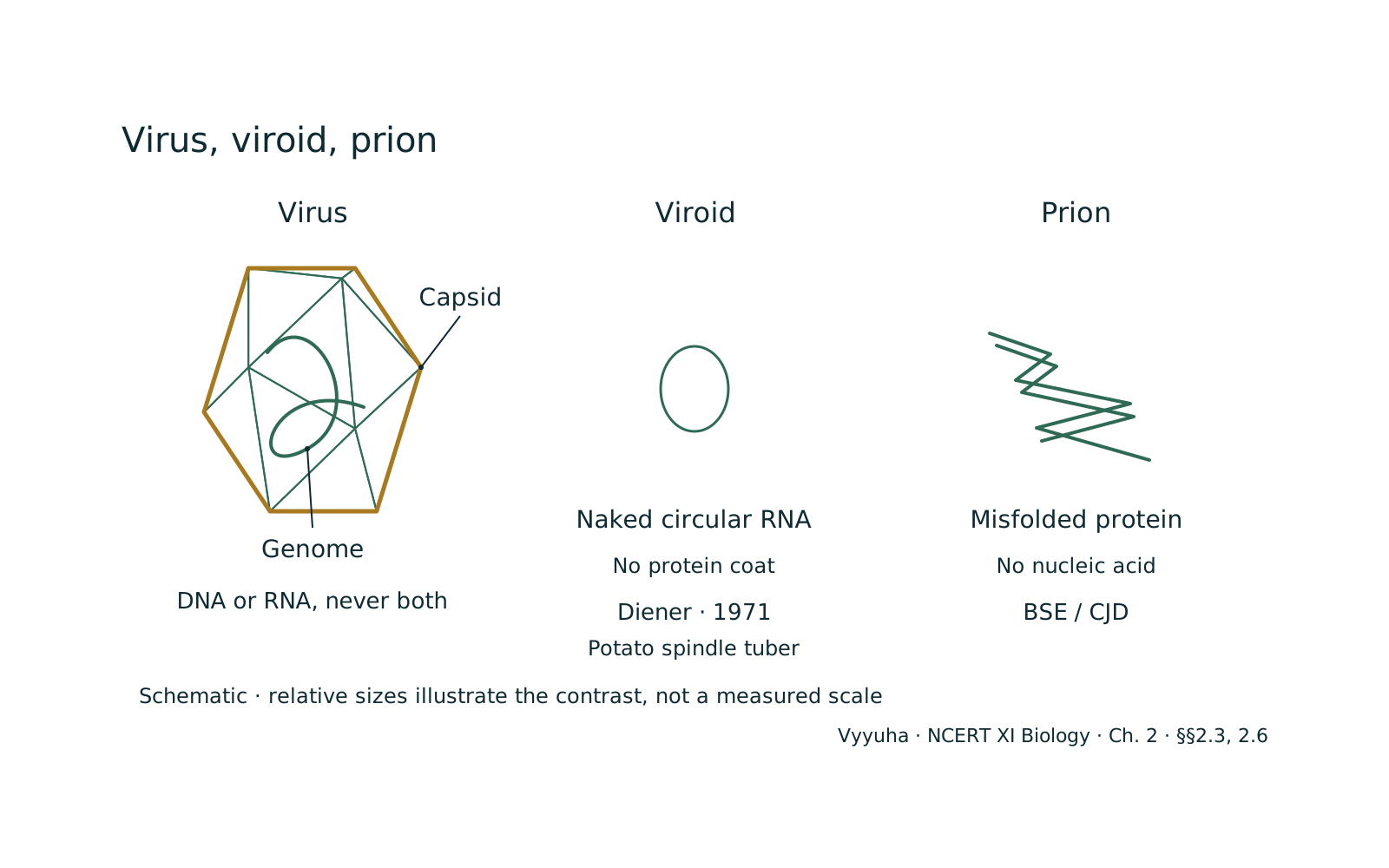
Detailed Explanation
The study of viruses, viroids, and prions offers a fascinating glimpse into the diversity of infectious agents and challenges our conventional understanding of life. These entities are often grouped together because they are acellular, meaning they lack the cellular organization (cytoplasm, organelles, cell membrane) that defines all other forms of life.
Consequently, they are not included in the five-kingdom classification system proposed by R.H. Whittaker, which categorizes organisms based on cellular structure, mode of nutrition, and ecological role.
Conceptual Foundation: Why Acellular Entities are Unique
Living organisms, from bacteria to humans, are fundamentally cellular. They possess a complex internal organization, can metabolize nutrients, grow, respond to stimuli, and reproduce independently. Viruses, viroids, and prions, however, are obligate parasites.
They cannot perform these 'life functions' outside a living host cell. They lack their own metabolic machinery and rely entirely on the host's ribosomes, enzymes, and energy-generating systems for replication and propagation.
This obligate parasitism and lack of cellular structure are the primary reasons for their exclusion from the traditional biological kingdoms.
Viruses: The Nucleoprotein Infectious Agents
Viruses are microscopic infectious agents that replicate only inside the living cells of an organism. They are significantly smaller than bacteria, typically ranging from 20 nm to 300 nm in diameter, and can only be observed with an electron microscope.
Structure of a Virus:
- Genetic Material (Genome): — A virus contains either DNA or RNA, but never both. This genetic material can be single-stranded (ss) or double-stranded (ds), and linear or circular. For example, bacteriophages often have dsDNA, influenza virus has ssRNA, and HIV has ssRNA.
- Capsid: — The genetic material is enclosed within a protective protein coat called the capsid. The capsid is made up of numerous identical protein subunits called capsomeres. The arrangement of capsomeres gives viruses their characteristic shapes (e.g., helical, polyhedral, complex).
- Envelope (Optional): — Some viruses, particularly animal viruses, have an additional outer layer called an envelope. This envelope is derived from the host cell's membrane during budding and often contains viral glycoproteins that aid in attachment to new host cells. Enveloped viruses (e.g., HIV, influenza) are generally more susceptible to disinfectants than non-enveloped (naked) viruses (e.g., poliovirus).
Types of Viruses:
- Based on Genetic Material: — DNA viruses (e.g., Poxvirus, Herpesvirus) and RNA viruses (e.g., Retrovirus, Picornavirus).
- Based on Host: — Plant viruses (e.g., Tobacco Mosaic Virus - TMV), animal viruses (e.g., Influenza virus, HIV), and bacteriophages (viruses that infect bacteria).
Replication Cycles:
Viruses replicate through complex cycles within host cells:
- Attachment: — The virus binds to specific receptors on the host cell surface.
- Penetration: — The virus or its genetic material enters the host cell.
- Uncoating: — The viral genetic material is released from the capsid.
- Replication/Biosynthesis: — The viral genome is replicated, and viral proteins are synthesized using the host cell's machinery.
- Assembly: — New viral particles (virions) are assembled from the replicated genetic material and proteins.
- Release: — New virions are released from the host cell, often by lysis (bursting) of the cell or by budding (acquiring an envelope from the host membrane).
Bacteriophages, in particular, exhibit two main cycles:
- Lytic Cycle: — The virus replicates immediately, lysing the host cell to release new virions. This is a virulent infection.
- Lysogenic Cycle: — The viral DNA integrates into the host bacterial chromosome (forming a prophage) and replicates along with the host DNA without immediately destroying the cell. The prophage can later excise and enter the lytic cycle.
Diseases Caused by Viruses: Common cold, influenza, measles, mumps, rubella, polio, AIDS, hepatitis, rabies, dengue fever, COVID-19.
Viroids: The Naked RNA Pathogens
Viroids are the smallest known infectious agents, discovered by Theodor Diener in 1971. They are distinct from viruses in several key aspects:
Structure of a Viroid:
- Naked RNA: — Viroids consist solely of a single-stranded, circular RNA molecule, typically very small (246-401 nucleotides long). Crucially, they lack a protein coat (capsid).
- Non-coding: — The viroid RNA does not code for any proteins. Its pathogenicity arises from its ability to interfere with host cell gene expression, often by acting as a regulatory RNA.
Replication: Viroids replicate autonomously within host cells, using the host's RNA polymerase (specifically, DNA-dependent RNA polymerase, which they somehow reprogram to transcribe RNA from an RNA template) to synthesize new viroid RNA molecules. They are primarily transmitted mechanically (e.g., through contaminated tools) or via pollen and seeds.
Diseases Caused by Viroids: Viroids are predominantly plant pathogens. Examples include Potato Spindle Tuber Viroid (PSTVd), Coconut Cadang-Cadang Viroid, Chrysanthemum Stunt Viroid, and Citrus Exocortis Viroid. Symptoms often include stunted growth, leaf distortion, and reduced yield.
Prions: The Infectious Proteins
Prions (PrPsc, Prion Protein Scrapie) are perhaps the most enigmatic infectious agents, discovered by Stanley Prusiner in the early 1980s. They are unique because they are composed entirely of protein, lacking any nucleic acid (DNA or RNA).
Nature of Prions:
- Misfolded Proteins: — Prions are abnormal, misfolded versions of a normal cellular protein called PrPC (Prion Protein Cellular), which is found abundantly in the brain and nervous tissue of mammals. The normal PrPC has a specific alpha-helical structure.
- Infectious Conformation: — The prion form, PrPSc, has a different, predominantly beta-sheet conformation. This abnormal structure makes it highly stable, resistant to proteases (enzymes that break down proteins), heat, and radiation.
- Self-Propagation: — The key to prion infectivity is its ability to act as a template, inducing normal PrPC proteins to refold into the abnormal PrPSc conformation. This process is a chain reaction, leading to an accumulation of insoluble PrPSc aggregates in neural tissue, forming plaques and causing neuronal death.
Diseases Caused by Prions (Transmissible Spongiform Encephalopathies - TSEs): These are fatal neurodegenerative diseases characterized by spongy degeneration of the brain tissue. They can be sporadic (arising spontaneously), inherited (due to mutations in the PrP gene), or acquired (through exposure to infectious prions).
- In Animals: — Bovine Spongiform Encephalopathy (BSE or 'Mad Cow Disease') in cattle, Scrapie in sheep and goats, Chronic Wasting Disease (CWD) in deer and elk.
- In Humans: — Creutzfeldt-Jakob Disease (CJD), variant CJD (vCJD, linked to consumption of BSE-infected meat), Kuru (historically associated with cannibalism), Gerstmann-Sträussler-Scheinker syndrome (GSS), Fatal Familial Insomnia (FFI).
Real-World Applications (Briefly):
While primarily associated with disease, some aspects of viral biology have been harnessed:
- Viral Vectors: — Modified viruses are used in gene therapy to deliver therapeutic genes into cells.
- Phage Therapy: — Bacteriophages are being explored as an alternative to antibiotics for treating bacterial infections.
Common Misconceptions:
- Viruses are not living organisms: — This is a nuanced point. While they lack independent metabolism and cellular structure, they possess genetic material, evolve, and replicate within host cells, exhibiting some characteristics of life. They are often described as 'organisms at the edge of life'.
- Viruses are bacteria: — No, viruses are much smaller and structurally simpler than bacteria. Bacteria are prokaryotic cells, capable of independent life and metabolism, while viruses are acellular obligate parasites.
- Antibiotics kill viruses: — Antibiotics are effective against bacteria, not viruses. Antiviral drugs are specifically designed to target viral replication mechanisms.
NEET-Specific Angle:
For NEET, focus on the distinguishing features:
- Genetic material: — Viruses (DNA or RNA), Viroids (RNA only), Prions (no nucleic acid).
- Protein coat: — Viruses (present), Viroids (absent), Prions (entirely protein).
- Host specificity: — Viruses (broad range), Viroids (primarily plants), Prions (mammals, especially nervous system).
- Diseases: — Memorize key examples for each category.
- Classification: — Understand why they are outside the five-kingdom system.
- Discovery: — Key scientists like Diener (Viroids) and Prusiner (Prions).
- Replication mechanism: — General viral cycle, viroid RNA replication, prion protein misfolding.
Understanding these acellular infectious agents is critical for a comprehensive grasp of biological classification and disease mechanisms, frequently tested in NEET.
Often confused with
Side-by-side differences the NEET paper likes to test.
| Aspect | Virus, Viroids and Prions | Viruses, Viroids, and Prions |
|---|---|---|
| Nature/Composition | Viruses: Nucleoprotein (genetic material + protein coat) | Viroids: Naked RNA (no protein coat); Prions: Misfolded protein (no nucleic acid) |
| Genetic Material | Viruses: DNA or RNA (ss or ds) | Viroids: RNA only (circular, ss); Prions: None |
| Protein Coat (Capsid) | Viruses: Present | Viroids: Absent; Prions: Absent (entirely protein, but not a capsid) |
| Size | Viruses: 20-300 nm (larger than viroids/prions) | Viroids: Smallest known infectious agents (~246-401 nucleotides); Prions: Protein aggregates, variable size |
| Host Range | Viruses: Plants, animals, bacteria, fungi | Viroids: Primarily plants; Prions: Mammals (especially nervous system) |
| Mechanism of Pathogenicity | Viruses: Replicate, hijack host cell machinery, cause cell damage/lysis | Viroids: Interfere with host gene expression (RNA interference); Prions: Induce misfolding of normal host proteins |
| Examples of Diseases | Viruses: Flu, HIV, Measles, COVID-19 | Viroids: Potato Spindle Tuber Disease; Prions: BSE, CJD, Scrapie |
| Discovery | Viruses: Ivanovsky, Beijerinck, Stanley (TMV) | Viroids: Diener (PSTVd); Prions: Prusiner (Scrapie) |
Viruses are nucleoprotein entities with DNA or RNA and a protein coat, infecting a wide range of hosts. Viroids are simpler, consisting only of naked, circular RNA, primarily plant pathogens. Prions are unique, being infectious misfolded proteins without any genetic material, causing neurodegenerative diseases in mammals.
This table highlights their fundamental differences in composition, genetic material, presence of a protein coat, size, host specificity, and disease mechanisms, which are crucial for distinguishing these acellular infectious agents.
Why it is tested: For NEET, understanding the distinct characteristics of viruses, viroids, and prions is fundamental. Questions frequently test their composition (presence/absence of protein coat, type of genetic material), host range, and the specific diseases they cause. The ability to differentiate between these three categories based on their unique biological properties is a high-yield concept.
Questions students ask
6 answered on this topic.
Why are viruses, viroids, and prions not included in the five-kingdom classification system?
The five-kingdom classification system, proposed by R.H. Whittaker, categorizes organisms based on cellular structure, mode of nutrition, and ecological role. Viruses, viroids, and prions are fundamentally acellular, meaning they lack the complex cellular organization (cytoplasm, organelles, cell membrane) characteristic of all kingdoms.
They are obligate parasites, entirely dependent on a living host cell's machinery for replication and metabolism, and cannot sustain life independently. This fundamental difference in organization and lifestyle places them outside the cellular framework of the five kingdoms.
What is the primary difference between a virus and a viroid?
The primary difference lies in their structure and composition. A virus is a nucleoprotein entity, meaning it consists of genetic material (either DNA or RNA) enclosed within a protective protein coat called a capsid. In contrast, a viroid is much simpler, composed solely of a naked, circular, single-stranded RNA molecule without any protein coat. Viroids are also significantly smaller than viruses and primarily infect plants, whereas viruses have a broader host range.
How do prions cause disease without any genetic material?
Prions cause disease through a unique mechanism involving protein misfolding. They are abnormal, misfolded versions of a normal cellular protein (PrPC) found in the body. When an infectious prion (PrPSc) comes into contact with a normal PrPC protein, it acts as a template, inducing the normal protein to refold into the abnormal, disease-causing PrPSc conformation.
This initiates a chain reaction, leading to the accumulation of insoluble PrPSc aggregates, particularly in the brain, which causes neuronal damage and neurodegenerative diseases.
Are antibiotics effective against viral infections?
No, antibiotics are specifically designed to target and kill bacteria or inhibit their growth. They work by interfering with bacterial cellular processes like cell wall synthesis, protein synthesis, or DNA replication, which are absent or different in viruses. Viruses lack their own metabolic machinery and replicate within host cells, making them unaffected by antibiotics. Antiviral drugs, which target specific stages of the viral life cycle, are used to treat viral infections.
Can viruses infect bacteria? If so, what are they called?
Yes, viruses can infect bacteria. These specific types of viruses are called bacteriophages, often simply referred to as 'phages'. Bacteriophages are among the most abundant biological entities on Earth and play crucial roles in microbial ecosystems.
They inject their genetic material into bacterial cells and hijack the bacterial machinery to replicate, often leading to the lysis (bursting) of the host bacterium. They are being explored for therapeutic uses, known as phage therapy, as an alternative to antibiotics.
What is the significance of the Tobacco Mosaic Virus (TMV) in virology?
The Tobacco Mosaic Virus (TMV) holds immense historical significance in virology. It was the first virus ever discovered and crystallized. In the late 19th and early 20th centuries, scientists like Dmitri Ivanovsky and Martinus Beijerinck demonstrated that the infectious agent causing mosaic disease in tobacco plants could pass through filters that retained bacteria, leading to the concept of a 'filterable virus'.
Wendell Stanley later crystallized TMV in 1935, showing it was largely composed of protein and RNA, paving the way for understanding the chemical nature of viruses.