Pteridophytes
Pteridophytes represent a pivotal evolutionary group within the plant kingdom, often referred to as the 'first terrestrial vascular plants'. They mark a significant transition from the non-vascular bryophytes, demonstrating true roots, stems, and leaves, alongside a well-developed vascular system comprising xylem and phloem. This vascular tissue is crucial for efficient transport of water and nutr…
Quick Summary
Pteridophytes are the first group of terrestrial plants to possess a true vascular system (xylem and phloem), enabling efficient transport of water and nutrients. They exhibit true roots, stems, and leaves, distinguishing them from non-vascular bryophytes.
Their life cycle is characterized by a dominant, independent sporophyte () generation, which is the familiar plant body, and a small, independent gametophyte () called a prothallus. Reproduction occurs via spores produced in sporangia, often clustered in sori on sporophylls.
Fertilization is water-dependent, requiring motile male gametes to swim to the egg, hence their 'amphibian' nature. Pteridophytes can be homosporous (producing one type of spore) or heterosporous (producing microspores and megaspores), with heterospory being an important evolutionary step towards seed habit.
Key examples include ferns, horsetails (Equisetum), clubmosses (Lycopodium, Selaginella), and whisk ferns (Psilotum), classified into Psilopsida, Lycopsida, Sphenopsida, and Pteropsida respectively.
They play ecological roles in soil conservation and are valued as ornamentals.
Full explanation
Pteridophytes, often celebrated as the 'reptiles of the plant kingdom' due to their intermediate position between amphibians (bryophytes) and higher plants (gymnosperms/angiosperms), represent a crucial evolutionary leap in the colonization of terrestrial environments. Their emergence marked the development of several key adaptations that allowed plants to thrive away from constant moisture, setting the stage for the evolution of seed plants.
Conceptual Foundation: The March to Land and Vascular Innovation
The evolutionary journey of plants from aquatic to terrestrial habitats was fraught with challenges: desiccation, lack of structural support, and inefficient transport of water and nutrients. Bryophytes made the initial foray but remained largely confined to moist environments due to their lack of vascular tissue and dependence on water for reproduction.
Pteridophytes overcame these limitations by evolving a true vascular system – xylem for water and mineral transport, and phloem for organic nutrient transport. This internal plumbing system allowed for efficient long-distance transport, enabling larger plant bodies and greater structural integrity.
Consequently, pteridophytes developed true roots for anchorage and absorption, stems for support and conduction, and leaves for photosynthesis, marking a significant departure from the thalloid body plan of bryophytes.
Key Principles and Laws: Alternation of Generations and Dominant Sporophyte
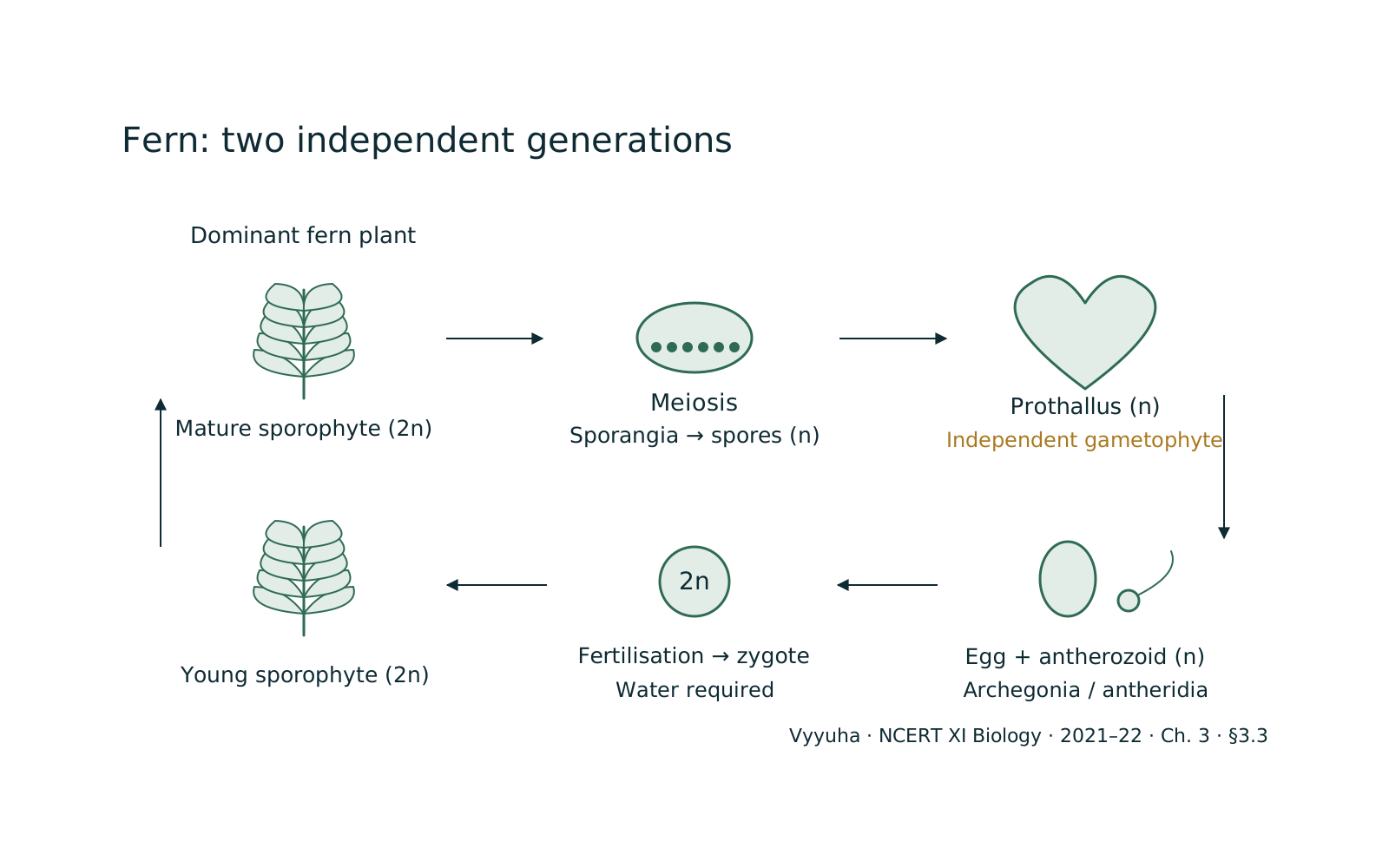
The life cycle of pteridophytes, like all plants, exhibits alternation of generations, but with a distinct shift in dominance. In pteridophytes, the diploid sporophyte () is the dominant, independent, photosynthetic, and long-lived phase. This is the leafy plant you typically recognize as a fern or horsetail. The sporophyte produces spores via meiosis within specialized structures called sporangia. These spores are haploid ().
Upon germination, a spore develops into a small, inconspicuous, and often short-lived haploid gametophyte (), also known as a prothallus. This gametophyte is typically photosynthetic and independent, though it requires moist conditions.
The gametophyte bears the sex organs: antheridia (producing male gametes, antherozoids) and archegonia (producing female gametes, eggs). Fertilization is external and strictly requires a film of water for the motile antherozoids to swim to the archegonium and fuse with the egg.
This water dependency is the primary reason pteridophytes are still restricted to moist, shady habitats, despite their vascular advancements.
The fusion of male and female gametes forms a diploid zygote (), which then develops into a new sporophyte, completing the cycle. This clear dominance of the sporophyte over the gametophyte is a defining characteristic of pteridophytes and a major evolutionary trend towards higher plants.
Homospory vs. Heterospory: A Reproductive Divide
Pteridophytes exhibit two main types of spore production:
- Homospory — The majority of pteridophytes (e.g., most ferns, Lycopodium) produce only one type of spore, which is morphologically similar. These spores germinate to form bisexual gametophytes (prothalli) that bear both antheridia and archegonia. While genetically capable of self-fertilization, cross-fertilization is often promoted by sequential maturation of sex organs.
- Heterospory — A significant evolutionary development seen in some pteridophytes (e.g., Selaginella, Salvinia, Marsilea) is heterospory. Here, two distinct types of spores are produced: microspores (smaller, germinate into male gametophytes) and megaspores (larger, germinate into female gametophytes). This separation of sexes at the gametophytic stage is a crucial precursor to seed habit, as the female gametophyte develops within the megasporangium, providing protection and nourishment to the developing embryo. This phenomenon is often referred to as the 'seed habit' precursor.
Morphological Features:
- Roots — True roots, typically adventitious, arising from the stem.
- Stem — May be underground (rhizome) or aerial, often branched.
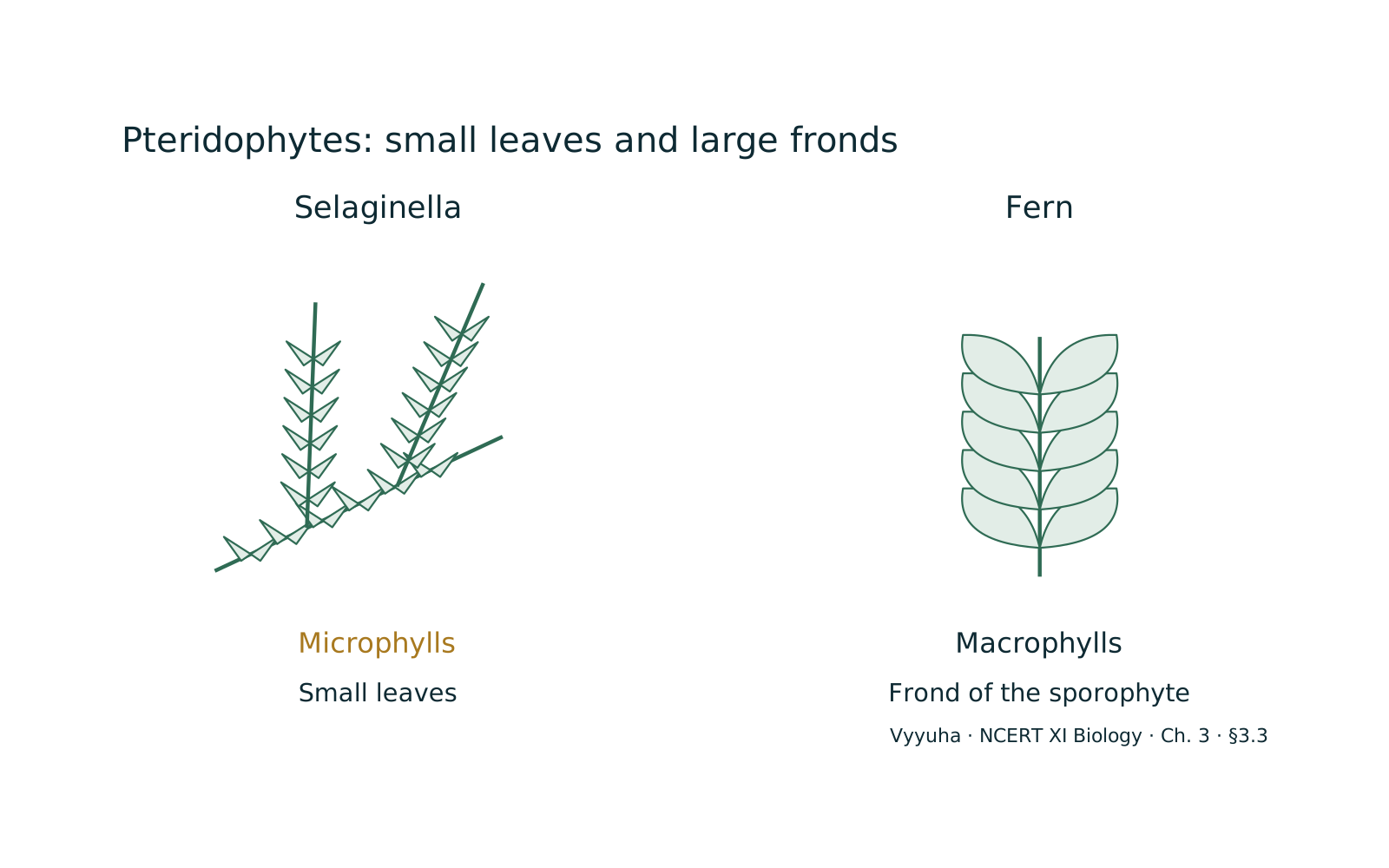
- Leaves — Can be small (microphylls) as in Selaginella and Lycopodium, or large (macrophylls) as in ferns. Microphylls have a single, unbranched vein, while macrophylls have a complex venation system.
- Sporangia — Spore-producing structures, often borne on specialized leaves called sporophylls. In ferns, sporangia are typically clustered into sori on the underside of fertile fronds, often protected by an indusium.
Classification of Pteridophytes (NEET Focus):
The pteridophytes are traditionally divided into four main classes, based on their morphological characteristics:
- Psilopsida — Represented by Psilotum (whisk ferns). They are considered the most primitive living vascular plants, characterized by a dichotomously branched stem, lack of true roots (rhizoids instead), and absence of true leaves (small scales present). Sporangia are borne terminally on short branches.
- Lycopsida — Includes Lycopodium (clubmoss) and Selaginella (spike moss). They possess true roots, stems, and microphylls. Sporangia are borne in the axils of sporophylls, which often form compact cone-like structures called strobili.
- Sphenopsida — Represented by Equisetum (horsetail). They have jointed stems with distinct nodes and internodes, small scale-like leaves arranged in whorls at the nodes, and a prominent rhizome. Sporangia are borne on sporophylls organized into strobili at the apex of the stem.
- Pteropsida — This is the largest and most diverse group, encompassing all true ferns (e.g., Dryopteris, Adiantum). They are characterized by large, pinnately compound leaves (fronds) with complex venation, a prominent rhizome, and sporangia typically grouped into sori on the underside of the fronds.
Real-World Applications and Ecological Significance:
Pteridophytes play various ecological roles. They are important components of forest undergrowth, contributing to soil formation and preventing soil erosion. Some species are pioneer plants, colonizing disturbed areas.
Economically, many ferns are popular ornamental plants (e.g., Boston fern, Maidenhair fern). Some are used in traditional medicine, and a few, like Azolla (a water fern), are used as biofertilizers in paddy fields due due to their symbiotic association with nitrogen-fixing cyanobacteria.
Common Misconceptions:
- Confusion with Bryophytes — Students often confuse pteridophytes with bryophytes. The key distinction is the presence of vascular tissue and a dominant sporophyte in pteridophytes, versus no vascular tissue and a dominant gametophyte in bryophytes.
- Seed Plants — Pteridophytes are not seed plants. They reproduce by spores. Heterospory is a precursor to seed habit but does not mean they produce seeds.
- Gametophyte Independence — While the sporophyte is independent, the gametophyte is also typically independent and photosynthetic, unlike the dependent gametophyte within the ovule of seed plants.
- Water Dependency — The misconception that vascular tissue makes them fully terrestrial. While it aids terrestrial life, the requirement of water for fertilization still limits their distribution to moist habitats.
NEET-Specific Angle:
For NEET, a deep understanding of the pteridophyte life cycle, especially the alternation of generations and the distinction between homospory and heterospory, is paramount. Memorizing key examples for each class (e.
g., Psilotum for Psilopsida, Selaginella for Lycopsida, Equisetum for Sphenopsida, Dryopteris for Pteropsida) is crucial. Questions often involve identifying stages of the life cycle, matching features to classes, or comparing pteridophytes with bryophytes and gymnosperms.
Diagram-based questions on the life cycle or morphology are also common. Pay close attention to terms like sporophyll, strobilus, sori, indusium, prothallus, antheridium, and archegonium.
Key Concepts
In pteridophytes, the life cycle involves a distinct alternation between a diploid sporophyte generation and…
This concept differentiates pteridophytes based on the types of spores they produce. Homosporous…
The evolution of vascular tissue (xylem and phloem) was a monumental step in plant evolution, directly…
Often confused with
Side-by-side differences the NEET paper likes to test.
| Aspect | Pteridophytes | Bryophytes |
|---|---|---|
| Vascular Tissue | Absent | Present (xylem and phloem) |
| Dominant Generation | Gametophyte (haploid, independent) | Sporophyte (diploid, independent) |
| Plant Body | Thalloid, undifferentiated (no true roots, stems, leaves) | Differentiated into true roots, stems, and leaves |
| Sporophyte | Dependent on gametophyte for nutrition | Independent and photosynthetic |
| Habitat | Strictly moist and shady environments | Moist and shady, but can colonize slightly drier areas due to vascular tissue |
| Reproduction | Spores produced by sporophyte, gametes by gametophyte | Spores produced by sporophyte, gametes by gametophyte (water-dependent fertilization) |
Pteridophytes represent a significant evolutionary advancement over bryophytes, primarily due to the development of a vascular system and a dominant, independent sporophyte. While both groups require water for fertilization, pteridophytes' structural complexity with true roots, stems, and leaves allows them to explore more diverse terrestrial niches.
Bryophytes remain simpler, thalloid, and their sporophyte is parasitic on the gametophyte, highlighting a fundamental difference in their life cycle strategies and adaptations to land.
Why it is tested: NEET relevance: Understanding these differences is fundamental for classifying plant groups and tracing evolutionary trends. Questions often involve comparing life cycle stages, structural features, and ecological adaptations between these two groups, emphasizing the 'first vascular plants' concept.
| Aspect | Pteridophytes | Gymnosperms |
|---|---|---|
| Reproduction | Spores (no seeds) | Seeds (naked seeds) |
| Gametophyte | Independent, photosynthetic prothallus | Reduced, dependent on sporophyte (within ovule/pollen grain) |
| Water for Fertilization | Essential (motile antherozoids) | Not essential (pollen tube delivers non-motile gametes) |
| Ovules/Ovaries | Absent | Ovules present (naked, not enclosed in ovary) |
| Dominant Generation | Sporophyte (dominant, independent) | Sporophyte (highly dominant, independent) |
| Evolutionary Position | First vascular plants, spore-bearing | First seed plants, non-flowering |
The transition from pteridophytes to gymnosperms marks the evolution of the seed habit, a major adaptation for terrestrial life. While both have dominant sporophytes and vascular tissue, gymnosperms overcome the water dependency for fertilization through pollen and protect the embryo within a seed.
Their gametophytes are highly reduced and dependent, a stark contrast to the independent prothallus of pteridophytes. This comparison highlights the progressive adaptations for survival in drier environments.
Why it is tested: NEET relevance: This comparison is crucial for understanding the evolutionary progression from spore-bearing to seed-bearing plants. Questions frequently test the understanding of the 'seed habit' and the reduction of the gametophyte, emphasizing the key differences in reproductive strategies and their implications for terrestrial adaptation.
Questions students ask
5 answered on this topic.
What is the primary distinguishing feature of pteridophytes compared to bryophytes?
The most significant distinguishing feature of pteridophytes from bryophytes is the presence of a well-developed vascular system (xylem and phloem). This vascular tissue allows pteridophytes to efficiently transport water and nutrients throughout their body, enabling them to grow larger and taller, and to colonize more diverse terrestrial habitats. Bryophytes, being non-vascular, are restricted to small sizes and moist environments due to their reliance on diffusion for transport.
Why are pteridophytes often called 'amphibians of the plant kingdom'?
Pteridophytes are termed 'amphibians of the plant kingdom' because, despite possessing vascular tissue and true roots, stems, and leaves, they still require a film of water for fertilization. The male gametes (antherozoids) are motile and must swim through water to reach the female gamete (egg) within the archegonium. This dependency on water for reproduction limits their distribution to moist, shady places, similar to how amphibians require water for breeding.
Explain the concept of homospory and heterospory in pteridophytes.
Homospory refers to the production of only one type of spore, which germinates to form a bisexual gametophyte (prothallus) bearing both male and female sex organs. Most ferns are homosporous. Heterospory, on the other hand, involves the production of two morphologically different types of spores: microspores (smaller, developing into male gametophytes) and megaspores (larger, developing into female gametophytes).
This is seen in genera like Selaginella and Salvinia and is considered a precursor to the seed habit.
What is a 'prothallus' in the context of pteridophytes?
A prothallus is the haploid gametophytic stage in the life cycle of a pteridophyte. It is typically a small, green, heart-shaped, photosynthetic, and independent structure that develops from the germination of a spore. The prothallus bears the sex organs – antheridia (male) and archegonia (female) – and is responsible for sexual reproduction, requiring water for the motile male gametes to reach the egg.
Name the four major classes of pteridophytes with one example each.
The four major classes of pteridophytes are:
- Psilopsida — Example - Psilotum (whisk fern)
- Lycopsida — Example - Lycopodium (clubmoss) or Selaginella (spike moss)
- Sphenopsida — Example - Equisetum (horsetail)
- Pteropsida — Example - Dryopteris (fern) or Adiantum (maidenhair fern)
These classifications are based on distinct morphological features, particularly related to their stem, leaves, and sporangia arrangement.
Revise in 30 seconds
- First vascular plants: — Possess xylem and phloem.
- Dominant Sporophyte: — Diploid (), independent, photosynthetic.
- Gametophyte (Prothallus): — Haploid (), small, independent, photosynthetic, bears sex organs.
- Reproduction: — By spores (produced in sporangia).
- Fertilization: — Requires water (motile antherozoids).
- Homosporous: — One type of spore (e.g., most ferns, Lycopodium).
- Heterosporous: — Two types of spores (microspores, megaspores; e.g., Selaginella, Salvinia).
- Classes & Examples:
- Psilopsida: Psilotum - Lycopsida: Lycopodium, Selaginella - Sphenopsida: Equisetum - Pteropsida: Dryopteris (ferns)
- Key terms: — Sporophyll, Strobilus, Sori, Indusium, Rhizome.
Please Learn Some Pteridophyte Classifications:
- Psilopsida (Psilotum)
- Lycopsida (Lycopodium, Selaginella)
- Sphenopsida (Equisetum)
- Pteropsida (Ferns like Dryopteris)
To remember key features: Very Strong Growers With Heavy Spores
- Vascular tissue
- Sporophyte dominant
- Gametophyte independent
- Water for fertilization
- Homospory/Heterospory
- Spores for reproduction