Plant Life Cycles and Alternation of Generations
Plant life cycles are a fascinating testament to evolutionary adaptation, characterized by a fundamental pattern known as the 'alternation of generations.' This biological phenomenon involves the sequential occurrence of two distinct multicellular stages: a diploid, spore-producing sporophyte and a haploid, gamete-producing gametophyte. These two generations alternate in producing each other, with…
Quick Summary
Plant life cycles are characterized by 'alternation of generations,' a pattern where a plant alternates between two distinct multicellular forms: a diploid sporophyte and a haploid gametophyte. The sporophyte (2n) is the spore-producing generation; it undergoes meiosis to produce haploid spores.
These spores germinate and grow into the gametophyte (n), the gamete-producing generation. The gametophyte produces haploid gametes (sperm and egg) through mitosis. The fusion of gametes during fertilization forms a diploid zygote, which then develops into a new sporophyte, completing the cycle.
There are three main types of life cycles: Haplontic (dominant gametophyte, zygotic meiosis, e.g., many algae), Diplontic (dominant sporophyte, gametic meiosis, e.g., Fucus, seed plants), and Haplo-diplontic (both multicellular, e.
g., bryophytes and pteridophytes). Bryophytes have a dominant gametophyte, while pteridophytes, gymnosperms, and angiosperms show increasing sporophyte dominance and gametophyte reduction, an evolutionary trend crucial for terrestrial adaptation.
Full explanation
The concept of plant life cycles, particularly the 'alternation of generations,' is a cornerstone of plant biology and a fundamental topic for NEET aspirants. It describes a reproductive strategy where an organism alternates between two distinct multicellular forms: a haploid (n) gametophyte and a diploid (2n) sporophyte. This pattern is universal across all true plants (Kingdom Plantae) and some algae, albeit with significant variations in the dominance and morphology of each stage.
Conceptual Foundation
At its heart, alternation of generations is a sophisticated mechanism for sexual reproduction that combines the benefits of both sexual and asexual propagation. It ensures genetic recombination through the fusion of gametes (sexual reproduction) while also allowing for widespread dispersal via spores (a form of asexual reproduction).
- Haploid (n) vs. Diploid (2n) Stages — The life cycle is fundamentally characterized by a shift between these two ploidy levels. The haploid stage, the gametophyte, carries one set of chromosomes, while the diploid stage, the sporophyte, carries two sets.
- Meiosis — This specialized cell division reduces the chromosome number by half, converting a diploid cell into haploid cells. In plants, meiosis occurs in the sporophyte to produce spores.
- Mitosis — This is a regular cell division that maintains the chromosome number. It's responsible for the growth and development of both the sporophyte (from a zygote) and the gametophyte (from a spore), and for the production of gametes by the gametophyte.
- Fertilization — The fusion of two haploid gametes (sperm and egg) to form a diploid zygote, thereby restoring the diploid chromosome number.
Key Principles and Stages
Let's delineate the two main generations:
- Sporophyte (2n) — This is the diploid, spore-producing generation. It develops from a zygote. Within specialized structures called sporangia, cells known as sporocytes or spore mother cells undergo meiosis to produce haploid spores. These spores are typically dispersed and are the first cells of the gametophyte generation.
- Gametophyte (n) — This is the haploid, gamete-producing generation. It develops from a spore through mitotic divisions. Within specialized structures called gametangia (antheridia for male gametes, archegonia for female gametes), it produces haploid gametes (sperm and egg) through mitosis. The fusion of these gametes during fertilization forms a diploid zygote.
Types of Life Cycles
The relative prominence and independence of the sporophyte and gametophyte generations lead to three main types of life cycles observed in plants and algae:
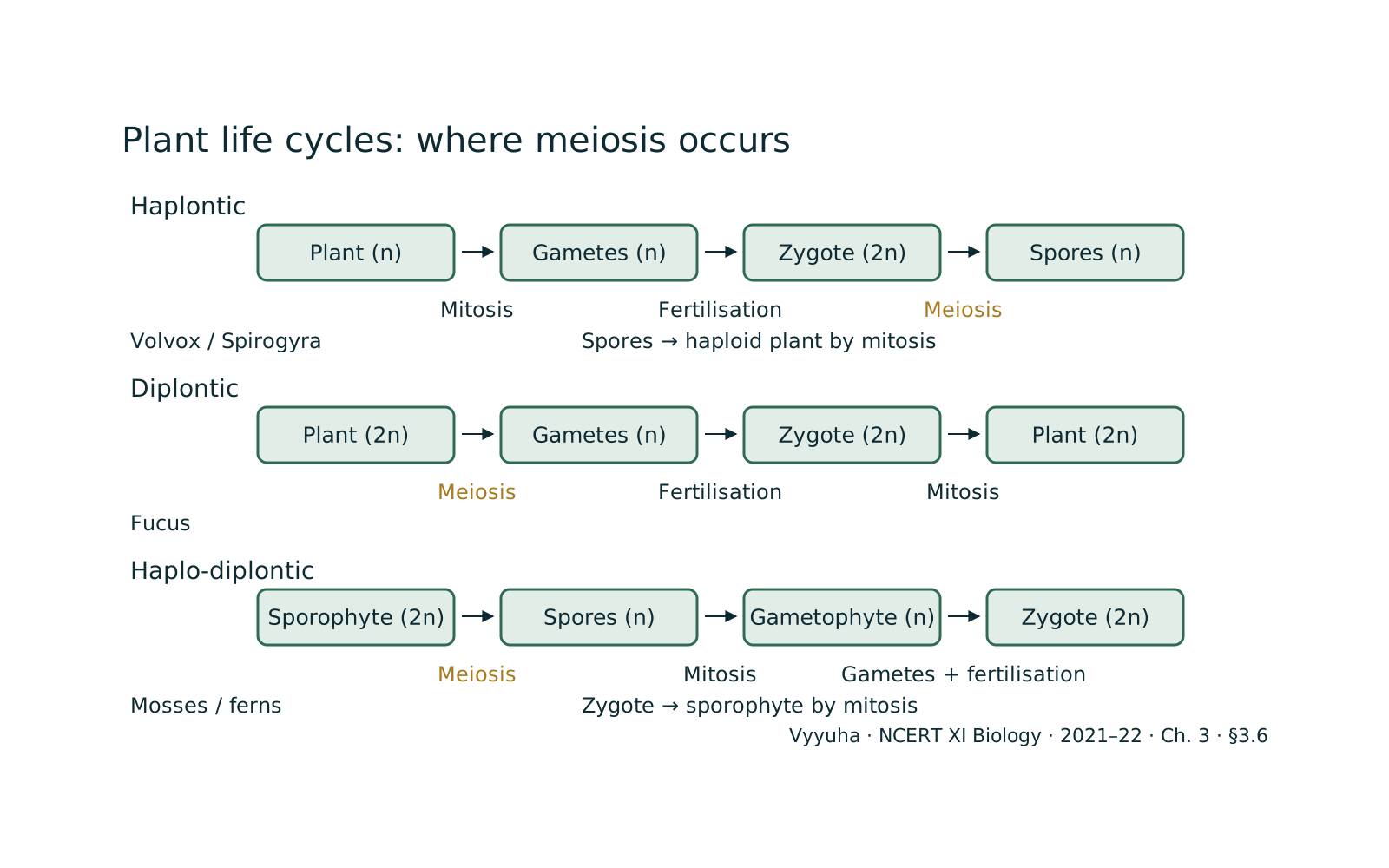
- Haplontic Life Cycle — In this cycle, the dominant, free-living plant body is the haploid gametophyte. The diploid stage is represented only by the zygote. Meiosis occurs immediately after zygote formation (zygotic meiosis), producing haploid spores that develop into gametophytes. There is no free-living diploid sporophyte. This type of life cycle is characteristic of many algae (e.g., Volvox, Spirogyra, Chlamydomonas) and some fungi.
* Cycle: Gametophyte (n) Gametes (n) Zygote (2n) Meiosis Spores (n) Gametophyte (n).
- Diplontic Life Cycle — Here, the dominant, free-living plant body is the diploid sporophyte. The haploid stage is represented only by the gametes. Meiosis occurs during gamete formation (gametic meiosis) in the sporophyte. There is no free-living haploid gametophyte. This cycle is typical of animals, some algae (e.g., Fucus, Sargassum), and all seed plants (Gymnosperms and Angiosperms), though in seed plants, the gametophyte is highly reduced and dependent on the sporophyte.
* Cycle: Sporophyte (2n) Meiosis Gametes (n) Fertilization Zygote (2n) Sporophyte (2n).
- Haplo-diplontic (or Diplo-haplontic) Life Cycle — This is the true 'alternation of generations' where both the haploid gametophyte and the diploid sporophyte are multicellular stages. Their relative dominance varies:
* Bryophytes (Mosses, Liverworts): The gametophyte (n) is the dominant, independent, photosynthetic plant body. The sporophyte (2n) is multicellular but short-lived, parasitic (nutritionally dependent) on the gametophyte, and partially or wholly dependent on it for nutrition.
Meiosis occurs in the sporophyte to produce spores. * Pteridophytes (Ferns, Horsetails): The sporophyte (2n) is the dominant, independent, photosynthetic plant body. The gametophyte (n) is multicellular but typically small, short-lived, and independent (though often inconspicuous).
Meiosis occurs in the sporophyte to produce spores. * Gymnosperms and Angiosperms: These represent an extreme reduction of the gametophyte stage. The sporophyte (2n) is overwhelmingly dominant and independent.
The gametophyte (n) is highly reduced, microscopic, and completely dependent on the sporophyte, residing within its tissues (e.g., pollen grains are male gametophytes, embryo sac is female gametophyte).
This is essentially a diplontic cycle with a highly reduced, dependent gametophyte. * Cycle: Sporophyte (2n) Meiosis Spores (n) Gametophyte (n) Gametes (n) Fertilization Zygote (2n) Sporophyte (2n).
Evolutionary Significance and Plant Groups
The evolution of plant life cycles shows a clear trend towards sporophyte dominance and gametophyte reduction, especially with increasing adaptation to terrestrial environments.
- Algae — Exhibit all three types of life cycles. Many green algae are haplontic. Brown algae like Fucus are diplontic. Some, like Ectocarpus, show isomorphic alternation (sporophyte and gametophyte look similar) or heteromorphic alternation.
- Bryophytes — Represent the first major step onto land. Their dominant gametophyte is well-suited for moist environments, but their sporophyte is dependent, highlighting a transitional stage.
- Pteridophytes — Show the first clear dominance of the sporophyte, which is well-adapted for terrestrial life. The independent gametophyte, though small, still requires water for fertilization, limiting their full terrestrial independence.
- Gymnosperms and Angiosperms — The sporophyte is the main plant body. The gametophytes are microscopic and protected within the sporophyte's reproductive structures (cones, flowers), eliminating the need for external water for fertilization (pollen tube mechanism). This was a crucial adaptation for successful colonization of diverse terrestrial habitats.
Common Misconceptions
- Alternation of Generations vs. Sexual Reproduction — While related, they are not synonymous. Alternation of generations specifically refers to the alternation of multicellular haploid and diploid forms. Sexual reproduction (fusion of gametes) is a part of this cycle.
- Spores vs. Gametes — Spores are haploid reproductive cells produced by meiosis in the sporophyte, which germinate to form a gametophyte without fusion. Gametes are haploid sex cells produced by mitosis in the gametophyte, which must fuse with another gamete to form a zygote.
- Dominance means only one stage exists — Even in haplontic or diplontic cycles, both ploidy levels exist; it's the multicellularity and independence that define dominance. In haplontic, the diploid stage is just the zygote. In diplontic, the haploid stage is just the gametes. Haplo-diplontic has multicellular forms for both.
NEET-Specific Angle
NEET questions frequently test the understanding of:
- Ploidy levels — of different structures (spore, gamete, zygote, sporophyte, gametophyte, antheridium, archegonium, etc.).
- Dominant phase — in different plant groups (e.g., gametophyte dominant in bryophytes, sporophyte dominant in pteridophytes, gymnosperms, angiosperms).
- Location of meiosis and mitosis — in the life cycle.
- Examples — of organisms exhibiting each type of life cycle.
- Evolutionary trends — in the reduction of the gametophyte and increasing sporophyte dominance.
- Homosporous vs. Heterosporous — conditions and their implications (e.g., in pteridophytes and seed plants).
Mastering these distinctions and understanding the underlying cellular processes (meiosis and mitosis) is crucial for scoring well on this topic.
Key Concepts
Ploidy refers to the number of sets of chromosomes in a cell. A **haploid (n)** cell contains one set of…
The concept of 'dominance' in alternation of generations refers to which stage is larger, longer-lived, more…
Both meiosis and mitosis are essential for the plant life cycle, but they serve distinct purposes and occur…
Often confused with
Side-by-side differences the NEET paper likes to test.
| Aspect | Plant Life Cycles and Alternation of Generations | Haplontic, Diplontic, and Haplo-diplontic Life Cycles |
|---|---|---|
| Dominant Phase | Haplontic: Gametophyte (n) | Diplontic: Sporophyte (2n) |
| Diploid Stage | Haplontic: Only Zygote (2n) | Diplontic: Sporophyte (2n) is the main plant body |
| Haploid Stage | Haplontic: Gametophyte (n) is the main plant body | Diplontic: Only Gametes (n) |
| Meiosis Type | Haplontic: Zygotic Meiosis (occurs in zygote) | Diplontic: Gametic Meiosis (occurs during gamete formation) |
| Examples | Haplontic: *Volvox*, *Spirogyra*, *Chlamydomonas* (many algae) | Diplontic: *Fucus*, *Sargassum* (some algae), all animals, Gymnosperms, Angiosperms |
| Evolutionary Significance | Haplontic: Primitive, common in aquatic forms | Diplontic: Advanced, dominant in highly evolved terrestrial plants (seed plants) and animals |
The three types of life cycles – haplontic, diplontic, and haplo-diplontic – represent different evolutionary strategies in plants and algae, primarily distinguished by which generation (haploid gametophyte or diploid sporophyte) is dominant and multicellular, and at what point meiosis occurs.
Haplontic cycles feature a dominant gametophyte and zygotic meiosis, while diplontic cycles have a dominant sporophyte and gametic meiosis. Haplo-diplontic cycles exhibit true alternation of multicellular generations, with sporic meiosis, and show a clear evolutionary trend from gametophyte dominance (bryophytes) to sporophyte dominance (pteridophytes, seed plants).
Why it is tested: For NEET, understanding these differences is crucial for classifying plant groups, predicting ploidy levels of various structures, and comprehending the evolutionary journey of plants from aquatic to terrestrial environments. Questions often involve identifying the life cycle type for specific examples or comparing features across different plant divisions.
Questions students ask
5 answered on this topic.
What is the primary difference between a spore and a gamete?
A spore is a haploid reproductive cell produced by the sporophyte through meiosis. It is capable of germinating and developing into a new haploid organism (the gametophyte) without fusing with another cell.
In contrast, a gamete is also a haploid cell, but it is produced by the gametophyte through mitosis. Gametes are specialized for sexual reproduction and must fuse with another gamete (fertilization) to form a diploid zygote, which then develops into a sporophyte.
So, spores are for dispersal and asexual reproduction of the gametophyte, while gametes are for sexual reproduction.
Why is alternation of generations considered an evolutionary advantage for plants?
Alternation of generations offers several evolutionary advantages. The sporophyte stage, being diploid, can mask deleterious recessive mutations, providing genetic resilience. The production of numerous spores by the sporophyte allows for wide dispersal and colonization of new habitats.
The gametophyte stage, being haploid, allows for direct expression of genes, which can be advantageous for rapid adaptation in certain environments. This dual strategy combines genetic recombination (via sexual reproduction) with efficient dispersal (via spores), enhancing survival and propagation in diverse and changing environments.
How does the life cycle of a moss differ from that of a fern?
The key difference lies in the dominance of the generations. In mosses (bryophytes), the haploid gametophyte is the dominant, independent, photosynthetic plant body, while the diploid sporophyte is short-lived and nutritionally dependent on the gametophyte.
In ferns (pteridophytes), the diploid sporophyte is the dominant, independent, and photosynthetic plant body, forming the large, familiar fern plant. The haploid gametophyte (prothallus) is small, independent, and short-lived.
Both require water for fertilization, but the sporophyte's dominance in ferns marks an evolutionary step towards terrestrial adaptation.
What is the significance of the reduction of the gametophyte in higher plants?
The progressive reduction and increasing dependence of the gametophyte on the sporophyte in gymnosperms and angiosperms is a major evolutionary trend. This adaptation protects the delicate gametes and the developing embryo from desiccation and environmental hazards.
The male gametophyte (pollen grain) is dispersed by wind or animals, eliminating the need for water for fertilization. The female gametophyte (embryo sac) is retained within the ovule, providing nourishment and protection.
This shift allowed higher plants to colonize drier terrestrial environments more effectively.
Can you explain homospory and heterospory in the context of plant life cycles?
Homospory refers to the production of only one type of spore, which germinates to produce a bisexual gametophyte (one that bears both male and female sex organs). This is common in most bryophytes and many pteridophytes.
Heterospory, on the other hand, involves the production of two different types of spores: microspores (smaller, germinate into male gametophytes) and megaspores (larger, germinate into female gametophytes).
Heterospory is found in some pteridophytes (e.g., Selaginella, Salvinia) and is a prerequisite for seed habit, being universally present in gymnosperms and angiosperms. It promotes cross-fertilization and provides better protection for the developing female gametophyte and embryo.
Revise in 30 seconds
- Alternation of Generations — Life cycle with multicellular haploid (gametophyte) and diploid (sporophyte) stages.
- Sporophyte (2n) — Diploid, produces haploid spores via meiosis.
- Gametophyte (n) — Haploid, produces haploid gametes via mitosis.
- Zygote (2n) — Formed by fusion of gametes, develops into sporophyte.
- Haplontic — Dominant gametophyte, only zygote is 2n. Zygotic meiosis. Ex: Spirogyra.
- Diplontic — Dominant sporophyte, only gametes are n. Gametic meiosis. Ex: Fucus, Seed plants.
- Haplo-diplontic — Both multicellular. Sporic meiosis.
- Bryophytes: Dominant gametophyte, dependent sporophyte. - Pteridophytes: Dominant sporophyte, independent gametophyte. - Gymnosperms/Angiosperms: Dominant sporophyte, highly reduced dependent gametophyte.
- Homospory — One type of spore bisexual gametophyte.
- Heterospory — Two types of spores (micro/mega) male/female gametophytes. Prerequisite for seed habit.
To remember the dominance in Haplo-diplontic cycles: Bryophytes Get Dominant Gametophytes, Pteridophytes Show Dominant Sporophytes. (BGDG, PSDS)