Types of Fruits — Explained
Detailed Explanation
The study of fruits, known as pomology, is a fascinating branch of botany that delves into the structure, development, and classification of these vital plant organs. From a botanical perspective, a fruit is unequivocally the mature, ripened ovary of a flowering plant, typically enclosing the seeds.
This development is a direct consequence of fertilization, where the ovules within the ovary are fertilized, initiating a cascade of hormonal changes that stimulate the ovary wall to grow and transform into the pericarp.
Conceptual Foundation: The Pericarp
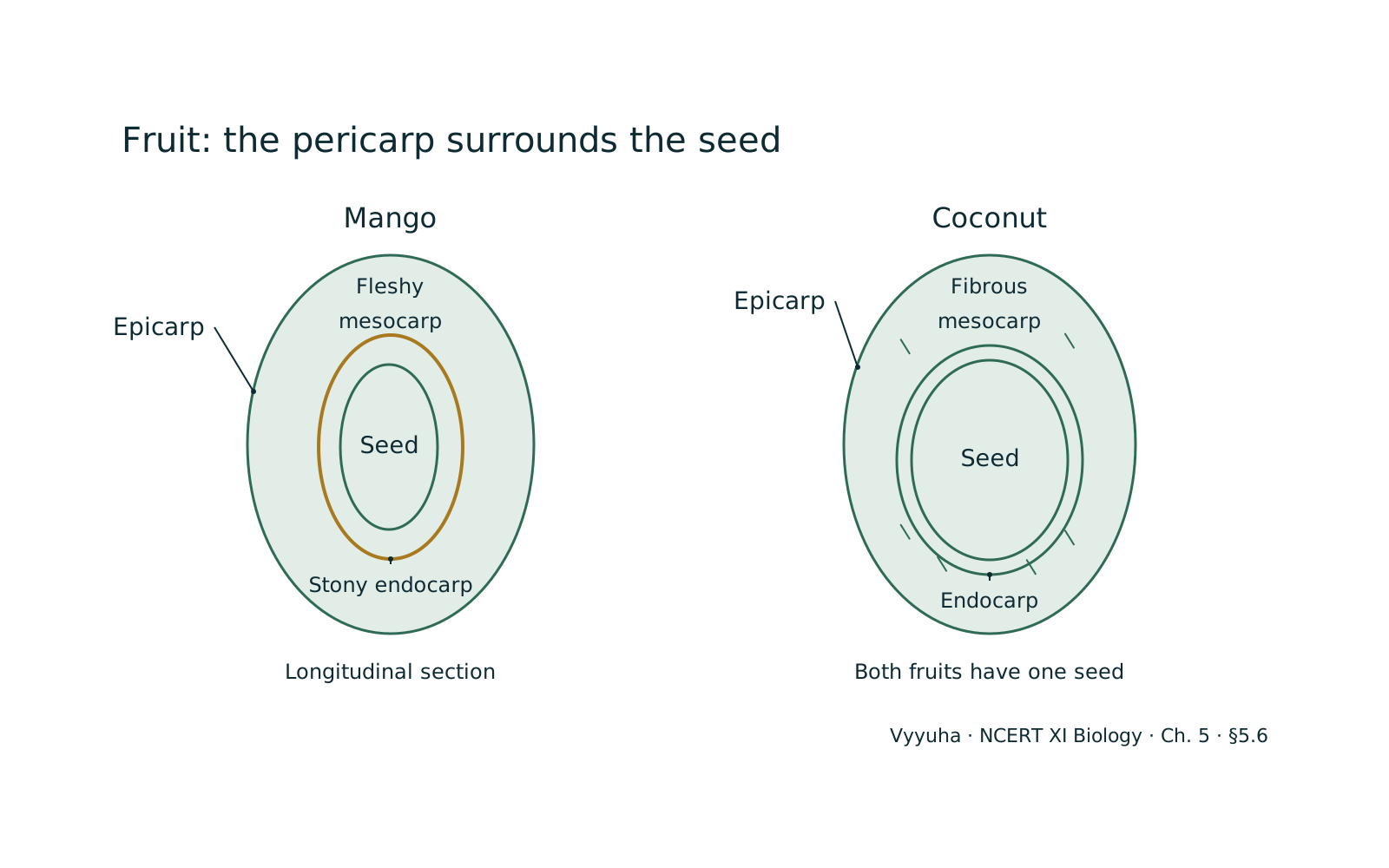
The pericarp, or fruit wall, is the defining structural component of a fruit, derived directly from the ovary wall. Its differentiation into three distinct layers is a key characteristic used in fruit classification:
- Epicarp: — The outermost layer, often referred to as the skin or rind. It provides protection against desiccation, mechanical injury, and pathogens. Its texture can vary from thin and delicate (e.g., grape) to tough and leathery (e.g., orange) or even spiny (e.g., jackfruit).
- Mesocarp: — The middle layer, which is often the most substantial part of the fruit. In fleshy fruits, this layer is typically succulent and edible (e.g., mango, peach). In dry fruits, it can be papery, leathery, or fibrous.
- Endocarp: — The innermost layer, directly surrounding the seed(s). Its nature is highly variable; it can be thin and membranous (e.g., grape), stony and hard (e.g., peach, coconut), or even fibrous (e.g., date).
Key Principles of Fruit Classification
Fruits are primarily classified based on their origin from the flower and the nature of their pericarp. The major categories are:
I. Simple Fruits: These fruits develop from a single ovary of a single flower. The flower may have a single carpel (monocarpellary) or multiple fused carpels (syncarpous). Simple fruits are further divided into two main types based on the pericarp's nature:
A. Fleshy Fruits: The pericarp is thick, soft, and succulent when mature, often containing a significant amount of water and sugars. These are typically consumed by animals, aiding in seed dispersal.
1. Drupe: Characterized by a fleshy mesocarp and a hard, stony endocarp that encloses a single seed (or sometimes multiple seeds). The epicarp is usually thin. Examples: Mango, Peach, Cherry, Coconut (fibrous mesocarp, stony endocarp).
2. Berry: The entire pericarp (epicarp, mesocarp, and endocarp) is fleshy, and it typically contains many seeds. The seeds are usually small and embedded within the pulp. Examples: Grape, Tomato, Brinjal, Chilli, Banana (botanically a berry, despite common perception).
3. Pepo: A type of berry with a hard, leathery or woody rind (epicarp) formed by the fusion of the receptacle and ovary wall. The mesocarp and endocarp are fleshy. Examples: Cucumber, Watermelon, Gourd, Pumpkin.
4. Hesperidium: A special type of berry characteristic of citrus fruits. It has a leathery epicarp and mesocarp containing volatile oils, and a juicy endocarp divided into segments by membranous walls, each segment filled with juice sacs (modified epidermal hairs).
Examples: Orange, Lemon, Sweet Lime. 5. Pome: A false fruit (pseudocarp) where the fleshy, edible part is derived from the thalamus (receptacle) that surrounds the true fruit. The true fruit (ovary) is cartilaginous and forms the core containing the seeds.
Examples: Apple, Pear.
B. Dry Fruits: The pericarp becomes dry, hard, or papery at maturity. These are further subdivided based on whether they split open to release seeds or not.
1. Dehiscent Dry Fruits: These fruits split open along specific lines or pores at maturity to release their seeds. This mechanism aids in seed dispersal. a. Follicle: Develops from a monocarpellary, superior ovary and dehisces along one suture (usually the ventral suture).
Examples: Delphinium, Larkspur, Calotropis. b. Legume (Pod): Develops from a monocarpellary, superior ovary and dehisces along both dorsal and ventral sutures. Characteristic of the Fabaceae (legume) family.
Examples: Pea, Bean, Groundnut (though groundnut is indehiscent in the soil, it's structurally a legume). c. Siliqua: Develops from a bicarpellary, superior ovary with a false septum (replum) dividing the ovary into two chambers.
It dehisces from both sutures, with the two valves separating from the replum. Examples: Mustard, Radish. d. Capsule: Develops from a multicarpellary (syncarpous), superior or inferior ovary. It dehisces in various ways: by pores (poppy), by valves (cotton), by teeth (Datura), or by splitting longitudinally.
Examples: Cotton, Lady's Finger, Opium Poppy, Datura.
2. Indehiscent Dry Fruits: These fruits do not split open at maturity; the seeds remain enclosed within the pericarp and are dispersed along with the fruit. They often have a single seed. a. Achene: Develops from a monocarpellary, superior ovary.
It is a small, one-seeded fruit where the pericarp is free from the seed coat. Examples: Mirabilis, Clematis, Sunflower (often mistaken for a seed, but it's a fruit). b. Caryopsis: Develops from a monocarpellary, superior ovary.
It is a small, one-seeded fruit where the pericarp is fused with the seed coat. Characteristic of grasses (Poaceae family). Examples: Wheat, Maize, Rice. c. Cypsela: Develops from a bicarpellary, inferior ovary.
It is a one-seeded fruit where the pericarp is free from the seed coat, often crowned by a persistent pappus (modified calyx). Characteristic of Asteraceae family. Examples: Sunflower (the 'seed' is actually a cypsela), Marigold.
d. Nut: Develops from a multicarpellary (syncarpous), superior ovary. It is a large, one-seeded fruit with a hard, woody pericarp. Examples: Cashew (the 'nut' is the seed, the fleshy part is the pedicel), Walnut, Chestnut, Litchi (seed is the 'nut', aril is edible).
e. Samara: Develops from a monocarpellary or bicarpellary ovary. It is a dry, indehiscent, one-seeded fruit with a wing-like outgrowth of the pericarp, aiding in wind dispersal. Examples: Maple, Elm, Ash.
II. Aggregate Fruits: These fruits develop from a single flower that has multiple, free carpels (apocarpous ovary). Each carpel develops into a small fruitlet, and these fruitlets are clustered together on a common receptacle.
The collection of these fruitlets is called an etaerio. Examples: * Etaerio of Achenes: Strawberry (fleshy receptacle with achenes on its surface), Ranunculus. * Etaerio of Follicles: Magnolia, Michelia.
* Etaerio of Berries: Annona (Custard Apple). * Etaerio of Drupes: Raspberry, Blackberry.
III. Multiple Fruits (Composite Fruits): These fruits develop from an entire inflorescence (a cluster of flowers). The ovaries of all the flowers in the inflorescence, along with other floral parts and the axis of the inflorescence, fuse together to form a single, compact fruit.
Examples: * Sorosis: Develops from a spike, spadix, or catkin inflorescence. The flowers, bracts, and perianth fuse to form a single fruit. Examples: Pineapple, Jackfruit, Mulberry. * Syconus: Develops from a hypanthodium inflorescence, where the fleshy receptacle forms a hollow structure with flowers on its inner surface.
The true fruits are tiny achenes inside. Examples: Fig.
False Fruits (Pseudocarps): These are fruits where other floral parts, in addition to the ovary, contribute significantly to the formation of the edible part. The thalamus (receptacle) is the most common accessory part involved. Examples: Apple, Pear (thalamus forms the fleshy part), Strawberry (thalamus is fleshy, true fruits are achenes on its surface), Cashew (pedicel becomes fleshy).
Real-World Applications and Significance:
Fruits are indispensable in human diets, providing essential vitamins, minerals, and fiber. Their diverse forms are crucial for seed dispersal, a fundamental process for plant reproduction and ecosystem health.
Animals consume fruits, dispersing seeds through their digestive tracts or by carrying them away. Economically, fruits form a massive global industry, supporting livelihoods and trade. From a biological standpoint, the evolution of diverse fruit types reflects complex co-evolutionary relationships between plants and their dispersers.
Common Misconceptions:
- Botanical vs. Culinary Definition: — A common pitfall is confusing the botanical definition of a fruit with its culinary usage. Botanically, tomatoes, cucumbers, bell peppers, and even peas are fruits because they develop from the ovary and contain seeds. Culinarily, they are often treated as vegetables. Conversely, rhubarb is a vegetable culinarily but botanically a petiole, not a fruit.
- True vs. False Fruits: — Students often struggle to distinguish between true fruits (derived solely from the ovary) and false fruits (where other floral parts contribute). Remembering key examples like apple (thalamus) and strawberry (fleshy receptacle) is vital.
- Seed vs. Fruit: — Many dry indehiscent fruits, like the 'seed' of a sunflower or a grain of wheat, are actually fruits (cypsela and caryopsis, respectively), not just seeds. The pericarp is fused with or closely surrounds the seed.
NEET-Specific Angle:
For NEET, the focus is heavily on classification, specific examples for each fruit type, and the distinguishing features of these types. Questions often involve:
- Identification: — Given a fruit example, identify its type (e.g., 'Mango is a ______').
- Characteristics: — Matching fruit types with their defining features (e.g., 'Which fruit has a stony endocarp and fleshy mesocarp?').
- False Fruits: — Identifying examples of false fruits or the floral part contributing to their fleshy structure.
- Origin: — Understanding the floral origin (single ovary, multiple free ovaries, inflorescence) for simple, aggregate, and multiple fruits.
- Pericarp Layers: — Questions on the differentiation of epicarp, mesocarp, and endocarp in specific fruit types.
Thorough memorization of examples for each category is paramount, along with a clear understanding of the botanical criteria for classification.
Often confused with
Side-by-side differences the NEET paper likes to test.
| Aspect | Types of Fruits | True Fruit vs. False Fruit |
|---|---|---|
| Definition | Develops exclusively from the ripened ovary of a flower. | Develops from the ripened ovary along with other accessory floral parts (e.g., thalamus, receptacle, perianth). |
| Contributing Parts | Only the ovary wall forms the pericarp. | Ovary wall + other floral parts (e.g., thalamus, pedicel, bracts) form the edible portion. |
| Examples | Mango, Grape, Tomato, Pea, Wheat | Apple, Pear, Strawberry, Cashew, Fig |
| Botanical Accuracy | Represents the strict botanical definition of a fruit. | Often deviates from the strict botanical definition, but is commonly consumed as 'fruit'. |
The distinction between true and false fruits is critical in botany. True fruits originate solely from the mature ovary, with the pericarp being the transformed ovary wall. Examples like mango and pea pods perfectly fit this description.
False fruits, however, incorporate other floral structures, such as the thalamus in apples or the receptacle in strawberries, into their fleshy, edible part. While both serve the purpose of seed protection and dispersal, their developmental origin from the flower differs significantly, impacting their botanical classification.
Why it is tested: NEET relevance: High. This is a frequently tested concept, often requiring students to identify examples of each type and the specific accessory part involved in false fruits.
| Aspect | Types of Fruits | Fleshy Fruits vs. Dry Fruits |
|---|---|---|
| Pericarp Nature | Pericarp is thick, soft, and succulent at maturity, rich in water and sugars. | Pericarp becomes dry, hard, or papery at maturity, with little moisture. |
| Seed Dispersal | Often dispersed by animals who consume the fleshy part and excrete seeds. | Dispersed by wind, water, or mechanical dehiscence; sometimes by animals consuming the entire fruit/seed. |
| Edibility | Typically edible and palatable to humans and animals. | Often not directly consumed for their pericarp, but seeds may be edible. |
| Examples | Drupe (Mango), Berry (Grape), Pepo (Cucumber), Hesperidium (Orange), Pome (Apple) | Legume (Pea), Achene (Mirabilis), Caryopsis (Wheat), Nut (Chestnut), Samara (Maple) |
The primary difference between fleshy and dry fruits lies in the nature of their pericarp at maturity. Fleshy fruits, like mangoes and grapes, have a soft, succulent pericarp, often rich in water and sugars, designed to attract animals for seed dispersal.
Dry fruits, such as peas and wheat grains, possess a pericarp that becomes dry, hard, or papery, relying on other mechanisms like wind, water, or mechanical splitting for seed dispersal. This fundamental distinction influences their ecological roles and economic importance.
Why it is tested: NEET relevance: High. Students must be able to classify simple fruits into these two broad categories and provide examples for each, understanding the structural differences.
| Aspect | Types of Fruits | Dehiscent Dry Fruits vs. Indehiscent Dry Fruits |
|---|---|---|
| Seed Release | Split open along specific sutures or pores at maturity to release seeds. | Do not split open at maturity; seeds remain enclosed within the pericarp and are dispersed with the fruit. |
| Mechanism | Involves active splitting or opening of the pericarp. | Relies on the entire fruit being dispersed or pericarp decaying to release the seed. |
| Examples | Follicle (Delphinium), Legume (Pea), Siliqua (Mustard), Capsule (Cotton) | Achene (Mirabilis), Caryopsis (Wheat), Cypsela (Sunflower), Nut (Chestnut), Samara (Maple) |
Within the category of dry fruits, the mechanism of seed release provides a further crucial classification. Dehiscent dry fruits, like pea pods (legumes) or cotton bolls (capsules), actively split open at maturity along specific lines or pores to release their seeds.
This ensures efficient seed dispersal. In contrast, indehiscent dry fruits, such as wheat grains (caryopsis) or sunflower 'seeds' (cypsela), do not split open. Their seeds remain enclosed within the pericarp and are dispersed as a unit with the fruit, often relying on wind, water, or animals to carry the entire structure away.
Why it is tested: NEET relevance: Medium to High. Students need to know the sub-categories of dry fruits and their specific examples, particularly which ones dehisce and which do not.
Questions students ask
6 answered on this topic.
What is the primary botanical definition of a fruit?
Botanically, a fruit is the mature, ripened ovary of a flowering plant that develops after fertilization. Its main function is to protect the developing seeds and aid in their dispersal. The fruit wall, called the pericarp, is derived from the ovary wall and can be differentiated into epicarp, mesocarp, and endocarp. This definition is crucial for understanding plant reproduction and differs significantly from the common culinary use of the term 'fruit'.
How do 'true fruits' differ from 'false fruits'?
A true fruit develops exclusively from the ripened ovary of a flower, with no other floral parts contributing to its formation. Examples include mango, grape, and pea. A false fruit, also known as a pseudocarp or accessory fruit, develops not only from the ovary but also from other floral parts, such as the thalamus (receptacle), bracts, or perianth. Classic examples are apple and pear, where the fleshy edible part is the thalamus, and strawberry, where the receptacle is fleshy.
What is the difference between a drupe and a berry?
Both drupes and berries are simple fleshy fruits. The key difference lies in their endocarp. A drupe has a fleshy mesocarp and a hard, stony endocarp that encloses a single seed (e.g., mango, peach). A berry, on the other hand, has an entirely fleshy pericarp (epicarp, mesocarp, and endocarp) and typically contains multiple seeds embedded within the pulp (e.g., grape, tomato). This distinction is fundamental in fruit classification.
Explain the difference between aggregate and multiple fruits.
Aggregate fruits develop from a single flower that has multiple, free (apocarpous) carpels. Each carpel forms a small fruitlet, and these fruitlets cluster together on a common receptacle (e.g., strawberry, raspberry). Multiple fruits, in contrast, develop from an entire inflorescence, meaning a cluster of flowers. The ovaries of all the flowers in the inflorescence, along with other floral parts, fuse to form a single, composite fruit (e.g., pineapple, jackfruit, fig).
What are the three layers of the pericarp and their significance?
The pericarp, or fruit wall, is typically differentiated into three layers: the epicarp (outermost skin/rind), mesocarp (middle layer, often fleshy), and endocarp (innermost layer surrounding the seed). Each layer plays a role in protection and dispersal. The epicarp protects against external damage, the mesocarp often provides nutrients and attracts dispersers, and the endocarp can be protective (stony in drupes) or aid in seed release. Their characteristics are vital for fruit classification.
Are all nuts botanically considered nuts?
No, not all culinary 'nuts' are botanically true nuts. Botanically, a true nut is a dry, indehiscent, one-seeded fruit with a hard, woody pericarp, developing from a multicarpellary superior ovary (e.g., chestnut, hazelnut). Many commonly called 'nuts' are actually seeds (e.g., almond, walnut, pecan are drupes where the seed is eaten), or they are parts of other fruit types (e.g., cashew 'nut' is the seed, the fleshy part is the pedicel; peanut is a legume).