Dicot Root and Stem — Explained
Detailed Explanation
The internal organization of plant organs, known as anatomy, is fundamental to understanding their physiological functions. Dicotyledonous plants, a major group within angiosperms, exhibit characteristic anatomical features in their primary roots and stems that are distinct and adapted to their specific roles. These structures are primarily a result of primary growth, originating from apical meristems.
Conceptual Foundation
Plant tissues are broadly classified into three systems: the dermal tissue system (epidermis), the ground tissue system (cortex, pith), and the vascular tissue system (xylem, phloem). Each system has a specific arrangement and cellular composition that contributes to the overall function of the organ.
Primary growth involves the increase in length of the plant body, driven by cell division and enlargement in the apical meristems of roots and shoots. The differentiation of these newly formed cells gives rise to the primary tissues we observe in young dicot roots and stems.
Key Principles/Laws
The principle of division of labor is evident in plant anatomy, where specialized tissues and organs perform specific functions. For instance, the root is primarily for anchorage and absorption, while the stem is for support, conduction, and displaying leaves and flowers. This functional specialization is reflected in their unique anatomical blueprints.
Anatomy of Dicot Root (Primary Structure)
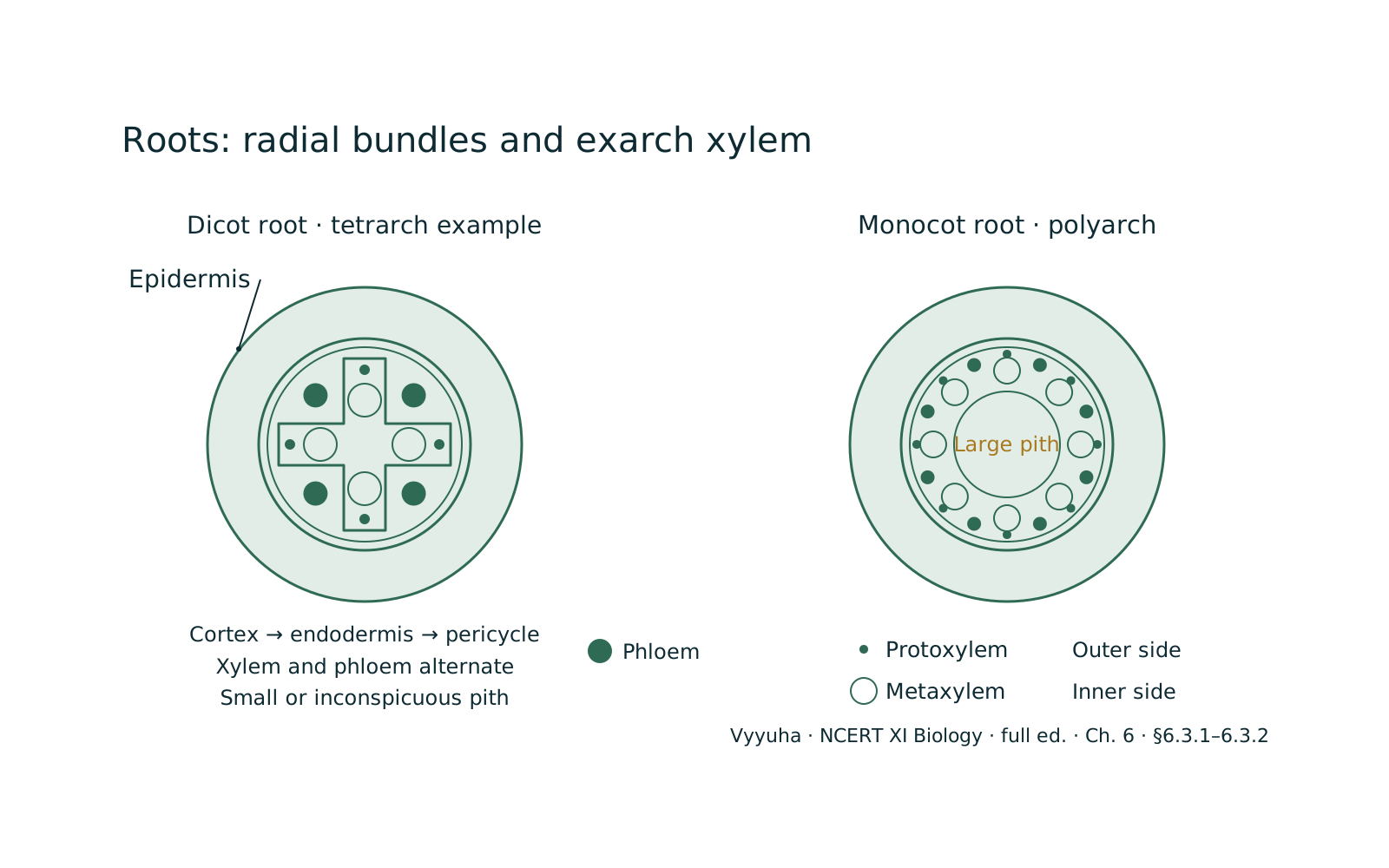
The dicot root is adapted for absorption of water and minerals, and anchorage. Its primary structure, observed in a transverse section, reveals a concentric arrangement of tissues:
- Epidermis: — This is the outermost single layer of parenchymatous cells, tightly packed without intercellular spaces. Some epidermal cells elongate to form unicellular root hairs, which significantly increase the surface area for water and mineral absorption. The epidermis lacks a cuticle, facilitating absorption.
- Cortex: — Located just beneath the epidermis, the cortex is a broad zone composed of several layers of thin-walled parenchymatous cells. These cells have abundant intercellular spaces, which aid in aeration and storage of food reserves (e.g., starch). The cortex provides a pathway for water and minerals absorbed by root hairs to reach the vascular tissues.
- Endodermis: — This is the innermost layer of the cortex, consisting of a single row of barrel-shaped cells, compactly arranged without intercellular spaces. A distinctive feature of the endodermis is the presence of Casparian strips on their radial and tangential walls. These strips are made of suberin and lignin, making them impermeable to water. The Casparian strip forces water and dissolved solutes to pass through the cytoplasm of endodermal cells (symplastic pathway) rather than between them (apoplastic pathway), thus regulating the movement of substances into the vascular cylinder. Some endodermal cells, opposite the protoxylem poles, lack Casparian strips and are called passage cells or transfusion cells, allowing for regulated water movement.
- Stele: — All tissues inside the endodermis constitute the stele. It includes the pericycle, vascular bundles, and pith.
* Pericycle: This is a single layer of thick-walled parenchymatous cells located just inside the endodermis. It is the site of origin for lateral roots and, in some dicots, contributes to the formation of vascular cambium during secondary growth.
* Vascular Bundles: In dicot roots, the vascular bundles are radial, meaning xylem and phloem strands are arranged alternately on different radii. The number of xylem bundles typically ranges from two to six (diarch to hexarch).
Xylem is exarch, meaning the protoxylem (smaller vessels) is located towards the periphery, and the metaxylem (larger vessels) is towards the center. This arrangement is efficient for water transport under tension.
Phloem bundles are located between the xylem bundles. * Pith: The central part of the stele. In most dicot roots, the pith is either very small or completely absent, with the vascular tissues occupying the central region.
Anatomy of Dicot Stem (Primary Structure)
The dicot stem is designed for support, conduction of water and nutrients, and displaying leaves and flowers. Its primary structure, in a transverse section, also shows a distinct organization:
- Epidermis: — The outermost single layer of cells, covered externally by a protective, waxy layer called the cuticle, which reduces water loss. The epidermis may bear multicellular hairs (trichomes) and stomata (though fewer than on leaves) for gas exchange.
- Cortex: — Located beneath the epidermis, the cortex is differentiated into three sub-zones:
* Hypodermis: The outermost layer of the cortex, typically composed of a few layers of collenchymatous cells. These cells provide mechanical support to the young stem, especially in herbaceous dicots.
* General Cortex: Consists of several layers of thin-walled parenchymatous cells with prominent intercellular spaces. These cells are involved in food storage and sometimes photosynthesis. * Endodermis (Starch Sheath): The innermost layer of the cortex, often distinct due to the presence of abundant starch grains.
It is sometimes referred to as the 'starch sheath' because of this characteristic. Unlike the root endodermis, Casparian strips are generally absent in the stem endodermis.
- Stele: — The central cylinder of the stem, comprising the pericycle, vascular bundles, medullary rays, and pith.
* Pericycle: Located just inside the endodermis, it consists of one or more layers of parenchymatous cells, sometimes with patches of sclerenchyma (e.g., in sunflower stem, forming 'bundle caps' over phloem).
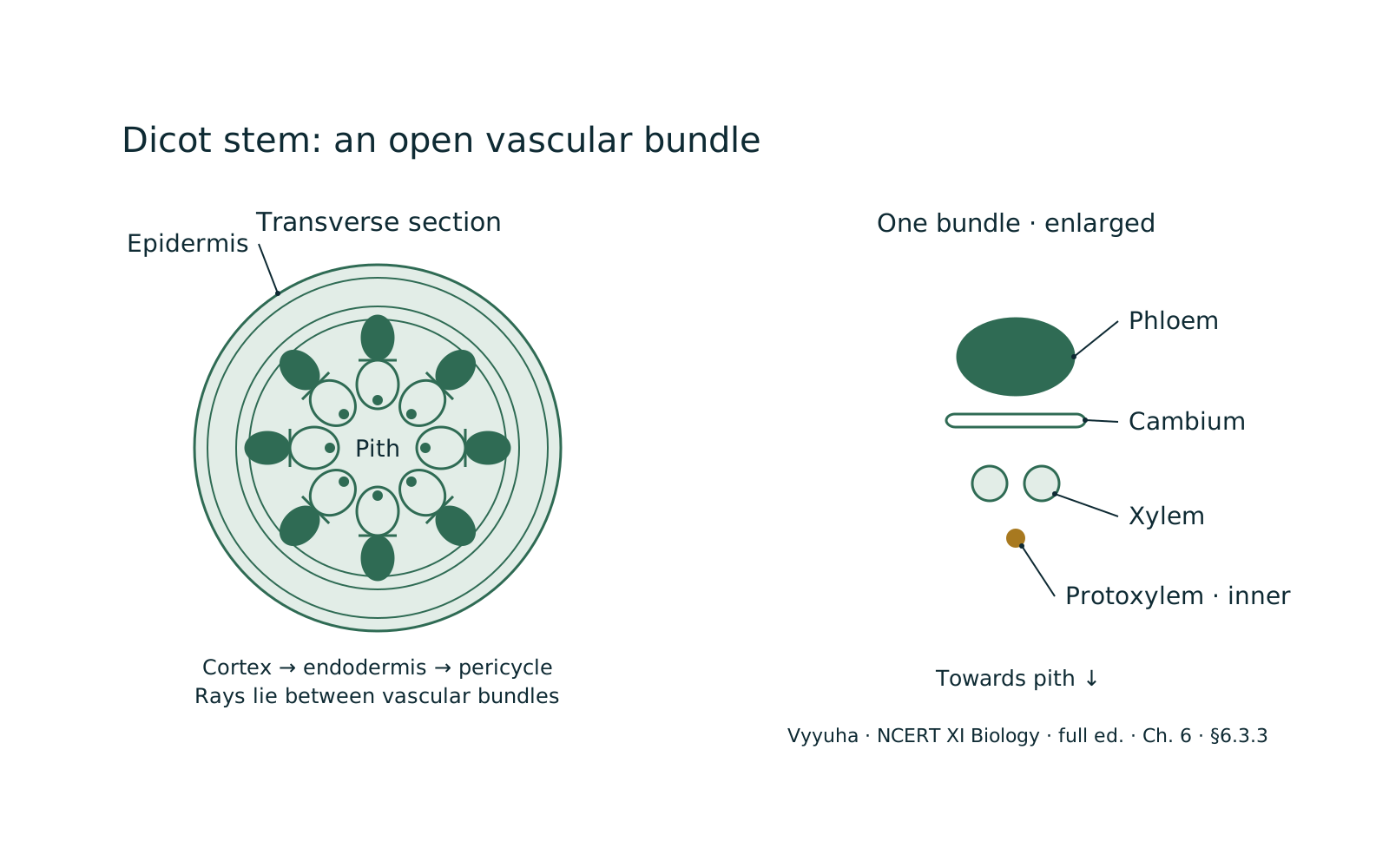
* Vascular Bundles: A defining feature of dicot stems is the arrangement of vascular bundles in a ring. These bundles are conjoint (xylem and phloem together in the same bundle), collateral (phloem towards the periphery, xylem towards the center), and open (a strip of vascular cambium is present between xylem and phloem, enabling secondary growth).
Xylem is endarch, meaning the protoxylem is towards the center (pith) and metaxylem is towards the periphery. This arrangement is efficient for upward water transport and provides structural integrity.
* Medullary Rays (Pith Rays): These are narrow, radial strips of parenchymatous cells that extend from the pith to the cortex, passing between the vascular bundles. They are involved in radial conduction of water and food, and storage.
* Pith: The large, central part of the stem, composed of thin-walled parenchymatous cells with intercellular spaces. The pith primarily functions in food storage.
Real-World Applications
Understanding dicot root and stem anatomy is crucial in agriculture for identifying plant species, diagnosing plant diseases (as pathogens often target specific tissues), and optimizing irrigation and nutrient delivery.
For example, the presence of root hairs and the Casparian strip directly relates to the efficiency of water and mineral uptake. The strong collenchymatous hypodermis in stems provides resilience against wind and mechanical stress.
The open vascular bundles allow for secondary growth, leading to the formation of wood, which is vital for timber industries.
Common Misconceptions
- Confusing Exarch and Endarch Xylem: — Students often mix up the terms. Remember 'Exarch' for Root (xylem matures from Exterior to interior) and 'Endarch' for Stem (xylem matures from End/interior to exterior).
- Casparian Strip in Stem: — A common mistake is to assume the stem endodermis also has Casparian strips. They are characteristic of the root endodermis, regulating water movement into the stele.
- Vascular Bundle Arrangement: — The radial arrangement in roots vs. the ring arrangement in stems is a key differentiator, often confused.
- Presence of Pith: — Dicot roots generally have a small or absent pith, while dicot stems have a large, well-developed pith.
NEET-Specific Angle
NEET questions on dicot root and stem anatomy frequently involve:
- Diagram-based identification: — Identifying labeled parts in a transverse section of a dicot root or stem.
- Comparative anatomy: — Questions asking to differentiate between dicot root and stem, or even between dicot and monocot structures (though the latter is a separate topic).
- Functional significance: — Relating specific anatomical features (e.g., Casparian strip, root hairs, collenchymatous hypodermis) to their physiological roles.
- Tissue characteristics: — Questions on the cell types, arrangement, and specific features of epidermis, cortex, endodermis, pericycle, and vascular tissues.
- Terms and definitions: — Understanding terms like exarch, endarch, conjoint, collateral, open, radial, stele, etc.
Often confused with
Side-by-side differences the NEET paper likes to test.
| Aspect | Dicot Root and Stem | Dicot Stem |
|---|---|---|
| Function | Anchorage, water and mineral absorption | Support, conduction, display of leaves/flowers |
| Root Hairs/Trichomes | Unicellular root hairs present | Multicellular trichomes (hairs) may be present; cuticle present |
| Cuticle | Absent | Present on epidermis |
| Hypodermis | Absent | Collenchymatous (for mechanical support) |
| Endodermis | Prominent, with Casparian strips | Often called 'starch sheath', Casparian strips absent |
| Pericycle | Gives rise to lateral roots and vascular cambium (secondary growth) | Gives rise to vascular cambium and cork cambium (secondary growth) |
| Vascular Bundle Arrangement | Radial (xylem and phloem on different radii) | Conjoint, collateral, open (xylem and phloem on same radius, with cambium), arranged in a ring |
| Xylem Maturation | Exarch (protoxylem towards periphery) | Endarch (protoxylem towards pith) |
| Pith | Small or absent | Large and well-developed |
Dicot roots and stems are fundamentally different in their primary anatomical organization, reflecting their distinct roles. Roots are characterized by root hairs, the absence of a cuticle, a prominent endodermis with Casparian strips, radial vascular bundles with exarch xylem, and a small or absent pith.
Stems, conversely, possess a cuticle, may have trichomes, a collenchymatous hypodermis, an endodermis (starch sheath) without Casparian strips, conjoint and collateral vascular bundles arranged in a ring with endarch xylem, and a large central pith.
These features are critical for their respective functions of absorption and anchorage versus support and conduction.
Why it is tested: For NEET, understanding these differences is paramount for identifying transverse sections of plant organs, answering comparative anatomy questions, and linking structure to function. Questions often involve identifying specific tissues or arrangements unique to either the root or the stem, or distinguishing between dicot and monocot structures.
Questions students ask
6 answered on this topic.
Why is the xylem in dicot roots described as 'exarch'?
In dicot roots, the xylem is described as 'exarch' because the protoxylem (the first-formed, smaller xylem vessels) is located towards the periphery of the vascular cylinder, while the metaxylem (later-formed, larger xylem vessels) is situated towards the center.
This arrangement is an adaptation that allows for efficient water transport, especially when the root is growing and needs to draw water from the soil. The peripheral protoxylem helps in early water uptake, while the central metaxylem provides robust long-distance transport as the root matures.
What is the function of the Casparian strip in a dicot root?
The Casparian strip is a waxy, impermeable band of suberin and lignin found in the radial and tangential walls of endodermal cells in dicot roots. Its primary function is to regulate the movement of water and dissolved minerals into the vascular cylinder (stele).
By blocking the apoplastic pathway (movement through cell walls and intercellular spaces), it forces water and solutes to enter the endodermal cells' cytoplasm (symplastic pathway), allowing the plant to selectively control what enters its vascular system, preventing uncontrolled leakage and ensuring proper nutrient uptake.
How can you distinguish a dicot stem from a dicot root based on vascular bundle arrangement?
The arrangement of vascular bundles is a key distinguishing feature. In a dicot root, vascular bundles are 'radial', meaning xylem and phloem strands are arranged alternately on different radii, often forming a star-like pattern.
In contrast, a dicot stem has 'conjoint' vascular bundles (xylem and phloem together in the same bundle), which are typically 'collateral' (phloem outside, xylem inside) and arranged in a distinct 'ring' around a central pith.
This ring arrangement is a hallmark of dicot stems.
What are medullary rays and what is their significance in a dicot stem?
Medullary rays, also known as pith rays, are narrow, radial strips of parenchymatous cells that extend from the pith to the cortex, passing between the vascular bundles in a dicot stem. Their significance lies in their role in radial conduction.
They facilitate the lateral transport of water and food substances (like sugars) between the vascular tissues and the ground tissues (cortex and pith). Additionally, they serve as storage sites for food reserves, contributing to the overall metabolic activity and structural integrity of the stem.
Why is the hypodermis in dicot stems typically collenchymatous?
The hypodermis in dicot stems is typically composed of collenchymatous cells because these cells provide crucial mechanical support and flexibility to the young, growing stem. Collenchyma cells have unevenly thickened cell walls, particularly at the corners, which allows them to offer strength without hindering growth.
This support is essential for the stem to withstand bending forces from wind or other mechanical stresses, helping the plant maintain an upright posture and protect its delicate internal tissues.
What is the 'starch sheath' in a dicot stem?
The 'starch sheath' is the innermost layer of the cortex in a dicot stem, which is essentially the endodermis. It gets its name because its cells are typically rich in starch grains, serving as a storage site for carbohydrates.
While it is homologous to the endodermis of the root, it generally lacks the Casparian strips found in roots. Its primary functions include starch storage and potentially playing a role in gravity perception (gravitropism) due to the presence of statoliths (starch grains) within its cells.