Endoplasmic Reticulum and Ribosomes — Explained
Detailed Explanation
The intricate dance of life within a eukaryotic cell is orchestrated by a symphony of organelles, each performing specialized roles. Among the most fundamental players in this cellular orchestra are the Endoplasmic Reticulum (ER) and Ribosomes, intimately linked in the critical processes of protein synthesis, modification, and trafficking. Understanding these structures is paramount for any NEET aspirant, as they form the bedrock of cellular function.
Conceptual Foundation: The Endomembrane System and Compartmentalization
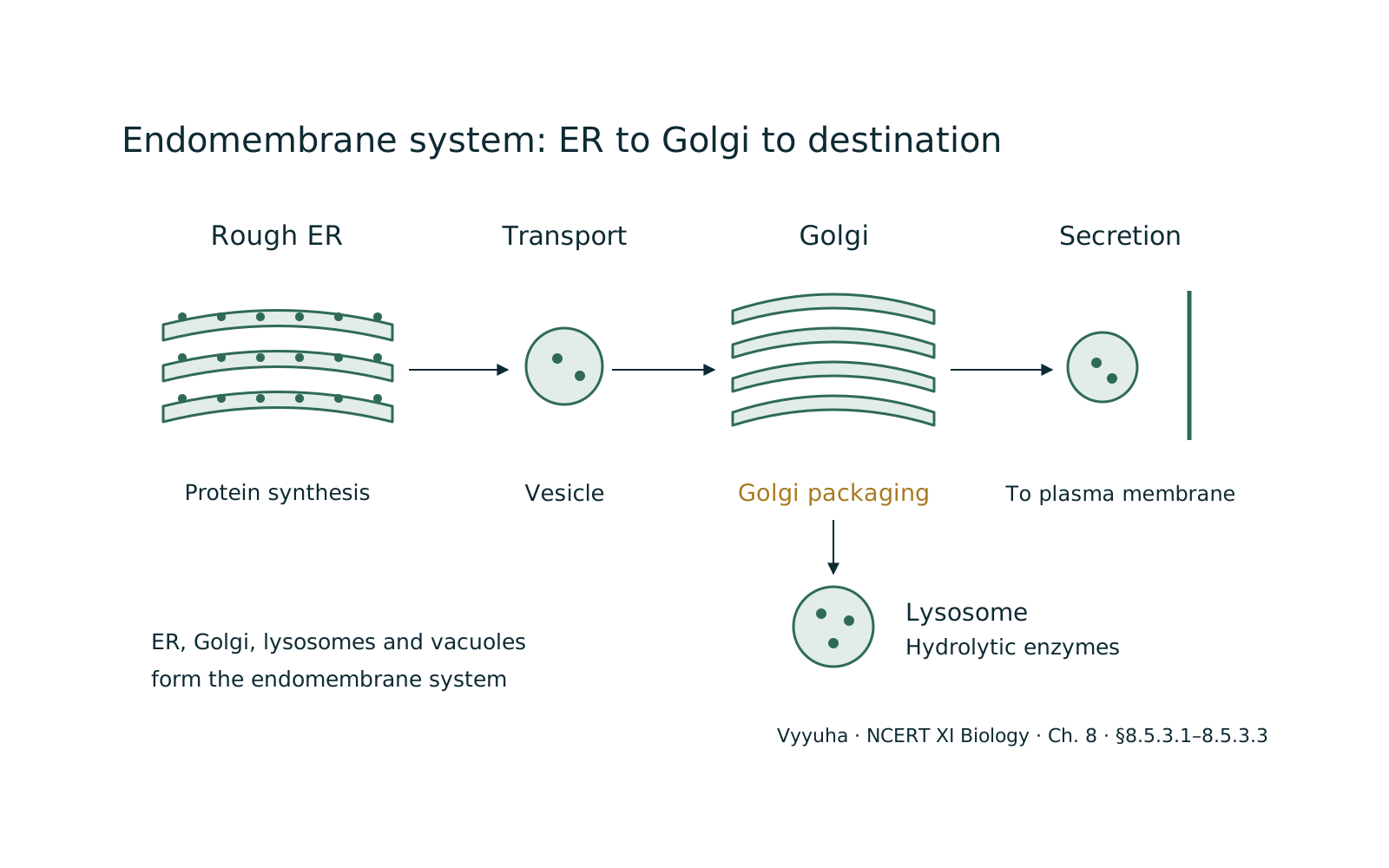
Eukaryotic cells are characterized by their internal compartmentalization, achieved through a complex system of membranes that divide the cell into functional units. The endomembrane system is a network of organelles that includes the nuclear envelope, endoplasmic reticulum, Golgi apparatus, lysosomes, vacuoles, and the plasma membrane.
These components are either directly continuous or connected via the transfer of vesicles, working in concert to synthesize, modify, package, and transport lipids and proteins. The ER and ribosomes are the initial and crucial entry points into this system for many proteins and lipids.
I. The Endoplasmic Reticulum (ER): The Cell's Internal Highway and Processing Plant
The ER is the largest membrane-bound organelle in most eukaryotic cells, forming an extensive, dynamic network of interconnected tubules, flattened sacs (cisternae), and vesicles. It is continuous with the outer nuclear membrane, highlighting its central role in cellular communication and material flow.
A. Structure of the ER:
- Cisternae: — Flattened, membrane-bound sacs, particularly prominent in the Rough ER.
- Tubules: — Interconnecting tube-like structures, more prevalent in the Smooth ER.
- Lumen (ER Cisternal Space): — The internal compartment enclosed by the ER membrane, distinct from the cytosol. This space is crucial for protein folding and modification.
- ER Membrane: — A single lipid bilayer, similar to the plasma membrane, but with a unique protein composition that facilitates its diverse functions.
B. Types of ER and Their Functions:
- Rough Endoplasmic Reticulum (RER):
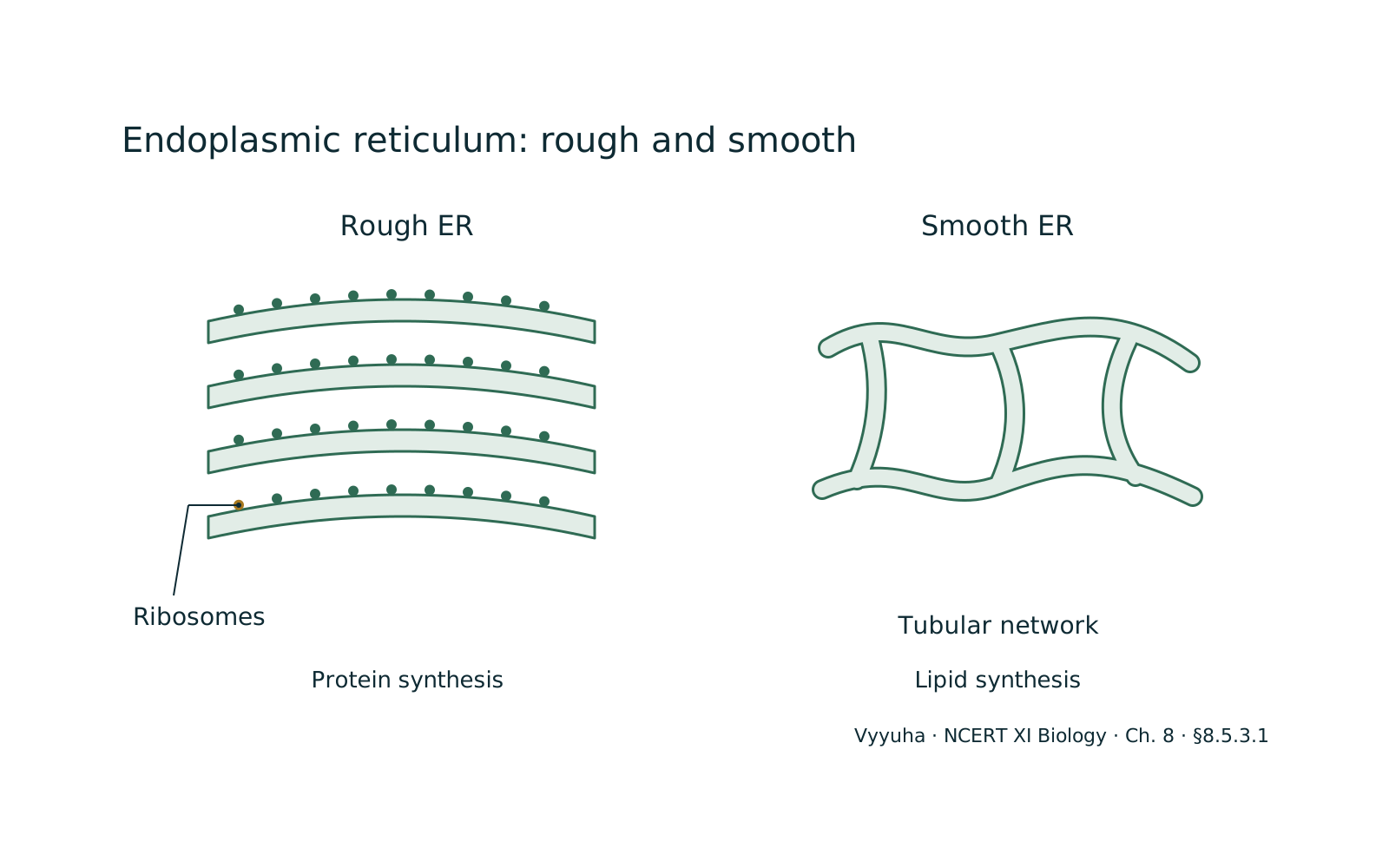
* Appearance: 'Rough' due to the presence of ribosomes attached to its cytosolic surface. * Primary Role: Protein synthesis, folding, modification, and quality control for proteins destined for secretion, insertion into membranes, or delivery to other organelles (e.
g., lysosomes, Golgi). * Key Functions: * Protein Synthesis: Ribosomes attached to the RER synthesize proteins that contain a 'signal peptide' sequence. This sequence directs the ribosome-mRNA complex to the RER membrane, where the nascent polypeptide chain is threaded into the ER lumen or inserted into the ER membrane.
* Protein Folding: Inside the ER lumen, newly synthesized proteins undergo proper folding into their correct three-dimensional conformations. This process is aided by molecular chaperones (e.g., BiP, calnexin, calreticulin) that prevent misfolding and aggregation.
Misfolded proteins are retained in the ER or targeted for degradation (ER-associated degradation, ERAD). * Disulfide Bond Formation: The ER lumen is an oxidizing environment, facilitating the formation of disulfide bonds between cysteine residues, which are crucial for the stability and function of many secreted and membrane proteins.
This is catalyzed by protein disulfide isomerase (PDI). * Glycosylation (N-linked): Many proteins receive oligosaccharide chains (sugar groups) attached to asparagine residues (N-linked glycosylation) within the ER lumen.
This process is vital for protein folding, stability, and cell-cell recognition. The initial oligosaccharide is transferred from a lipid carrier (dolichol phosphate) to the nascent protein. * Quality Control: The RER acts as a quality control checkpoint, ensuring that only correctly folded and assembled proteins proceed to the Golgi apparatus.
Misfolded proteins are either refolded or retrotranslocated back into the cytosol for ubiquitination and proteasomal degradation.
- Smooth Endoplasmic Reticulum (SER):
* Appearance: 'Smooth' because it lacks ribosomes on its surface. It typically consists of a network of interconnected tubules. * Primary Role: Diverse metabolic processes, including lipid synthesis, detoxification, and calcium storage.
* Key Functions: * Lipid Synthesis: The SER is the primary site for the synthesis of various lipids, including phospholipids (major components of cell membranes), cholesterol, and steroid hormones (e.
g., in adrenal cortex cells, gonads). * Detoxification of Drugs and Poisons: Particularly abundant in liver cells (hepatocytes), the SER contains enzymes (e.g., cytochrome P450 enzymes) that metabolize and detoxify lipid-soluble drugs, pesticides, and carcinogens by adding hydroxyl groups, making them more soluble and easier to excrete.
* Calcium Ion Storage and Release: The SER sequesters and releases calcium ions () from the cytosol. In muscle cells, a specialized SER called the sarcoplasmic reticulum plays a critical role in muscle contraction by storing and releasing in response to nerve impulses.
* Carbohydrate Metabolism: In liver cells, the SER is involved in the breakdown of glycogen to glucose, containing glucose-6-phosphatase, an enzyme that removes the phosphate group from glucose-6-phosphate, allowing glucose to be released into the bloodstream.
II. Ribosomes: The Cell's Protein Synthesis Machines
Ribosomes are complex molecular machines responsible for protein synthesis, a process known as translation. They are unique among organelles in that they are non-membranous and found in both prokaryotic and eukaryotic cells, as well as within mitochondria and chloroplasts.
A. Structure of Ribosomes:
- Composition: — Ribosomes are composed of ribosomal RNA (rRNA) and ribosomal proteins.
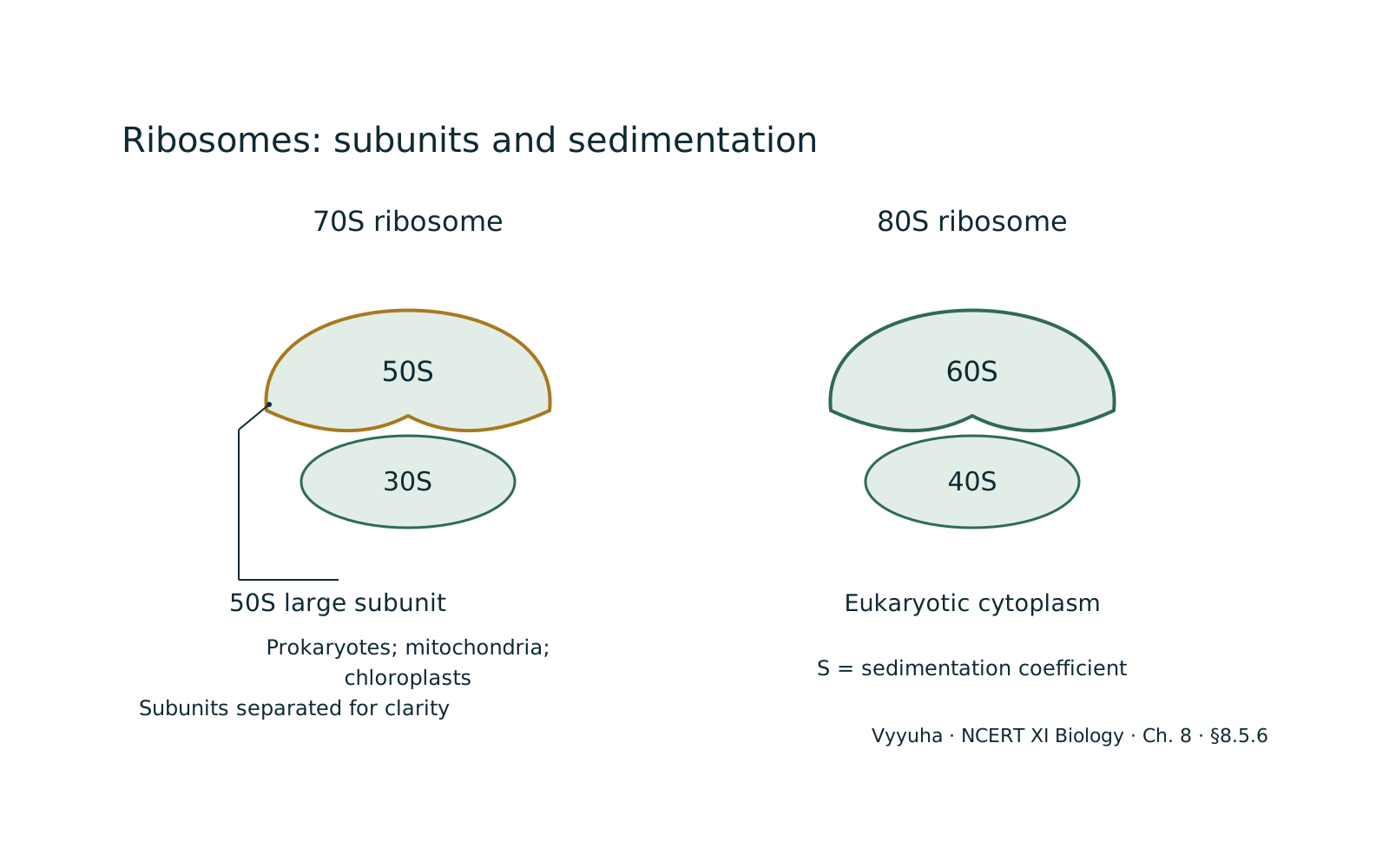
- Subunits: — Each ribosome consists of two subunits: a large subunit and a small subunit. These subunits are separate in the cytoplasm when not actively synthesizing proteins and come together only during translation.
- Sedimentation Coefficient (Svedberg units, S): — This value reflects the sedimentation rate of a particle in a centrifuge, which is influenced by its mass, density, and shape. It is not additive.
* Eukaryotic Ribosomes (80S): Found in the cytoplasm (free or RER-bound). Composed of a 60S large subunit (containing 28S, 5.8S, and 5S rRNA) and a 40S small subunit (containing 18S rRNA). * Prokaryotic Ribosomes (70S): Found in bacteria and archaea. Also found in mitochondria and chloroplasts of eukaryotic cells, supporting the endosymbiotic theory. Composed of a 50S large subunit (containing 23S and 5S rRNA) and a 30S small subunit (containing 16S rRNA).
B. Location and Function of Ribosomes:
- Free Ribosomes: — Suspended in the cytosol. They synthesize proteins that will function within the cytosol itself (e.g., enzymes of glycolysis, cytoskeletal proteins).
- Bound Ribosomes: — Attached to the outer surface of the RER. They synthesize proteins destined for the endomembrane system (ER, Golgi, lysosomes, vacuoles), secretion outside the cell, or insertion into membranes.
- Mitochondrial and Chloroplast Ribosomes: — These are 70S ribosomes, similar to prokaryotic ribosomes, and synthesize a limited number of proteins specific to these organelles.
C. Mechanism of Protein Synthesis (Translation):
Ribosomes facilitate the decoding of genetic information from messenger RNA (mRNA) into a sequence of amino acids, forming a polypeptide chain. This involves three main stages:
- Initiation: — The small ribosomal subunit binds to mRNA and an initiator tRNA (carrying methionine). The large subunit then joins, forming a complete ribosome.
- Elongation: — Amino acids are added one by one to the growing polypeptide chain. The ribosome moves along the mRNA, reading codons (three-nucleotide sequences) and recruiting corresponding tRNAs with their amino acids. Peptide bonds are formed between adjacent amino acids.
- Termination: — When the ribosome encounters a stop codon on the mRNA, a release factor binds, causing the polypeptide chain to be released from the ribosome. The ribosomal subunits then dissociate.
III. Interrelationship and Protein Targeting:
The ER and ribosomes are functionally interconnected, particularly for proteins entering the secretory pathway. Proteins destined for the ER, Golgi, lysosomes, plasma membrane, or secretion are synthesized by ribosomes bound to the RER.
The 'signal hypothesis' explains this targeting: a signal peptide at the N-terminus of the nascent polypeptide chain directs the ribosome to the RER membrane, where the protein is translocated into the ER lumen or integrated into the membrane.
Proteins lacking this signal peptide are synthesized on free ribosomes and remain in the cytosol.
IV. Common Misconceptions:
- All proteins are made on the RER: — Incorrect. Proteins for the cytosol, nucleus, mitochondria, and chloroplasts are typically made on free ribosomes.
- SER is only for detoxification: — While a major role, SER also synthesizes lipids, steroids, and stores calcium.
- Ribosomes are membrane-bound organelles: — Incorrect. Ribosomes are non-membranous ribonucleoprotein particles.
- Svedberg units are additive: — Incorrect. The 'S' value reflects sedimentation rate, not molecular weight, so 40S + 60S does not equal 100S; it equals 80S for eukaryotic ribosomes.
V. NEET-Specific Angle:
NEET questions often focus on differentiating RER and SER functions, the types and locations of ribosomes (70S vs. 80S, free vs. bound), the sequence of events in protein synthesis and modification within the ER, and the concept of protein targeting.
Understanding the endomembrane system as a whole, and the specific roles of chaperones, glycosylation, and disulfide bond formation in the ER, are high-yield areas. Clinical correlations, such as the hypertrophy of SER in liver cells due to chronic drug use (increased detoxification capacity), are also relevant.
Often confused with
Side-by-side differences the NEET paper likes to test.
| Aspect | Endoplasmic Reticulum and Ribosomes | Smooth Endoplasmic Reticulum (SER) |
|---|---|---|
| Presence of Ribosomes | Rough Endoplasmic Reticulum (RER): Has ribosomes attached to its outer (cytosolic) surface, giving it a 'rough' appearance. | Smooth Endoplasmic Reticulum (SER): Lacks ribosomes on its surface, appearing 'smooth'. |
| Primary Structure | RER: Predominantly composed of flattened sacs called cisternae. | SER: Primarily consists of a network of interconnected tubules. |
| Main Functions | RER: Protein synthesis (for secretion, membranes, organelles), protein folding, modification (e.g., N-linked glycosylation), and quality control. | SER: Lipid synthesis (phospholipids, steroids), detoxification of drugs and poisons, calcium ion storage and release, carbohydrate metabolism. |
| Protein Targeting | RER: Synthesizes proteins destined for the endomembrane system or secretion. | SER: Does not directly synthesize proteins; its enzymes are typically synthesized on free ribosomes and then imported. |
| Abundance | RER: Abundant in cells that secrete large amounts of proteins (e.g., pancreatic cells, plasma cells). | SER: Abundant in cells involved in lipid metabolism (e.g., liver cells, adrenal cortex cells, muscle cells (sarcoplasmic reticulum)). |
The Rough Endoplasmic Reticulum (RER) is characterized by its ribosome-studded surface and its central role in synthesizing, folding, and modifying proteins destined for secretion or membrane integration.
Its structure is dominated by flattened cisternae. In contrast, the Smooth Endoplasmic Reticulum (SER) lacks ribosomes, giving it a tubular appearance, and is primarily involved in lipid synthesis, detoxification, and calcium storage.
While both are continuous parts of the ER network, their distinct structural features and enzymatic compositions enable them to perform highly specialized and complementary functions crucial for cellular homeostasis.
Why it is tested: For NEET, understanding the distinct roles of RER and SER is fundamental. Questions frequently test the specific functions of each, their structural differences, and their prevalence in different cell types based on cellular activity (e.g., RER in antibody-secreting cells, SER in liver cells for detoxification). The functional differentiation is a high-yield concept.
Questions students ask
6 answered on this topic.
What is the primary difference in function between the Rough ER and the Smooth ER?
The primary functional distinction lies in their roles in macromolecule synthesis and processing. The Rough ER, studded with ribosomes, is predominantly involved in the synthesis, folding, modification (like N-linked glycosylation), and quality control of proteins destined for secretion, insertion into membranes, or delivery to other organelles.
In contrast, the Smooth ER, lacking ribosomes, is the main site for lipid synthesis (including phospholipids and steroid hormones), detoxification of drugs and poisons, and storage and release of calcium ions.
While both are part of the ER network, their enzymatic machinery and associated proteins dictate their specialized tasks.
Why are some ribosomes 'free' in the cytoplasm while others are 'bound' to the RER?
The location of ribosomes dictates the destination of the proteins they synthesize. Free ribosomes, floating in the cytoplasm, produce proteins that are intended to function within the cytosol itself, such as enzymes involved in glycolysis or components of the cytoskeleton.
Bound ribosomes, attached to the RER, synthesize proteins that are destined for the endomembrane system (ER, Golgi, lysosomes), for insertion into cellular membranes (like the plasma membrane), or for secretion out of the cell.
This targeting mechanism is initiated by a signal peptide sequence on the nascent polypeptide chain, which directs the ribosome to the RER.
What is the significance of the 70S and 80S classification for ribosomes?
The 'S' in 70S and 80S refers to Svedberg units, a measure of sedimentation rate in a centrifuge, which is influenced by a particle's mass, density, and shape. This classification is significant because it distinguishes between prokaryotic and eukaryotic ribosomes.
Prokaryotic cells (bacteria, archaea) possess 70S ribosomes, which are also found in the mitochondria and chloroplasts of eukaryotic cells, supporting the endosymbiotic theory. Eukaryotic cells, in their cytoplasm, have larger 80S ribosomes.
This difference in size and composition is often exploited by antibiotics that target 70S ribosomes, inhibiting bacterial protein synthesis without harming host (eukaryotic) cells.
How does the ER ensure that proteins are correctly folded?
The ER employs a sophisticated quality control system to ensure proper protein folding. Within the ER lumen, specialized proteins called molecular chaperones (e.g., BiP, calnexin, calreticulin) bind to nascent or partially folded proteins, assisting them in achieving their correct three-dimensional conformation and preventing aggregation.
The ER also facilitates the formation of disulfide bonds, crucial for protein stability. If a protein fails to fold correctly after several attempts, it is typically targeted for degradation through a pathway called ER-associated degradation (ERAD), where it is retrotranslocated back into the cytosol and degraded by proteasomes.
This stringent quality control prevents the accumulation of potentially harmful misfolded proteins.
What is the role of the SER in muscle contraction?
In muscle cells, the Smooth Endoplasmic Reticulum is specialized and referred to as the Sarcoplasmic Reticulum (SR). Its crucial role in muscle contraction is the storage and regulated release of calcium ions ().
When a nerve impulse stimulates a muscle cell, it triggers the release of from the SR into the muscle cell's cytoplasm. These ions then bind to specific proteins, initiating the cascade of events that lead to muscle fiber contraction.
After contraction, is actively pumped back into the SR, allowing the muscle to relax. Thus, the SR acts as a vital calcium reservoir, precisely controlling muscle activity.
Can ribosomes synthesize all types of proteins?
Yes, ribosomes are the universal machinery for synthesizing all proteins, regardless of their final destination or function. However, the type of ribosome (free vs. bound) and its location determine where the protein is synthesized and subsequently processed.
All proteins, whether cytoplasmic enzymes, secreted hormones, or membrane receptors, are initially assembled as polypeptide chains by ribosomes. The subsequent folding, modification, and targeting pathways then dictate their ultimate functional form and cellular location.