Mitochondria and Plastids — Explained
Detailed Explanation
The intricate machinery of eukaryotic cells relies heavily on specialized membrane-bound organelles, among which mitochondria and plastids stand out due to their unique structure, function, and evolutionary history. These two organelles are central to energy metabolism and storage, making them indispensable for the survival of most eukaryotic life forms.
I. Conceptual Foundation: The Endosymbiotic Theory
Before delving into the specifics of each organelle, it's crucial to understand their proposed origin. The endosymbiotic theory, largely popularized by Lynn Margulis, posits that mitochondria and plastids (specifically chloroplasts) originated from free-living prokaryotic organisms that were engulfed by a larger ancestral eukaryotic cell.
Instead of being digested, these prokaryotes established a symbiotic relationship, eventually evolving into the organelles we observe today.
- Double Membranes — Both organelles are enclosed by two membranes. The outer membrane is thought to be derived from the host cell's phagosomal membrane, while the inner membrane represents the original prokaryotic cell membrane.
- Circular DNA — They possess their own genetic material in the form of a single, circular DNA molecule, similar to bacterial chromosomes, and distinct from the linear DNA in the host cell's nucleus.
- 70S Ribosomes — Both contain ribosomes of the 70S type, characteristic of prokaryotes, rather than the 80S ribosomes found in the eukaryotic cytoplasm.
- Independent Replication — They replicate by binary fission, a process akin to bacterial cell division, independent of the host cell's mitotic cycle.
- Protein Synthesis — They can synthesize some of their own proteins using their internal genetic machinery.
II. Mitochondria: The Powerhouses of the Cell
Mitochondria are ubiquitous in almost all eukaryotic cells (exceptions include mature red blood cells and some anaerobic protists). Their primary function is to generate ATP through aerobic respiration.
A. Structure of Mitochondria:
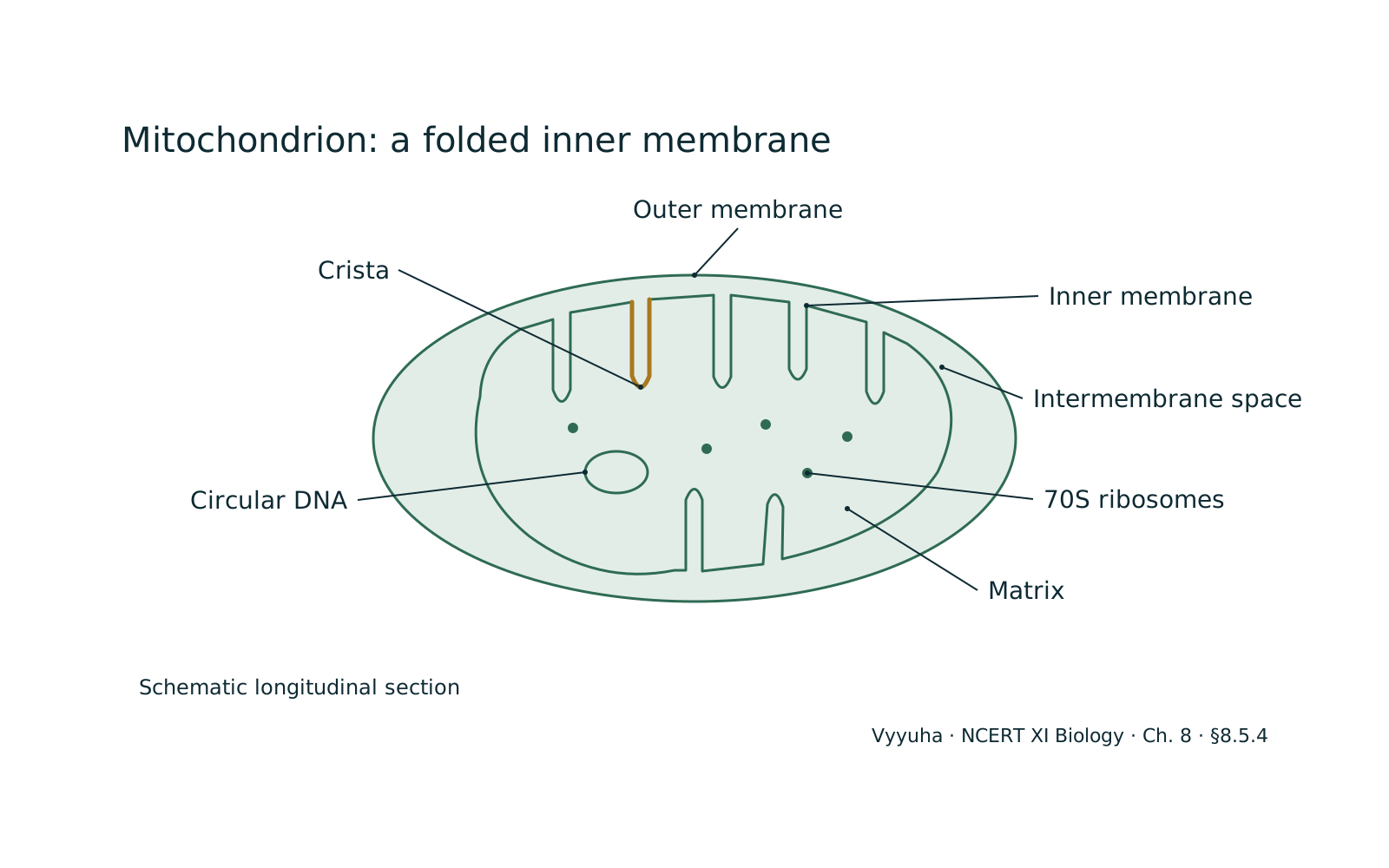
An individual mitochondrion is typically rod-shaped or oval, varying in size from to in diameter. It is characterized by its double-membrane structure:
- Outer Membrane — Smooth, permeable to small molecules due to the presence of porins (channel proteins). It encloses the entire organelle.
- Inner Membrane — Highly convoluted, forming numerous infoldings called cristae (singular: crista). This extensive folding dramatically increases the surface area for the electron transport chain (ETC) and ATP synthase complexes. The inner membrane is selectively permeable, regulating the passage of molecules into and out of the mitochondrial matrix.
- Intermembrane Space — The narrow region between the outer and inner membranes. It plays a crucial role in proton accumulation during oxidative phosphorylation.
- Mitochondrial Matrix — The jelly-like substance enclosed by the inner membrane. It contains:
Mitochondrial DNA (mtDNA): A single, circular, double-stranded molecule. 70S Ribosomes: For synthesizing mitochondrial proteins. Enzymes: For the Krebs cycle (citric acid cycle), fatty acid oxidation, and other metabolic pathways. Inorganic ions and organic molecules.
B. Function of Mitochondria: Cellular Respiration
Mitochondria are the sites of the final stages of aerobic respiration, a process that extracts energy from glucose to produce ATP.
- Glycolysis — Occurs in the cytoplasm, breaking down glucose into pyruvate.
- Pyruvate Oxidation — Pyruvate enters the mitochondrial matrix and is converted to acetyl-CoA.
- Krebs Cycle (Citric Acid Cycle) — Occurs in the mitochondrial matrix. Acetyl-CoA is completely oxidized, producing carbon dioxide, ATP (or GTP), NADH, and FADH. NADH and FADH are crucial electron carriers.
- Electron Transport Chain (ETC) and Oxidative Phosphorylation — Occurs on the inner mitochondrial membrane. Electrons from NADH and FADH are passed along a series of protein complexes, releasing energy. This energy is used to pump protons () from the matrix into the intermembrane space, creating a proton gradient. Protons then flow back into the matrix through ATP synthase, driving the synthesis of ATP from ADP and inorganic phosphate (). This process is known as chemiosmosis.
C. Replication and Dynamics:
Mitochondria are dynamic organelles, constantly fusing and dividing (fission) to maintain a healthy population within the cell. Their replication is independent of the nuclear division, occurring via binary fission, ensuring that daughter cells receive an adequate number of mitochondria.
III. Plastids: The Diverse Organelles of Plants and Algae
Plastids are a characteristic feature of plant cells and some protists. They are a diverse group of organelles, all originating from proplastids (undifferentiated plastids) and capable of interconversion depending on the cell's needs and environmental conditions.
A. Types of Plastids:
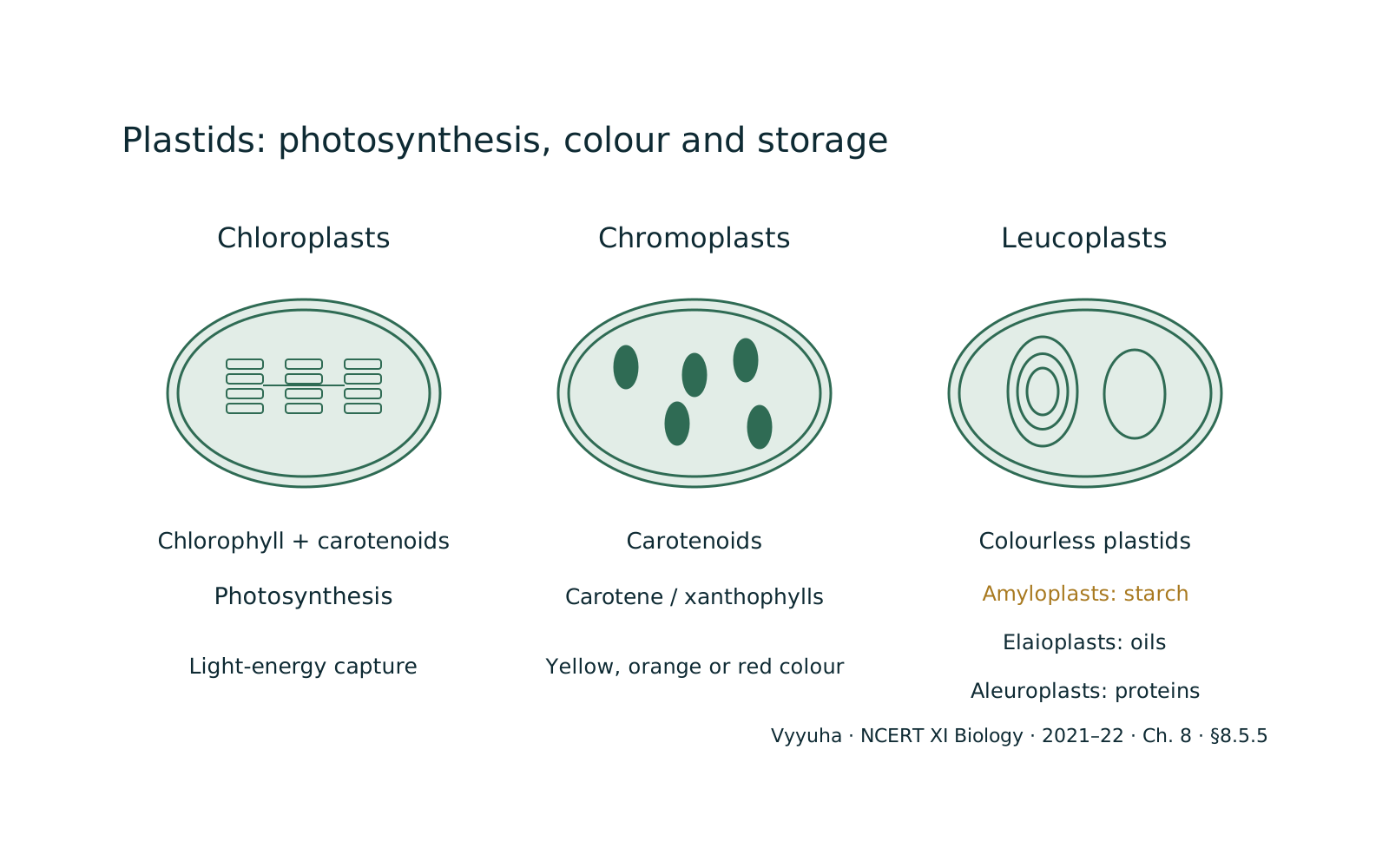
- Chloroplasts — The most prominent type, responsible for photosynthesis. They contain chlorophyll and carotenoid pigments.
- Chromoplasts — Contain carotenoid pigments (yellow, orange, red) but lack chlorophyll. They are responsible for the vibrant colors of flowers, fruits, and some roots (e.g., carrot).
- Leucoplasts — Colorless plastids primarily involved in storage. They are further classified based on the type of substance they store:
* Amyloplasts: Store starch (e.g., in potato tubers, rice grains). * Elaioplasts: Store oils and fats (e.g., in seeds). * Aleuroplasts (Proteinoplasts): Store proteins (e.g., in castor seeds).
B. Structure of Chloroplasts:
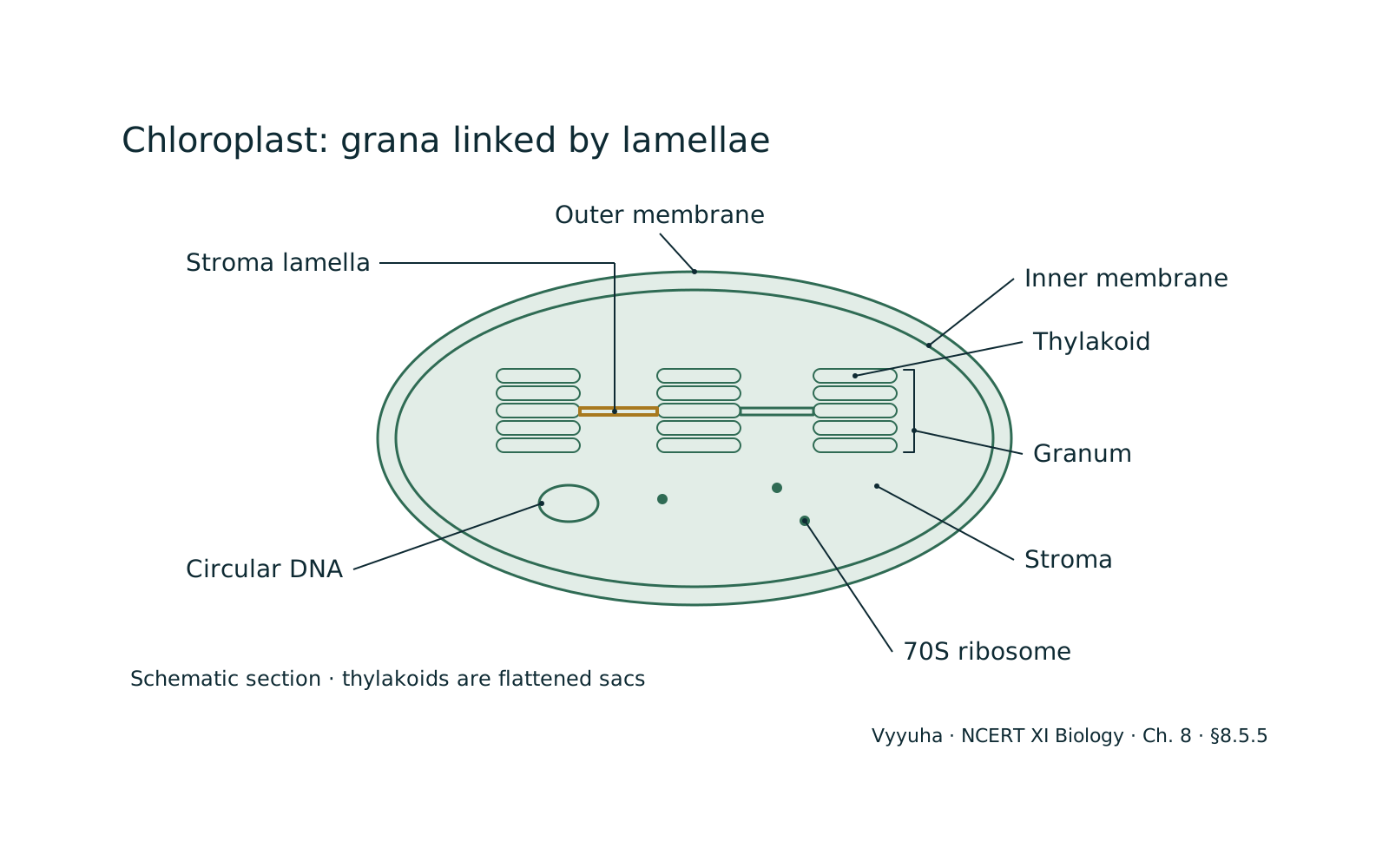
Chloroplasts are typically lens-shaped, ranging from to in diameter. Like mitochondria, they have a double-membrane envelope:
- Outer Membrane — Smooth and permeable.
- Inner Membrane — Smooth and selectively permeable, enclosing the stroma.
- Stroma — The homogeneous, jelly-like matrix within the inner membrane. It contains:
Chloroplast DNA (cpDNA): A single, circular, double-stranded molecule. 70S Ribosomes: For synthesizing chloroplast proteins. Enzymes: For the Calvin cycle (light-independent reactions of photosynthesis). Starch granules and lipid droplets.
- Thylakoids — Flattened, sac-like membranous structures suspended in the stroma. The thylakoid membrane contains photosynthetic pigments (chlorophylls, carotenoids) and the components of the light-dependent reactions.
- Grana (singular: Granum) — Stacks of thylakoids, resembling piles of coins. Each granum is interconnected by stromal lamellae.
- Stromal Lamellae (Intergranal Thylakoids) — Flat membranous tubules connecting different grana thylakoids.
C. Function of Chloroplasts: Photosynthesis
Chloroplasts are the sites where light energy is converted into chemical energy in the form of glucose.
- Light-Dependent Reactions — Occur on the thylakoid membranes. Chlorophyll absorbs light energy, which drives the splitting of water (photolysis), releasing oxygen, electrons, and protons. This energy is used to generate ATP and NADPH (another energy carrier).
- Light-Independent Reactions (Calvin Cycle) — Occur in the stroma. ATP and NADPH from the light reactions are used to fix carbon dioxide from the atmosphere into glucose and other organic molecules.
IV. Semi-Autonomous Nature and Interdependence
Both mitochondria and plastids are considered semi-autonomous because they possess some degree of independence from the nuclear genome. They have their own genetic material (circular DNA), ribosomes (70S), and protein synthesis machinery. However, they are not entirely independent; their functions are still largely regulated by the nuclear genome, and they import many proteins synthesized in the cytoplasm. This interdependence highlights the complex coordination within eukaryotic cells.
V. Common Misconceptions and NEET-Specific Angles:
- Mitochondria are only in animal cells, and chloroplasts are only in plant cells — While generally true for chloroplasts, mitochondria are present in almost all eukaryotic cells, including plant cells. Plant cells have both mitochondria (for respiration) and chloroplasts (for photosynthesis).
- Mitochondria and chloroplasts are fully independent — They are semi-autonomous, not fully autonomous. Many of their essential proteins are encoded by nuclear DNA and imported.
- All plastids are green — Only chloroplasts are green due to chlorophyll. Chromoplasts are colored (red, orange, yellow), and leucoplasts are colorless.
- NEET Focus — Questions often test the structural components (cristae, thylakoids, stroma, matrix), the specific locations of metabolic pathways (Krebs cycle in matrix, ETC on inner mitochondrial membrane, Calvin cycle in stroma, light reactions on thylakoids), the endosymbiotic theory evidence, and the types and functions of different plastids. Understanding the 70S ribosomes and circular DNA as prokaryotic features is also a recurring theme.
Often confused with
Side-by-side differences the NEET paper likes to test.
| Aspect | Mitochondria and Plastids | Chloroplasts |
|---|---|---|
| Primary Function | Cellular respiration (ATP synthesis) | Photosynthesis (glucose synthesis) |
| Presence | Almost all eukaryotic cells (animal, plant, fungi, protists) | Plant cells and some protists (algae) |
| Internal Membrane System | Inner membrane folded into cristae | Thylakoids stacked into grana, interconnected by stromal lamellae |
| Internal Fluid Space | Matrix | Stroma |
| Pigments | No photosynthetic pigments | Chlorophylls and carotenoids |
| Key Metabolic Cycles | Krebs cycle, Electron Transport Chain | Calvin cycle, Light-dependent reactions |
| Energy Conversion | Chemical energy (glucose) to chemical energy (ATP) | Light energy to chemical energy (glucose) |
Mitochondria and chloroplasts, though both semi-autonomous and double-membraned, serve fundamentally opposite yet complementary roles in energy metabolism. Mitochondria are ubiquitous in eukaryotes, breaking down organic molecules to generate ATP through respiration.
Their inner membrane forms cristae, housing the electron transport chain. Chloroplasts, found in plants and algae, capture light energy to synthesize glucose via photosynthesis, utilizing chlorophyll within their thylakoid-grana system.
While mitochondria consume oxygen and release carbon dioxide, chloroplasts consume carbon dioxide and release oxygen, creating a vital energy and gas exchange cycle essential for life on Earth.
Why it is tested: NEET relevance: This comparison is highly relevant for NEET as it frequently forms the basis of conceptual questions. Students are expected to differentiate their structures, specific functions, locations of key metabolic pathways, and the types of energy conversion involved. Understanding these differences is crucial for grasping the overall energy flow within a cell and an ecosystem.
Questions students ask
6 answered on this topic.
What is the significance of the inner membrane folds (cristae) in mitochondria?
The inner mitochondrial membrane is extensively folded into structures called cristae. This folding dramatically increases the surface area available within the mitochondrion. This increased surface area is crucial because the cristae house the protein complexes of the electron transport chain and ATP synthase enzymes.
A larger surface area allows for a greater number of these complexes, thereby maximizing the efficiency and rate of ATP production through oxidative phosphorylation, which is the primary function of mitochondria.
How do mitochondria and chloroplasts support the endosymbiotic theory?
Mitochondria and chloroplasts provide compelling evidence for the endosymbiotic theory through several shared characteristics with prokaryotes. Both organelles possess their own circular DNA, similar to bacterial chromosomes, and contain 70S ribosomes, which are characteristic of prokaryotic cells, unlike the 80S ribosomes in the eukaryotic cytoplasm.
Furthermore, they replicate by binary fission, a process resembling bacterial cell division, and are enclosed by a double membrane, where the inner membrane is thought to be derived from the original prokaryotic cell membrane.
These features strongly suggest their origin from engulfed free-living bacteria.
What is the difference between stroma and matrix in terms of function?
The stroma is the fluid-filled space within the inner membrane of a chloroplast, and it is the site where the light-independent reactions (Calvin cycle) of photosynthesis occur, leading to the synthesis of glucose.
The matrix, on the other hand, is the fluid-filled space within the inner membrane of a mitochondrion. It is the site for the Krebs cycle (citric acid cycle) and fatty acid oxidation, which are crucial steps in cellular respiration for generating electron carriers (NADH, FADH) that feed into ATP production.
Can plastids interconvert? Give an example.
Yes, plastids are highly dynamic and can interconvert from one type to another depending on the cell's needs and environmental cues. A classic example is the ripening of a tomato or chili pepper. Initially, the fruit is green due to the presence of chloroplasts.
As it ripens, the chloroplasts lose their chlorophyll and internal thylakoid membranes, accumulating carotenoid pigments, thereby transforming into chromoplasts. This change in plastid type is responsible for the fruit's color change from green to red or yellow.
Why are mitochondria and plastids considered 'semi-autonomous' rather than 'fully autonomous'?
Mitochondria and plastids are termed 'semi-autonomous' because while they possess their own genetic material (circular DNA) and protein-synthesizing machinery (70S ribosomes), allowing them to produce some of their own proteins and replicate independently, they are not entirely self-sufficient.
A significant portion of the proteins required for their structure and function, particularly those involved in their genetic expression and metabolic pathways, are encoded by the nuclear DNA of the host cell and then imported into the organelles.
Thus, their complete functionality and regulation are still dependent on the nuclear genome.
What are the different types of leucoplasts and their storage functions?
Leucoplasts are colorless plastids primarily involved in the storage of various substances. They are categorized based on what they store. Amyloplasts are specialized leucoplasts that store starch, commonly found in storage organs like potato tubers and rice grains.
Elaioplasts are responsible for storing oils and fats, prevalent in oil-rich seeds. Aleuroplasts, also known as proteinoplasts, are leucoplasts that store proteins, often found in protein-rich seeds such as castor beans.
This diversity allows plant cells to efficiently store different forms of energy and nutrients.