Nucleus
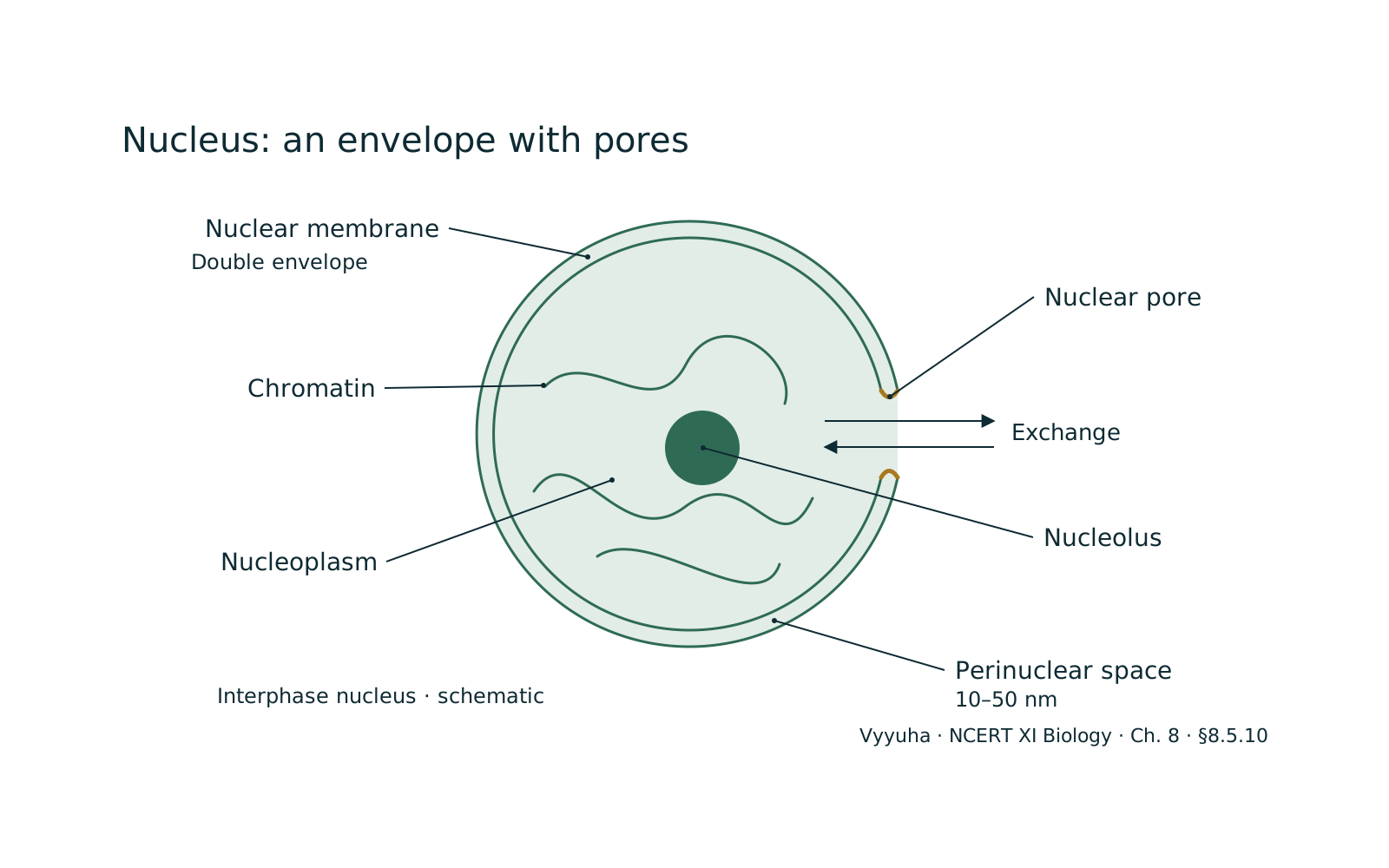
The nucleus, a defining organelle of eukaryotic cells, serves as the command center, housing the cell's genetic material in the form of DNA organized into chromosomes. Encased by a double-membraned nuclear envelope punctuated by nuclear pores, it meticulously regulates gene expression, DNA replication, and repair, thereby orchestrating all cellular activities. Its internal environment, the nucleop…
Quick Summary
The nucleus is the defining organelle of eukaryotic cells, serving as the cell's control center. It is typically spherical or oval and enclosed by a double-membraned nuclear envelope, which is perforated by nuclear pores.
These pores regulate the transport of molecules between the nucleus and the cytoplasm. Inside the nucleus, the genetic material, DNA, is organized with proteins (histones) into a complex called chromatin.
Chromatin exists in two states: euchromatin (less condensed, transcriptionally active) and heterochromatin (highly condensed, transcriptionally inactive). During cell division, chromatin condenses further to form visible chromosomes.
The nucleoplasm is the jelly-like substance filling the nucleus. A prominent, non-membrane-bound structure within the nucleus is the nucleolus, which is responsible for synthesizing ribosomal RNA (rRNA) and assembling ribosomal subunits.
The primary functions of the nucleus include storing and protecting the cell's genetic information, controlling gene expression, facilitating DNA replication and repair, and initiating ribosome biogenesis.
Its integrity is crucial for cell viability and heredity.
Full explanation
The nucleus stands as the quintessential organelle of eukaryotic cells, a testament to the evolutionary leap from simpler prokaryotic life forms. Its presence defines the eukaryotic domain, providing a segregated compartment for the cell's genetic blueprint and the machinery to manage it. Understanding the nucleus is fundamental to grasping cellular function, heredity, and disease.
1. Conceptual Foundation: The Cell's Command Center
The discovery of the nucleus is often attributed to Robert Brown in 1831, who observed a prominent opaque spot within plant cells. Subsequent research, particularly with the advent of advanced microscopy and biochemical techniques, revealed its profound role.
The nucleus is not merely a storage vault for DNA; it's a dynamic control center. It orchestrates gene expression, DNA replication, and repair, thereby governing all aspects of cellular life, from growth and metabolism to differentiation and apoptosis.
Its central role is encapsulated by the 'Central Dogma of Molecular Biology,' where genetic information flows from DNA to RNA to protein, with the initial steps (replication and transcription) primarily occurring within the nucleus.
2. Key Structural Components and Their Functions
To understand the nucleus, we must dissect its intricate architecture:
- Nuclear Envelope: — This is a double-membraned structure that encloses the nucleus, separating its contents from the cytoplasm. Each membrane is a typical lipid bilayer. The outer nuclear membrane is continuous with the endoplasmic reticulum (ER) and is often studded with ribosomes, indicating its role in protein synthesis that may be destined for the ER lumen or secretion. The space between the inner and outer membranes is called the perinuclear space, which is continuous with the lumen of the ER. The inner nuclear membrane provides structural support and serves as an attachment site for chromatin via proteins called lamins, which form the nuclear lamina. The nuclear lamina is a fibrous meshwork that provides mechanical support and plays a role in chromatin organization and gene regulation.
- Nuclear Pores: — The nuclear envelope is not a continuous barrier but is perforated by numerous complex structures called nuclear pores. These pores are not simple holes but highly organized channels formed by a complex of approximately 30 different proteins known as nucleoporins, forming the Nuclear Pore Complex (NPC). NPCs regulate the bidirectional transport of molecules between the nucleus and the cytoplasm. Small molecules and ions can diffuse freely, but larger molecules, such as proteins (e.g., histones, DNA polymerase) and RNA molecules (e.g., mRNA, tRNA, ribosomal subunits), require active transport mechanisms mediated by specific transport receptors (importins and exportins) and energy from GTP hydrolysis (often involving the Ran GTPase cycle). This selective transport is critical for maintaining nuclear integrity and function, ensuring that only necessary molecules enter or exit.
- Nucleoplasm (Karyolymph): — This is the viscous, transparent, semi-fluid matrix filling the nuclear interior, analogous to the cytoplasm. It contains a complex mixture of water, ions, enzymes, nucleotides, and various proteins essential for nuclear functions, such as DNA replication, transcription, and repair. The nucleoplasm provides the environment for the suspension of chromatin and the nucleolus.
- Chromatin: — Within the nucleoplasm, the genetic material (DNA) is not freely floating but is intricately packaged with proteins, primarily histones, to form chromatin. This packaging is crucial for fitting the vast length of DNA into the confined nuclear space and for regulating gene expression. Chromatin exists in two main forms:
* Euchromatin: This is a less condensed, transcriptionally active form of chromatin. It is loosely packed, allowing access for transcription factors and RNA polymerase, thus appearing lighter under an electron microscope.
Genes located in euchromatin are actively being transcribed into RNA. * Heterochromatin: This is a highly condensed, transcriptionally inactive form of chromatin. It is tightly packed, making it inaccessible for transcription machinery, and thus appears darker.
Heterochromatin is typically found at the periphery of the nucleus or around the nucleolus. It can be constitutive (always condensed, e.g., centromeres and telomeres, containing repetitive DNA) or facultative (condensed in some cells/stages, e.
g., inactivated X chromosome in females). During cell division (mitosis/meiosis), chromatin condenses further to form distinct, rod-like structures called chromosomes, which become visible under a light microscope.
- Nucleolus: — Often the most prominent structure within the nucleus, the nucleolus is a dense, spherical, non-membrane-bound organelle. Its primary function is the synthesis of ribosomal RNA (rRNA) and the assembly of ribosomal subunits (large and small). It contains ribosomal DNA (rDNA) sequences, rRNA molecules, and ribosomal proteins. The nucleolus typically has three main regions: the fibrillar center (FC), where rDNA is located; the dense fibrillar component (DFC), where rRNA transcription and processing occur; and the granular component (GC), where ribosomal proteins associate with rRNA to form pre-ribosomal particles. These subunits are then exported to the cytoplasm to form functional ribosomes.
3. Functions of the Nucleus
The multifaceted functions of the nucleus underpin all aspects of cellular life:
- Genetic Material Storage and Protection: — The nucleus safeguards the cell's DNA, protecting it from enzymatic degradation and damage in the cytoplasm.
- Control of Gene Expression: — By regulating transcription (the process of converting DNA into RNA), the nucleus determines which proteins are synthesized, when, and in what quantities. This precise control is vital for cell differentiation, development, and response to environmental cues.
- DNA Replication: — Before cell division, the entire genome must be accurately duplicated. DNA replication occurs within the nucleus, ensuring that each daughter cell receives a complete set of genetic information.
- DNA Repair: — The nucleus houses the machinery for DNA repair, constantly monitoring and correcting errors or damage to the genetic material, which is crucial for preventing mutations and maintaining genomic stability.
- Ribosome Biogenesis: — The nucleolus is the site of rRNA synthesis and ribosomal subunit assembly, essential for protein synthesis in the cytoplasm.
- Regulation of Cell Division: — The nucleus plays a critical role in initiating and controlling the cell cycle, ensuring proper progression through interphase and mitosis.
4. Real-World Applications and Clinical Relevance
Understanding the nucleus has profound implications:
- Genetic Diseases: — Many genetic disorders arise from mutations in nuclear DNA, affecting gene expression or protein function. Studying nuclear processes helps in diagnosing and potentially treating these conditions.
- Cancer Biology: — Cancer is fundamentally a disease of uncontrolled cell division, often stemming from mutations in genes that regulate the cell cycle or DNA repair, all orchestrated within the nucleus. Nuclear morphology (size, shape, chromatin pattern) is a key diagnostic feature in pathology.
- Gene Therapy: — Techniques like CRISPR-Cas9 target specific genes within the nucleus to correct genetic defects, offering therapeutic potential for various diseases.
- Cloning: — Somatic cell nuclear transfer (SCNT), the technique used to clone Dolly the sheep, involves transferring a nucleus from a somatic cell into an enucleated egg cell, highlighting the nucleus's role as the carrier of complete genetic information.
- Drug Development: — Many drugs target nuclear processes, such as chemotherapy agents that interfere with DNA replication or transcription in cancer cells.
5. Common Misconceptions
- The nucleus is just a storage unit for DNA: — While it stores DNA, it's an active participant in gene regulation, replication, and repair, constantly interacting with the cytoplasm.
- The nucleolus is a small nucleus: — The nucleolus is a sub-organelle within the nucleus, lacking a membrane, and specialized for ribosome synthesis, distinct from the nucleus's broader functions.
- Nuclear pores are simple holes: — They are highly complex, selective channels regulating molecular traffic, not passive openings.
6. NEET-Specific Angle
For NEET aspirants, a detailed understanding of the nucleus is indispensable. Questions frequently test:
- Structure-Function Relationships: — E.g., the role of nuclear pores in transport, the function of the nucleolus in ribosome synthesis, the difference between euchromatin and heterochromatin.
- Components and their composition: — E.g., nuclear envelope (double membrane), chromatin (DNA + histones), nucleolus (rRNA, rDNA, proteins).
- Key processes: — DNA replication, transcription, ribosome biogenesis, and their localization within the nucleus.
- Differences: — Between prokaryotic nucleoid and eukaryotic nucleus, or between interphase and mitotic chromatin/chromosomes.
- Associated proteins: — Histones, lamins, nucleoporins, importins/exportins.
Mastering these details, along with the broader conceptual understanding of the nucleus as the cell's control center, will be crucial for success in NEET.
Key Concepts
The NPC is not just a passive opening but a highly sophisticated molecular gate. It's composed of multiple…
The dynamic state of chromatin packaging is a fundamental mechanism for regulating gene expression.…
The nucleolus is a dynamic structure that lacks a surrounding membrane, yet it maintains distinct functional…
Often confused with
Side-by-side differences the NEET paper likes to test.
| Aspect | Nucleus | Euchromatin vs. Heterochromatin |
|---|---|---|
| Condensation Level | Less condensed, loosely packed | Highly condensed, tightly packed |
| Transcriptional Activity | Transcriptionally active (genes expressed) | Transcriptionally inactive (genes silenced) |
| Appearance (EM) | Appears lighter or electron-lucent | Appears darker or electron-dense |
| Location | Distributed throughout the nucleoplasm, often central | Often found at nuclear periphery, around nucleolus, or centromeres/telomeres |
| DNA Content | Contains actively transcribed genes | Contains repetitive DNA, structural DNA, or silenced genes |
Euchromatin and heterochromatin represent two fundamental states of DNA packaging within the nucleus, directly correlating with gene activity. Euchromatin is the open, accessible form that allows for active gene expression, crucial for the cell's functional identity.
In contrast, heterochromatin is the compact, inaccessible form, typically associated with gene silencing and structural roles, ensuring genomic stability and proper chromosome segregation. The dynamic interconversion between these states is vital for cellular regulation and differentiation.
Why it is tested: For NEET, understanding the distinction between euchromatin and heterochromatin is critical for questions related to gene regulation, DNA packaging, and the functional organization of the nucleus. Questions often test their respective roles in transcription, their appearance under microscopy, and their implications for cell differentiation and disease states like cancer.
Questions students ask
6 answered on this topic.
What is the primary function of the nuclear envelope?
The nuclear envelope serves as a protective barrier, separating the genetic material within the nucleus from the cytoplasm. Its double-membraned structure, continuous with the endoplasmic reticulum, maintains a distinct nuclear environment.
Crucially, it is perforated by nuclear pores, which are not just openings but highly regulated channels. These pores control the selective bidirectional transport of macromolecules like proteins and RNA, ensuring that essential molecules enter the nucleus for DNA replication and transcription, and processed RNA and ribosomal subunits exit to the cytoplasm for protein synthesis, thus maintaining nuclear integrity and function.
How does chromatin differ from chromosomes?
Chromatin refers to the complex of DNA and proteins (primarily histones) found within the nucleus of eukaryotic cells. In its normal, non-dividing state (interphase), chromatin exists as a diffuse, decondensed network, allowing access for gene expression.
Chromosomes, on the other hand, are highly condensed, compact structures formed from chromatin during cell division (mitosis and meiosis). This condensation makes them visible under a light microscope and facilitates their accurate segregation into daughter cells.
So, chromatin is the decondensed form, while chromosomes are the condensed, transportable form of the genetic material.
What is the significance of nuclear pores?
Nuclear pores are vital gateways embedded in the nuclear envelope, formed by complex protein structures called nucleoporins. Their significance lies in regulating the traffic of molecules between the nucleus and the cytoplasm.
They allow small molecules to diffuse freely but actively transport larger molecules, such as proteins (e.g., histones, DNA polymerase) into the nucleus and various RNA molecules (mRNA, tRNA, ribosomal subunits) out of the nucleus.
This selective transport is essential for gene expression, ribosome biogenesis, and maintaining the unique biochemical environment required for nuclear processes like DNA replication and repair.
What is the role of the nucleolus?
The nucleolus is a prominent, non-membrane-bound structure within the nucleus, primarily responsible for ribosome biogenesis. It is the site where ribosomal RNA (rRNA) is synthesized from ribosomal DNA (rDNA) and then processed.
Subsequently, these rRNA molecules combine with specific ribosomal proteins (imported from the cytoplasm) to form the large and small ribosomal subunits. These newly assembled subunits are then exported through the nuclear pores to the cytoplasm, where they combine to form functional ribosomes, the cellular machinery for protein synthesis.
Thus, the nucleolus is critical for the cell's protein-making capacity.
Explain the difference between euchromatin and heterochromatin.
Euchromatin and heterochromatin represent two distinct states of chromatin packaging within the nucleus, directly impacting gene activity. Euchromatin is a less condensed, loosely packed form of chromatin that appears lighter under a microscope.
Its open structure allows easy access for transcription factors and RNA polymerase, making it transcriptionally active, meaning genes within euchromatin are actively expressed. Conversely, heterochromatin is a highly condensed, tightly packed form of chromatin, appearing darker.
Its compact nature restricts access for transcription machinery, rendering it transcriptionally inactive. Heterochromatin often serves structural roles, like at centromeres and telomeres, or is involved in gene silencing.
How does the nucleus contribute to cell differentiation?
The nucleus plays a central role in cell differentiation by controlling gene expression. All cells in an organism generally contain the same genetic information, but different cell types (e.g., muscle cells, nerve cells) express different sets of genes.
The nucleus, through its intricate regulatory mechanisms involving chromatin remodeling, transcription factors, and epigenetic modifications, determines which genes are turned 'on' or 'off' at specific times and in specific cell lineages.
This selective gene expression leads to the unique structural and functional characteristics of differentiated cells, driving the development of complex tissues and organs.
Revise in 30 seconds
- Nucleus: — Eukaryotic cell's control center, houses DNA.
- Nuclear Envelope: — Double membrane, continuous with ER, perforated by nuclear pores.
- Nuclear Pores: — Regulate bidirectional transport of macromolecules (proteins, RNA).
- Nucleoplasm: — Nuclear matrix, contains chromatin, nucleolus, enzymes.
- Chromatin: — DNA + histones. Euchromatin (loose, active), Heterochromatin (condensed, inactive).
- Nucleolus: — Non-membrane-bound, site of rRNA synthesis and ribosome assembly.
- Functions: — Genetic material storage, gene expression control, DNA replication/repair, ribosome biogenesis.
To remember the key components and functions of the nucleus: Nuclear Envelope, Nuclear Pores, Nucleoplasm, Chromatin, Nucleolus.
Nice Elephants Never Play Near Cats' Nests.
- Nice Elephants: Nuclear Envelope (double membrane, ER continuity)
- Never Play: Nuclear Pores (regulate transport)
- Near Cats': Nucleoplasm (Chromatin, enzymes)
- Nests: Nucleolus (rRNA, ribosome assembly)