Biological Classification
Biological classification is the scientific process of arranging organisms into groups based on their similarities and differences, allowing for systematic study and understanding of the vast diversity of life on Earth. This hierarchical arrangement, from broader categories like kingdoms down to specific species, facilitates identification, nomenclature, and the exploration of evolutionary relatio…
Quick Summary
Biological classification is the systematic arrangement of organisms into groups based on their similarities and differences, crucial for studying Earth's vast biodiversity. Early systems, like Linnaeus's Two-Kingdom system, were simplistic.
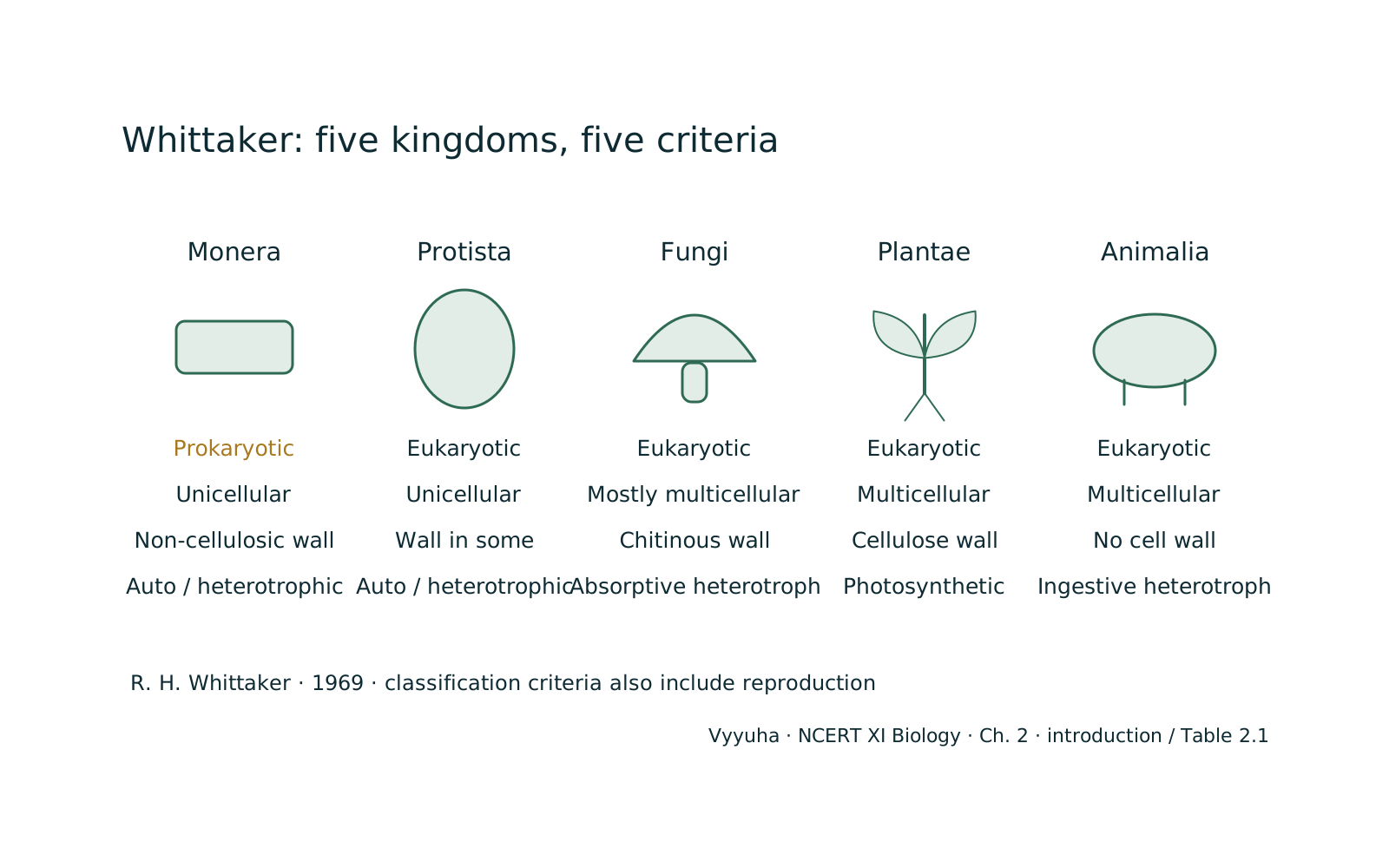
The most widely accepted system for NEET is R.H. Whittaker's Five-Kingdom classification (1969), which categorizes life into Monera, Protista, Fungi, Plantae, and Animalia. This system is based on key criteria: cell structure (prokaryotic/eukaryotic), body organization (unicellular/multicellular), mode of nutrition (autotrophic/heterotrophic), and phylogenetic relationships.
Monera includes all prokaryotes. Protista comprises unicellular eukaryotes. Fungi are heterotrophic decomposers with chitin cell walls. Plantae are autotrophic photosynthesizers with cellulose cell walls.
Animalia are heterotrophic consumers without cell walls. This hierarchical system, from Kingdom to Species, along with binomial nomenclature, provides a universal language for biologists to identify, name, and understand the evolutionary relationships among organisms, facilitating research, conservation, and practical applications in various fields.
Full explanation
Biological classification is a cornerstone of biology, providing a structured framework to understand the immense diversity of life on Earth. Without it, studying the estimated 8.7 million species (and countless more yet to be discovered) would be an insurmountable task. This systematic arrangement allows biologists to identify, name, and group organisms based on shared characteristics, ultimately revealing their evolutionary relationships.
Conceptual Foundation: Why Classify?
The fundamental need for classification arises from the sheer number and variety of organisms. Imagine a library without any cataloging system; finding a specific book would be nearly impossible. Similarly, without classification, identifying a newly discovered species, understanding its ecological role, or tracing its evolutionary history would be chaotic. The benefits are manifold:
- Organization and Simplification — It reduces the complexity of life forms into manageable groups, making study more efficient.
- Identification — It provides a clear method to identify unknown organisms by comparing their features to known groups.
- Predictive Power — If an organism belongs to a certain group, we can predict many of its characteristics based on what we know about other members of that group.
- Evolutionary Insights — Modern classification systems are largely phylogenetic, meaning they reflect the evolutionary history and relationships among organisms.
- Universal Communication — Scientific names and classification hierarchies provide a common language for biologists globally, overcoming linguistic barriers.
- Conservation — Understanding biodiversity through classification is crucial for conservation efforts, helping to identify and protect endangered species and ecosystems.
Key Principles and Laws of Taxonomy
Taxonomy is the science of classifying organisms. It involves three main processes:
- Identification — Determining that a particular organism is distinct from others and assigning it to a known taxonomic group or recognizing it as new.
- Nomenclature — Giving a scientific name to an organism according to established rules.
- Classification — Arranging organisms into hierarchical groups based on their similarities and differences.
Systematics is a broader field that includes taxonomy but also focuses on the evolutionary relationships (phylogeny) among organisms. It uses various data sources, including morphological, anatomical, cytological, biochemical, and molecular evidence.
Binomial Nomenclature: Developed by Carolus Linnaeus, this system assigns each species a unique two-part scientific name. The first part is the genus name (always capitalized), and the second part is the species epithet (always lowercase). Both parts are italicized when typed or underlined when handwritten. For example, Homo sapiens for humans or Mangifera indica for mango. This system ensures clarity and universality.
Hierarchical Classification: Organisms are grouped into a series of ranks or categories, forming a hierarchy. The most commonly used ranks, from broadest to most specific, are:
- Kingdom
- Phylum — (for animals) or Division (for plants and fungi)
- Class
- Order
- Family
- Genus
- Species
Each rank represents a taxonomic group (taxon). Organisms within a species are the most similar and can interbreed to produce fertile offspring. As you move up the hierarchy, the number of organisms in each taxon increases, but their shared characteristics become fewer and more general.
Evolution of Classification Systems
- Two-Kingdom System (Linnaeus, 1758)
* Divided all living organisms into two kingdoms: Plantae (plants, fungi, bacteria, algae) and Animalia (animals). * Limitations: Failed to distinguish between prokaryotes and eukaryotes, unicellular and multicellular organisms, and photosynthetic (plants) and non-photosynthetic (fungi) organisms. Many organisms like Euglena exhibited characteristics of both kingdoms.
- Three-Kingdom System (Haeckel, 1866)
* Introduced Protista for unicellular organisms (bacteria, protozoa, fungi, algae) that didn't fit neatly into Plantae or Animalia. * Limitations: Still grouped prokaryotes and eukaryotes together within Protista, and didn't separate fungi from plants.
- Four-Kingdom System (Copeland, 1956)
* Separated prokaryotes into a new kingdom, Monera, leaving Protista for eukaryotic unicellular organisms. The other two kingdoms were Plantae and Animalia. * Limitations: Fungi were still included in Plantae, despite their distinct mode of nutrition and cell wall composition.
- Five-Kingdom System (R.H. Whittaker, 1969)
This is the most widely accepted system for NEET UG. Whittaker proposed five kingdoms based on five key criteria: Cell structure: Prokaryotic or Eukaryotic * Body organization: Unicellular or Multicellular * Mode of nutrition: Autotrophic (photosynthetic or chemosynthetic), Heterotrophic (saprophytic or holozoic) * Reproduction: Asexual or Sexual * Phylogenetic relationships: Evolutionary history The five kingdoms are: Monera: All prokaryotes (bacteria, cyanobacteria, mycoplasma).
Unicellular, cell wall present (non-cellulosic), autotrophic or heterotrophic. * Protista: All unicellular eukaryotes (amoeba, paramecium, diatoms, dinoflagellates, euglenoids). Cell wall present in some, autotrophic or heterotrophic.
* Fungi: Multicellular (except yeast), eukaryotic, heterotrophic (saprophytic or parasitic). Cell wall made of chitin. * Plantae: Multicellular, eukaryotic, autotrophic (photosynthetic). Cell wall made of cellulose.
* Animalia: Multicellular, eukaryotic, heterotrophic (holozoic). No cell wall. * Advantages: This system successfully resolved many ambiguities of previous systems by clearly separating prokaryotes, unicellular eukaryotes, and fungi based on fundamental biological differences.
- Six-Kingdom System (Carl Woese, 1977)
* Based on ribosomal RNA (rRNA) gene sequencing, Woese proposed dividing Kingdom Monera into two distinct domains: Archaea (archaebacteria) and Bacteria (eubacteria). The other four eukaryotic kingdoms (Protista, Fungi, Plantae, Animalia) were grouped under the domain Eukarya.
This led to a 'three-domain system' (Archaea, Bacteria, Eukarya) and a 'six-kingdom system' (Archaebacteria, Eubacteria, Protista, Fungi, Plantae, Animalia). While more phylogenetically accurate, the Five-Kingdom system remains the primary focus for NEET UG.
Real-World Applications
Biological classification is not just an academic exercise; it has profound practical implications:
- Agriculture — Identifying pests, pathogens, and beneficial organisms (e.g., nitrogen-fixing bacteria, pollinators) is crucial for crop management and food security.
- Medicine — Classifying disease-causing microbes (bacteria, fungi, viruses, protozoa) is essential for diagnosis, treatment, and vaccine development. Understanding the classification of vectors (e.g., mosquitoes) helps in disease control.
- Conservation Biology — Identifying and classifying species helps in assessing biodiversity, recognizing endangered species, and designing effective conservation strategies for ecosystems.
- Biotechnology — Understanding the characteristics of different organisms, especially microbes, is vital for applications in genetic engineering, industrial production of enzymes, antibiotics, and biofuels.
- Ecology — Classifying organisms helps in understanding food webs, ecological niches, and the interactions within ecosystems.
Common Misconceptions and NEET-Specific Angles
- Viruses — Viruses are acellular and do not possess a cellular structure, metabolism, or the ability to reproduce independently. They are obligate intracellular parasites. Due to these reasons, they are not included in Whittaker's Five-Kingdom classification. They are often considered 'connecting links' between living and non-living.
- Lichens — Lichens are symbiotic associations between fungi (mycobiont) and algae or cyanobacteria (phycobiont). They are not a single organism but a composite, and thus are not classified as a separate kingdom or phylum within the Five-Kingdom system. Their components are classified separately.
- Fungi vs. Plants — A common mistake is to confuse fungi with plants. Fungi are heterotrophic (saprophytic or parasitic), have cell walls made of chitin, and store food as glycogen. Plants are autotrophic (photosynthetic), have cell walls made of cellulose, and store food as starch. These fundamental differences justify their placement in separate kingdoms.
- Prokaryotes vs. Eukaryotes — Monera are the only prokaryotic kingdom. All other four kingdoms (Protista, Fungi, Plantae, Animalia) are eukaryotic. This distinction based on cell organization is critical.
- Unicellular vs. Multicellular — Monera and Protista are primarily unicellular. Fungi, Plantae, and Animalia are primarily multicellular (with exceptions like yeast in Fungi).
- Mode of Nutrition — Pay close attention to the dominant mode of nutrition for each kingdom (e.g., Monera: diverse; Protista: diverse; Fungi: heterotrophic/saprophytic; Plantae: autotrophic/photosynthetic; Animalia: heterotrophic/holozoic).
For NEET, a deep understanding of the characteristics of each of Whittaker's five kingdoms, including their cell type, body organization, cell wall composition, mode of nutrition, and key examples, is paramount. Questions often test the distinguishing features between kingdoms or ask to identify an organism based on a set of characteristics. Understanding the limitations of earlier systems also provides context for the robustness of the Five-Kingdom system.
Key Concepts
R.H. Whittaker's 1969 system revolutionized biological classification by proposing five distinct kingdoms:…
Binomial nomenclature is the standardized system for naming species, established by Carolus Linnaeus. Each…
The taxonomic hierarchy is a graded series of classification ranks, organizing organisms from broad,…
Often confused with
Side-by-side differences the NEET paper likes to test.
| Aspect | Biological Classification | Two-Kingdom Classification System |
|---|---|---|
| Proposer | R.H. Whittaker (1969) | Carolus Linnaeus (1758) |
| Number of Kingdoms | Five (Monera, Protista, Fungi, Plantae, Animalia) | Two (Plantae, Animalia) |
| Cell Type Distinction | Clearly separates prokaryotes (Monera) from eukaryotes (Protista, Fungi, Plantae, Animalia) | Does not distinguish; prokaryotes and eukaryotes were grouped together (e.g., bacteria with plants) |
| Unicellular/Multicellular Distinction | Separates unicellular eukaryotes (Protista) from multicellular eukaryotes | Does not distinguish; unicellular and multicellular organisms were grouped together |
| Mode of Nutrition | Clearly distinguishes between autotrophs (Plantae), heterotrophs (Animalia), and saprophytes (Fungi) | Primarily based on presence/absence of cell wall and locomotion (Plantae - autotrophic, Animalia - heterotrophic, but with many exceptions) |
| Fungi Placement | Separate Kingdom Fungi, recognizing their distinct characteristics (chitin cell wall, saprophytic nutrition) | Included within Kingdom Plantae, despite fundamental differences |
| Viruses | Not included, as they are acellular and lack independent life processes | Not explicitly addressed or fitted into the system |
The Five-Kingdom system, proposed by R.H. Whittaker, represents a significant advancement over Linnaeus's Two-Kingdom system. Whittaker's classification provides a more natural and phylogenetically accurate grouping by considering fundamental biological characteristics such as cell structure (prokaryotic vs.
eukaryotic), body organization (unicellular vs. multicellular), and mode of nutrition. It correctly separates prokaryotes into Monera, unicellular eukaryotes into Protista, and establishes Fungi as a distinct kingdom due to their unique cell wall composition and saprophytic nutrition.
In contrast, the Two-Kingdom system was simplistic, failing to differentiate between these crucial biological distinctions, leading to many organisms being misclassified or difficult to place.
Why it is tested: For NEET, understanding the evolution of classification systems and the rationale behind Whittaker's Five-Kingdom system is crucial. Questions often test the limitations of earlier systems and the specific criteria used by Whittaker. Knowing these differences helps in comprehending why certain organisms are placed in particular kingdoms and avoids common misconceptions about their relationships.
Questions students ask
6 answered on this topic.
Why are viruses not included in the Five-Kingdom classification system?
Viruses are unique entities that pose a challenge to traditional biological classification. R.H. Whittaker's Five-Kingdom system is based on criteria like cell structure, body organization, mode of nutrition, and reproduction.
Viruses are acellular, meaning they lack a cellular structure (no cytoplasm, organelles, or cell membrane of their own). They are obligate intracellular parasites, meaning they can only replicate inside living host cells, using the host's machinery.
Outside a host cell, they are inert. Because they do not exhibit all the defining characteristics of life independently and lack a cellular organization, they do not fit into any of the five kingdoms, which are fundamentally based on cellular life forms.
What are the main criteria used by R.H. Whittaker for his Five-Kingdom classification?
R.H. Whittaker's 1969 Five-Kingdom classification system is based on five primary criteria that reflect fundamental biological differences among organisms. These include: 1. Cell structure (prokaryotic vs.
eukaryotic), 2. Body organization (unicellular vs. multicellular), 3. Mode of nutrition (autotrophic - photosynthetic/chemosynthetic, or heterotrophic - saprophytic/holozoic), 4. Reproduction (asexual, sexual, or both), and 5.
Phylogenetic relationships (evolutionary history and relatedness). These criteria allowed for a more natural and robust grouping of organisms compared to earlier systems.
How do fungi differ from plants, and why are they placed in a separate kingdom?
Fungi were historically grouped with plants, but they possess fundamental differences that justify their separate kingdom status. Key distinctions include: Fungi are heterotrophic, primarily saprophytic (decomposers) or parasitic, absorbing nutrients from their environment, whereas plants are autotrophic (photosynthetic), producing their own food.
Fungi have cell walls made of chitin, while plant cell walls are composed of cellulose. Fungi store food as glycogen, similar to animals, while plants store it as starch. These significant differences in nutrition, cell wall composition, and storage products led Whittaker to establish Fungi as a distinct kingdom.
What is the significance of binomial nomenclature?
Binomial nomenclature, introduced by Carolus Linnaeus, is a universally accepted system for naming species. Its significance lies in providing a unique, unambiguous, and stable scientific name for every known species.
Each name consists of two parts: the genus name (capitalized) and the species epithet (lowercase), both italicized. This system eliminates the confusion caused by common names, which vary geographically and linguistically.
It facilitates global communication among scientists, ensures that each species has a distinct identity, and helps in organizing and retrieving biological information efficiently, making the study of biodiversity more systematic.
Explain the concept of 'hierarchy' in biological classification.
The concept of hierarchy in biological classification refers to the arrangement of taxonomic groups (taxa) in a graded series of decreasing inclusiveness, from the broadest category to the most specific.
This hierarchical structure, often visualized as a pyramid, starts with the largest and most general group (Kingdom) and progressively narrows down to smaller, more specific groups (Phylum/Division, Class, Order, Family, Genus, and finally, Species).
Organisms within higher ranks share fewer general characteristics, while those within lower ranks share more specific and numerous traits. This system reflects evolutionary relationships, where organisms in lower ranks are more closely related, providing a structured way to organize and understand biodiversity.
What are Archaebacteria, and how do they differ from Eubacteria?
Archaebacteria (now often referred to as Archaea) are a group of ancient prokaryotes that are distinct from Eubacteria (true bacteria). While both are prokaryotic, they differ significantly in their cell wall composition, cell membrane structure, and genetic makeup.
Archaea often live in extreme environments (e.g., hot springs, saline lakes, anaerobic marshes) and have unique cell wall components (pseudomurein or protein/glycoprotein, lacking peptidoglycan) and membrane lipids.
Eubacteria have peptidoglycan in their cell walls and different membrane lipids. These biochemical and genetic differences are so profound that Carl Woese proposed placing them in separate domains (Archaea and Bacteria) within the three-domain system, highlighting their distinct evolutionary lineages.
Revise in 30 seconds
- Whittaker's 5 Kingdoms — Monera, Protista, Fungi, Plantae, Animalia.
- Monera — Prokaryotic, unicellular. Ex: Bacteria, Cyanobacteria. Cell wall (non-cellulosic).
- Protista — Eukaryotic, unicellular. Ex: Amoeba, Paramecium, Diatoms. Cell wall in some.
- Fungi — Eukaryotic, mostly multicellular (except yeast), heterotrophic (saprophytic/parasitic). Cell wall (chitin).
- Plantae — Eukaryotic, multicellular, autotrophic (photosynthetic). Cell wall (cellulose).
- Animalia — Eukaryotic, multicellular, heterotrophic (holozoic). No cell wall.
- Binomial Nomenclature — Genus species (italicized/underlined). Ex: Homo sapiens.
- Hierarchy — Kingdom > Phylum/Division > Class > Order > Family > Genus > Species.
- Viruses — Acellular, not classified in 5 Kingdoms.
To remember the taxonomic hierarchy: King Philip Came Over For Good Soup. (Kingdom, Phylum, Class, Order, Family, Genus, Species)