Root System
The root system constitutes the underground, non-photosynthetic part of a vascular plant, primarily responsible for anchoring the plant firmly to the soil, absorbing water and dissolved mineral nutrients from the soil, and transporting them upwards to the shoot system. Additionally, roots play crucial roles in storing reserve food materials, synthesizing certain plant growth regulators, and provid…
Quick Summary
The root system is the underground portion of a plant, originating from the radicle of the embryo. Its primary roles are anchoring the plant, absorbing water and minerals from the soil, and transporting them upwards.
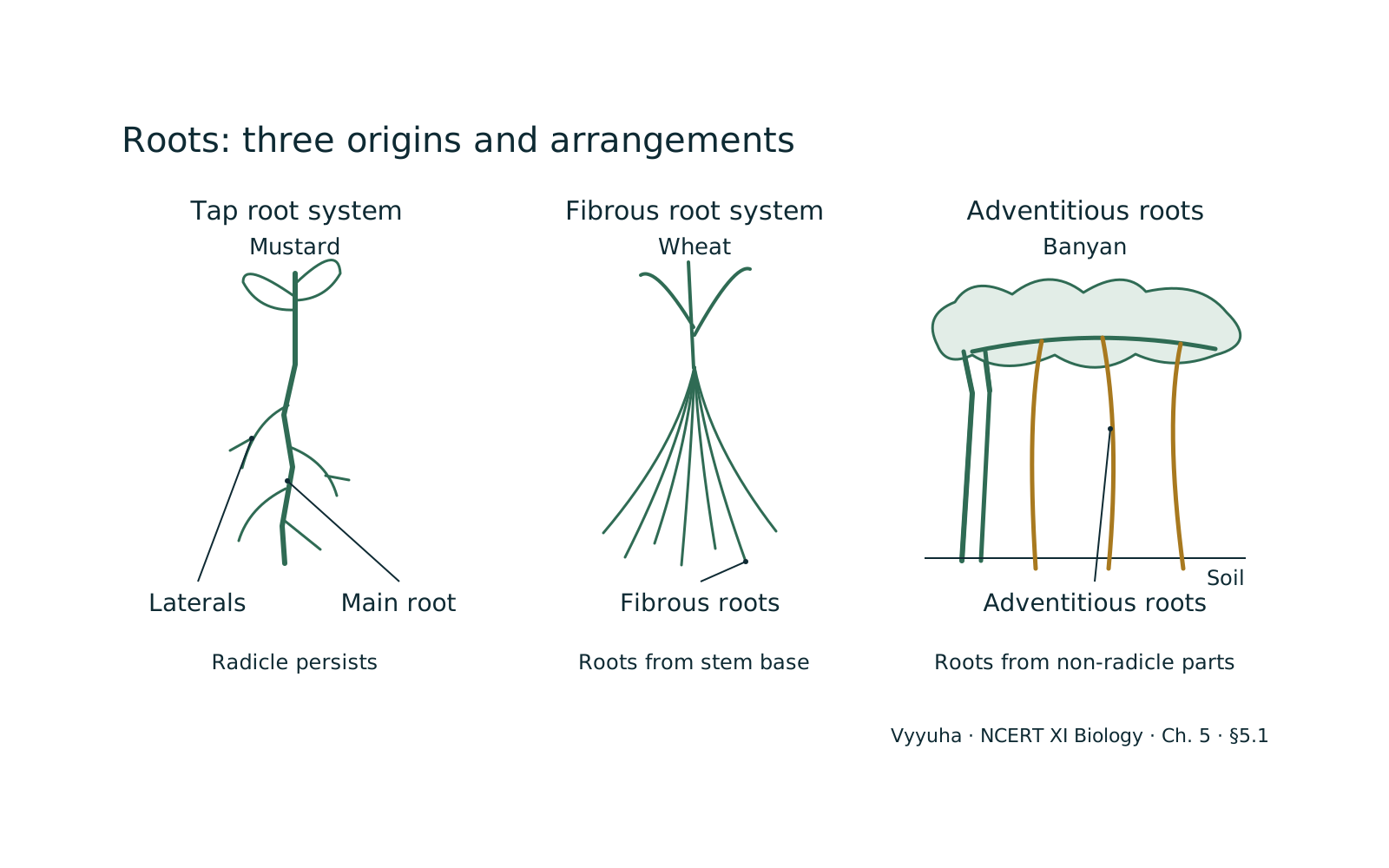
Roots also store food and synthesize plant growth regulators. There are three main types: the tap root system (dicots), characterized by a single main root and lateral branches; the fibrous root system (monocots), with a cluster of thin roots from the stem base; and adventitious roots, which arise from any part of the plant other than the radicle.
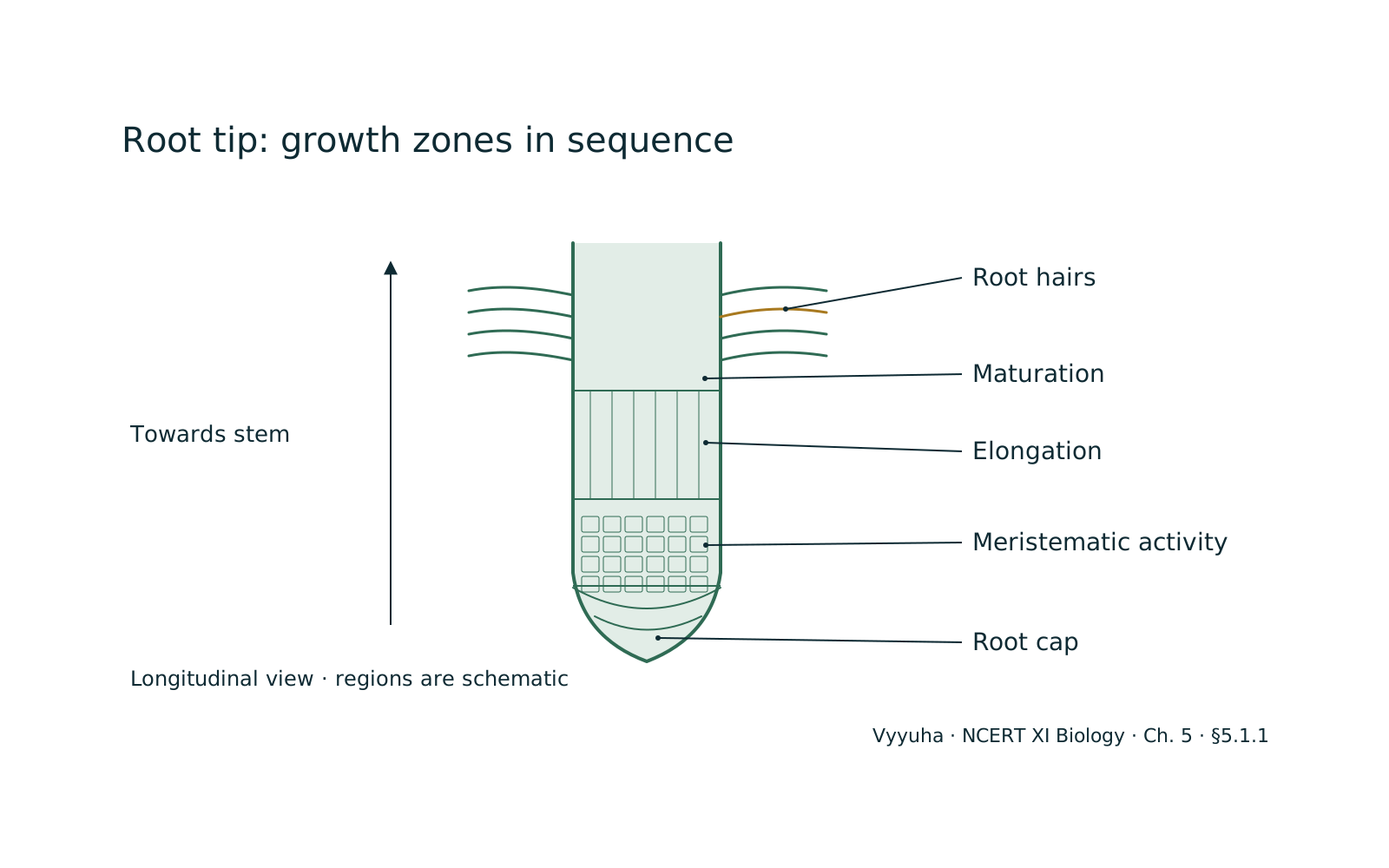
A typical root tip has a root cap for protection, a region of meristematic activity for cell division, a region of elongation for growth in length, and a region of maturation where cells differentiate and root hairs form for absorption.
Roots exhibit various modifications for specialized functions like food storage (e.g., carrot, sweet potato), mechanical support (e.g., prop roots, stilt roots), respiration (e.g., pneumatophores), and even photosynthesis (e.
g., Tinospora). Understanding these types, regions, and modifications is fundamental for NEET.
Full explanation
The root system is a fundamental component of the plant body, representing the subterranean axis that typically grows downwards into the soil. Its development originates from the radicle of the embryo during seed germination.
The radicle elongates to form the primary root, which then gives rise to the entire root system, either directly or indirectly. While primarily underground, some roots can be aerial, as seen in epiphytes or mangroves, showcasing the remarkable adaptability of plant structures.
Conceptual Foundation and Primary Functions:
The primary functions of the root system are foundational to plant life:
- Anchorage: — Roots firmly fix the plant to the substratum, providing stability against external forces like wind and water currents. This mechanical support is crucial for the upright growth of the shoot system.
- Absorption: — The root system is the primary site for the absorption of water and dissolved mineral nutrients from the soil. This process is facilitated by root hairs, which are epidermal outgrowths that significantly increase the surface area for absorption.
- Conduction: — Once absorbed, water and minerals are transported upwards to the shoot system through the xylem tissue present in the roots.
- Storage: — Many plants modify their roots to store reserve food materials, such as carbohydrates (starch, sugars) and proteins, which are utilized during periods of stress or for reproductive development.
- Synthesis of Plant Growth Regulators (PGRs): — Roots are known to synthesize certain hormones, particularly cytokinins and gibberellins, which are then transported to the shoot, influencing various aspects of plant growth and development.
Types of Root Systems:
Based on their origin and morphology, root systems are broadly classified into three main types:
- Tap Root System:
* Origin: Develops directly from the elongation of the radicle. The primary root persists and grows deep into the soil. * Structure: Consists of a prominent, central main root (the tap root) from which smaller, lateral roots (secondary, tertiary roots) branch out.
The tap root is typically thicker at the top and tapers downwards. * Occurrence: Characteristic of dicotyledonous plants (e.g., mustard, pea, carrot, turnip, mango). * Function: Provides strong anchorage, penetrates deep into the soil to access water from deeper layers, and often serves as a storage organ.
- Fibrous Root System:
* Origin: The primary root, which develops from the radicle, is short-lived and soon replaced by a cluster of roots. * Structure: Consists of numerous thin, thread-like roots that arise from the base of the stem.
These roots are generally of similar size and spread out horizontally in the upper layers of the soil. * Occurrence: Characteristic of monocotyledonous plants (e.g., wheat, rice, maize, grasses).
* Function: Provides good surface anchorage, prevents soil erosion, and efficiently absorbs water and nutrients from the topsoil.
- Adventitious Root System:
* Origin: Roots that develop from any part of the plant body other than the radicle (e.g., stem, leaves, branches). * Structure: Highly variable, depending on their origin and function. * Occurrence: Found in both monocots and dicots (e.g., Banyan tree, maize, sugarcane, Monstera, sweet potato, grass). * Function: Primarily provides additional support, storage, or specialized functions like climbing or respiration.
Regions of the Root:
A typical root tip exhibits several distinct regions, each with specific functions, crucial for growth and absorption:
- Root Cap: — A thimble-like structure covering the apex of the root. It protects the tender apical meristem from damage as the root pushes through the soil. Cells of the root cap are continuously sloughed off and replaced.
- Region of Meristematic Activity: — Located just above the root cap, this region consists of small, thin-walled cells with dense protoplasm that divide rapidly. This division is responsible for the increase in root length.
- Region of Elongation: — Proximal to the meristematic region, cells in this zone rapidly increase in length, contributing significantly to the root's growth in length. This elongation pushes the root tip further into the soil.
- Region of Maturation: — Located above the region of elongation, cells in this zone differentiate and mature into various specialized tissues. This is where root hairs, which are fine, delicate, thread-like structures, are formed from the epidermal cells, greatly increasing the surface area for water and mineral absorption.
Modifications of Roots:
Roots often undergo structural changes to perform functions other than absorption and anchorage. These modifications are crucial for survival and adaptation.
A. Modifications of Tap Roots:
- For Food Storage:
* Fusiform: Spindle-shaped, swollen in the middle and tapering at both ends (e.g., Radish - Raphanus sativus). * Conical: Cone-shaped, broad at the base and tapering towards the apex (e.g., Carrot - Daucus carota).
* Napiform: Spherical at the base and abruptly tapering into a tail-like structure (e.g., Turnip - Brassica rapa, Beetroot - Beta vulgaris). * Tuberous/Tuberiform: Irregularly shaped, thick and fleshy, without a definite shape (e.
g., Four o'clock plant - Mirabilis jalapa).
- For Respiration (Pneumatophores): — Found in mangrove plants growing in marshy, saline soils where oxygen is deficient. These roots grow vertically upwards (negatively geotropic) out of the water/soil, with pores (lenticels) on their surface for gaseous exchange (e.g., Rhizophora, Avicennia).
- For Nitrogen Fixation (Nodulated Roots): — Found in leguminous plants. Small swellings (nodules) are formed on the roots due to symbiotic association with nitrogen-fixing bacteria (). These bacteria convert atmospheric nitrogen into usable forms for the plant (e.g., Pea, Bean, Groundnut).
B. Modifications of Adventitious Roots:
- For Food Storage:
* Tuberous Roots: Single, irregularly shaped, swollen roots (e.g., Sweet Potato - Ipomoea batatas). * Fasciculated Roots: A cluster of tuberous roots arising from the base of the stem (e.g.
, Dahlia, Asparagus). * Nodulose Roots: Swollen only at the apex, forming a nodule-like structure (e.g., Ginger - Zingiber officinale, Turmeric - Curcuma longa - though these are rhizomes, some adventitious roots can be nodulose).
* Moniliform/Beaded Roots: Swollen at regular intervals, forming a beaded appearance (e.g., Indian spinach - Basella rubra, Grasses). * Annulated Roots: Roots with a series of ring-like swellings (e.
g., Ipecac - Cephaelis ipecacuanha).
- For Mechanical Support:
* Prop Roots: Thick, pillar-like roots growing vertically downwards from horizontal branches, providing support to large trees (e.g., Banyan tree - Ficus benghalensis). * Stilt Roots: Oblique roots growing from the lower nodes of the stem, anchoring the plant firmly in the soil (e.
g., Maize - Zea mays, Sugarcane - Saccharum officinarum, Screw Pine - Pandanus). * Climbing Roots: Roots that arise from the nodes and help the plant cling to supports (e.g., Money Plant - Pothos, Betel - Piper betle, Black Pepper - Piper nigrum).
* Buttress Roots: Large, plank-like extensions at the base of the trunk, providing massive support to huge trees, especially in rainforests (e.g., Silk Cotton tree - Ceiba pentandra).
- For Vital Functions:
* Sucking/Haustorial Roots: Found in parasitic plants, these roots penetrate the host tissue to absorb water and nutrients (e.g., Cuscuta - Dodder). * Epiphytic/Velamen Roots: Found in epiphytes (plants growing on other plants for support, not nutrition).
These roots hang in the air and possess a spongy tissue called velamen, which absorbs moisture from the atmosphere (e.g., Orchids - Vanda). * Assimilatory/Photosynthetic Roots: Green roots that contain chlorophyll and perform photosynthesis (e.
g., Tinospora, Trapa). * Floating Roots: Spongy, air-filled roots that help aquatic plants float (e.g., Jussiaea).
Common Misconceptions:
- All roots are underground: — While most roots are subterranean, modifications like prop roots, stilt roots, pneumatophores, and epiphytic roots are aerial or emerge from the soil/water.
- All roots absorb water and minerals: — While primary function, specialized roots like prop roots (support), storage roots (storage), or haustorial roots (parasitic absorption) may not primarily absorb water from the soil in the conventional sense.
- Roots only grow downwards: — While generally positively geotropic, pneumatophores grow upwards (negatively geotropic) to facilitate gas exchange.
- Root hairs are roots: — Root hairs are unicellular extensions of epidermal cells, not separate roots. They are crucial for absorption but are distinct from the multicellular root structure.
NEET-Specific Angle:
For NEET, a strong emphasis is placed on:
- Classification: — Differentiating between tap, fibrous, and adventitious root systems with clear examples.
- Regions of the root: — Understanding the function of each zone (root cap, meristematic, elongation, maturation) and the role of root hairs.
- Root Modifications: — This is a high-yield area. Students must know the specific names of modified roots, their functions, and at least two distinct examples for each modification (e.g., fusiform, conical, napiform for storage tap roots; prop, stilt, climbing for support adventitious roots; pneumatophores for respiration). Memorizing examples is critical. Questions often involve matching columns or identifying the type of modification from a given example. Understanding the adaptive significance of these modifications is also important. For instance, why do mangroves have pneumatophores? Why do banyan trees have prop roots? These questions test conceptual understanding beyond mere memorization.
Key Concepts
The root tip is organized into distinct functional zones. The **root cap** is the outermost protective layer.…
Many roots are modified to store food, primarily carbohydrates, helping the plant survive adverse conditions…
Some roots develop unique structures to provide extra mechanical support, especially for large or climbing…
Often confused with
Side-by-side differences the NEET paper likes to test.
| Aspect | Root System | Fibrous Root System |
|---|---|---|
| Origin | Develops directly from the radicle; primary root persists. | Primary root is short-lived; replaced by roots from stem base. |
| Structure | Consists of a single, prominent main root (tap root) with lateral branches. | Composed of a cluster of thin, branched roots of similar size. |
| Penetration Depth | Grows deep into the soil, reaching deeper water tables. | Spreads out in the upper layers of the soil, absorbing surface water. |
| Anchorage | Provides strong, deep anchorage. | Provides good surface anchorage, prevents soil erosion. |
| Plant Type | Characteristic of dicotyledonous plants. | Characteristic of monocotyledonous plants. |
| Examples | Mustard, Pea, Carrot, Turnip, Mango. | Wheat, Rice, Maize, Grasses, Onion. |
The tap root system, typical of dicots, is characterized by a dominant primary root that grows deep into the soil, providing robust anchorage and accessing deeper water sources. In contrast, the fibrous root system, common in monocots, features a network of similarly sized roots originating from the stem base, spreading superficially to absorb surface water and prevent soil erosion.
While tap roots offer deep stability, fibrous roots excel in holding topsoil and absorbing widely distributed surface moisture.
Why it is tested: For NEET, understanding the distinctions between tap and fibrous root systems is crucial for identifying plant types, predicting their ecological adaptations, and recognizing their structural differences. Questions frequently test examples and functional implications of each system, making this a high-yield comparison.
Questions students ask
6 answered on this topic.
What is the primary difference between a tap root system and a fibrous root system?
The primary difference lies in their origin and structure. A tap root system develops from the direct elongation of the radicle, forming a single, prominent main root (tap root) with smaller lateral roots branching off.
It's characteristic of dicots and provides deep anchorage. In contrast, a fibrous root system arises when the primary root is short-lived and replaced by numerous thin, branched roots originating from the base of the stem.
It's typical of monocots, offering surface anchorage and preventing soil erosion. Think of a carrot (tap root) versus a clump of grass (fibrous roots).
How do root hairs contribute to the efficiency of water and mineral absorption?
Root hairs are crucial for efficient absorption because they are tiny, unicellular, thread-like extensions of the epidermal cells in the region of maturation. Their immense number and small diameter dramatically increase the surface area of the root that is in contact with the soil particles.
This increased surface area allows for a much greater uptake of water through osmosis and mineral ions through active transport and diffusion, maximizing the plant's ability to acquire essential resources from the soil, even from minute soil pores.
Explain the function of pneumatophores and provide an example.
Pneumatophores are specialized roots that facilitate respiration in plants growing in marshy or swampy areas, where the soil is waterlogged and deficient in oxygen. These roots grow vertically upwards (negatively geotropic) out of the water or mud, acting like 'breathing roots.
' They possess numerous small pores called lenticels on their surface, which allow for the exchange of gases (oxygen intake and carbon dioxide release) between the atmosphere and the submerged root system.
A classic example is found in mangrove plants like Rhizophora and Avicennia.
What are adventitious roots, and how do they differ from primary roots?
Adventitious roots are roots that originate from any part of the plant body other than the radicle. This means they can arise from the stem (e.g., prop roots of banyan, stilt roots of maize), leaves (e.
g., Bryophyllum), or even branches. Primary roots, on the other hand, are the direct continuation of the radicle, the embryonic root. The key distinction is their point of origin: primary roots are radicle-derived, while adventitious roots are non-radicle derived.
Adventitious roots often perform specialized functions like support or storage.
Can roots perform photosynthesis? If so, give an example.
Yes, under specific modifications, roots can perform photosynthesis, although it's not their typical function. These are known as assimilatory or photosynthetic roots. They develop chlorophyll, become green, and are exposed to sunlight, allowing them to carry out photosynthesis.
A notable example is Tinospora (Giloy), where the aerial adventitious roots become green and contribute to food production. Another example is Trapa (water chestnut), where the submerged roots are green and photosynthetic.
Why is the root cap important for root growth?
The root cap is a crucial protective structure covering the very tip of the root. As the root grows, it pushes through abrasive soil particles. The root cap acts like a thimble, shielding the delicate and actively dividing cells of the apical meristem (region of meristematic activity) from mechanical injury.
Without the root cap, the meristematic cells would be damaged, halting root growth. The cells of the root cap are continuously sloughed off and replaced, ensuring constant protection for the growing root tip.
Revise in 30 seconds
- Primary Functions: — Anchorage, Absorption ( & minerals), Storage, Synthesis of PGRs.
- Types:
- Tap Root: Dicot, from radicle, main root + laterals (e.g., Mustard, Carrot). - Fibrous Root: Monocot, primary root short-lived, cluster from stem base (e.g., Wheat, Rice). - Adventitious Root: From non-radicle parts (stem, leaf) (e.g., Banyan, Maize, Sweet Potato).
- Root Regions (tip to base): — Root Cap (protection) Meristematic Activity (cell division) Elongation (cell growth) Maturation (differentiation, root hairs).
- Modifications (Key Examples):
- Storage (Tap): Fusiform (Radish), Conical (Carrot), Napiform (Turnip). - Storage (Adventitious): Tuberous (Sweet Potato), Fasciculated (Dahlia). - Support (Adventitious): Prop (Banyan), Stilt (Maize, Sugarcane), Climbing (Money Plant). - Respiration: Pneumatophores (Rhizophora). - Absorption (Parasitic): Haustorial (Cuscuta). - Atmospheric Moisture: Velamen (Orchids). - Photosynthesis: Assimilatory (Tinospora).
Really Absorb Support Storage Protection Conduction
Root Apex Makes Every Mature Root Hair
- Root Apex: Root Cap, Meristematic, Elongation, Maturation, Root Hairs
Tap Fibrous Adventitious: Think For All Plants
- Tap: Carrot, Radish, Turnip (Conical, Fusiform, Napiform)
- Adventitious: Banyan (Prop), Maize (Stilt), Sweet Potato (Tuberous), Rhizophora (Pneumatophores), Orchids (Velamen)