Shoot System
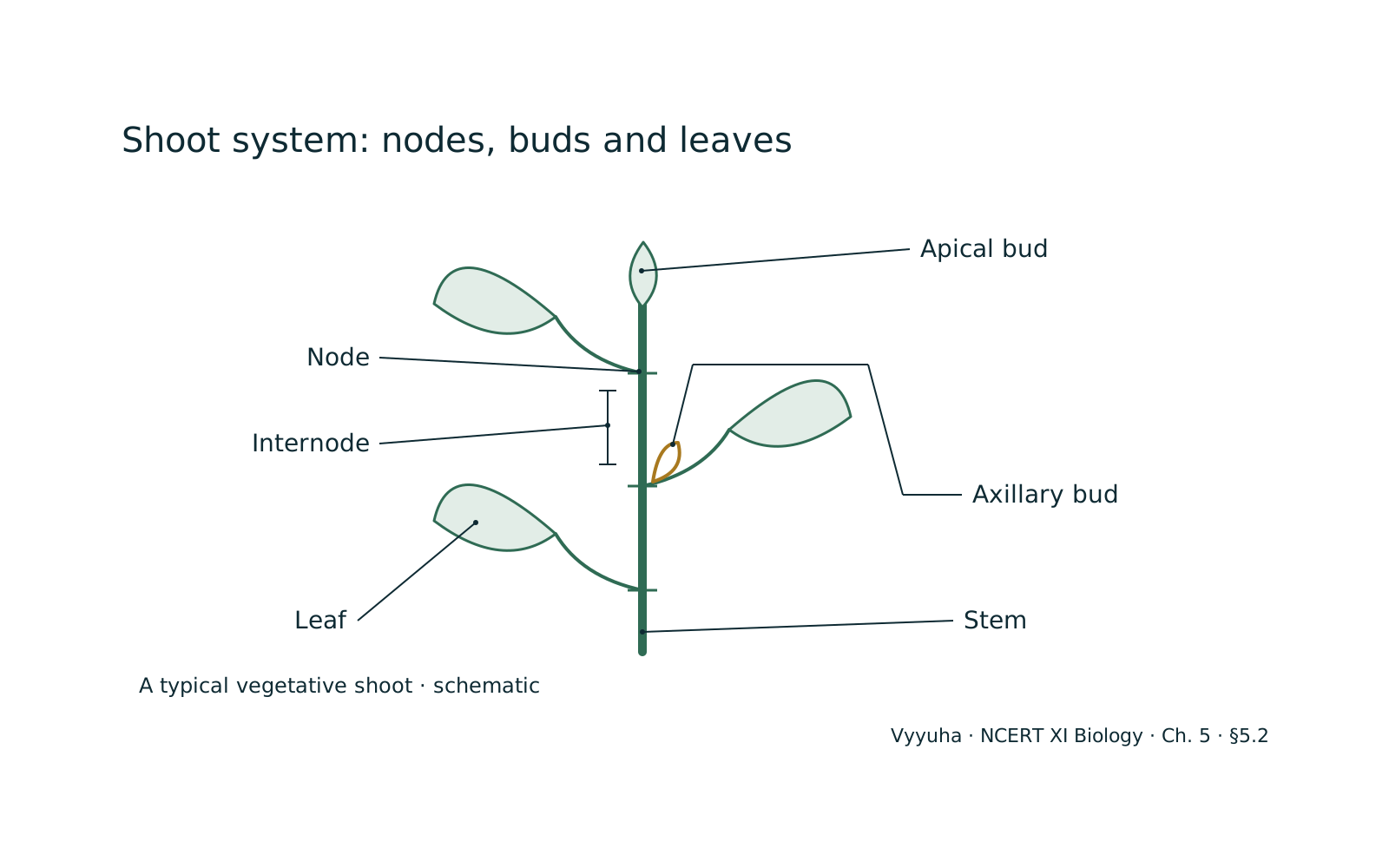
The shoot system in vascular plants refers to the aerial part of the plant body, typically growing above the ground, and is primarily responsible for photosynthesis, reproduction, and the transport of water and nutrients. It originates from the plumule of the embryo and comprises the main stem, its branches, leaves, flowers, and fruits. This complex structural organization allows the plant to effi…
Quick Summary
The shoot system is the aerial part of a plant, originating from the plumule of the embryo. It comprises the stem, leaves, flowers, and fruits. The stem is the central axis, characterized by nodes (where leaves and branches arise) and internodes (sections between nodes).
It bears buds (apical for vertical growth, axillary for lateral branches/flowers). Leaves are the primary sites for photosynthesis, while flowers are reproductive structures, developing into fruits that protect and disperse seeds.
The shoot system's main functions include photosynthesis, support, transport of water and nutrients, and reproduction. Stems exhibit various modifications for specialized roles: Underground stems (rhizome, corm, tuber, bulb) store food and aid perennation (e.
g., ginger, potato, onion). Sub-aerial stems (runner, stolon, offset, sucker) facilitate vegetative propagation (e.g., grass, mint). Aerial stems (tendrils, thorns, phylloclade, cladode) provide support, protection, or perform photosynthesis (e.
g., grapevine, Bougainvillea, Opuntia). Understanding these components, functions, and modifications is fundamental to plant biology.
Full explanation
The shoot system represents the aerial, ascending axis of a vascular plant, originating from the plumule of the embryo. It is a highly dynamic and adaptable structure, fundamentally responsible for the plant's interaction with its atmospheric environment. The primary functions of the shoot system include photosynthesis, reproduction, transport of water and nutrients, and providing structural support.
I. Conceptual Foundation and Components:
The shoot system is broadly composed of the stem, leaves, flowers, and fruits. Its development begins with the elongation of the plumule, which gives rise to the primary stem. Subsequent growth involves the continuous production of nodes and internodes, along with lateral appendages like leaves and branches.
- Stem: — The stem is the main axis of the shoot system, providing support and facilitating the transport of water, minerals, and synthesized food. It is characterized by the presence of:
* Nodes: The points on the stem where leaves or branches arise. These are regions of active cell division and differentiation. * Internodes: The portions of the stem between two successive nodes.
Their length varies significantly among different plant species and even within the same plant, influencing the overall plant architecture. * Buds: Undeveloped shoots, which can be vegetative (giving rise to leaves and branches) or floral (giving rise to flowers).
Buds are categorized based on their position: * Apical (Terminal) Bud: Located at the apex (tip) of the main stem or a branch, responsible for increasing the length of the shoot. It exhibits apical dominance, inhibiting the growth of lateral buds.
* Axillary (Lateral) Bud: Arises in the axil (angle between the leaf petiole and the stem) of a leaf. These buds can develop into branches or flowers. * Accessory Buds: Additional buds found in the axil of a leaf, alongside the main axillary bud.
* Adventitious Buds: Buds that develop at unusual positions, such as on roots, old stems, or leaves (e.g., Bryophyllum).
- Leaves: — Primarily the photosynthetic organs, leaves are typically flattened, lateral outgrowths of the stem, borne at the nodes. Their broad, flat surface maximizes light absorption. Key features include the lamina (leaf blade), petiole (leaf stalk), and stipules (small leaf-like appendages at the base of the petiole).
- Flowers: — The reproductive structures of angiosperms, responsible for sexual reproduction. They are modified shoots, where the internodes are condensed, and the leaves are modified into floral organs (sepals, petals, stamens, carpels).
- Fruits: — Developed from the ovary after fertilization, fruits enclose and protect the seeds, aiding in their dispersal.
II. Functions of the Shoot System:
- Photosynthesis: — Leaves, the primary organs of photosynthesis, convert light energy into chemical energy (sugars).
- Support: — The stem provides structural support, holding leaves, flowers, and fruits in optimal positions for light capture, pollination, and seed dispersal.
- Conduction: — The vascular tissues (xylem and phloem) within the stem facilitate the upward transport of water and minerals from roots to leaves, and the downward transport of synthesized food from leaves to other parts of the plant.
- Reproduction: — Flowers are essential for sexual reproduction, while some stems can also reproduce vegetatively.
- Storage: — Many stems are modified to store food (e.g., potato, ginger) or water (e.g., cacti).
- Protection: — Some stems develop thorns or spines for defense against herbivores.
III. Modifications of Stem:
Stems often undergo modifications to perform specialized functions or to adapt to specific environmental conditions. These modifications are crucial for NEET aspirants to understand, as they are frequently tested.
A. Underground Stem Modifications: These stems grow below the soil surface, primarily for food storage and perennation (survival during unfavorable conditions). 1. Rhizome: A fleshy, non-green, prostrate, underground stem that grows horizontally.
It has distinct nodes, internodes, scale leaves, and axillary buds. Adventitious roots arise from its lower surface. Examples: Ginger (Zingiber officinale), Turmeric (Curcuma longa), Banana, Canna.
2. Corm: A condensed, spherical, fleshy, underground stem that grows vertically. It has distinct nodes and internodes, covered by dry scale leaves. Axillary buds are present in the axils of scale leaves.
Examples: Colocasia (Arvi), Amorphophallus (Suran), Crocus, Gladiolus. 3. Tuber: A swollen, fleshy, terminal part of an underground stem branch, rich in stored food (starch). It lacks adventitious roots but has 'eyes' (nodes) which are axillary buds covered by scale leaves.
Examples: Potato (Solanum tuberosum). 4. Bulb: A highly condensed, disc-shaped underground stem with fleshy scale leaves (modified leaves) that store food. The stem is reduced to a disc. Adventitious roots arise from the base of the disc.
Examples: Onion (Allium cepa), Garlic.
B. Sub-aerial Stem Modifications: These stems grow partially above and partially below the ground, primarily for vegetative propagation. 1. Runner: A slender, prostrate stem that creeps on the ground, producing roots at nodes and new plants at intervals.
Examples: Grasses (Cynodon dactylon), Strawberry (Fragaria), Oxalis. 2. Stolon: A slender, lateral branch that arises from the base of the main stem, grows aerially for some distance, then arches downwards to touch the ground, producing a new plant.
Examples: Mint (Mentha), Jasmine. 3. Offset: A short, thick, prostrate lateral branch, typically found in aquatic plants, that arises from the axil of a leaf and grows horizontally for a short distance, producing a rosette of leaves and a cluster of roots at its apex.
Examples: Pistia, Eichhornia (Water Hyacinth). 4. Sucker: A lateral branch that arises from the underground part of the main stem, grows obliquely upwards, and gives rise to a new shoot. Examples: Chrysanthemum, Banana, Pineapple.
C. Aerial Stem Modifications: These stems grow entirely above ground, modified for various functions like support, protection, photosynthesis, or storage. 1. Stem Tendrils: Thin, wiry, spirally coiled, sensitive structures that help the plant climb by coiling around a support.
They are modifications of axillary buds. Examples: Gourd family (cucumber, pumpkin, watermelon), Grapevine. 2. Thorns: Hard, pointed, woody structures, modifications of axillary buds, providing protection against browsing animals.
Examples: Citrus, Bougainvillea. 3. Phylloclade: A flattened or cylindrical, fleshy, green stem modification that performs photosynthesis. It has distinct nodes and internodes, and leaves are reduced to spines or scales to minimize water loss.
Found in xerophytes. Examples: Opuntia (flattened), Euphorbia (cylindrical). 4. Cladode: A phylloclade with only one or two internodes long, typically green and flattened, performing photosynthesis.
Examples: Asparagus, Ruscus.
IV. Common Misconceptions and NEET-Specific Angles:
- Potato is a root: — A common mistake. Potato is an underground stem tuber, as evidenced by the presence of 'eyes' (nodes with axillary buds) and its origin from a stem branch. Roots do not have nodes or buds.
- Onion is a root: — Onion is a bulb, which is a highly condensed modified stem (disc-shaped) with fleshy scale leaves storing food. The roots are adventitious, arising from the base of the disc.
- Differentiation between Phylloclade and Cladode: — Phylloclade has multiple internodes (e.g., Opuntia), while cladode has one or two internodes (e.g., Asparagus).
- Stem tendril vs. Leaf tendril: — Stem tendrils are modifications of axillary buds (e.g., grapevines), while leaf tendrils are modifications of leaves or leaflets (e.g., pea).
- Apical dominance: — Understanding the role of the apical bud in inhibiting lateral bud growth and its hormonal control (auxins) is important.
- Examples are key: — NEET often tests the ability to identify the correct modification type for a given plant example. Memorizing these examples is crucial.
By understanding the structural intricacies, functional diversity, and adaptive modifications of the shoot system, aspirants can effectively tackle questions related to plant morphology and anatomy in the NEET UG examination.
Key Concepts
Many plants adapt their stems to grow underground, primarily for storing food reserves and surviving…
Sub-aerial stem modifications are crucial for asexual reproduction, allowing plants to spread horizontally…
Aerial stem modifications help plants adapt to their environment by providing support for climbing or…
Often confused with
Side-by-side differences the NEET paper likes to test.
| Aspect | Shoot System | Root System |
|---|---|---|
| Origin | Develops from the plumule of the embryo. | Develops from the radicle of the embryo. |
| Growth Direction | Generally grows upwards, towards light (positively phototropic). | Generally grows downwards, away from light (negatively phototropic) and towards gravity (positively geotropic). |
| Presence of Nodes & Internodes | Possesses distinct nodes and internodes. | Lacks nodes and internodes. |
| Presence of Buds | Bears buds (apical, axillary, adventitious). | Lacks true buds, though adventitious buds can form on some roots. |
| Terminal Structure | Terminates in a shoot apex, often protected by young leaves. | Terminates in a root cap, protecting the root apical meristem. |
| Primary Function | Photosynthesis, reproduction, support, transport. | Anchorage, absorption of water and minerals, storage. |
| Presence of Chlorophyll | Typically green due to chlorophyll (especially leaves and young stems). | Generally non-green, lacking chlorophyll. |
The shoot system, originating from the plumule, is the aerial, light-seeking part of the plant, characterized by nodes, internodes, and buds, primarily responsible for photosynthesis and reproduction.
In contrast, the root system, developing from the radicle, is the subterranean, gravity-seeking part, lacking nodes and buds, and primarily functions in anchorage and absorption of water and minerals.
These fundamental differences in origin, morphology, and function highlight their complementary roles in plant survival and growth.
Why it is tested: For NEET, understanding the distinct morphological and functional differences between the shoot and root systems is crucial. Questions often test the identification of modified structures (e.g., distinguishing a stem tuber from a root tuber), the origin of different plant parts, and their adaptive significance. A clear grasp of these differences helps in correctly classifying plant organs and their specialized roles.
Questions students ask
5 answered on this topic.
What is the primary function of the shoot system in plants?
The primary function of the shoot system is multifaceted, but its most crucial roles revolve around photosynthesis and reproduction. Through its leaves, the shoot system efficiently captures sunlight and facilitates gas exchange, enabling the plant to produce its own food (sugars).
Additionally, it bears the reproductive structures (flowers in angiosperms), ensuring the continuation of the species through seed production and dispersal. The stem also provides vital support and acts as a conduit for water, minerals, and synthesized food.
How can I differentiate between a stem and a root, especially for underground structures?
The key distinguishing features lie in their morphology. Stems, even underground ones, possess nodes and internodes, and typically bear buds (apical, axillary, or adventitious) and sometimes scale leaves. Roots, conversely, lack nodes, internodes, and true buds. Roots are characterized by a root cap at their tip and often have root hairs. For example, a potato is a stem tuber because it has 'eyes' (buds at nodes), while a sweet potato is a root because it lacks these features.
What is apical dominance and why is it important for plant growth?
Apical dominance is a phenomenon where the growth of the apical (terminal) bud inhibits the growth of lateral (axillary) buds. This is primarily mediated by the plant hormone auxin, produced at the shoot apex. It's important because it allows the plant to grow vertically, maximizing light capture, especially in competitive environments. When the apical bud is removed (e.g., by pruning), apical dominance is broken, leading to the vigorous growth of lateral branches, resulting in a bushier plant.
What are the main types of stem modifications and what are their purposes?
Stem modifications are broadly categorized into underground, sub-aerial, and aerial. Underground modifications (e.g., rhizome, corm, tuber, bulb) primarily serve for food storage and perennation. Sub-aerial modifications (e.
g., runner, stolon, offset, sucker) are mainly involved in vegetative propagation. Aerial modifications (e.g., tendrils, thorns, phylloclade, cladode) serve diverse functions such as support (tendrils), protection (thorns), and photosynthesis (phylloclade, cladode), often as adaptations to specific environmental stresses.
Can you explain the difference between a phylloclade and a cladode with examples?
Both phylloclades and cladodes are green, flattened or cylindrical stem modifications that perform photosynthesis, typically found in xerophytes. The key difference lies in their internode structure. A phylloclade is a stem with multiple internodes that becomes flattened or fleshy and green, resembling a leaf (e.
g., Opuntia or prickly pear, Euphorbia). A cladode, on the other hand, is a phylloclade with only one or two internodes long, also flattened and green, performing photosynthesis (e.g., Asparagus, Ruscus).
Essentially, a cladode is a more reduced form of a phylloclade.
Revise in 30 seconds
- Shoot System: — Plumule origin, aerial part.
- Components: — Stem, leaves, flowers, fruits.
- Stem: — Nodes, Internodes, Buds (Apical, Axillary).
- Underground Stems (Storage/Perennation):
- Rhizome: Ginger, Turmeric (horizontal) - Corm: Colocasia, Gladiolus (vertical) - Tuber: Potato ('eyes' = buds) - Bulb: Onion, Garlic (reduced stem disc, fleshy leaves)
- Sub-aerial Stems (Vegetative Propagation):
- Runner: Grass, Strawberry (creeping) - Stolon: Mint, Jasmine (arches down) - Offset: Pistia, Eichhornia (aquatic, short thick) - Sucker: Banana, Chrysanthemum (underground base, grows up)
- Aerial Stems (Support/Protection/Photosynthesis):
- Tendrils: Grapevine, Gourds (axillary bud modified) - Thorns: Citrus, Bougainvillea (axillary bud modified) - Phylloclade: Opuntia, Euphorbia (multiple internodes, photosynthetic) - Cladode: Asparagus, Ruscus (1-2 internodes, photosynthetic)
- Apical Dominance: — Apical bud inhibits lateral bud growth.
To remember the common underground stem modifications and their examples:
Really Cool Teachers Bring Good Potatoes Often.
- Rhizome: Ginger
- Corm: Gladiolus (or Colocasia)
- Tuber: Potato
- Bulb: Onion