Fruit and Seed
A fruit is the mature or ripened ovary, developed after fertilization, containing one or more seeds. It is a characteristic feature of flowering plants (angiosperms) and serves primarily for the protection and dispersal of seeds. The seed, on the other hand, is a fertilized ovule, consisting of an embryo, stored food reserves (endosperm or cotyledons), and a protective seed coat. Both fruit and se…
Quick Summary
Fruits and seeds are fundamental reproductive structures in flowering plants. A fruit is the mature, ripened ovary, typically developing after fertilization, whose primary function is to protect the developing seeds and aid in their dispersal.
The fruit wall, or pericarp, can be differentiated into epicarp, mesocarp, and endocarp. Fruits are classified into simple (from a single ovary), aggregate (from multiple separate ovaries of one flower), and multiple (from an entire inflorescence).
Simple fruits can be fleshy (e.g., drupe, berry) or dry (dehiscent like legumes, or indehiscent like achenes). False fruits involve other floral parts in their formation, such as the thalamus in apples.
A seed is a fertilized ovule, comprising a protective seed coat, an embryo (with plumule, radicle, and cotyledons), and often a food reserve (endosperm). Seeds are either albuminous (with endosperm) or exalbuminous (without endosperm, food in cotyledons).
They are also classified as monocotyledonous (one cotyledon) or dicotyledonous (two cotyledons). Seed dormancy is a state of suspended growth, crucial for survival and proper timing of germination.
Seed dispersal mechanisms (wind, water, animals) ensure species propagation and colonization.
Full explanation
The reproductive success of angiosperms, or flowering plants, hinges significantly on the development and function of fruits and seeds. These structures are not merely containers; they represent sophisticated evolutionary adaptations for protection, nourishment, and dispersal of the next generation.
Conceptual Foundation: The Journey from Flower to Fruit and Seed
At the heart of fruit and seed formation lies the process of sexual reproduction within the flower. Following successful pollination, where pollen grains land on the stigma, and subsequent fertilization, where a male gamete fuses with the egg cell, the floral parts undergo profound changes.
The ovary, which houses the ovules, matures into the fruit, while the ovules themselves develop into seeds. This coordinated transformation ensures that the delicate embryo within the seed is protected and provided with resources for its initial growth.
The Fruit: A Protective and Dispersal Unit
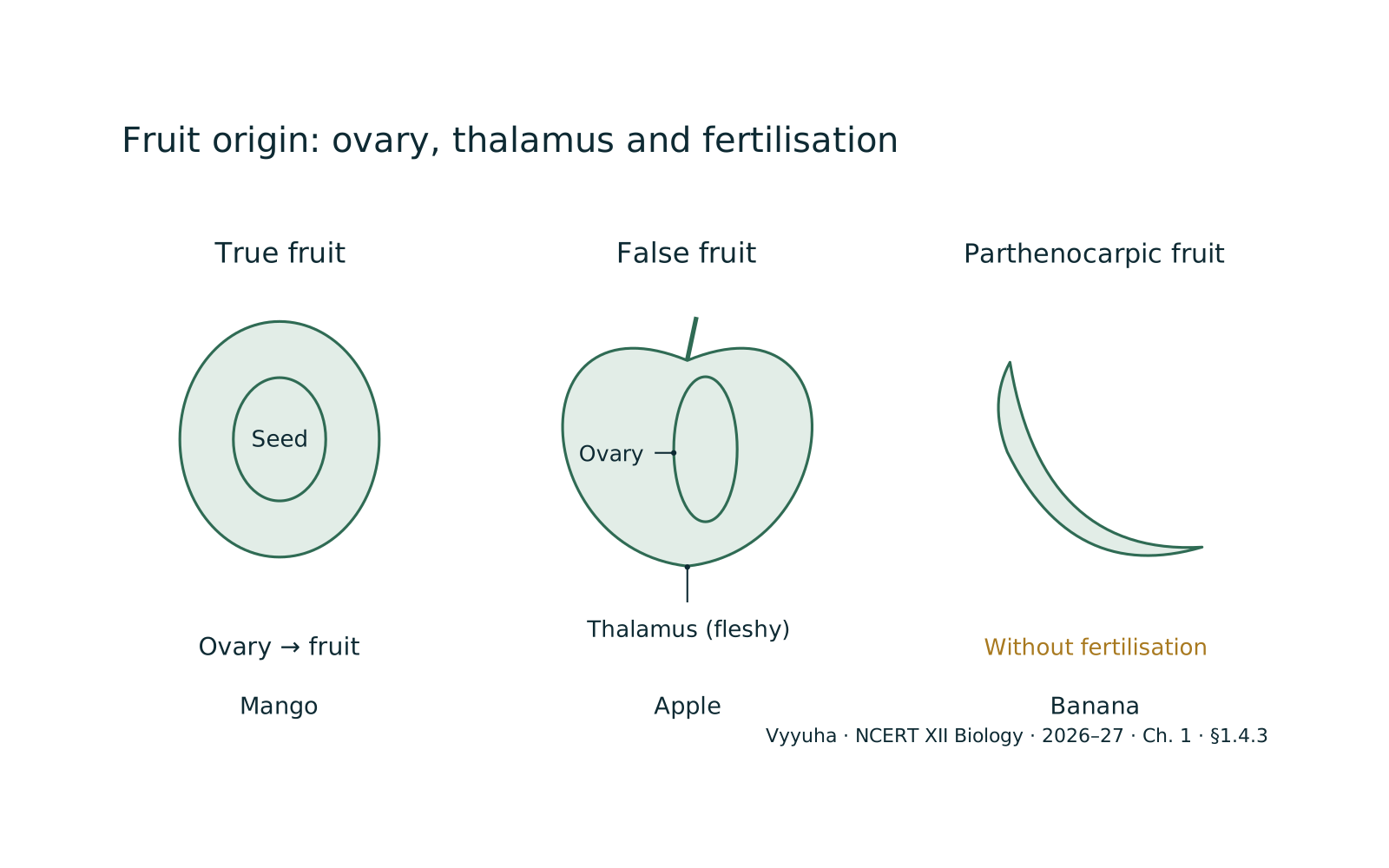
Definition and Development: A fruit is essentially the ripened ovary of a flower, typically developing after fertilization. Its primary roles are to protect the immature seeds and facilitate their dispersal. In some cases, fruits can develop without fertilization, a phenomenon known as parthenocarpy, resulting in seedless fruits (e.g., banana, seedless grapes).
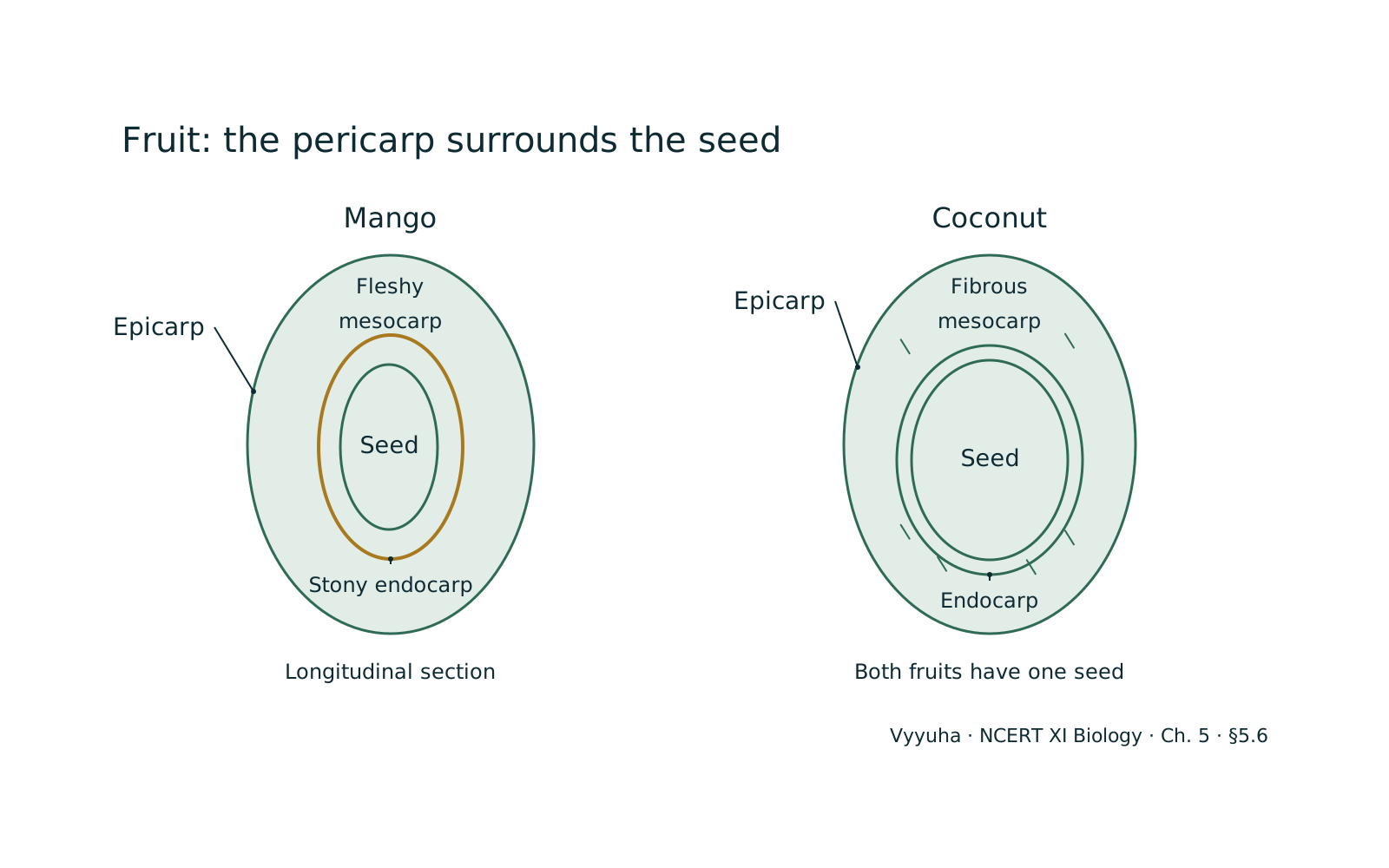
Structure of a Fruit: The fruit wall, derived from the ovary wall, is called the pericarp. The pericarp can be dry or fleshy and is often differentiated into three distinct layers:
- *Epicarp*: The outermost layer, forming the skin or rind of the fruit. It provides protection.
- *Mesocarp*: The middle layer, which is often fleshy and edible (e.g., mango, peach) or fibrous (e.g., coconut) or dry.
- *Endocarp*: The innermost layer, which directly encloses the seed(s). It can be thin and papery (e.g., pea), stony (e.g., mango, coconut), or membranous.
Types of Fruits: Fruits are broadly classified based on their origin from the flower:
- Simple Fruits: — These develop from a single ovary of a single flower. They can be further divided into:
* Fleshy Fruits: The pericarp is fleshy and juicy. * *Drupe*: Develops from a monocarpellary superior ovary and is one-seeded. The pericarp is differentiated into a thin epicarp, a fleshy mesocarp, and a stony endocarp (e.
g., mango, coconut, peach, plum). In coconut, the mesocarp is fibrous. * *Berry*: Develops from a monocarpellary or multicarpellary, syncarpous ovary. The epicarp is thin, and the mesocarp and endocarp are fused to form a fleshy pulp with many seeds (e.
g., tomato, grape, brinjal, guava). * *Pepo: A type of berry with a hard, leathery rind (epicarp) formed from an inferior ovary (e.g., cucumber, pumpkin, watermelon). * Hesperidium*: A type of berry with a leathery rind containing oil glands (epicarp and mesocarp fused) and juicy placental hairs (endocarp) (e.
g., orange, lemon). * *Pome*: A 'false fruit' where the fleshy part is the thalamus, and the true fruit (ovary) is enclosed within it (e.g., apple, pear). * Dry Fruits: The pericarp is dry and often hard.
Dehiscent Fruits (splitting open at maturity to release seeds): * Legume*: Develops from a monocarpellary superior ovary, dehisces along both dorsal and ventral sutures (e.g., pea, bean).
Follicle*: Dehisces along one suture only (e.g., Delphinium, Calotropis). * *Siliqua*: Develops from a bicarpellary superior ovary, dehisces from base to apex, leaving a false septum (replum) (e.
g., mustard, radish). * *Capsule*: Develops from a multicarpellary syncarpous ovary, dehisces in various ways (e.g., cotton, Datura, poppy). * *Indehiscent Fruits (do not split open at maturity; seeds remain enclosed): * Achene*: Small, one-seeded fruit, pericarp free from seed coat (e.
g., Mirabilis, sunflower). * *Caryopsis: Small, one-seeded fruit, pericarp fused with seed coat (e.g., maize, wheat, rice). * Nut*: One-seeded, hard, woody pericarp (e.g., cashew nut, chestnut).
Samara: Winged achene, pericarp forms a wing for dispersal (e.g., elm, maple). * Cypsela*: Achene-like fruit with persistent pappus (e.g., sunflower).
- Aggregate Fruits: — Develop from multiple separate carpels (apocarpous ovary) of a single flower. Each carpel develops into a fruitlet, and all fruitlets together form an aggregate fruit (e.g., custard apple, blackberry, raspberry, strawberry – where the fleshy part is thalamus, making it a false fruit).
- Multiple (Composite) Fruits: — Develop from the entire inflorescence, where all the flowers and their ovaries, along with the floral axis, fuse to form a single fruit (e.g., pineapple, jackfruit, mulberry).
The Seed: The Embryo's Cradle
Definition and Development: A seed is a fertilized and mature ovule. It is the reproductive unit of angiosperms, containing an embryo, stored food, and a protective seed coat. The ovule's integuments develop into the seed coat.
Structure of a Seed: A typical seed comprises:
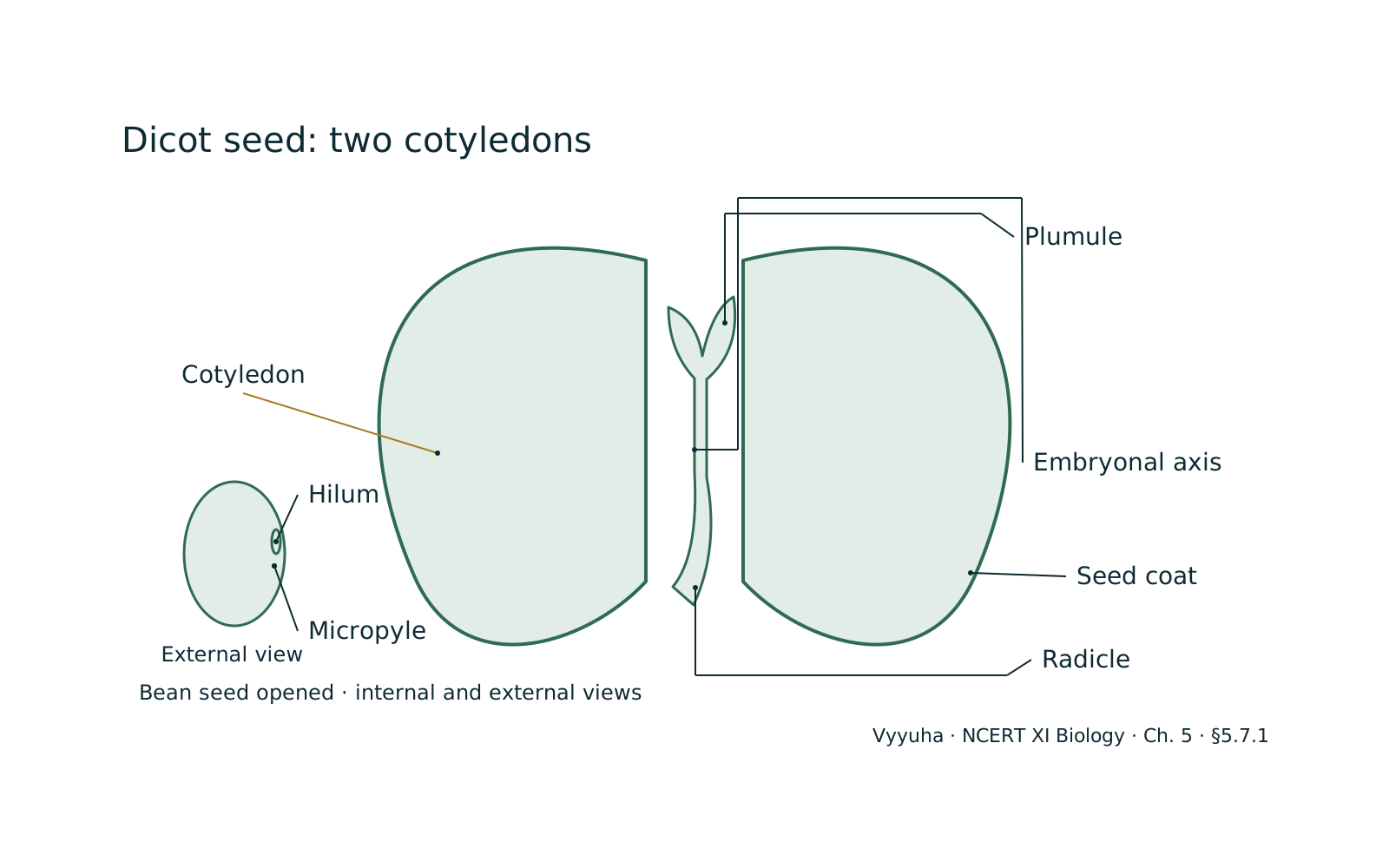
- *Seed Coat*: The protective outer covering, derived from the integuments of the ovule. It has two layers: the outer testa and the inner tegmen. On the seed coat, a scar called the hilum marks the point of attachment to the fruit. Above the hilum is a small pore called the micropyle, which facilitates water absorption and gas exchange during germination.
- *Embryo*: The miniature plant, consisting of an embryonal axis and one or two cotyledons.
* Embryonal Axis: Comprises the plumule (future shoot) at the upper end and the radicle (future root) at the lower end. The region between the plumule and cotyledonary attachment is the epicotyl, and the region between the radicle and cotyledonary attachment is the hypocotyl. * Cotyledons: Seed leaves that store food (in exalbuminous seeds) or absorb food from the endosperm (in albuminous seeds).
- *Endosperm*: A nutritive tissue formed during double fertilization (fusion of a male gamete with the central cell). It provides nourishment to the developing embryo. In some seeds (e.g., castor, maize), it persists at maturity (albuminous seeds), while in others (e.g., pea, bean, groundnut), it is completely consumed by the developing embryo, and food is stored in cotyledons (exalbuminous seeds).
Types of Seeds:
- Dicotyledonous Seed (Dicot Seed): — Possesses two cotyledons (e.g., pea, gram, bean, groundnut). Most dicot seeds are exalbuminous. The embryo is typically curved or folded.
* Example: Pea seed. It has a thick seed coat. The hilum is visible. The embryo consists of a large embryonal axis and two large cotyledons. The plumule and radicle are distinct.
- Monocotyledonous Seed (Monocot Seed): — Possesses a single cotyledon (e.g., maize, wheat, rice, onion). Most monocot seeds are albuminous.
* Example: Maize grain (which is technically a fruit, a caryopsis, where the pericarp is fused with the seed coat). It has a large endosperm. The single cotyledon is called scutellum, which is shield-shaped and located to one side of the embryonal axis. The embryonal axis has a plumule and radicle, enclosed in protective sheaths called coleoptile and coleorhiza, respectively.
Seed Dormancy: A state of suspended growth and metabolism in a seed, even under favorable environmental conditions. It is an adaptive mechanism that prevents premature germination and ensures germination occurs at the most opportune time for seedling survival. Dormancy can be broken by various factors like chilling (stratification), light, or chemical treatments (e.g., gibberellins).
Seed Dispersal: The movement or transport of seeds away from the parent plant. This is crucial to reduce competition, colonize new areas, and prevent pathogen accumulation. Mechanisms include wind (anemochory, e.g., dandelion, maple), water (hydrochory, e.g., coconut), animals (zoochory, e.g., fleshy fruits eaten by birds/mammals, burrs clinging to fur), and self-dispersal (autochory, e.g., pea pods bursting).
Common Misconceptions and NEET-Specific Angle
- Fruit vs. Vegetable: — Biologically, a fruit develops from the ovary and contains seeds. Vegetables are other edible plant parts (roots, stems, leaves, flowers). Tomatoes, cucumbers, and bell peppers are botanically fruits, though culinarily often treated as vegetables.
- True vs. False Fruits: — Understanding the contribution of floral parts other than the ovary is key. Apple (thalamus), strawberry (thalamus), cashew (pedicel) are common NEET examples of false fruits.
- Albuminous vs. Exalbuminous Seeds: — Remember that 'albuminous' means endosperm is present at maturity, while 'exalbuminous' means it's consumed, and cotyledons store food. This is a frequent point of confusion.
- Monocot vs. Dicot Seed Structure: — Pay close attention to the number of cotyledons, the presence/absence of endosperm, and specific structures like scutellum, coleoptile, and coleorhiza in monocots.
- Parthenocarpy vs. Apomixis: — Parthenocarpy is fruit formation without fertilization (seedless fruit). Apomixis is seed formation without fertilization (asexual seed). Both are important for NEET.
NEET questions often test specific examples of fruit types, the layers of the pericarp, the parts of a seed, and the differences between monocot and dicot seeds. Diagrams are frequently used to identify parts. Knowledge of seed dormancy and dispersal mechanisms is also tested.
Key Concepts
The pericarp, or fruit wall, is a critical structure derived from the ovary wall. Its three layers—epicarp,…
The fundamental difference between monocot and dicot seeds lies in the number of cotyledons and the presence…
Simple dry fruits are those where the pericarp is dry at maturity. They are further categorized based on…
Often confused with
Side-by-side differences the NEET paper likes to test.
| Aspect | Fruit and Seed | Monocotyledonous Seed vs. Dicotyledonous Seed |
|---|---|---|
| Number of Cotyledons | One (e.g., scutellum) | Two |
| Endosperm at Maturity | Usually present (albuminous) | Usually absent (exalbuminous), food stored in cotyledons |
| Embryonal Axis Protection | Plumule covered by coleoptile, radicle by coleorhiza | Plumule and radicle are naked (not covered by sheaths) |
| Cotyledon Size/Function | Small, shield-shaped (scutellum), absorbs food from endosperm | Large, fleshy, stores food |
| Example | Maize, wheat, rice, onion | Pea, bean, gram, groundnut |
Monocotyledonous and dicotyledonous seeds represent two major groups of flowering plants, primarily distinguished by the number of cotyledons in their embryo. Monocot seeds typically have one cotyledon and often retain a large endosperm for nourishment, with their embryonic plumule and radicle protected by specialized sheaths.
Dicot seeds, conversely, possess two cotyledons, which usually store the food reserves, having absorbed the endosperm during development, and lack the protective sheaths around their embryonic axis. These structural differences dictate their germination patterns and early seedling development.
Why it is tested: NEET relevance: This comparison is a frequently tested concept in NEET, often appearing in the form of direct questions on structural differences, examples, or diagram-based identification. Understanding these distinctions is fundamental for morphology and plant physiology.
Questions students ask
5 answered on this topic.
What is the primary difference between a true fruit and a false fruit?
A true fruit develops exclusively from the ripened ovary of a flower, with no other floral parts contributing to its formation. Examples include mango and tomato. In contrast, a false fruit, also known as an accessory fruit, involves other floral parts, such as the thalamus, receptacle, or perianth, along with the ovary, in its development.
The fleshy, edible part of a false fruit is often derived from these accessory structures. Classic examples of false fruits are apple and pear (where the thalamus forms the main edible part) and strawberry (where the receptacle is fleshy).
Explain the significance of the pericarp in fruit development.
The pericarp is the fruit wall, which develops from the ovary wall after fertilization. Its significance is multifaceted. Firstly, it provides crucial protection to the developing seeds inside from mechanical injury, desiccation, and predation.
Secondly, in fleshy fruits, the pericarp (especially the mesocarp) becomes succulent and attractive, aiding in seed dispersal by animals. In dry fruits, it can develop structures like wings or hooks for wind or animal dispersal.
The differentiation of the pericarp into epicarp, mesocarp, and endocarp allows for specialized functions, from outer protection to inner enclosure of the seed.
What is seed dormancy, and why is it important for plants?
Seed dormancy is a state where a viable seed fails to germinate even under environmental conditions that are normally favorable for germination (e.g., adequate water, oxygen, temperature, light). It's a crucial adaptive strategy for plants.
Its importance lies in preventing premature germination during unfavorable conditions, ensuring that the seedling emerges when chances of survival are highest. Dormancy allows seeds to be dispersed over time and space, reducing competition with the parent plant, surviving harsh seasons, and colonizing new habitats.
It also ensures that germination occurs synchronously, which can be beneficial for species survival.
Distinguish between albuminous and exalbuminous seeds with examples.
The distinction between albuminous (or endospermic) and exalbuminous (or non-endospermic) seeds lies in the fate of the endosperm. Albuminous seeds retain a significant amount of endosperm at maturity, which serves as the primary food storage tissue for the developing embryo.
Examples include castor, maize, wheat, and rice. In contrast, exalbuminous seeds completely consume the endosperm during embryo development. In these seeds, the food reserves are stored primarily within the large, fleshy cotyledons of the embryo.
Examples of exalbuminous seeds are pea, bean, gram, and groundnut.
How do parthenocarpy and apomixis differ in their outcomes for fruit and seed production?
Parthenocarpy refers to the development of a fruit without fertilization. The resulting fruits are typically seedless, as no ovules were fertilized to form seeds. Bananas and seedless grapes are common examples.
Apomixis, on the other hand, is the formation of seeds without fertilization. In apomictic seeds, the embryo develops from an unfertilized egg cell or other diploid cells of the ovule, bypassing meiosis and syngamy.
This results in seeds that are genetically identical to the parent plant. Examples include some species of Asteraceae and grasses. So, parthenocarpy yields seedless fruits, while apomixis yields seeds without sexual reproduction.
Revise in 30 seconds
- Fruit: — Mature/ripened ovary, protects and disperses seeds.
- Pericarp: — Fruit wall (epicarp, mesocarp, endocarp).
- True Fruit: — Only from ovary (e.g., mango).
- False Fruit: — Ovary + other floral parts (e.g., apple, thalamus).
- Simple Fruit: — Single ovary of single flower (e.g., pea, mango).
- Aggregate Fruit: — Multiple separate ovaries of single flower (e.g., custard apple).
- Multiple Fruit: — Entire inflorescence (e.g., pineapple).
- Drupe: — Fleshy, stony endocarp, 1-seeded (e.g., mango).
- Berry: — Fleshy, multi-seeded, no stony endocarp (e.g., tomato).
- Legume: — Dry, dehiscent, splits along two sutures (e.g., pea).
- Caryopsis: — Dry, indehiscent, pericarp fused with seed coat (e.g., maize).
- Seed: — Fertilized ovule, contains embryo, food, seed coat.
- Seed Coat: — Outer protective layers (testa, tegmen), with hilum and micropyle.
- Embryo: — Plumule (shoot), Radicle (root), Cotyledon(s).
- Epicotyl: — Between plumule and cotyledons.
- Hypocotyl: — Between radicle and cotyledons.
- Albuminous Seed: — Endosperm present (e.g., castor, maize).
- Exalbuminous Seed: — Endosperm absent, food in cotyledons (e.g., pea, bean).
- Monocot Seed: — One cotyledon (scutellum), plumule/radicle protected by coleoptile/coleorhiza (e.g., maize).
- Dicot Seed: — Two cotyledons, no protective sheaths (e.g., pea).
- Seed Dormancy: — Suspended growth, adaptive for survival.
For Fruit Types: Some Apples Make Delicious Berries.
- Simple: Develop from a single ovary.
- Aggregate: From multiple separate ovaries of a single flower.
- Multiple: From an entire inflorescence.
- Drupe: Fleshy with stony endocarp (e.g., Mango).
- Berry: Fleshy, multi-seeded (e.g., Tomato).