Algae — Explained
Detailed Explanation
Algae represent a vast and heterogeneous group of photosynthetic organisms, traditionally studied under botany due to their plant-like characteristics, primarily photosynthesis. However, modern classification recognizes their polyphyletic nature, meaning they do not all share a single common ancestor to the exclusion of other groups.
Despite this, for NEET UG purposes, they are typically grouped as the simplest forms within the 'Plant Kingdom' chapter, preceding bryophytes, pteridophytes, gymnosperms, and angiosperms.
Conceptual Foundation: The Algal Thallus
The most fundamental concept distinguishing algae from higher plants is the 'thallus' body organization. A thallus is a simple, undifferentiated plant body that lacks true roots, stems, and leaves. While some large algae (like kelps) might show structures resembling leaves (fronds), stems (stipes), and root-like holdfasts, these are analogous structures, not homologous to those of vascular plants.
They lack vascular tissues (xylem and phloem) for long-distance transport of water and nutrients, relying instead on diffusion and osmosis for material exchange.
Key Principles and General Characteristics:
- Habitat: — Predominantly aquatic, found in both freshwater (ponds, lakes, rivers) and marine environments (oceans, seas). Some also occur in moist terrestrial habitats like damp soils, rocks, and even snow (e.g., 'red snow' caused by Chlamydomonas nivalis). They can be planktonic (free-floating) or benthic (attached to substrates).
- Thallus Organization: — Exhibits a wide range of forms:
* Unicellular: E.g., Chlamydomonas, diatoms. * Colonial: Aggregates of cells, e.g., Volvox (motile colony), Hydrodictyon (non-motile net-like colony). * Filamentous: Cells arranged end-to-end, either unbranched (e.g., Spirogyra, Ulothrix) or branched (e.g., Cladophora). * Parenchymatous/Foliose: Sheet-like or blade-like structures, e.g., Ulva (sea lettuce). * Giant Kelps: Highly differentiated, macroscopic forms, e.g., Laminaria, Macrocystis.
- Cell Wall: — Composed primarily of cellulose in most green algae, but other components like galactans, mannans, calcium carbonate, algin, and carrageenan are also present, especially in brown and red algae. Pectin is also common.
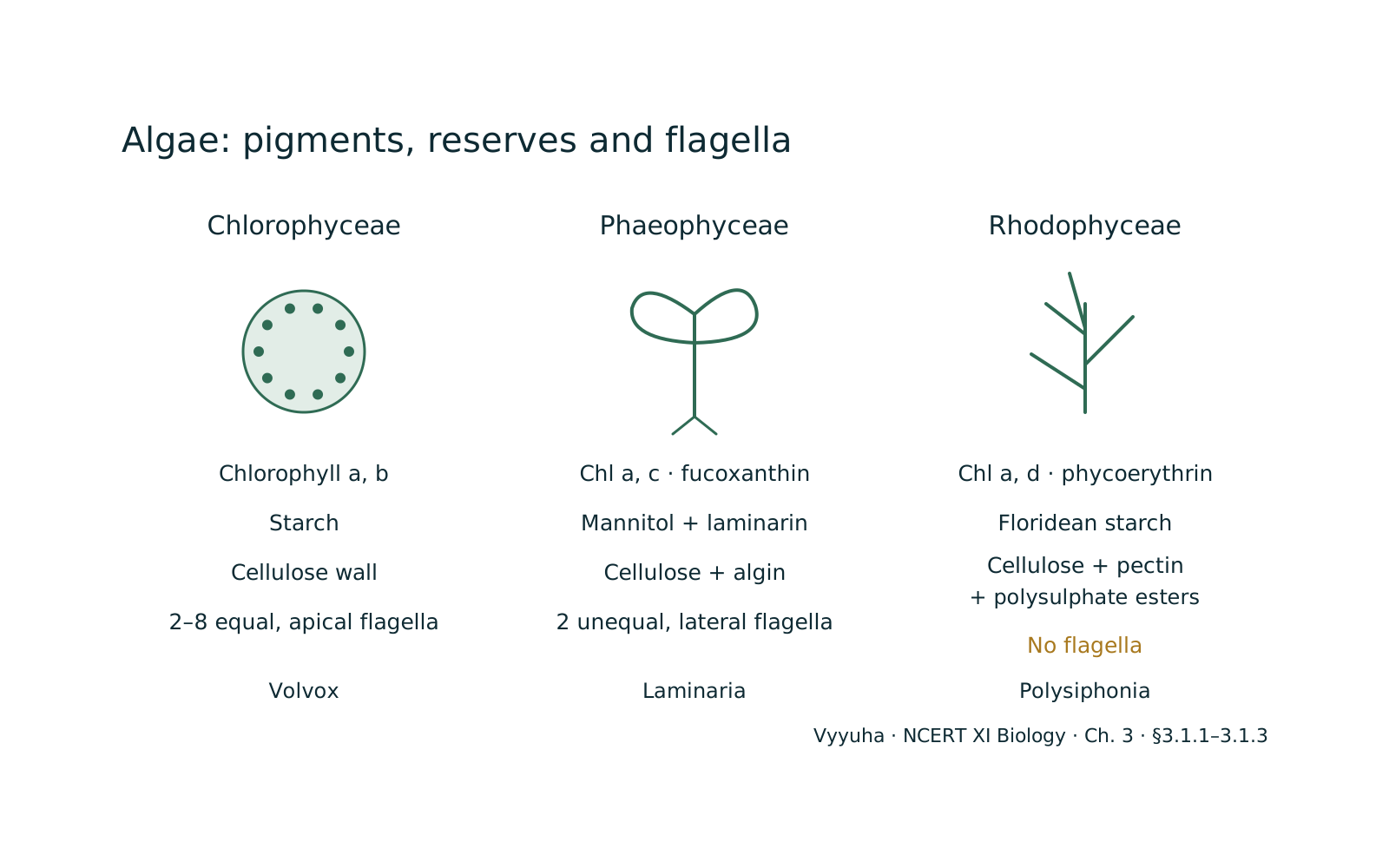
- Pigmentation: — Possess chlorophyll a (universal photosynthetic pigment) and often chlorophyll b, c, or d, along with accessory pigments like carotenoids (carotenes and xanthophylls) and phycobilins (phycoerythrin, phycocyanin). The specific combination of pigments determines their characteristic color and is crucial for classification.
- Food Storage: — Stored food reserves vary among different groups, typically starch (green algae), laminarin or mannitol (brown algae), and floridean starch (red algae).
- Flagella: — Present in motile forms (zoospores, gametes) of some algal groups. Their number, position, and type (whiplash or tinsel) are important taxonomic features.
Classification of Algae (Major Classes for NEET):
Algae are broadly classified into three main classes based on their primary photosynthetic pigments, stored food, and cell wall composition:
- Chlorophyceae (Green Algae):
* Pigments: Dominance of chlorophyll a and b, similar to higher plants. Carotenoids are also present. * Stored Food: Starch, stored in pyrenoids (proteinaceous bodies associated with chloroplasts).
* Cell Wall: Rigid, made of an inner layer of cellulose and an outer layer of pectose. * Flagella: Typically 2-8, equal, apical, and whiplash type in motile forms. * Habitat: Mostly freshwater, some marine, brackish water, or terrestrial.
* Thallus: Unicellular (Chlamydomonas), colonial (Volvox), filamentous (Spirogyra, Ulothrix), or parenchymatous (Ulva). * Examples: Chlamydomonas, Volvox, Ulothrix, Spirogyra, Chara.
- Phaeophyceae (Brown Algae):
* Pigments: Chlorophyll a, c, and fucoxanthin (dominant brown pigment). Carotenoids are also present. * Stored Food: Laminarin (a complex carbohydrate) and mannitol (a sugar alcohol). * Cell Wall: Composed of cellulose, algin (a hydrocolloid), and sometimes pectin.
Algin gives flexibility and strength. * Flagella: Two unequal, laterally attached flagella (one smooth, one tinsel type) in motile forms (zoospores, gametes). * Habitat: Almost exclusively marine, ranging from intertidal zones to deep waters.
They can be very large (kelps). * Thallus: Highly differentiated, often with a holdfast (for attachment), stipe (stalk), and frond (leaf-like photosynthetic part). * Examples: Ectocarpus, Dictyota, Laminaria, Sargassum, Fucus.
- Rhodophyceae (Red Algae):
* Pigments: Chlorophyll a, d, and phycoerythrin (dominant red pigment), phycocyanin, and carotenoids. Phycoerythrin allows them to absorb blue-green light, which penetrates deeper into water, enabling them to live at greater depths.
* Stored Food: Floridean starch, structurally similar to amylopectin and glycogen. * Cell Wall: Composed of cellulose, pectin, and often phycocolloids like carrageenan and agar. Some have calcium carbonate deposits (coralline algae).
* Flagella: Completely absent in all stages of their life cycle (unique feature). * Habitat: Mostly marine, found in both shallow and deep waters. Some freshwater forms exist. * Thallus: Multicellular, often complex, filamentous, or parenchymatous.
Can be delicate or robust. * Examples: Polysiphonia, Porphyra, Gracilaria, Gelidium.
Reproduction in Algae:
Algae exhibit all three modes of reproduction:
- Vegetative Reproduction: — By fragmentation, where a part of the thallus breaks off and develops into a new individual (e.g., Spirogyra). Also by budding or formation of adventitious branches.
- Asexual Reproduction: — By the production of various types of spores:
* Zoospores: Motile, flagellated spores (e.g., Chlamydomonas, Ulothrix). Produced in zoosporangia. * Aplanospores: Non-motile spores. * Hypnospores: Thick-walled, resting spores. * Akinetes: Thick-walled vegetative cells that store food and can survive unfavorable conditions.
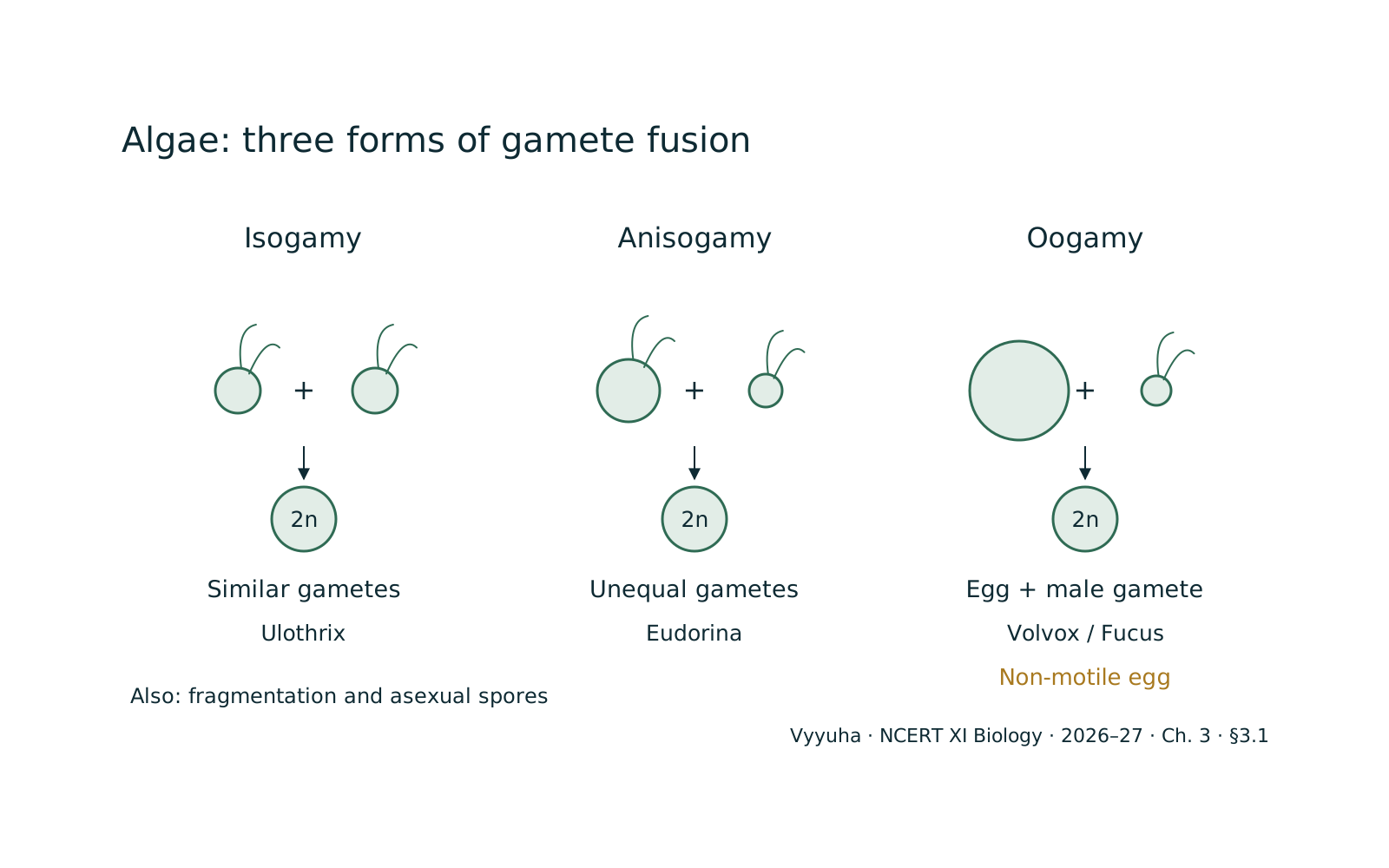
- Sexual Reproduction: — Involves the fusion of two gametes. It shows considerable variation:
* Isogamy: Fusion of two morphologically similar gametes. These gametes can be flagellated (e.g., Ulothrix, Chlamydomonas some species) or non-flagellated (e.g., Spirogyra). * Anisogamy: Fusion of two gametes that are morphologically dissimilar in size (e.
g., some species of Chlamydomonas). * Oogamy: Fusion between a large, non-motile female gamete (egg) and a smaller, motile male gamete (sperm). This is the most advanced type of sexual reproduction (e.
g., Volvox, Fucus, Chara).
Life Cycles and Alternation of Generations:
Algae exhibit diverse life cycles, often involving an alternation of generations, though simpler forms may have only one dominant phase. The three main types are:
- Haplontic Life Cycle: — The dominant phase is haploid (gametophyte). The diploid zygote is the only diploid stage and undergoes meiosis to produce haploid spores, which then develop into the haploid thallus (e.g., Volvox, Spirogyra, Chlamydomonas).
- Diplontic Life Cycle: — The dominant phase is diploid (sporophyte). Gametes are formed by meiosis, and they fuse to form a diploid zygote, which develops into the diploid thallus (e.g., Fucus).
- Haplo-diplontic Life Cycle: — Both haploid (gametophyte) and diploid (sporophyte) multicellular phases are present. They may be morphologically similar (isomorphic, e.g., Ectocarpus) or dissimilar (heteromorphic, e.g., Laminaria). This is common in many brown and red algae.
Economic Importance of Algae:
Algae are incredibly important, both ecologically and economically:
- Primary Producers: — Form the base of aquatic food chains, producing oxygen and organic matter through photosynthesis.
- Food Source: — Many marine algae (seaweeds) are consumed as food in various parts of the world (e.g., Porphyra - Nori, Laminaria - Kombu, Sargassum). Chlorella and Spirulina (a cyanobacterium, often grouped with algae) are rich in proteins and are used as single-cell protein (SCP).
- Hydrocolloids:
* Agar: Obtained from red algae like Gelidium and Gracilaria. Used to grow microbes in culture media, in ice creams, jellies, and cosmetics. * Carrageenan: Obtained from red algae like Chondrus crispus. Used as an emulsifier, thickener, and stabilizer in paints, toothpaste, and food products. * Algin: Obtained from brown algae (e.g., Laminaria, Macrocystis). Used in ice creams, jellies, dressings, and as a binder in pharmaceuticals.
- Biofertilizers: — Nitrogen-fixing cyanobacteria (often referred to as blue-green algae) like Anabaena and Nostoc are used in paddy fields to enrich soil fertility.
- Sewage Treatment: — Algae can be used in oxidation ponds to oxygenate water and remove pollutants.
- Diatomaceous Earth: — Cell walls of diatoms (a type of unicellular algae) are rich in silica and form diatomaceous earth, used in polishing, filtration of oils and syrups, and soundproofing.
Common Misconceptions and NEET-Specific Angle:
- Misconception: — All algae are green. Correction: Algae exhibit a wide range of colors due to diverse accessory pigments (brown, red, golden, etc.).
- Misconception: — Algae are primitive plants. Correction: While simple, they are a diverse group, and some (like red algae) are evolutionarily distinct from the lineage leading to land plants. They are not 'primitive' in a derogatory sense, but rather represent early diverging photosynthetic eukaryotes.
- Misconception: — All algae are microscopic. Correction: While many are, some, like kelps, are macroscopic and highly complex.
- NEET Angle: — Focus on the distinguishing features of Chlorophyceae, Phaeophyceae, and Rhodophyceae, especially their pigments, stored food, cell wall components, and flagellation. Examples for each class are crucial. Understand the types of sexual reproduction and the basic concept of different life cycles. Economic importance, particularly the sources and uses of agar, carrageenan, and algin, is a frequently tested area.
Often confused with
Side-by-side differences the NEET paper likes to test.
| Aspect | Algae | Bryophytes |
|---|---|---|
| Habitat | Predominantly aquatic (freshwater and marine); some moist terrestrial. | Terrestrial but require moist, shady places for growth and reproduction (amphibians of plant kingdom). |
| Body Organization (Thallus) | Simple thalloid body, no true roots, stems, or leaves. Can be unicellular, colonial, filamentous, or parenchymatous. | More differentiated thallus; may have root-like rhizoids, stem-like axis, and leaf-like appendages, but no true vascular tissues. |
| Vascular Tissue | Absent. | Absent. |
| Reproductive Organs | Single-celled, not surrounded by sterile jacket cells. | Multicellular, surrounded by a sterile jacket of cells (antheridia and archegonia). |
| Embryo Formation | No embryo formation after fertilization; zygote develops directly or undergoes meiosis. | Zygote develops into a multicellular embryo within the female gametophyte (archegonium), a key evolutionary step. |
| Dominant Life Cycle Phase | Highly variable (haplontic, diplontic, haplo-diplontic). | Gametophyte (haploid) is the dominant, independent, photosynthetic phase. |
| Dependence of Sporophyte | Sporophyte (if present) is often independent or short-lived. | Sporophyte (diploid) is parasitic and dependent on the gametophyte for nutrition. |
Algae and Bryophytes represent successive evolutionary steps in the plant kingdom, with bryophytes showing greater adaptation to land. Algae are primarily aquatic with simpler, undifferentiated thalli and single-celled reproductive structures.
Bryophytes, while still tied to water for reproduction, are terrestrial, exhibiting more differentiated body forms with rhizoids, stem-like and leaf-like structures, and crucially, multicellular reproductive organs protected by sterile jacket cells.
A key distinction is the formation of a protected embryo in bryophytes, which is absent in algae, marking a significant evolutionary advancement towards land plant survival.
Why it is tested: NEET relevance: Understanding the fundamental differences between algae and bryophytes is crucial for tracing the evolutionary journey of plants from aquatic to terrestrial environments. Questions often test these distinguishing features, especially regarding habitat, body organization, reproductive structures, and life cycle patterns, highlighting the adaptations that allowed plants to colonize land.
Questions students ask
6 answered on this topic.
What are the primary differences between green, brown, and red algae?
The primary differences lie in their dominant photosynthetic pigments, the form of stored food, and cell wall composition. Green algae (Chlorophyceae) have chlorophyll a and b, store food as starch, and have cellulose cell walls.
Brown algae (Phaeophyceae) possess chlorophyll a and c, along with fucoxanthin, store food as laminarin and mannitol, and have cellulose and algin in their cell walls. Red algae (Rhodophyceae) contain chlorophyll a and d, with phycoerythrin being dominant, store food as floridean starch, and have cellulose, pectin, and carrageenan in their cell walls.
Flagella are also a distinguishing feature, being absent in red algae.
How do algae reproduce, and what are the different types of sexual reproduction?
Algae reproduce vegetatively, asexually, and sexually. Vegetative reproduction occurs by fragmentation. Asexual reproduction typically involves the formation of spores, such as motile zoospores or non-motile aplanospores.
Sexual reproduction involves the fusion of gametes and can be of three types: isogamy (fusion of morphologically similar gametes), anisogamy (fusion of morphologically dissimilar gametes, usually in size), and oogamy (fusion of a large, non-motile female gamete with a smaller, motile male gamete).
These variations reflect the evolutionary progression in reproductive strategies.
What is the ecological significance of algae?
Algae are ecologically indispensable. As primary producers, they form the base of nearly all aquatic food webs, converting sunlight into organic matter through photosynthesis. This process also releases a significant portion of the Earth's atmospheric oxygen, making them crucial for aerobic life.
They absorb carbon dioxide, playing a role in carbon cycling. Furthermore, some cyanobacteria (often grouped with algae) fix atmospheric nitrogen, enriching soil fertility and supporting plant growth in various ecosystems, particularly in paddy fields.
What are hydrocolloids, and which algae produce them?
Hydrocolloids are hydrophilic polymers that form viscous solutions or gels when dispersed in water. They are widely used in food, pharmaceutical, and cosmetic industries as gelling agents, thickeners, and stabilizers.
Important hydrocolloids derived from algae include agar and carrageenan, both extracted from various red algae (e.g., Gelidium, Gracilaria for agar; Chondrus crispus for carrageenan). Algin is another significant hydrocolloid obtained from brown algae (e.
g., Laminaria, Macrocystis). These compounds have diverse applications, from microbial culture media to ice cream stabilizers.
Why are red algae able to grow at greater depths in the ocean compared to green algae?
Red algae possess a dominant red pigment called phycoerythrin, along with phycocyanin. These pigments are highly efficient at absorbing blue-green light, which is the specific wavelength of light that penetrates deepest into water.
Green algae, relying primarily on chlorophyll a and b, are better adapted to absorb red and blue light, which are filtered out more quickly in shallower waters. This unique pigment composition allows red algae to photosynthesize effectively in low-light conditions found in deeper oceanic zones, giving them a competitive advantage in such habitats.
What is a pyrenoid, and what is its function?
A pyrenoid is a sub-cellular structure found within the chloroplasts of many algae, particularly green algae. It is typically a proteinaceous body, often surrounded by starch plates. Its primary function is associated with starch synthesis and storage.
Pyrenoids act as centers for the polymerization of glucose into starch, serving as a crucial site for carbohydrate metabolism and energy storage within the algal cell. Their presence and morphology can be important taxonomic features in algal classification.