Cell Membrane — Explained
Detailed Explanation
The cell membrane, also known as the plasma membrane or plasmalemma, is a fundamental biological structure that defines the boundary of every living cell. It is a highly dynamic and intricate barrier, separating the cell's internal components from its external environment. Far from being a static wall, it is an active participant in numerous cellular processes, crucial for maintaining cellular integrity, regulating transport, and facilitating communication.
Conceptual Foundation: The Fluid Mosaic Model
For many years, scientists struggled to understand the exact structure of the cell membrane. Early models, like the sandwich model proposed by Danielli and Davson, suggested a protein-lipid-protein arrangement.
However, this model couldn't fully explain the membrane's dynamic properties and selective permeability. The most widely accepted and comprehensive model today is the Fluid Mosaic Model, proposed by S.
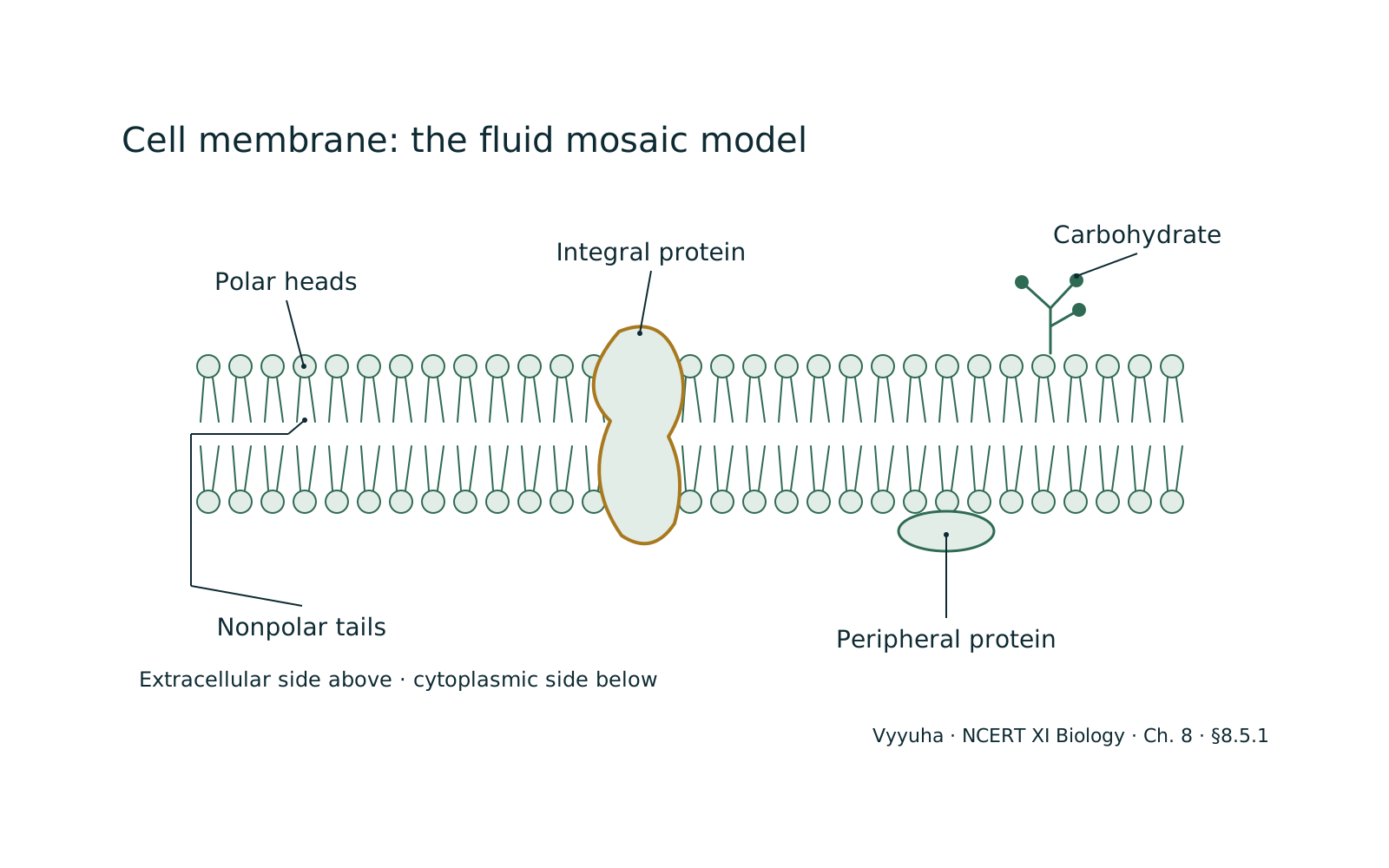
J. Singer and Garth Nicolson in 1972. This model describes the cell membrane as a 'mosaic' of various components—phospholipids, cholesterol, proteins, and carbohydrates—that are able to move and shift fluidly within the membrane, rather than being rigidly fixed.
- Phospholipid Bilayer: — This forms the basic structural framework of the membrane. Each phospholipid molecule is amphipathic, meaning it has both hydrophilic (water-loving) and hydrophobic (water-fearing) regions. The hydrophilic 'head' contains a phosphate group and faces the aqueous environments both inside and outside the cell. The two hydrophobic 'tails' are fatty acid chains that face inward, forming the core of the membrane, away from water. This spontaneous self-assembly into a bilayer is energetically favorable and creates a stable barrier.
- Proteins: — These are the functional workhorses of the membrane. They are broadly classified into two types:
* Integral (Intrinsic) Proteins: These are deeply embedded in the lipid bilayer, often spanning the entire membrane (transmembrane proteins) or penetrating only partially. They are difficult to separate from the membrane without disrupting its structure.
Examples include channel proteins, carrier proteins, and receptor proteins. * Peripheral (Extrinsic) Proteins: These are loosely associated with the surface of the membrane, either on the cytoplasmic or extracellular side.
They are easily separated without disrupting the membrane. They often function as enzymes or attachment points for the cytoskeleton.
- Cholesterol: — Found primarily in animal cell membranes, cholesterol molecules are interspersed among the phospholipids. They play a crucial role in regulating membrane fluidity. At moderate temperatures, cholesterol reduces membrane fluidity by hindering phospholipid movement. At low temperatures, it prevents phospholipids from packing too closely, thus maintaining fluidity and preventing the membrane from becoming too rigid.
- Carbohydrates: — These are typically found on the outer surface of the plasma membrane, covalently linked to either lipids (forming glycolipids) or proteins (forming glycoproteins). This carbohydrate layer is collectively known as the glycocalyx. The glycocalyx is vital for cell-cell recognition, adhesion, and as receptor sites for hormones and neurotransmitters.
Key Principles and Functions:
- Selective Permeability: — This is arguably the most critical function. The cell membrane acts as a selective barrier, allowing certain substances to pass through while restricting others. This property is essential for maintaining the cell's internal environment (homeostasis) and for regulating the uptake of nutrients and removal of waste products.
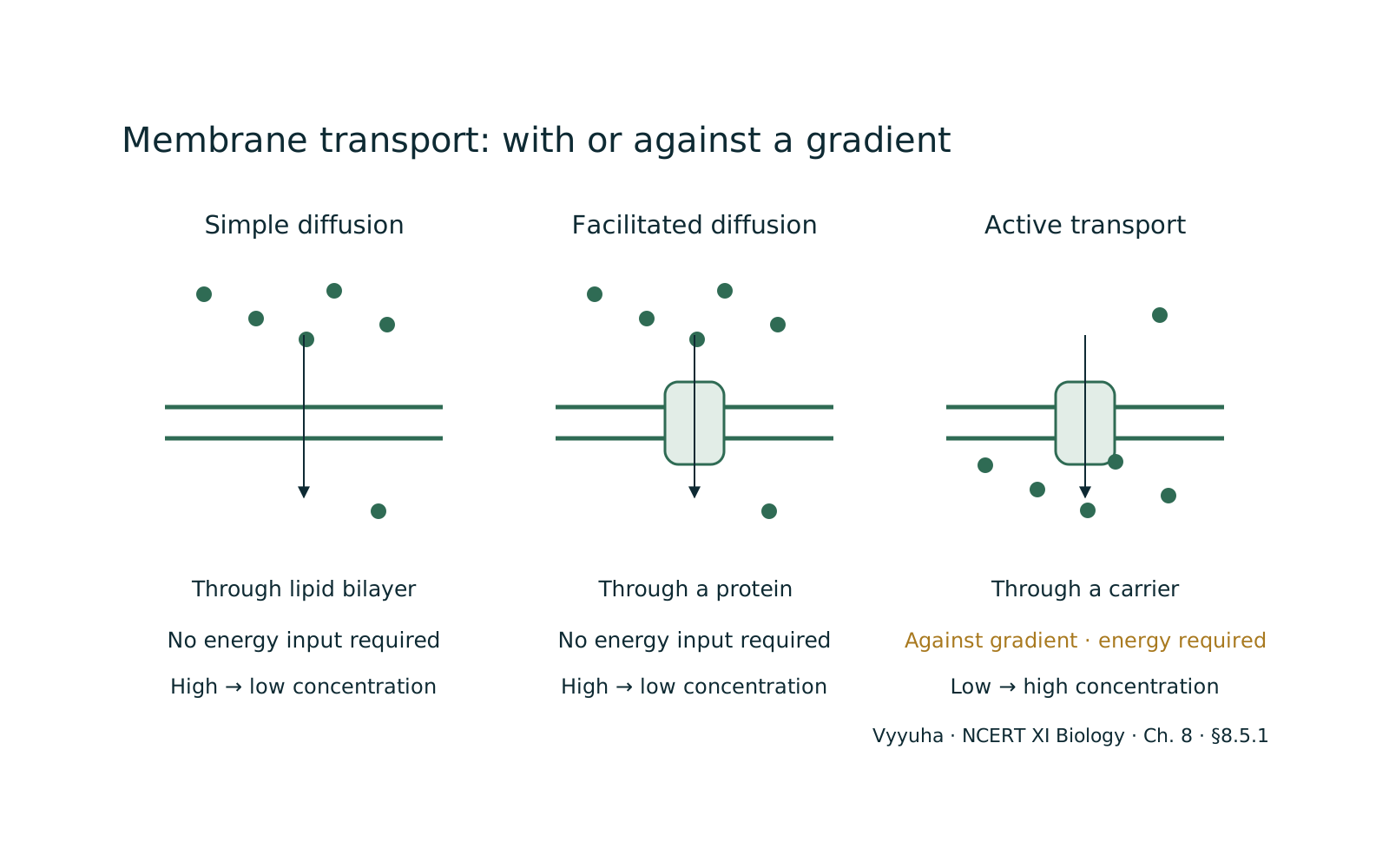
* Passive Transport: Does not require cellular energy (ATP). Substances move down their concentration gradient. * Simple Diffusion: Small, nonpolar molecules (e.g., O, CO, N, benzene) and small uncharged polar molecules (e.
g., water, urea, ethanol) can directly pass through the lipid bilayer. * Facilitated Diffusion: Larger polar molecules (e.g., glucose) and ions (e.g., Na, K, Cl) require the assistance of specific membrane proteins (channel proteins or carrier proteins) to cross the membrane, still moving down their concentration gradient.
* Osmosis: The diffusion of water across a selectively permeable membrane from a region of higher water potential to a region of lower water potential. * Active Transport: Requires cellular energy (ATP) to move substances against their concentration gradient (from a region of lower concentration to higher concentration).
This is typically carried out by specific carrier proteins, often called 'pumps' (e.g., Sodium-Potassium pump). * Bulk Transport: For very large molecules or particles. * Endocytosis: The process by which cells take in substances from outside by engulfing them in a vesicle.
Includes phagocytosis (cell eating), pinocytosis (cell drinking), and receptor-mediated endocytosis. * Exocytosis: The process by which cells release substances from inside by fusing vesicles with the plasma membrane.
- Cell-Cell Recognition and Adhesion: — The glycoproteins and glycolipids of the glycocalyx act as markers for cell identification, allowing cells to recognize each other. This is crucial for immune responses, tissue formation, and embryonic development. Membrane proteins also mediate cell adhesion, allowing cells to form tissues and organs.
- Signal Transduction: — Receptor proteins embedded in the membrane bind to specific signaling molecules (ligands) from the extracellular environment. This binding triggers a cascade of events inside the cell, leading to a specific cellular response. This is how cells respond to hormones, neurotransmitters, and growth factors.
- Enzymatic Activity: — Some membrane proteins function as enzymes, catalyzing specific biochemical reactions at the membrane surface.
- Attachment to Cytoskeleton and Extracellular Matrix: — Membrane proteins can anchor the cell to the cytoskeleton internally and to the extracellular matrix externally, providing structural support and maintaining cell shape.
NEET-Specific Angle and Common Misconceptions:
For NEET aspirants, a deep understanding of the Fluid Mosaic Model is paramount. Questions frequently test the components of the membrane, their arrangement, and their specific functions. Emphasis is often placed on the different types of membrane transport, including the energy requirements and specific examples of molecules transported by each mechanism. The role of cholesterol in membrane fluidity and the significance of the glycocalyx for cell recognition are also high-yield topics.
Common misconceptions include:
- The membrane is rigid: — Students often mistakenly think of the membrane as a static, impermeable barrier, overlooking its dynamic, fluid nature and the constant movement of its components.
- All transport is passive: — While passive transport is common, active transport is equally vital for maintaining gradients and accumulating necessary substances against their concentration gradients.
- Proteins are merely structural: — Proteins are not just embedded for support; they are the primary mediators of most membrane functions, including transport, signaling, and enzymatic activity.
- Water crosses freely through the lipid bilayer: — While water can pass directly, its movement is significantly facilitated by aquaporins (channel proteins) in many cells, especially where rapid water movement is required.
Understanding the cell membrane is foundational to comprehending cell physiology, immunology, neurobiology, and pharmacology. Its intricate design allows for the complex and highly regulated processes that define life itself.
Often confused with
Side-by-side differences the NEET paper likes to test.
| Aspect | Cell Membrane | Cell Wall |
|---|---|---|
| Location | Innermost boundary of the cell (in animal cells) or internal to the cell wall (in plant/fungal/bacterial cells). | Outermost rigid layer surrounding the cell membrane (in plant, fungal, bacterial, algal cells). |
| Composition | Phospholipid bilayer, proteins, cholesterol (animal cells), carbohydrates. | Cellulose (plants), chitin (fungi), peptidoglycan (bacteria), hemicellulose, pectin. |
| Permeability | Selectively permeable (regulates passage of specific substances). | Fully permeable (allows most substances to pass freely, except in some bacteria). |
| Flexibility | Flexible and dynamic. | Rigid and static. |
| Function | Regulates transport, cell recognition, signal transduction, maintains homeostasis. | Provides structural support, protection, prevents excessive water uptake (bursting). |
| Presence | Present in all living cells (prokaryotic and eukaryotic). | Present in plants, fungi, bacteria, algae; absent in animal cells. |
The cell membrane is a dynamic, selectively permeable phospholipid bilayer found in all cells, regulating internal environment and facilitating communication. In contrast, the cell wall is a rigid, fully permeable outer layer present only in plant, fungal, and bacterial cells, primarily offering structural support and protection.
While the cell membrane actively controls substance passage, the cell wall largely allows free movement of molecules, focusing on maintaining cell shape and preventing osmotic lysis.
Why it is tested: For NEET, understanding the distinct structural and functional differences between the cell membrane and cell wall is crucial. Questions often test their composition, permeability, and presence in different cell types. This comparison helps clarify their respective roles in maintaining cellular integrity and function, which is a frequently examined topic in cell biology.
Questions students ask
6 answered on this topic.
What is the primary function of the cell membrane?
The primary function of the cell membrane is to regulate the passage of substances into and out of the cell, acting as a selectively permeable barrier. This control is crucial for maintaining the cell's internal environment (homeostasis), ensuring it receives necessary nutrients, expels waste products, and maintains appropriate ion concentrations. Beyond transport, it also plays vital roles in cell-to-cell communication, recognition, and providing structural integrity to the cell.
How does the Fluid Mosaic Model describe the cell membrane?
The Fluid Mosaic Model describes the cell membrane as a dynamic, flexible structure rather than a rigid one. It proposes that the membrane is a 'mosaic' of various components—phospholipids, proteins, cholesterol, and carbohydrates—that are not static but are constantly moving and shifting within the lipid bilayer. The 'fluid' aspect refers to the ability of these components to move laterally, rotate, and flex, giving the membrane its adaptability and functional versatility.
What is the role of cholesterol in the cell membrane?
Cholesterol molecules are embedded within the phospholipid bilayer of animal cell membranes and act as a 'fluidity buffer'. At moderate temperatures, cholesterol reduces membrane fluidity by restricting the movement of phospholipids, preventing the membrane from becoming too fluid.
At low temperatures, it prevents phospholipids from packing too tightly together, thus maintaining fluidity and preventing the membrane from becoming overly rigid or solidifying. This ensures the membrane remains functional across a range of temperatures.
Differentiate between integral and peripheral proteins in the cell membrane.
Integral proteins are deeply embedded within the lipid bilayer, often spanning the entire membrane (transmembrane proteins) or penetrating partially. They are tightly bound and difficult to remove without disrupting the membrane structure.
Peripheral proteins, on the other hand, are loosely associated with the surface of the membrane, either on the cytoplasmic or extracellular side. They are not embedded in the hydrophobic core and can be easily detached without damaging the membrane's integrity.
Both types contribute to various membrane functions.
What is selective permeability and why is it important?
Selective permeability refers to the cell membrane's ability to allow certain substances to pass through while blocking others. This property is crucial because it enables the cell to maintain a stable internal environment (homeostasis) that is distinct from its surroundings.
It ensures that essential nutrients are taken in, metabolic waste products are expelled, and specific ion concentrations are maintained, all of which are vital for the cell's survival and proper functioning.
Without it, the cell would be unable to regulate its composition.
What is the glycocalyx and what is its function?
The glycocalyx is a fuzzy, carbohydrate-rich layer found on the outer surface of the plasma membrane, particularly in animal cells. It is formed by the carbohydrate portions of glycolipids and glycoproteins. Its primary functions include cell-cell recognition, allowing cells to identify each other (crucial for immune responses and tissue formation), cell adhesion, and acting as receptor sites for various signaling molecules. It also provides some protection to the cell surface.