Biomolecules — Explained
Detailed Explanation
The study of biomolecules forms the bedrock of biochemistry and molecular biology, providing insights into the chemical basis of life. Every living organism, from the simplest bacterium to the most complex human, is an intricate assembly of these organic molecules, each playing a specific and vital role.
Conceptual Foundation: The Chemical Composition of Living Matter
Living organisms are composed of both inorganic and organic substances. Inorganic components include water, minerals, and gases, which are crucial but generally simpler in structure. The organic components, the biomolecules, are characterized by their carbon backbone and are far more complex.
A common experiment to understand this involves elemental analysis of living tissue. When a living tissue (like a plant leaf or a piece of liver) is analyzed, we find elements like C, H, O, N, P, S, Na, K, Ca, Mg, etc.
If we grind the tissue in trichloroacetic acid (TCA), we get two fractions: an acid-soluble pool (filtrate) and an acid-insoluble pool (retentate). The acid-soluble pool contains micromolecules (molecular weight less than 1000 Da), including amino acids, monosaccharides, nucleotides, and some lipids.
The acid-insoluble pool contains macromolecules (molecular weight greater than 1000 Da), primarily proteins, polysaccharides, and nucleic acids. Lipids, despite having a molecular weight generally less than 800 Da, are found in the acid-insoluble fraction because they form vesicles and are not truly soluble in the aqueous TCA solution.
Key Principles and Laws Governing Biomolecules
- Polymerization — Many biomolecules are polymers, large molecules formed by linking together many smaller, identical or similar units called monomers. This principle allows for the creation of vast structural and functional diversity from a limited set of building blocks. For example, proteins are polymers of amino acids, polysaccharides are polymers of monosaccharides, and nucleic acids are polymers of nucleotides.
- Specific Linkages — Monomers are joined by specific covalent bonds. For instance, amino acids are linked by peptide bonds, monosaccharides by glycosidic bonds, and nucleotides by phosphodiester bonds. The formation of these bonds typically involves a dehydration reaction (removal of a water molecule).
- Structure-Function Relationship — The three-dimensional structure of a biomolecule is intimately linked to its function. Even a slight change in structure (e.g., a single amino acid substitution in a protein, or denaturation) can drastically alter or abolish its biological activity.
- Dynamic State of Body Constituents — Living organisms are not static. Biomolecules are constantly being synthesized (anabolism) and broken down (catabolism) in a continuous process called metabolism. This metabolic turnover ensures that the cell's components are constantly renewed and adapted to changing needs.
- Enzyme Catalysis — Most biochemical reactions within a cell are catalyzed by enzymes, which are predominantly proteins. Enzymes dramatically increase reaction rates without being consumed, ensuring that life processes occur at biologically relevant speeds.
Major Classes of Biomolecules and Their Derivations/Structures
1. Carbohydrates
- Definition — Polyhydroxy aldehydes or ketones, or substances that yield these upon hydrolysis. General formula: .
- Classification
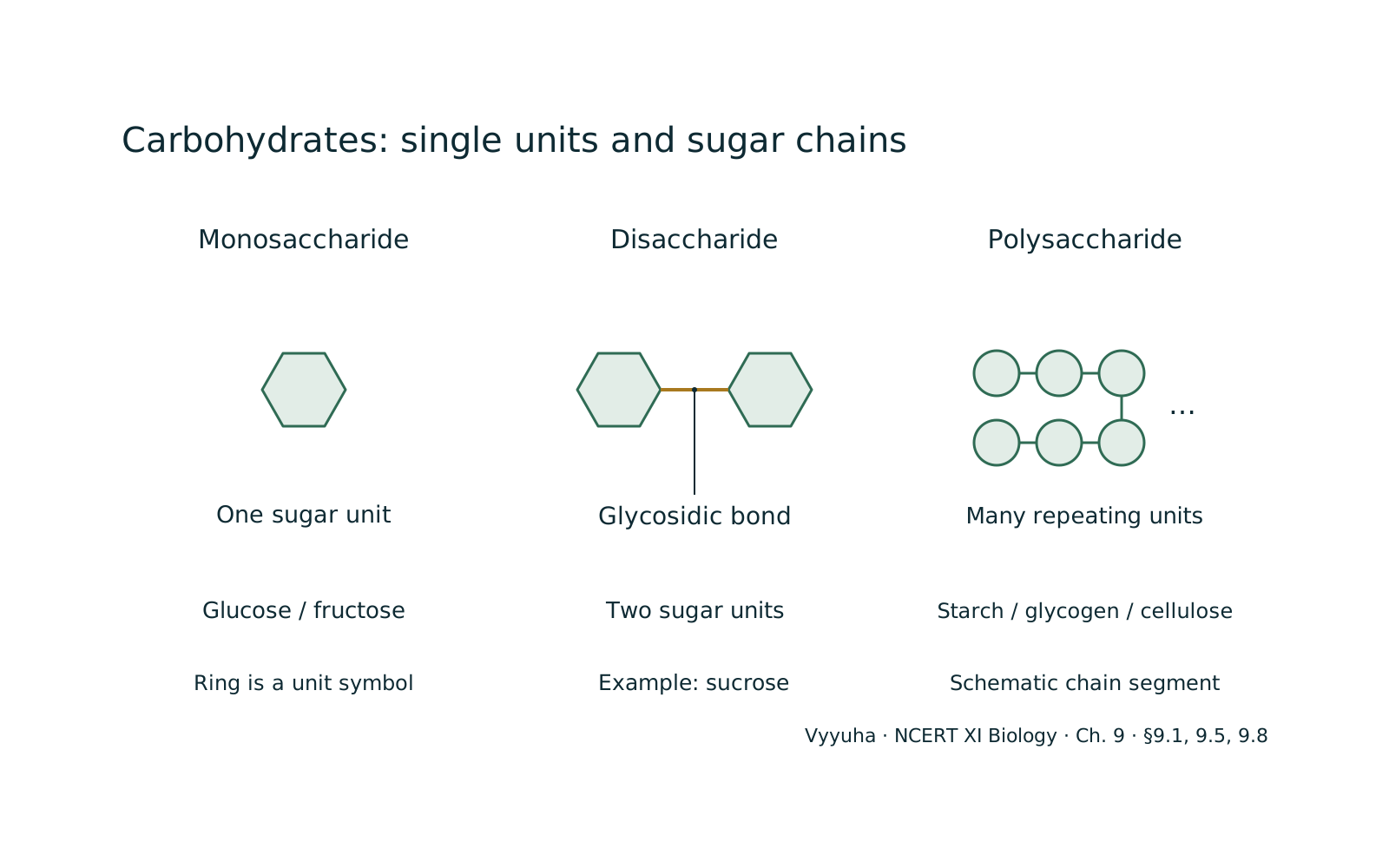
* Monosaccharides: Simple sugars, cannot be hydrolyzed further. E.g., Glucose, Fructose, Galactose (hexoses); Ribose, Deoxyribose (pentoses). They exist in linear and cyclic forms. Glucose is the most abundant monosaccharide.
* Oligosaccharides: 2-10 monosaccharide units linked by glycosidic bonds. E.g., Sucrose (glucose + fructose), Lactose (glucose + galactose), Maltose (glucose + glucose). * Polysaccharides: More than 10 monosaccharide units.
* Homopolysaccharides: Made of one type of monosaccharide. E.g., Starch (plant energy storage, -glucose units, branched amylopectin and unbranched amylose), Glycogen (animal energy storage, highly branched -glucose units), Cellulose (plant structural component, -glucose units, unbranched), Chitin (exoskeletons of arthropods, fungal cell walls, N-acetylglucosamine units).
* Heteropolysaccharides: Made of different types of monosaccharides or their derivatives. E.g., Hyaluronic acid, Heparin.
- Linkage — Glycosidic bond, formed between the hydroxyl groups of two monosaccharides with the elimination of water.
2. Proteins
- Definition — Polymers of amino acids linked by peptide bonds. They are the most abundant organic molecules in living systems.
- Amino Acids — Building blocks of proteins. Each amino acid has a central carbon atom (alpha-carbon) bonded to an amino group (), a carboxyl group (), a hydrogen atom (), and a variable side chain ( group). The R-group determines the amino acid's properties. There are 20 common amino acids found in proteins. Essential amino acids cannot be synthesized by the body and must be obtained from diet.
- Peptide Bond — A covalent bond formed between the carboxyl group of one amino acid and the amino group of another, with the elimination of a water molecule. A chain of amino acids is called a polypeptide.
- Protein Structure
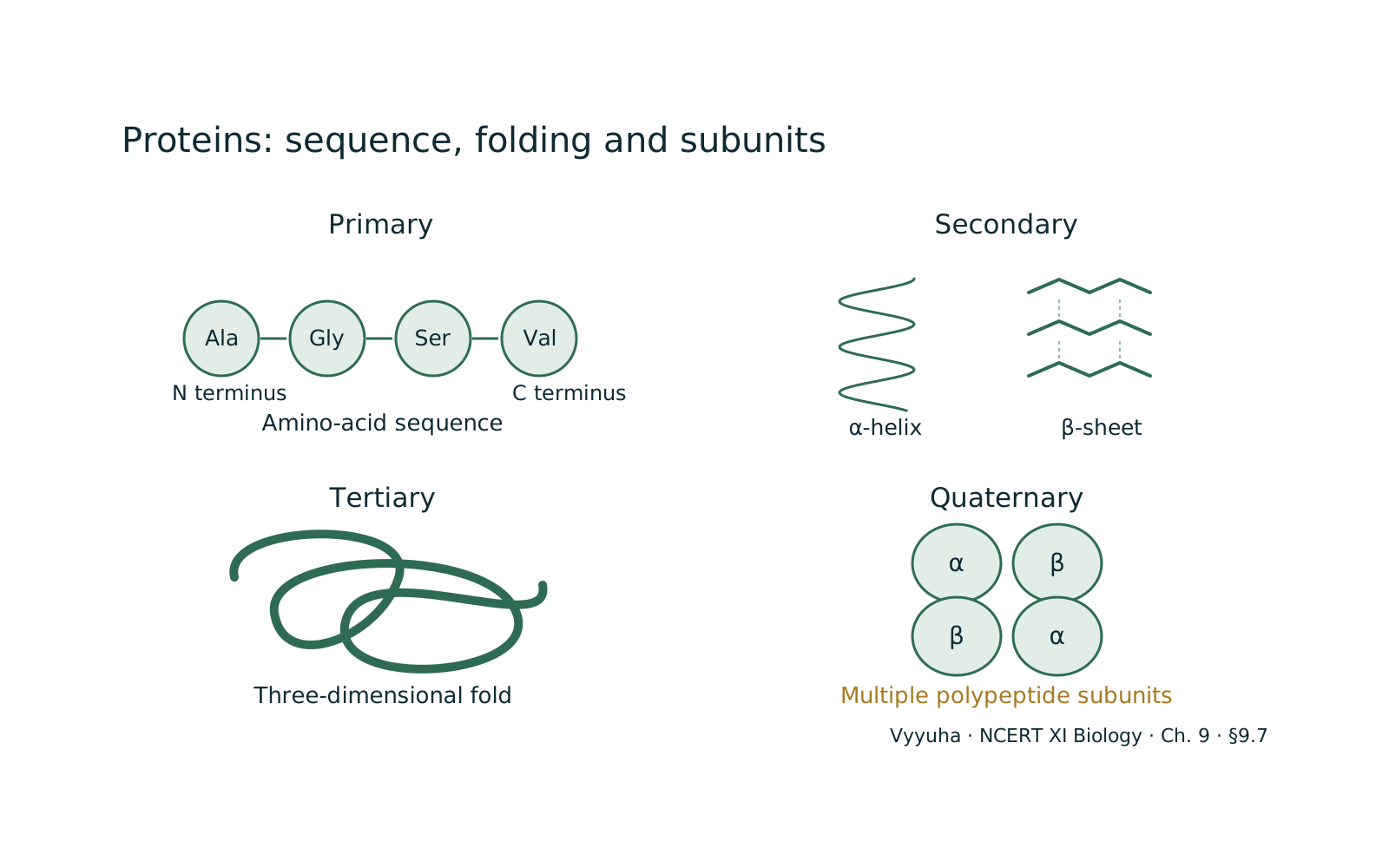
* Primary Structure: The linear sequence of amino acids in a polypeptide chain. Determined by genetic information. * Secondary Structure: Local folding patterns of the polypeptide chain, primarily -helices (spiral structure stabilized by intra-chain H-bonds) and -pleated sheets (sheet-like structure stabilized by inter-chain H-bonds).
* Tertiary Structure: The overall three-dimensional folding of a single polypeptide chain, resulting from interactions between R-groups (hydrophobic interactions, ionic bonds, hydrogen bonds, disulfide bridges).
This structure is crucial for biological activity. * Quaternary Structure: The arrangement of multiple polypeptide subunits (each with its own tertiary structure) to form a functional protein complex.
E.g., Hemoglobin (four subunits).
- Denaturation — Loss of a protein's native 3D structure (secondary, tertiary, quaternary) due to factors like heat, extreme pH, or chemicals, leading to loss of biological activity. Primary structure remains intact.
- Functions — Enzymes, structural components (collagen, keratin), transport (hemoglobin), hormones (insulin), antibodies, receptors, contractile elements (actin, myosin).
3. Lipids
- Definition — A diverse group of water-insoluble organic molecules, primarily composed of C, H, O, but with a much lower proportion of oxygen than carbohydrates. They are characterized by their hydrophobic nature.
- Classification
* Fats and Oils (Triglycerides): Esters of glycerol and three fatty acids. Fatty acids can be saturated (no double bonds, solid at room temp) or unsaturated (one or more double bonds, liquid at room temp).
Main function: energy storage. * Phospholipids: Composed of glycerol, two fatty acids, and a phosphate group (often with an attached polar head group). They are amphipathic (have both hydrophilic and hydrophobic parts) and are the primary components of cell membranes.
* Steroids: Characterized by a four-ring carbon skeleton. E.g., Cholesterol (precursor for other steroids, membrane component), steroid hormones (testosterone, estrogen). * Waxes: Esters of long-chain fatty acids and long-chain alcohols.
Provide protective coatings.
- Functions — Energy storage, structural components of membranes, insulation, protective coatings, hormones, signaling molecules.
4. Nucleic Acids
- Definition — Polymers of nucleotides, responsible for storing and transmitting genetic information.
- Nucleotides — Building blocks of nucleic acids. Each nucleotide consists of three components:
A nitrogenous base (Purines: Adenine (A), Guanine (G); Pyrimidines: Cytosine (C), Thymine (T) in DNA, Uracil (U) in RNA). A pentose sugar (Deoxyribose in DNA, Ribose in RNA). * A phosphate group.
- Nucleosides — Nitrogenous base + pentose sugar (without phosphate).
- Types
* DNA (Deoxyribonucleic Acid): Double helix structure (Watson-Crick model). Stores genetic information. Bases: A, T, C, G. Sugar: Deoxyribose. Two polynucleotide strands run antiparallel and are held together by hydrogen bonds between complementary base pairs (A-T, G-C). * RNA (Ribonucleic Acid): Single-stranded (mostly). Involved in gene expression. Bases: A, U, C, G. Sugar: Ribose. Types include mRNA (messenger RNA), tRNA (transfer RNA), rRNA (ribosomal RNA).
- Linkage — Phosphodiester bond, formed between the phosphate group of one nucleotide and the hydroxyl group of the sugar of another nucleotide.
- Functions — Storage and transmission of genetic information, protein synthesis, regulation of gene expression.
5. Enzymes
- Definition — Biocatalysts that accelerate the rate of biochemical reactions without being consumed in the process. Most enzymes are proteins, though some RNA molecules (ribozymes) also have catalytic activity.
- Mechanism — Enzymes bind to specific substrate molecules at their active site, forming an enzyme-substrate complex. This binding lowers the activation energy of the reaction, thereby increasing its rate. The enzyme then releases the product(s).
- Specificity — Enzymes are highly specific, meaning each enzyme typically catalyzes only one or a few specific reactions.
- Factors Affecting Enzyme Activity
* Temperature: Each enzyme has an optimal temperature. Beyond this, denaturation occurs. * pH: Each enzyme has an optimal pH. Deviations lead to denaturation. * Substrate Concentration: Reaction rate increases with substrate concentration up to a saturation point. * Inhibitors: Molecules that reduce enzyme activity (competitive, non-competitive). * Activators: Molecules that increase enzyme activity.
- Cofactors — Non-protein components required by some enzymes for activity.
* Prosthetic groups: Tightly bound organic or inorganic components (e.g., heme in catalase). * Coenzymes: Loosely bound organic molecules, often derived from vitamins (e.g., NAD, FAD). * Metal ions: Inorganic ions (e.g., for carboxypeptidase).
- Holoenzyme — Apoenzyme (protein part) + Cofactor.
6. Secondary Metabolites
- Definition — Organic compounds produced by organisms that are not directly involved in the normal growth, development, or reproduction of the organism (primary metabolic processes). They often have ecological functions (defense, signaling).
- Examples
* Alkaloids: Morphine, Codeine (drugs). * Terpenoids: Monoterpenes, Diterpenes (essential oils, resins). * Essential oils: Lemon grass oil. * Toxins: Abrin, Ricin. * Lectins: Concanavalin A. * Drugs: Vinblastin, Curcumin. * Polymeric substances: Rubber, Gums, Cellulose. * Pigments: Carotenoids, Anthocyanins.
Real-World Applications and NEET-Specific Angle
Biomolecules are central to all biological processes. Understanding their structure and function is critical for fields like medicine (drug design, disease mechanisms), agriculture (crop improvement, pest control), and biotechnology (enzyme engineering, genetic manipulation).
For NEET, the focus is heavily on:
- Structures — Recognizing the basic structures of monosaccharides, amino acids, nucleotides, and fatty acids. Understanding how they link to form polymers.
- Classifications — Differentiating between various types of carbohydrates, proteins (based on structure), lipids, and nucleic acids.
- Functions — Knowing the specific roles of different biomolecules (e.g., energy storage, structural, catalytic, genetic).
- Enzyme Kinetics — Factors affecting enzyme activity, types of inhibition, and the role of cofactors.
- Examples — Memorizing key examples for each category, especially for secondary metabolites and specific enzymes.
- Diagrams — Interpreting diagrams of molecular structures and reaction pathways.
Common Misconceptions
- Lipids as Polymers — Many students mistakenly consider lipids as polymers like proteins or carbohydrates. While they are large molecules, they are not typically formed by the repetitive linking of identical monomer units in the same way. Triglycerides are formed from glycerol and fatty acids, but fatty acids are not 'monomers' in the same sense as amino acids or monosaccharides.
- Denaturation and Primary Structure — Denaturation affects the secondary, tertiary, and quaternary structures of a protein, leading to loss of function. However, the primary structure (the sequence of amino acids) remains intact, as peptide bonds are generally not broken during denaturation.
- All Enzymes are Proteins — While the vast majority of enzymes are proteins, there are exceptions like ribozymes (RNA molecules with catalytic activity). This is a common trap in MCQs.
- Distinguishing Nucleoside and Nucleotide — A nucleoside is a base + sugar. A nucleotide is a base + sugar + phosphate. The presence of the phosphate group is the key difference.
- Primary vs. Secondary Metabolites — Primary metabolites are directly involved in normal growth and development (e.g., amino acids, sugars, nucleotides). Secondary metabolites are not directly involved but often have ecological roles (e.g., alkaloids, terpenes, toxins). It's important to know examples of each.
By focusing on these aspects, NEET aspirants can build a strong foundation in biomolecules, which is crucial for understanding higher-level biological concepts.
Often confused with
Side-by-side differences the NEET paper likes to test.
| Aspect | Biomolecules | Secondary Metabolites |
|---|---|---|
| Definition | Primary Metabolites: Directly involved in normal growth, development, and reproduction of an organism. | Secondary Metabolites: Not directly involved in primary metabolic processes but often have ecological roles. |
| Essentiality for survival | Primary Metabolites: Generally essential for the survival of the organism. | Secondary Metabolites: Not essential for the individual cell's survival, but crucial for the organism's interaction with its environment. |
| Examples | Primary Metabolites: Amino acids, monosaccharides (glucose), nucleotides, fatty acids, vitamins, hormones. | Secondary Metabolites: Alkaloids (morphine), terpenoids (menthol), essential oils, toxins (ricin), lectins (concanavalin A), drugs (vinblastin), pigments (carotenoids). |
| Distribution | Primary Metabolites: Universally present in all living organisms. | Secondary Metabolites: Often restricted to specific species or groups of organisms. |
| Function | Primary Metabolites: Energy production, structural components, genetic information, basic cellular machinery. | Secondary Metabolites: Defense against predators/pathogens, attracting pollinators, inter-species communication, UV protection. |
Primary metabolites are the core molecules indispensable for an organism's fundamental life processes like growth, metabolism, and reproduction, found universally across life forms. They include essential building blocks like amino acids, sugars, and nucleotides.
In contrast, secondary metabolites are specialized compounds not directly involved in these basic life-sustaining functions. Instead, they often serve ecological roles, such as defense, communication, or adaptation to specific environmental stressors, and their presence can vary significantly between different species.
While primary metabolites are about survival, secondary metabolites are often about thriving and interacting with the environment.
Why it is tested: For NEET, understanding the distinction between primary and secondary metabolites is crucial for classifying various biomolecules and their roles. Questions often test examples of each category and their general functions. For instance, identifying which compounds are primary energy sources versus those involved in plant defense mechanisms is a common question type. Knowledge of specific examples like alkaloids (morphine) or toxins (ricin) as secondary metabolites is frequently tested.
Questions students ask
5 answered on this topic.
What is the primary difference between DNA and RNA?
The primary differences lie in their sugar component, nitrogenous bases, and overall structure. DNA contains deoxyribose sugar and the bases Adenine (A), Guanine (G), Cytosine (C), and Thymine (T). It typically exists as a double-stranded helix.
RNA, on the other hand, contains ribose sugar and the bases Adenine (A), Guanine (G), Cytosine (C), and Uracil (U) (replacing Thymine). RNA is generally single-stranded and exists in various forms like mRNA, tRNA, and rRNA, each with distinct functions in protein synthesis.
Why are enzymes crucial for life, and what affects their activity?
Enzymes are vital because they act as biological catalysts, significantly speeding up biochemical reactions that would otherwise occur too slowly to sustain life. They achieve this by lowering the activation energy of reactions.
Their activity is highly sensitive to environmental conditions. Key factors affecting enzyme activity include temperature (each enzyme has an optimal temperature, beyond which it denatures), pH (optimal pH range), substrate concentration (rate increases until saturation), and the presence of inhibitors or activators.
How do primary and secondary metabolites differ, and why are both important?
Primary metabolites are directly involved in the normal growth, development, and reproduction of an organism. Examples include amino acids, sugars, nucleotides, and lipids, which are essential for basic metabolic processes.
Secondary metabolites are not directly involved in these primary functions but often play ecological roles, such as defense mechanisms (toxins, alkaloids), signaling (hormones), or attracting pollinators (pigments).
While not essential for individual cell survival, they are crucial for the organism's interaction with its environment and overall fitness.
What is denaturation in proteins, and what are its consequences?
Denaturation refers to the process where a protein loses its specific three-dimensional structure (secondary, tertiary, and quaternary structures) due to external factors like extreme heat, pH changes, or certain chemicals.
This loss of native structure leads to the loss of the protein's biological activity, as its function is intricately linked to its precise 3D shape. While the higher-order structures are disrupted, the primary structure (the sequence of amino acids) generally remains intact during denaturation.
Explain the significance of peptide bonds and glycosidic bonds in biomolecules.
Peptide bonds are crucial for forming proteins. They are amide linkages that connect the carboxyl group of one amino acid to the amino group of another, forming a polypeptide chain. The sequence of these bonds dictates the protein's primary structure.
Glycosidic bonds, on the other hand, are essential for carbohydrates. They are covalent bonds formed between two monosaccharide units, typically involving the hydroxyl groups, with the elimination of water.
These bonds link simple sugars to form disaccharides, oligosaccharides, and complex polysaccharides like starch and cellulose, which serve energy storage and structural roles.